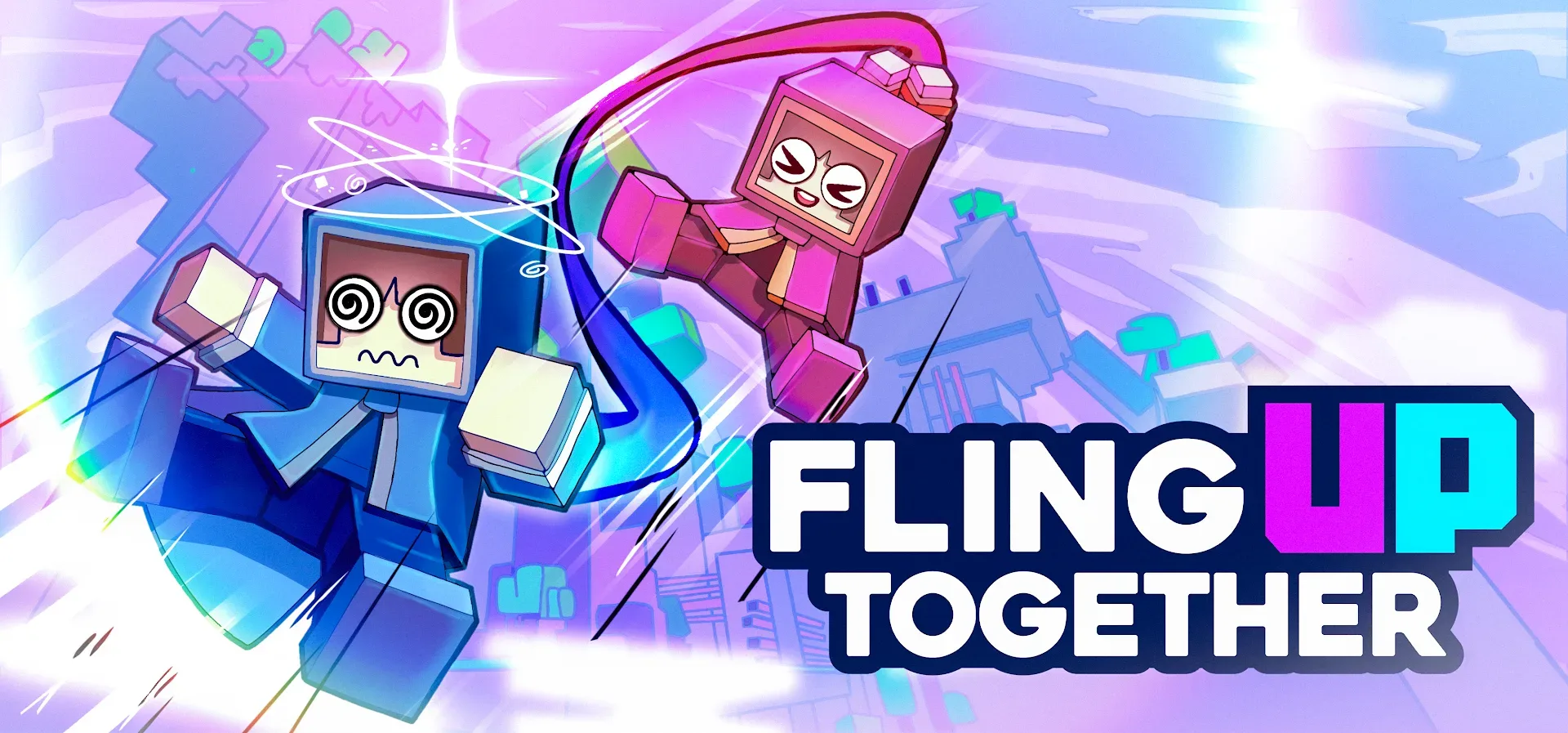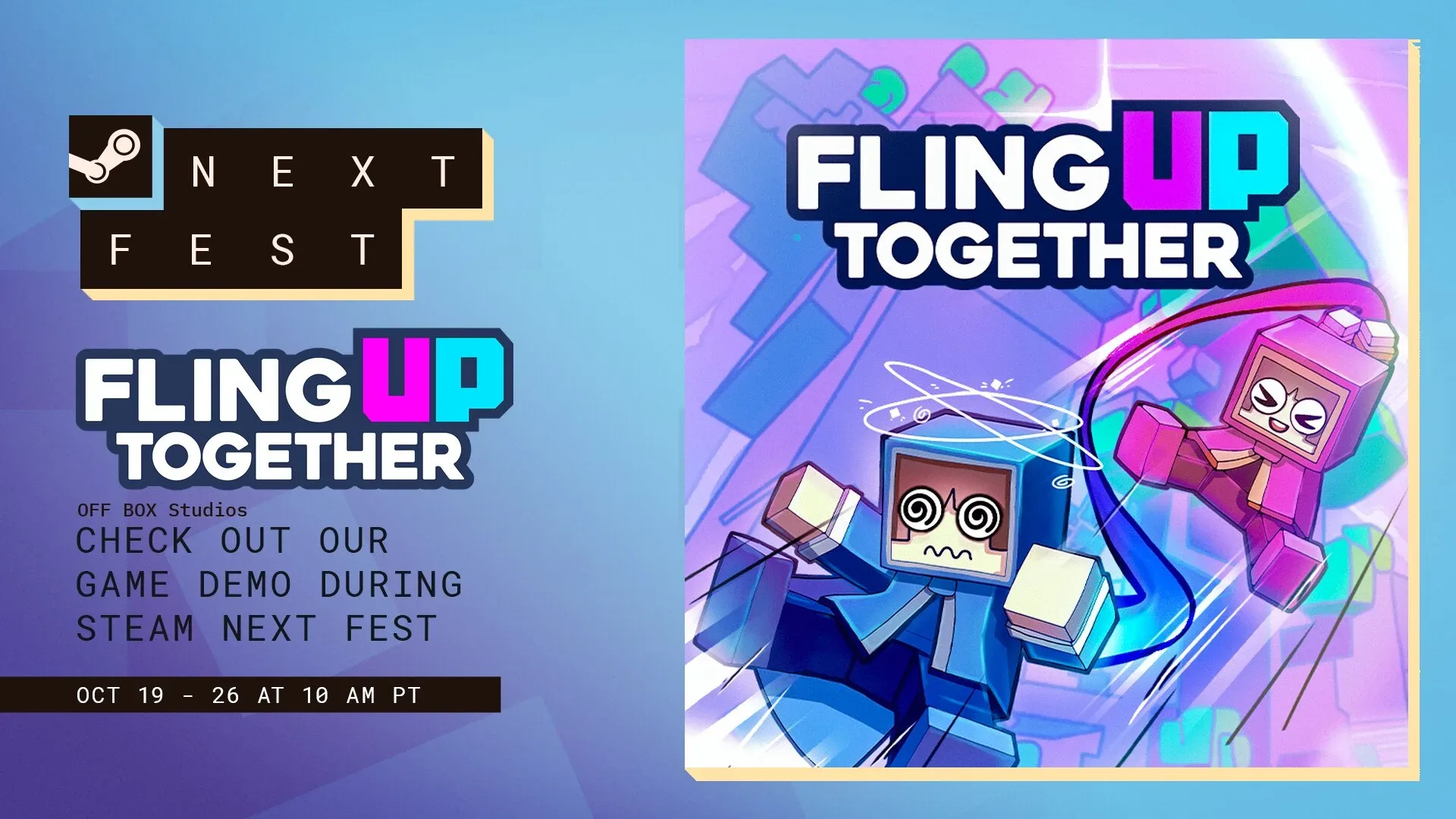
FLING UP TOGETHER has updated its free Steam demo for Steam Next Fest, adding proximity voice chat, character skins, emotes and optional collectibles to a co-op platformer built around one very consequential piece of rope. The demo is available during the festival from October 19 through October 26, while the full game is planned for Steam.
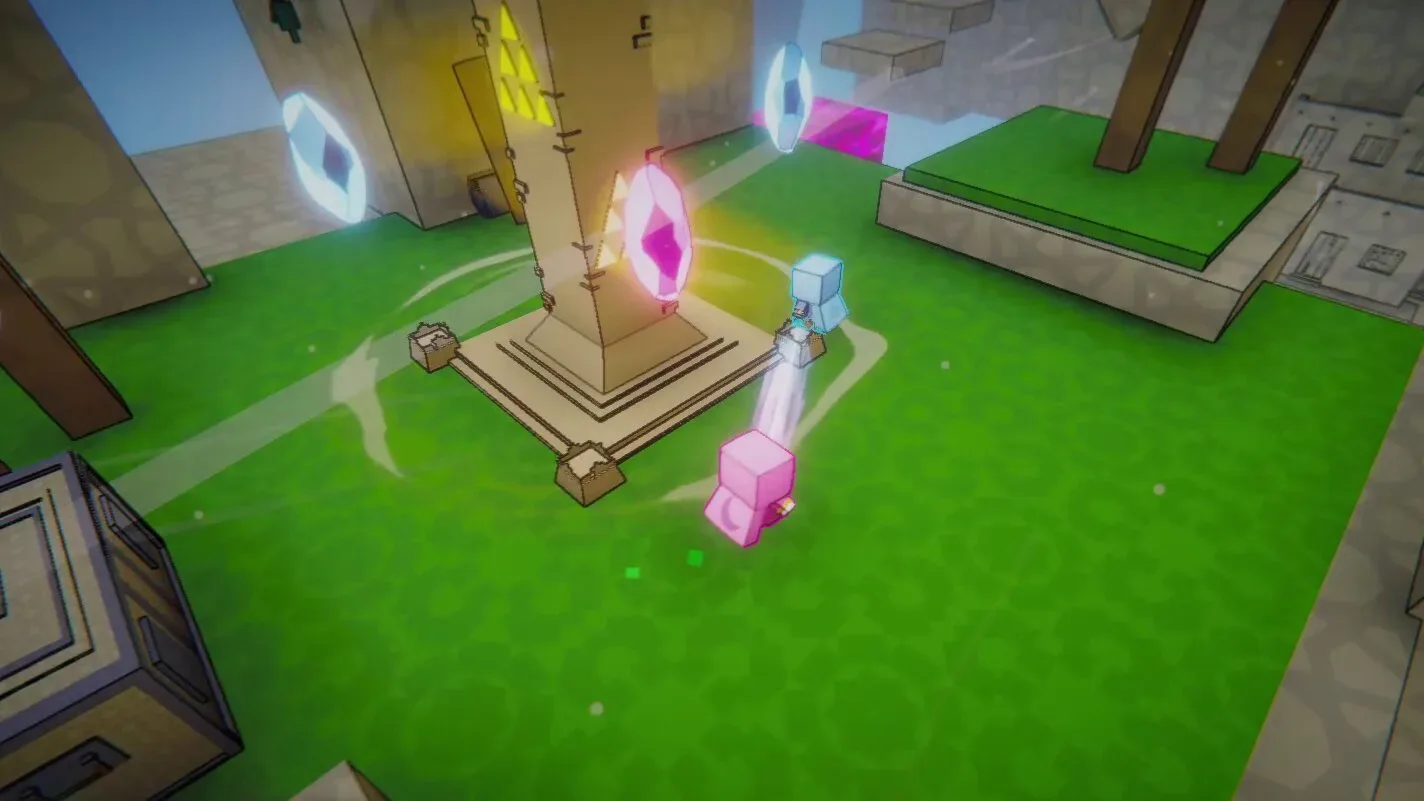
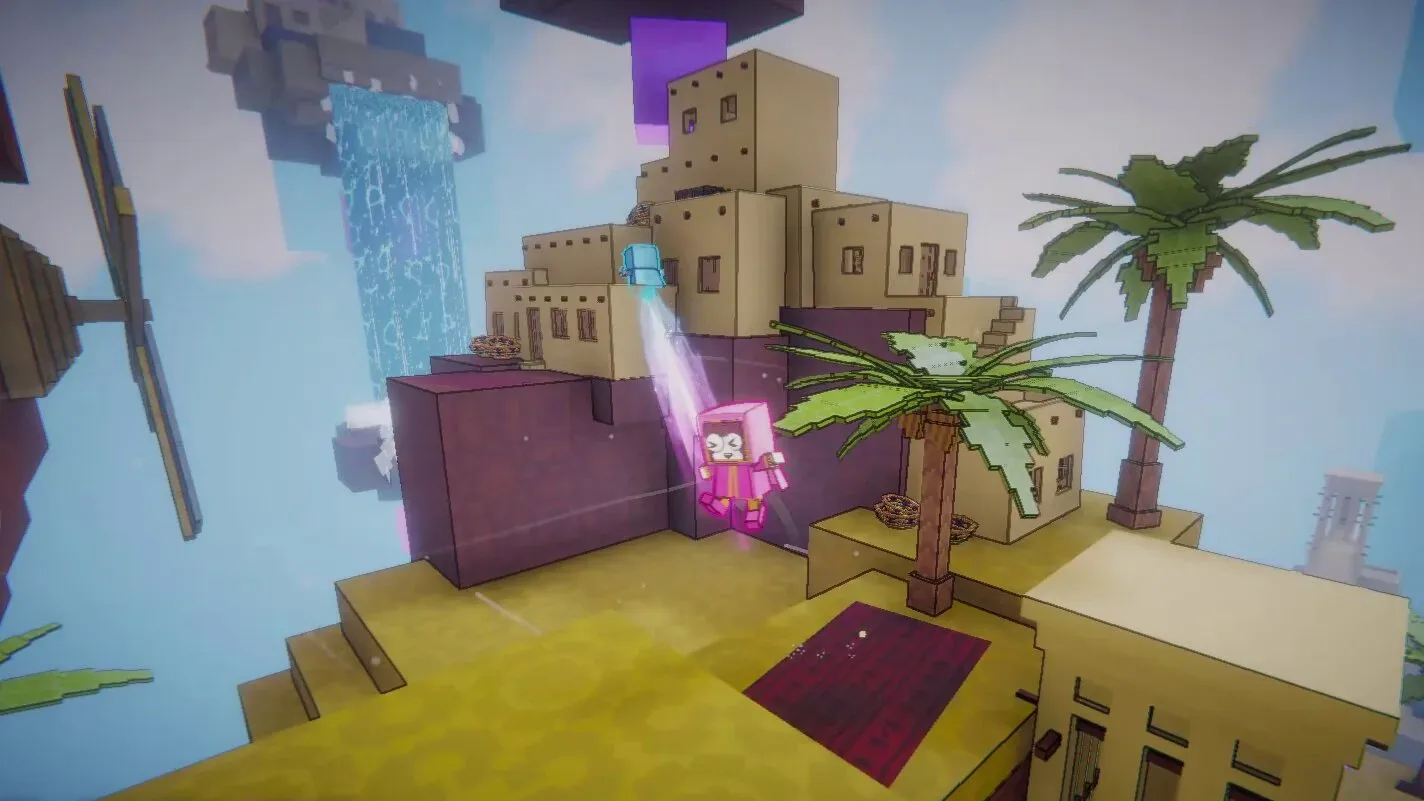
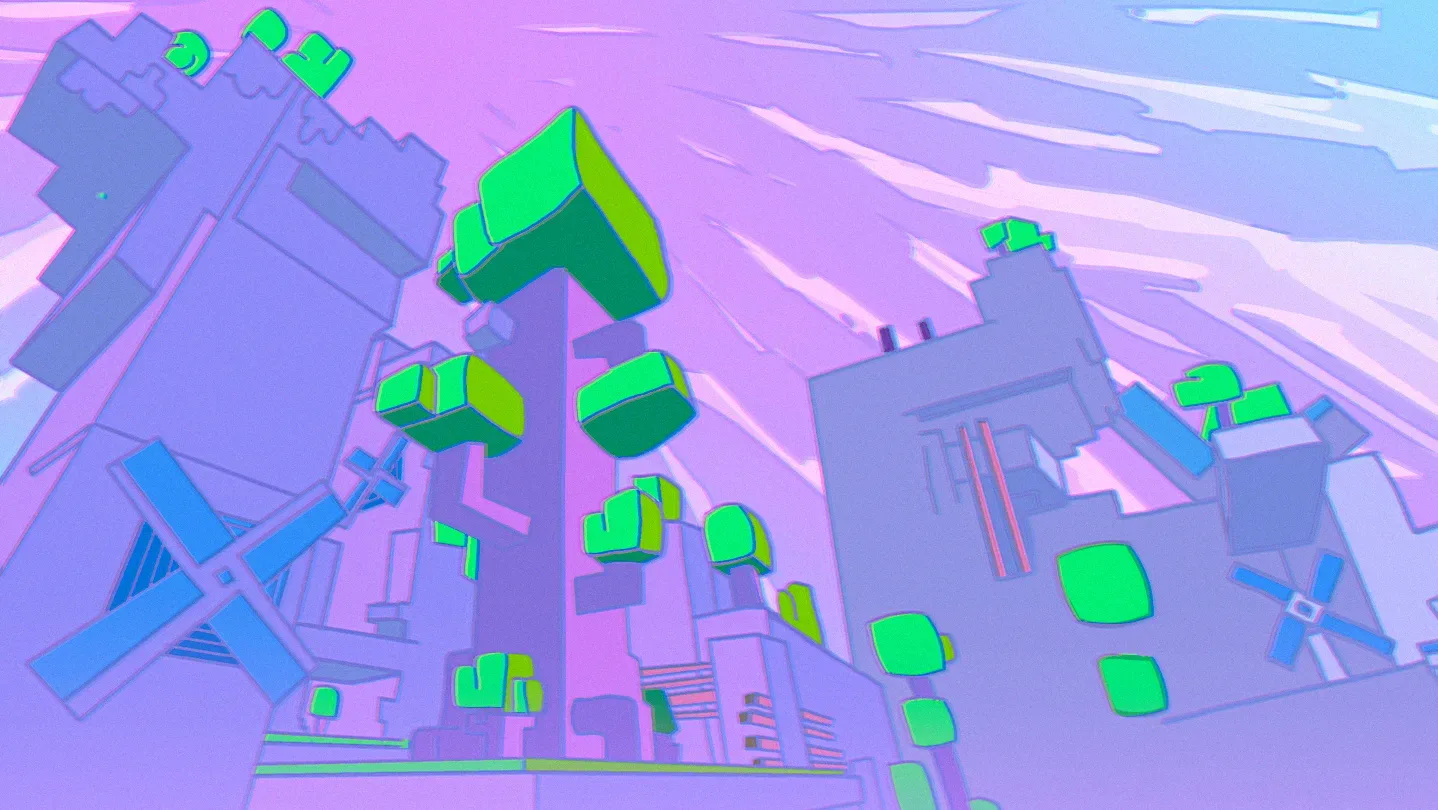
The central premise is deliberately uncompromising: two players are attached to the same rope and must ascend a vertical world together. That climb passes through an Arabian-inspired setting of sky islands, floating ruins and monumental bridges. One player can pull the rope to send their partner across a gap, or use it to catch them during a fall. But the safety net has a sizeable hole in it: if either player falls, the pair lose progress.
That shared consequence is the point. FLING UP TOGETHER is not framing co-op as two players independently completing adjacent jobs. Its climb asks both people to account for the other player’s position, momentum and next landing. The new voice-chat system is therefore more than a social extra; it is a direct fit for a game in which a mistimed launch, an unclear plan or a panicked recovery can immediately affect both players.
Proximity chat brings the conversation into the climb
The largest addition is proximity voice chat, which lets players communicate from inside the game rather than relying on a separate voice service. In broad terms, proximity voice chat is a communication system tied to player location or closeness in a game world. Here, it is intended to keep planning, last-second warnings and the inevitable post-fall apologies within the climb itself.
That choice makes particular sense for a physics platformer. A physics platformer is a game where movement depends heavily on momentum, weight, collision and other simulated interactions rather than only fixed jumps from one predetermined point to another. When two characters are connected by a rope, those interactions become mutual. A player preparing to fling their partner needs agreement on timing and destination; the launched player needs to know when to brace for a landing or respond to an unexpected swing.
The game’s developer describes the rope as something that already forces players to talk to one another, with the new chat feature allowing the game to participate in that conversation. It is a concise explanation of the design: coordination is not an optional route to a cleaner score. It is the baseline requirement for getting upward at all.
There is also room for the feature to support the game’s stated comic tone. The announcement positions physical mishaps, silly characters and moving obstacles as reasons mistakes should remain funny instead of purely punishing. When failure is shared, live in-game reactions can become part of the payoff—provided the two climbers are prepared to treat the disaster as a story rather than an argument.
A rope mechanic with no solo escape hatch
FLING UP TOGETHER’s rope-and-fling system gives the pair a clear set of cooperative actions. Players can pull the rope to launch a partner over gaps, and can catch a partner who is falling. Those moves create a dynamic relationship between risk and rescue: the same connection that complicates movement can become the tool that saves a run.
The more severe rule is described as forced interdependence. There is no solo progress and no separate checkpoints for each member of the team. In practical terms, a stronger platforming player cannot simply race ahead and wait for the other person to catch up, nor can one climber secure their own progress while the other attempts a dangerous section. The team’s fate is shared from start to reset.
This is distinct from conventional co-op where teammates may revive one another or share an objective while still retaining individual positions. FLING UP TOGETHER instead makes position itself communal. A safe ledge only matters if the rope arrangement can get the other player there too. A risky shortcut is a team decision because the penalty belongs to both people.
That structure may make the demo especially revealing for prospective players. A short trial can show whether a pair enjoys the underlying loop of discussing a route, committing to a fling, improvising through a near miss and accepting the consequences of a fall. It is not merely a question of whether either person likes platformers; it is whether they enjoy platforming under sustained mutual responsibility.
Colour-coded platforms make coordination a puzzle
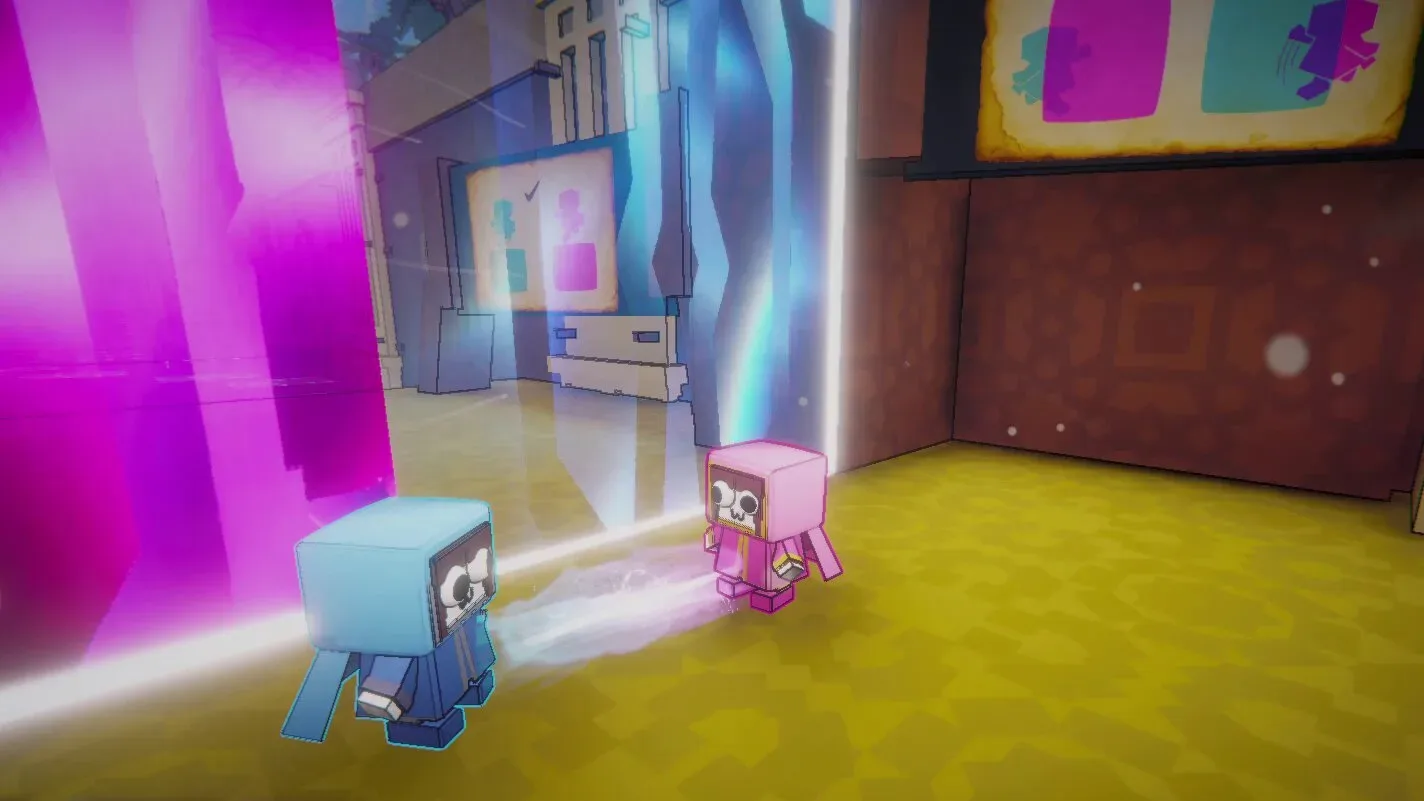
The climb also includes colour-coded co-op puzzles. Each player can stand only on platforms matching their own colour. This restriction turns platform placement into an ongoing communication problem rather than a simple matter of finding the nearest safe surface.
Colour-coding is a straightforward way to make player roles legible. If one climber cannot use a platform, their partner cannot assume that a reachable route works for both of them. Every sequence must be considered from two perspectives: where the first player can stand, where the second player can land, and how the rope’s movement lets them transition between those compatible spots.
Combined with moving obstacles, the system should put pressure on quick, clear callouts. The supplied feature description does not detail individual puzzle layouts or obstacle behavior, so it would be premature to assume a particular difficulty curve. What is clear is that the game is designed to make players repeatedly negotiate movement rather than merely travel side by side.
For pairs trying the demo, a useful approach follows directly from those rules: establish a simple vocabulary before difficult jumps. Calling out who is launching, who is catching, and which colour platform is the intended destination may avoid confusion when movement becomes frantic. That is not a hidden strategy or a promise of success—falls remain a stated part of the experience—but it suits a game that foregrounds coordination.
Skins, emotes and reasons to look off the main path
The update adds skins and emotes, allowing players to customize their climbers and communicate with animations during a run. The announcement does not specify the number of cosmetics, how they are obtained, or whether any are tied to progression, so those details remain unconfirmed. Still, the addition gives the two-person climb more personality, especially in a game deliberately pitched around chaotic physical comedy.
More materially, the demo now contains hidden treasure chests away from the main route and collectible bugs placed around the world. These are in-game collectibles, not a separate progression system with explained rewards. The available information does not say what chests contain, how many bugs exist, or whether collecting them changes the climb. It does establish that players who venture onto side ledges and explore beyond the direct ascent will have optional discoveries to pursue.
That can create an interesting tension with the game’s reset rule. A chest tucked off-route may invite curiosity, but a detour also asks two players to take on extra risk while tied together. In a game where one fall sends the team backward, exploration becomes another shared decision: is the find worth the additional rope management and platforming exposure?
Players who want to search should treat every apparent side path as a cooperative maneuver rather than a quick solo detour. Confirm that both climbers have a viable sequence of colour-compatible platforms, leave enough room to recover from a swing, and make sure neither player is being positioned where the other cannot catch them. The game’s stated rules make those sensible principles, even though the specific secret locations have not been detailed.
What Steam Next Fest players can expect
The updated demo is intended as a substantial introduction to the larger climb, rather than an isolated showcase for one feature. Its combination of rope physics, shared failure, colour-restricted platforms, voice chat and off-route secrets gives the demo several ways to test the same question: how well can two people communicate when their movement is physically entangled?
Players seeking other festival-focused PC coverage can also read about OMEA’s Steam Next Fest demo update. FLING UP TOGETHER’s own demo window runs from October 19 to October 26 on Steam.
The appeal is likely to rest on the balance between friction and laughter. The design removes many of the usual ways co-op players can separate, recover individually or quietly compensate for a teammate. In return, it puts the rescue, the mistake and the scramble to continue in the same shared space. With proximity chat now integrated, every careful plan and spectacularly mistimed fling has a built-in audience of exactly one person who was also attached to the rope.