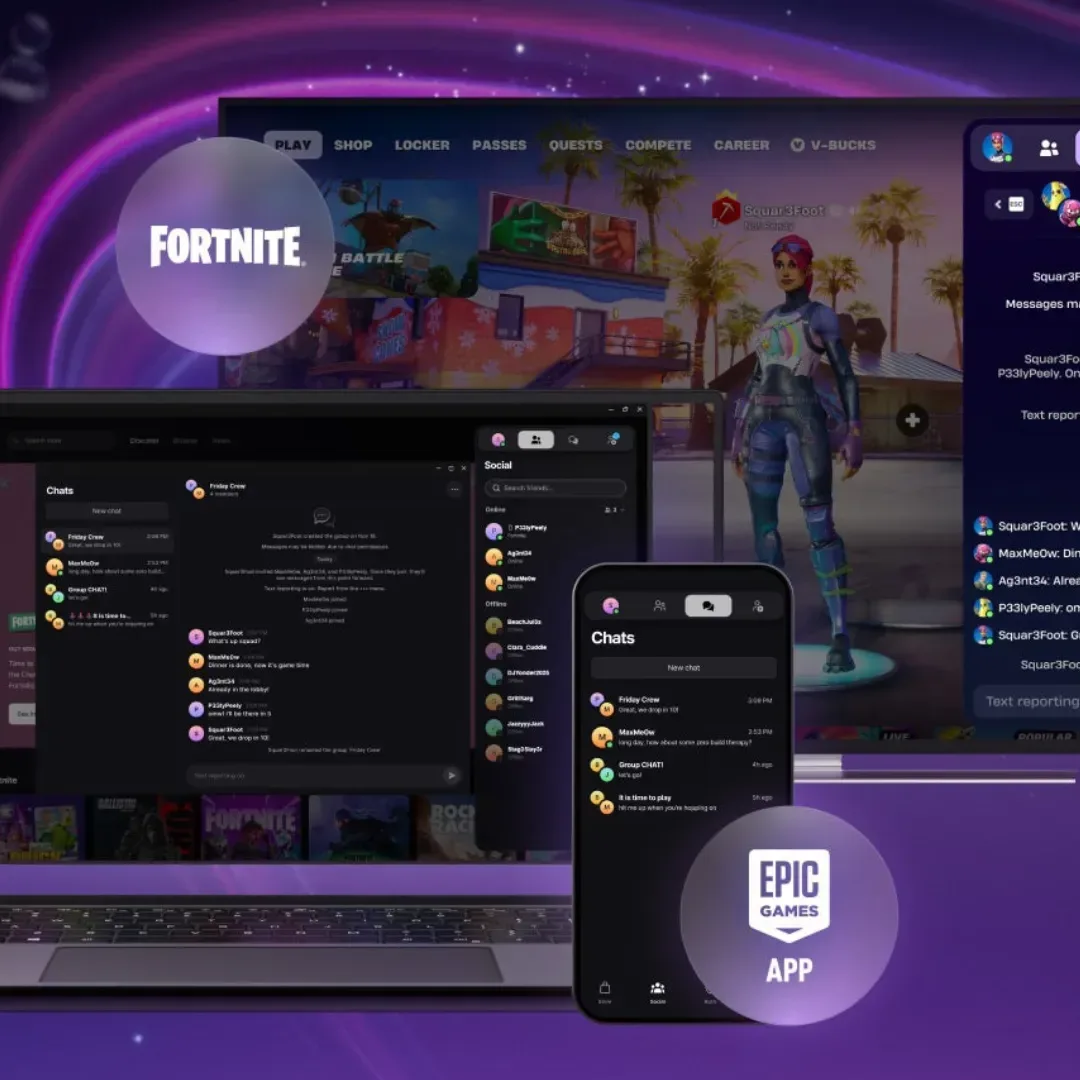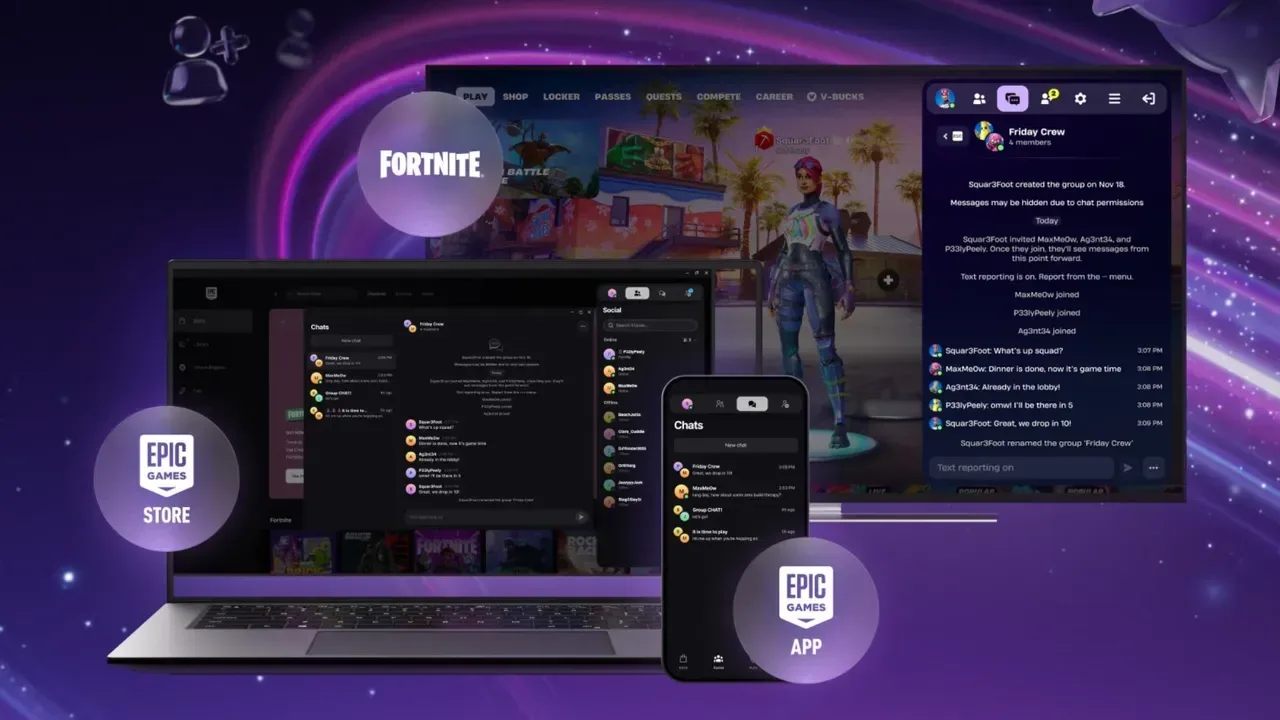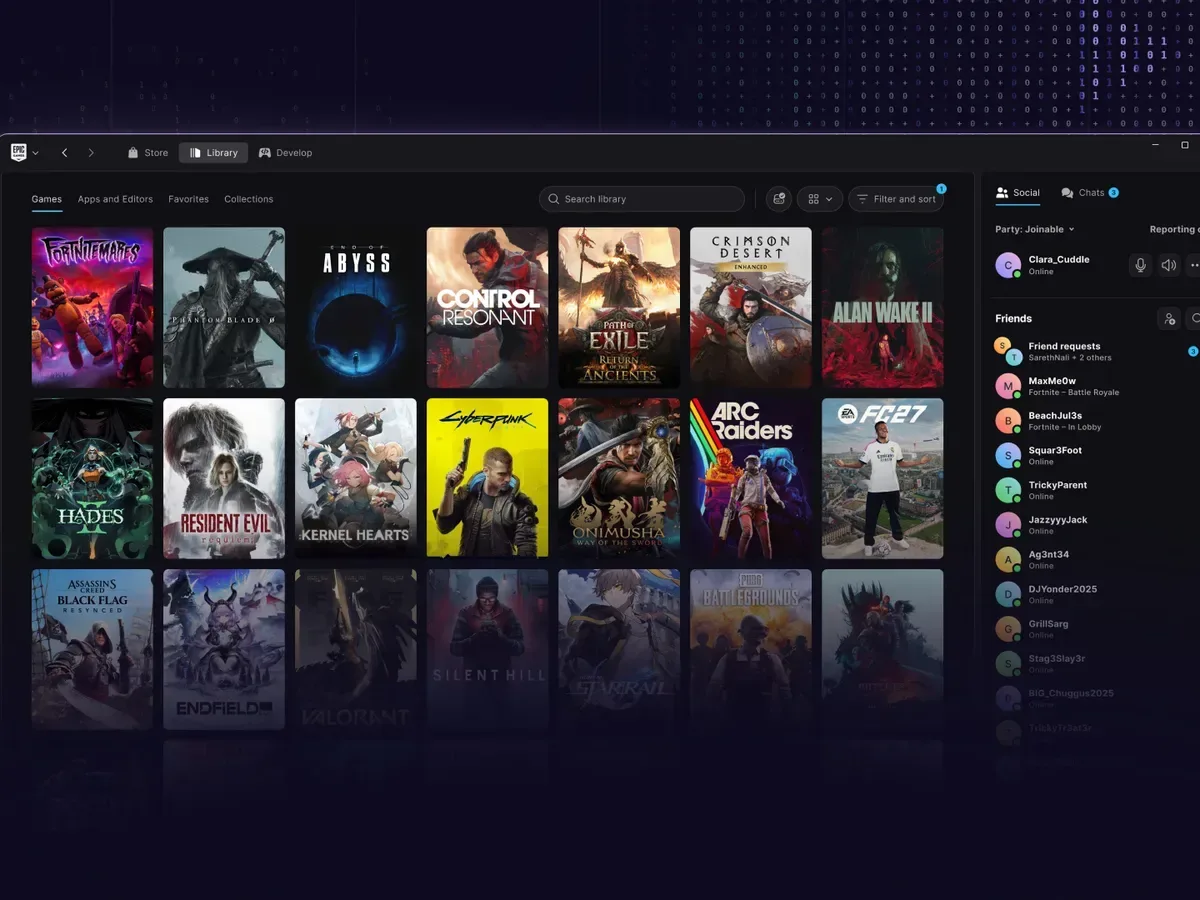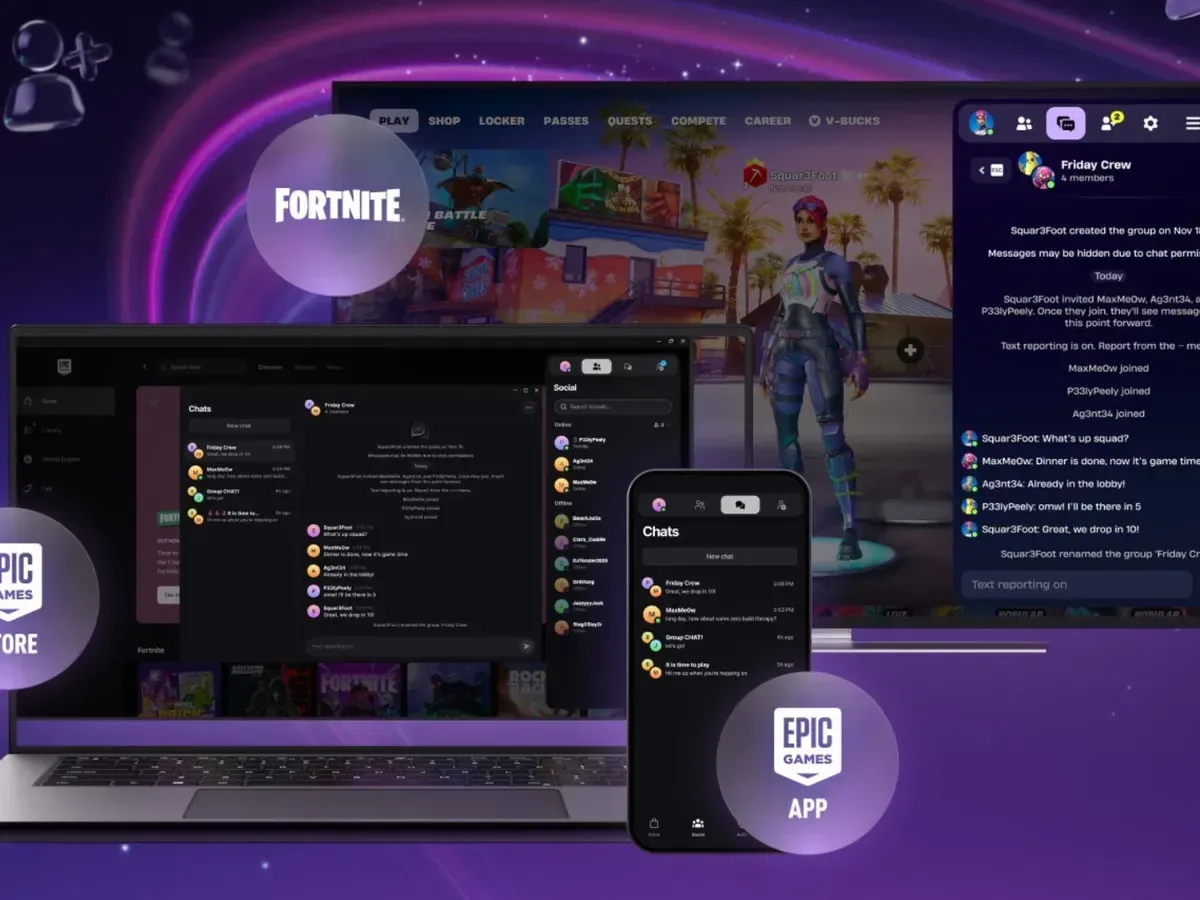
Epic has unveiled a refreshed Epic Games Launcher and attached an unusually candid label to its development: it was “vibe coded” with generative AI assistance.
The updated desktop app is the gateway to the Epic Games Store, players’ game libraries, social functions and a developer hub. Epic’s stated goals are familiar to anyone who has ever waited for a PC launcher to wake up: a faster, more responsive application with an updated appearance. What makes this rollout notable is not merely another launcher redesign, but the company’s decision to publicly frame AI as part of the way the underlying software was rebuilt.
That phrase deserves some unpacking. “Vibe coding” began as a tongue-in-cheek term for asking an AI system to produce software through natural-language prompts rather than writing every line manually. Used literally, it can suggest a developer is trusting a model to do the programming while they steer by feel. Epic’s own explanation, however, describes a narrower and more conventional role: AI was used as a development tool to help a small team rewrite the launcher’s code base, improve efficiency and work more quickly across platforms.
That distinction matters. An AI-assisted rewrite, with engineers deciding the architecture and validating the result, is not necessarily the same thing as releasing whatever code a chatbot first proposes. But the company’s deliberately playful wording also puts a spotlight on a serious industry question: where does AI materially help software teams, and where do human accountability and expertise remain indispensable?
What Epic says changed in the launcher
Epic says the new launcher should be faster and more responsive than the existing version and have a new look. Its store leadership says the rewrite was intended to let a small team move faster while supporting Windows and Mac, with a Linux edition also planned.
Those are meaningful priorities for a launcher because it is software players encounter before reaching a game. A sluggish or unreliable client can make library browsing, store visits, installations and social features feel worse even if the games themselves run perfectly. “Responsive” generally means the interface reacts promptly to input: windows open, pages load and navigation does not appear to lag behind clicks. It does not, by itself, promise a particular benchmark, download speed or feature set. Epic has not provided those kinds of specific performance figures here.
Likewise, a rewrite is not simply a fresh coat of paint. In software development, a code base is the collection of source code that defines an application. Rewriting it means rebuilding substantial underlying parts rather than only adjusting labels, icons or menus. That can make future maintenance and new features easier if the resulting structure is sound, but it is also a substantial engineering task: the application must still reliably do all the practical work users expect across the systems it supports.
Epic describes AI’s contribution as focused on code efficiency, architecture and faster feature work. Architecture is the high-level structure of an application—how its components are organized, communicate and divide responsibilities. Good architecture does not guarantee a perfect app, but it can affect how readily teams can alter features, isolate problems and keep a product working as it expands.
Related coverage includes Epic Games Says Its Rebuilt Launcher Used AI-Assisted 'Vibe Coding'.
For PC players, the clearest standard will be ordinary day-to-day behavior. Is the launcher quick to open? Is it straightforward to find owned games, use social functions and visit the store? Does it behave consistently on the platforms Epic says it supports? Those questions cannot be settled by the “vibe coded” label, or by AI’s involvement alone. They are questions of the shipping product.
AI assistance is not the same as AI-made visual design
Epic has drawn a line between the launcher’s engineering process and its visual work. The company says its use of AI on this project was about efficiency and software structure, not about the artwork or design style. The launcher does include visual updates, but Epic says those were handled by its regular design group.
This is an important clarification because “AI-built” is easily read as a blanket claim covering every element of a product. Here, Epic’s account is more specific: generative AI helped development work around the code, while the people responsible for design retained control of the interface’s visual direction.
That division also identifies two very different debates that are often compressed into one. AI used to assist programmers with code and technical planning raises questions around reliability, security, review practices and staffing. AI used to generate art raises additional issues around authorship, training data, creative jobs and the visual identity of a game or service. They can overlap in one company’s strategy, but they should not be treated as identical just because the same broad “AI” label is applied.
Epic’s broader record makes the distinction especially notable. The company has been open about using generative AI to help create Fortnite skins. Separately, reporting on an in-development Star Wars and Marvel crossover shooter has said its art is expected to use full AI workflows. Those projects and claims sit outside the launcher rewrite, but together they show that Epic is exploring AI across more than one type of creative and technical work.
Why the company’s wording is attracting attention
There is a reason “vibe coding” lands differently when a major game company uses it in relation to a public-facing app. In casual online use, the phrase often carries a joke at the expense of the process: describe what you want, accept an AI-generated solution and hope nothing catches fire. It is shorthand for distance from the painstaking work traditionally associated with programming.
Epic’s explanation is less extreme than that caricature. It says AI made a small team more efficient and accelerated a cross-platform rewrite. Still, using the phrase turns the launcher into a visible example of a larger shift. Software teams are increasingly weighing whether AI tools can assist with drafting code, restructuring systems, documenting work or accelerating feature development. The useful question is not whether a company can put AI-generated output somewhere in the pipeline; it is whether its teams can review, test and maintain the resulting software responsibly.
AI-generated code can be useful as a starting point, but a launcher's job is not finished when code compiles. Desktop clients must continue to operate across supported operating systems and changing user environments. They need engineers who understand the systems they are changing, can investigate faults and can own the decisions made in the final product. Epic’s comments emphasize acceleration for a small team, rather than claiming that people have been removed from the loop.
That still leaves plenty of room for scrutiny. “More efficient” is a process claim, while “faster and more responsive” is a user-facing outcome claim. The first describes how Epic says it built the software; the second is what players should be able to notice. The latter will determine whether the rewrite improves the launcher’s reputation.
A platform challenge beyond the technology
Epic’s launcher does not operate in a vacuum. PC players have spent decades building habits and game libraries around Steam, so any alternative storefront faces more than a technical task. It must persuade users that its library management, purchasing flow, social functions and overall convenience are worth making part of their routine.
Previous comments from Epic leadership on the launcher’s direction centered on a simple expectation: it should feel fast, direct and unsurprising. That remains a sensible target. A game launcher is infrastructure. Players are likely to notice it most when it adds friction between them and the game they want to play.
The refreshed client’s planned Linux version is also worth separating into what is known and unknown. Epic says a Linux version is on the way. That establishes an intention to support another desktop platform, but it does not establish a release date, detailed compatibility commitments or a full list of features. Players interested in Linux should treat the plan as a stated direction rather than a complete product specification.
For the moment, the practical story is not that AI has magically solved the PC launcher problem. It is that Epic says AI-assisted development enabled a small team to rebuild a core piece of its platform more quickly, while human designers remained responsible for the app’s look. The resulting software will have to earn confidence through speed, stability and usability—not through a catchy development slogan.
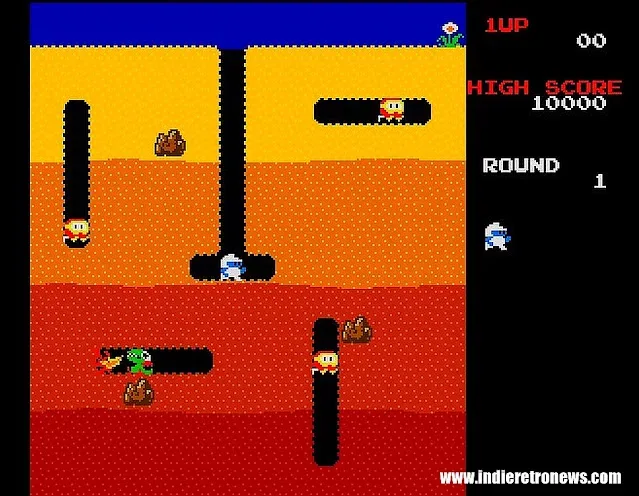
Epic’s approach also adds a useful real-world counterpart to AI-assisted technical work elsewhere in gaming. For a retro-focused example, see how AI-assisted Amiga ports are being used to revisit classic arcade games. The contexts are very different, but both illustrate the same core reality: the significance of AI in games depends on what it is used for, who is responsible for the final work and whether the finished result meets the needs of its audience.