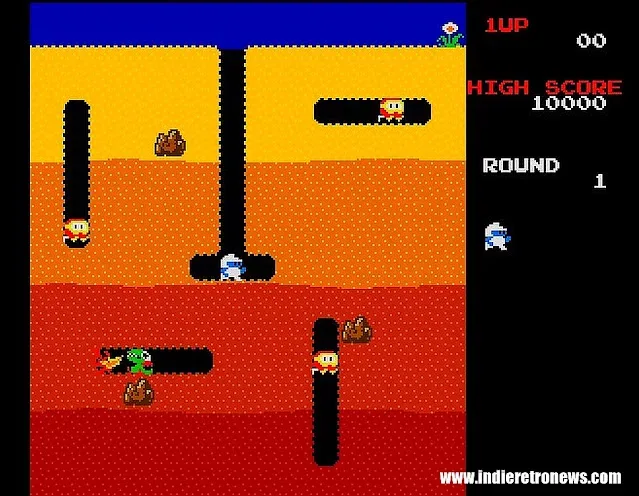
Two early-1980s arcade staples are receiving fresh Commodore Amiga treatments. Developer TjLaZer has created AI-assisted ports of Namco’s Dig Dug and Nintendo’s Mario Bros., targeting classic Amiga OCS/ECS and AGA hardware rather than treating the platform as an afterthought.
The stated goals are unusually specific for projects built around games this familiar: recognizable arcade presentation, responsive action and a consistent 60Hz pace on both PAL and NTSC systems. Dig Dug is described as a rewrite for Amigas with 512K of chip RAM, while Mario Bros. uses a 32-color low-resolution presentation and supports two players with dual joysticks.
That makes these more than simple nameplate revivals. Both original games depend on split-second movement, tightly controlled enemy patterns and screens that must remain readable during escalating chaos. Whether a version captures that feel comes down not merely to having the right characters on-screen, but to its timing, scrolling choices, animation and treatment of the machine standards that defined retro hardware.
Dig Dug: digging, danger and display adaptation
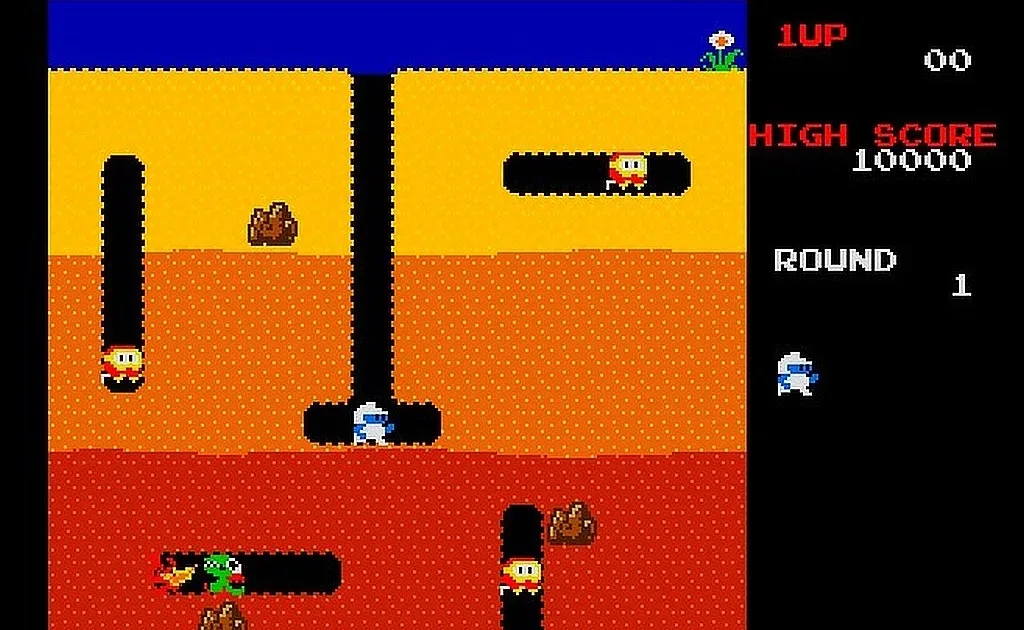
Dig Dug, originally released in arcades in 1982, is built around movement through destructible earth. The player tunnels through each round, inflates enemies with an air pump and can also drop rocks to eliminate threats. The Amiga version includes the series’ central hazards: enemies that can ghost through the terrain, fire-breathing Fygars and falling rocks.
TjLaZer’s conversion is said to retain the original graphics, accurate round layouts and iconic sound effects. It also includes a high-score table for the top five players. For a score-driven arcade game, that table is not a throwaway feature: replaying for a better route, surviving another round or extracting more value from a falling rock are the natural reasons to return after a game over.
The port’s handling of PAL and NTSC displays is particularly notable. PAL and NTSC are television and video standards associated with different regions and timing conventions. A game designed around a 60Hz arcade cadence can feel different when its presentation or logic is forced into a slower rhythm. This Dig Dug version automatically detects the system type and is intended to keep the arcade’s 60Hz speed on both.
Its interface changes by format rather than applying one compromise everywhere. PAL machines use a side-panel score view, while NTSC systems use a scrolling display. The practical aim is clear: preserve gameplay space and score information while accounting for the respective display environments. It is a reminder that an Amiga port is not just a matter of moving an arcade game to another computer; presentation decisions can affect visibility, pacing and the player’s sense of the original board.
Why 60Hz is a meaningful target
In this context, “60Hz” refers to a 60-times-per-second update or display rhythm. It should not be casually treated as proof that every part of a game is flawless, but it matters a great deal for arcade action. Enemy movement, player input, animation and sound all contribute to an experience players remember as fast, deliberate or sluggish.
Related coverage includes Dig Dug and Mario Bros. Arrive on Amiga in AI-Assisted Ports.
Dig Dug is especially exposed to timing changes. When enemies start ghosting through dirt, safe tunnels stop being safe. When a Fygar threatens with fire, positioning is the difference between advancing and retreating. Rocks create another layer of risk: their payoff depends on waiting for enemies to line up, then getting out of the way. A port that maintains its intended pace gives those familiar decisions the best chance of reading as they should.
Mario Bros. brings the sewer arena to OCS
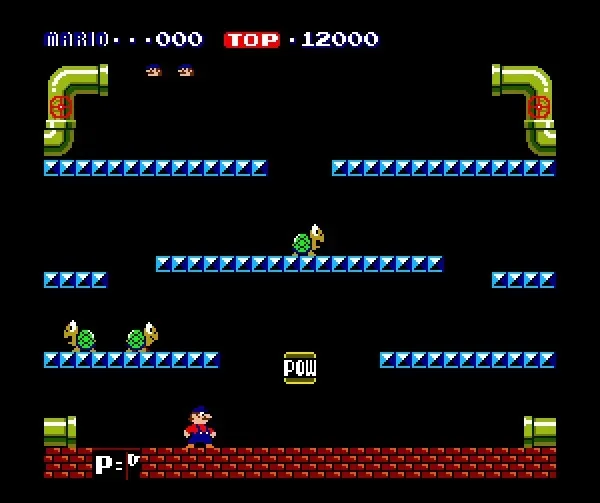
TjLaZer’s other project is an Amiga OCS port of Nintendo’s 1983 arcade game Mario Bros.. This is the pre-platforming arcade format in which Mario and Luigi work across a single sewer-screen arena, knocking enemies from below and clearing them before they recover.
The Amiga version is described as using a 32-color low-resolution palette intended to match the original arcade look. It also features smooth sprite animation and the screen-shaking POW block effect. Sprites are the movable on-screen images used for elements such as players and enemies. In a game as uncluttered and immediate as Mario Bros., smooth, readable sprite movement is fundamental: players need to judge where enemies are traveling and when to hit the floor beneath them.
The POW block is one of the game’s defining tools. Activating it shakes the stage and affects enemies across the screen. Including its screen-shake effect is a small but meaningful piece of arcade character, because the block is both a mechanical rescue option and a highly visible punctuation mark in the action.
Two people can play simultaneously through dual joysticks. That support is central to Mario Bros., where cooperation and interference naturally coexist. Players can clear threats together, but their movement and timing also create pressure on one another as the arena fills. A faithful two-player setup therefore matters as much as matching a palette or preserving a sound effect.
Performance remains an ambition for Mario Bros.
The Mario Bros. port is intended to run at 60 frames per second on PAL and NTSC machines, and players can manually switch the display rate with the F5 key. The wording around performance is important: the developer hopes to deliver that 60fps result, so it should be understood as a target rather than a blanket, independently established guarantee.
Frames per second, commonly abbreviated to fps, describes how often a game presents a new image. A stable high frame rate can make movement appear smoother, but performance claims are distinct from gameplay accuracy. The latter also involves collision behavior, enemy logic, animation timing, stage layout and input response. The supplied details establish the visual and performance intentions, not a comprehensive technical validation of every arcade behavior.
The F5 option offers users a degree of direct control over display rate. Alongside the automatic PAL/NTSC handling in Dig Dug, it shows the projects addressing a long-standing reality of software for vintage systems: one version may be used with different hardware and regional display expectations. A helpful port acknowledges those conditions instead of assuming one configuration fits all.
What AI-assisted development does—and does not—tell us here
Both ports were made with assistance from modern AI tools. That describes part of the development process, not a technical specification for the finished games. The available information does not identify which tasks used AI, which tools were involved, or how much of the code, art or audio pipeline depended on them. It would be inaccurate to fill those gaps with assumptions.
What can be said is that the projects place AI-assisted work in a very particular creative setting: bringing established arcade designs to period Amiga hardware with explicit limits and expectations. The resulting tests for players are concrete. Does Dig Dug preserve its layouts, enemy threats and arcade pace? Does Mario Bros. retain clean animation, a persuasive POW response and workable two-player action? Those questions concern the shipped behavior rather than a broad claim about the tools used during development.
AI’s growing place in retro-focused work is already prompting debate beyond these Amiga conversions. For a related example involving a different kind of legacy-game project, see our coverage of an AI-made Link’s Awakening Switch recompilation and the PC-port discussion around it. The common thread is not that all projects are equivalent, but that the term “AI-made” can conceal important distinctions in platform, process, rights and final technical result.
Practical takeaways for Amiga and arcade fans
- Dig Dug hardware target: OCS/ECS or AGA Amiga systems with 512K chip RAM are named for the port.
- Dig Dug format behavior: PAL systems use a side score panel; NTSC systems use a scrolling view; the game automatically detects the format.
- Dig Dug features: Original graphics, accurate round layouts, familiar sound effects, ghosting enemies, Fygars, falling rocks and a five-place high-score table are all identified.
- Mario Bros. presentation: The port uses a 32-color low-resolution palette, smooth sprite animation and a screen-shaking POW effect.
- Mario Bros. multiplayer: Simultaneous two-player play is supported through dual joysticks.
- Mario Bros. rate setting: F5 can manually toggle the display rate; 60fps on PAL and NTSC is presented as the developer’s hoped-for performance target.
These conversions are appealing precisely because they focus on games whose rules remain easy to grasp and difficult to perfect. Dig Dug turns a simple pump and tunnel system into a constantly changing maze of risk. Mario Bros. turns a single-screen arena into a demanding exercise in timing and spatial awareness. For Amiga users, the interesting promise is not a modern reinterpretation of either game, but a hardware-conscious attempt to make those original arcade ideas feel at home on the machine.