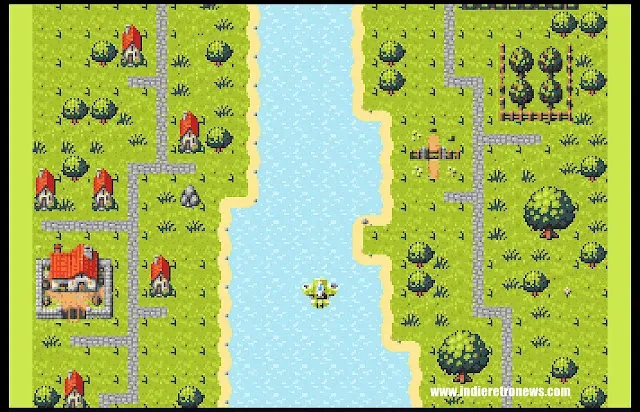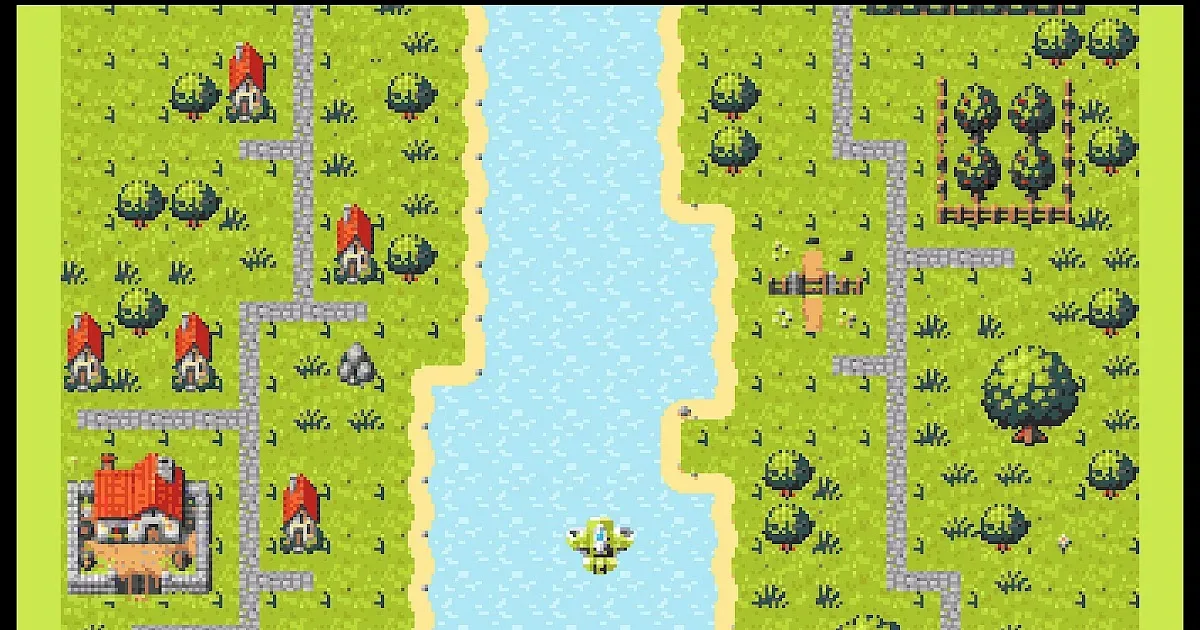
Commodore Amiga owners have a new project to keep an eye on: ChromaBlast, a vertical-scrolling shoot ’em up now available in beta form from developer GuruVision. Created by Michele Ferrigno, the game is being built for Amiga OCS/ECS and AGA hardware, with an ambition to run independently of the Amiga operating system and perform well on a stock A500+.
Its premise is as brightly direct as a good shooter should be. An alien force called the Grey Armada has learned to drain colour from the universe and use it as fuel for its war machine. The result is a trail of monochrome worlds. Players pilot the Chromacraft through enemy formations, seeking to fight back and restore colour to the landscapes left lifeless by the invasion.
ChromaBlast is a beta, not a finished release, and GuruVision is continuing to publish builds while adjusting performance, enemy patterns and hardware compatibility. That makes the current version chiefly an opportunity to see the project’s central ideas and its technical direction taking shape rather than a final statement on its balance or breadth.
A colour war with a visual gameplay hook
The project’s colour-draining fiction is not only a story wrapper. GuruVision describes “decoloration attacks” that warp environments in real time. That detail suggests the game’s central conflict will be represented on screen as well as in enemy sprites and stage backdrops: the hostile force is not merely attacking the player but actively changing the visual character of the world.
That is an especially appropriate idea for an Amiga production. ChromaBlast is targeting machines associated with distinctive colour graphics and screen presentation, so a game about defending colour has a natural connection to the platform. Still, the exact behaviour, frequency and gameplay consequences of these attacks have not been detailed. It is safest to view them as an advertised visual system rather than assume they alter controls, collision rules or player abilities.
The listed feature set also includes scrolling environments, large animated boss encounters and an original Amiga MOD soundtrack. In shoot ’em up terms, vertical scrolling means the action advances through a stage along the up-and-down axis, generally asking the player to read incoming formations while continually managing position. It creates a different kind of spatial pressure from a fixed-screen arena: danger can enter from ahead while the scrolling playfield limits how long a pilot can linger in one safe area.
Bosses are another important part of the package. GuruVision describes them as massive and animated, though no specific boss designs or fight mechanics have been confirmed. Their presence matters because boss encounters can serve as a punctuation point in a scrolling shooter, shifting focus from clearing formations to recognizing a larger threat’s movement and attack rhythm.
Combos are tied to evolution
ChromaBlast’s most notable gameplay system is described as combo-driven evolution. Players control the Chromacraft, and building combos is linked to its evolution. The announcement does not explain the precise requirements for starting or sustaining a combo, nor exactly how the craft evolves, so there is no basis to promise a particular upgrade tree, weapon type or scoring threshold.
Related coverage includes ChromaBlast Beta Brings AI-Assisted Vertical Shooter Action to Classic Amiga Hardware.
What can be said is that this wording points to a feedback loop beyond simple survival. A combo system generally rewards sustained successful play, such as maintaining offensive momentum or avoiding interruption. Connecting that momentum to evolution potentially gives the player a reason to pursue consecutive successes for more than a high score alone. It could make moment-to-moment performance part of how the Chromacraft develops during play.
That distinction is useful for prospective players. A conventional pick-up system may allow power to come chiefly from collecting items. A combo-linked progression system instead makes consistency central to gaining or retaining momentum. Whether ChromaBlast ultimately proves demanding, forgiving or flexible in that respect will depend on the details still being refined in beta.
What OCS/ECS and AGA support means here
The hardware targets are a major part of the story. OCS/ECS refers to Amiga chipset families used by earlier systems, while AGA identifies the later Advanced Graphics Architecture family. By naming both, GuruVision is positioning ChromaBlast across more than one generation of Amiga hardware rather than limiting it solely to a later machine class.
The developer also says the game uses custom 68000 assembly and C code. The Motorola 68000 is the processor family associated with the Amiga systems in question. Assembly language is a low-level programming approach that can give developers very close control over a machine’s operations; C is a higher-level language commonly used for performance-minded software. Neither language alone guarantees a game’s speed or compatibility, but the stated combination illustrates that GuruVision is approaching ChromaBlast as software tailored for this hardware.
“OS-independent” is another term worth separating from an availability claim. In this context, it means the game is intended to operate without relying on the Amiga operating system. The goal is relevant to a production designed around direct control and stock-hardware performance, but it should not be read as a complete compatibility guarantee. GuruVision is still tuning hardware support, and beta software can change considerably as testing identifies edge cases.
The stated stock A500+ focus gives the project a particularly practical benchmark. Rather than framing the game around upgraded or unusually configured systems, the target is an unmodified A500+ setup. That is an ambitious compatibility goal for a scrolling shooter promising animated bosses, real-time visual effects and a MOD soundtrack. It is also precisely the sort of claim that continued beta work needs to validate across the targeted configurations.
AI assistance is disclosed, not hidden
GuruVision has explicitly disclosed that ChromaBlast was made through human-AI collaboration with Claude AI, with AI assistance identified in code and graphics. The disclosure is significant because it defines the project’s development approach without disguising the tools involved. Ferrigno is identified as the project’s creator, while the AI is described as an assistant in parts of the work.
For a game built in custom assembly and C for legacy hardware, the disclosure also invites a more grounded discussion than simply treating “AI-assisted” as a genre or a guarantee of quality. The available information supports neither an assumption that the game was made automatically nor a claim that AI created every asset or technical system. It establishes that AI was involved in code and graphics work within a human-led project.
The result will ultimately be judged by familiar game-making measures: readable action, responsive control, stable performance, interesting stage and enemy design, and whether its evolution system gives players a satisfying reason to master runs. The unusual toolchain may attract attention, but it does not replace the importance of those fundamentals.
Why the beta process matters
GuruVision’s ongoing work on performance, enemy AI patterns and compatibility is more than routine housekeeping. Each area can materially affect a scrolling shooter’s feel. Performance determines whether the visual action stays dependable when scenes become busy. Enemy patterns determine whether threats are legible and engaging rather than arbitrary. Hardware compatibility decides which of the announced Amiga owners can actually experience the build as intended.
In a game with scrolling backdrops, large animated enemies, music and environmental visual manipulation, those factors are closely linked. Technical compromises can affect animation or stage presentation; pattern changes can alter the value of maintaining combos; compatibility changes can affect the reliability of the whole experience on its stated target systems. ChromaBlast’s repeated builds therefore represent an active period of refinement, not simply a static demo being left in public view.
The project arrives amid continued interest in games and peripherals designed with older play hardware in mind. For another example of current retro-focused controller experimentation, see this look at G’AIM’E Pro and Lite lightgun prototypes. ChromaBlast approaches that broader space from the software side: it is designed around original action for classic Amiga chipsets rather than a modern game merely borrowing an old aesthetic.
What is confirmed—and what remains open
Confirmed details establish ChromaBlast as a beta vertical shooter for Amiga OCS/ECS and AGA systems, starring the Chromacraft against the Grey Armada. It has multiple levels, scrolling environments, a combo-driven evolution concept, massive animated bosses, an original MOD soundtrack and real-time decoloration effects. It is being developed by GuruVision and created by Michele Ferrigno using custom 68000 assembly and C, with disclosed AI assistance in code and graphics.
Equally important are the unanswered questions appropriate to a beta project. No final release timing, full stage count, detailed control scheme, precise evolution rules, enemy roster or definitive compatibility list has been provided in the available information. Players interested in the project should therefore treat future builds as meaningful updates, particularly where performance and hardware support are concerned.
For now, ChromaBlast’s appeal is clear: a purpose-built Amiga shooter using a colour-versus-grayscale concept that reaches into its visual presentation, coupled with a progression hook tied to sustained combat success. Its beta status leaves room for the final shape to change, but its stated goals place both fast arcade action and authentic old-hardware performance at the centre of the project.