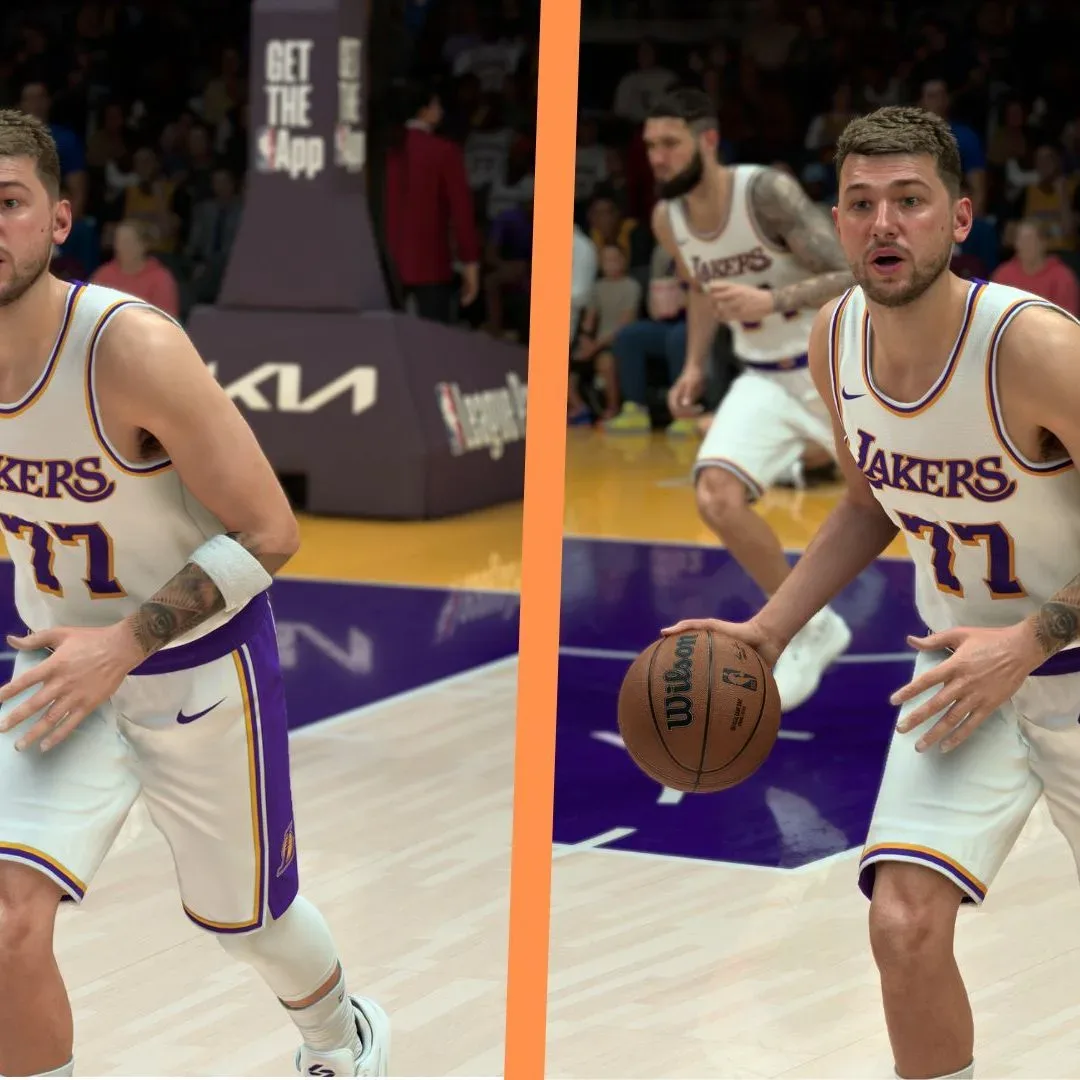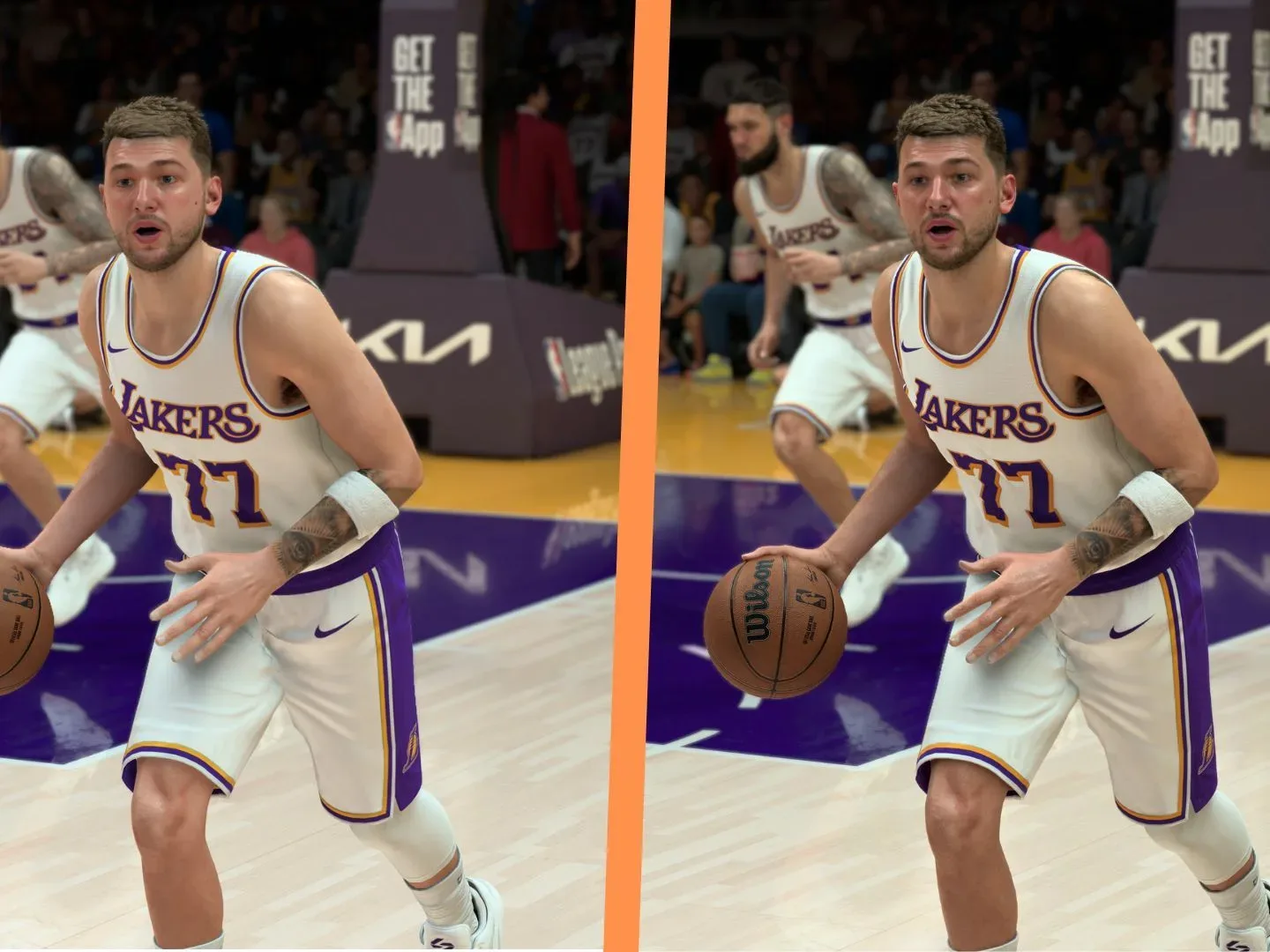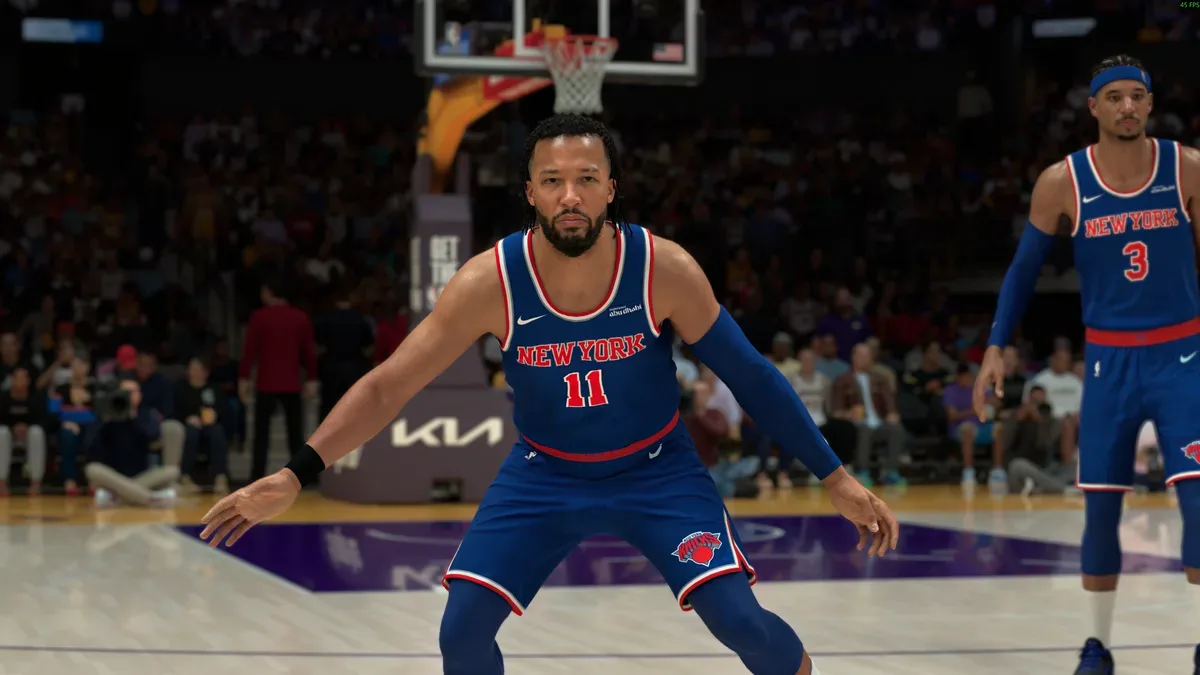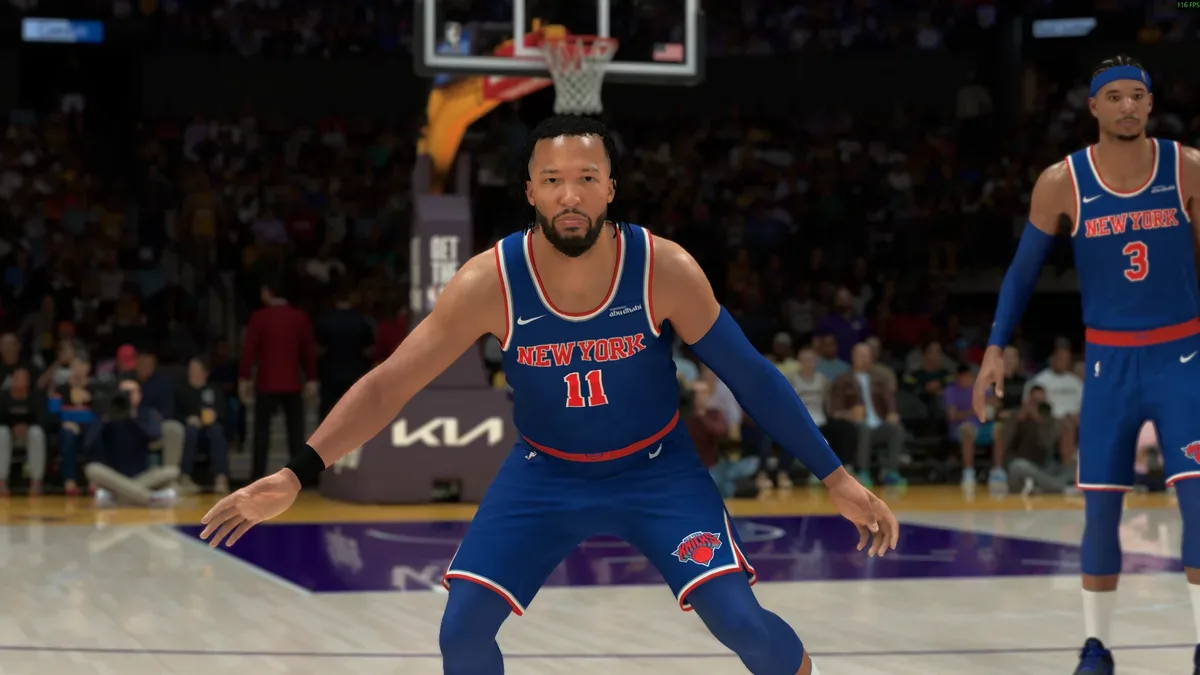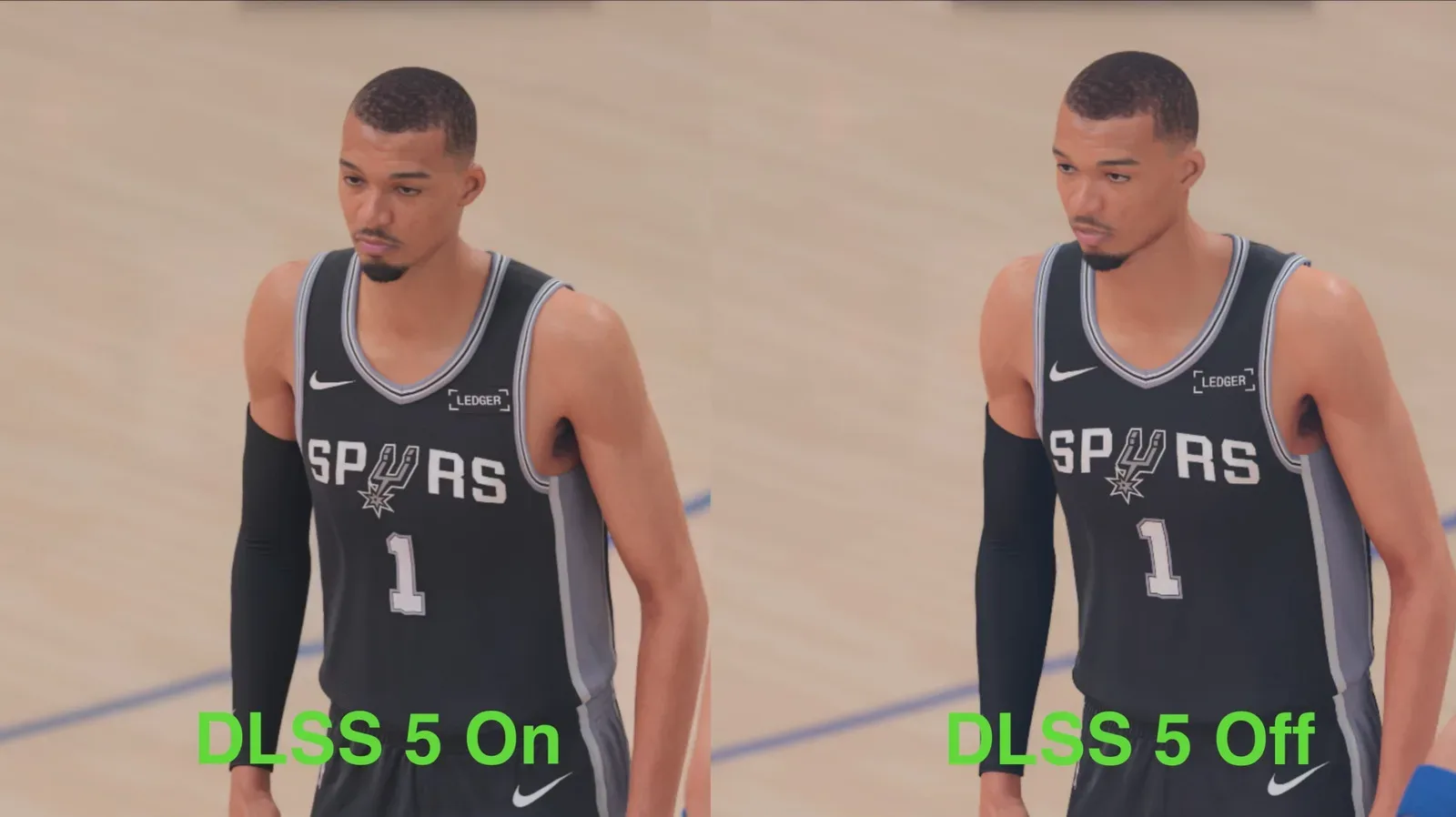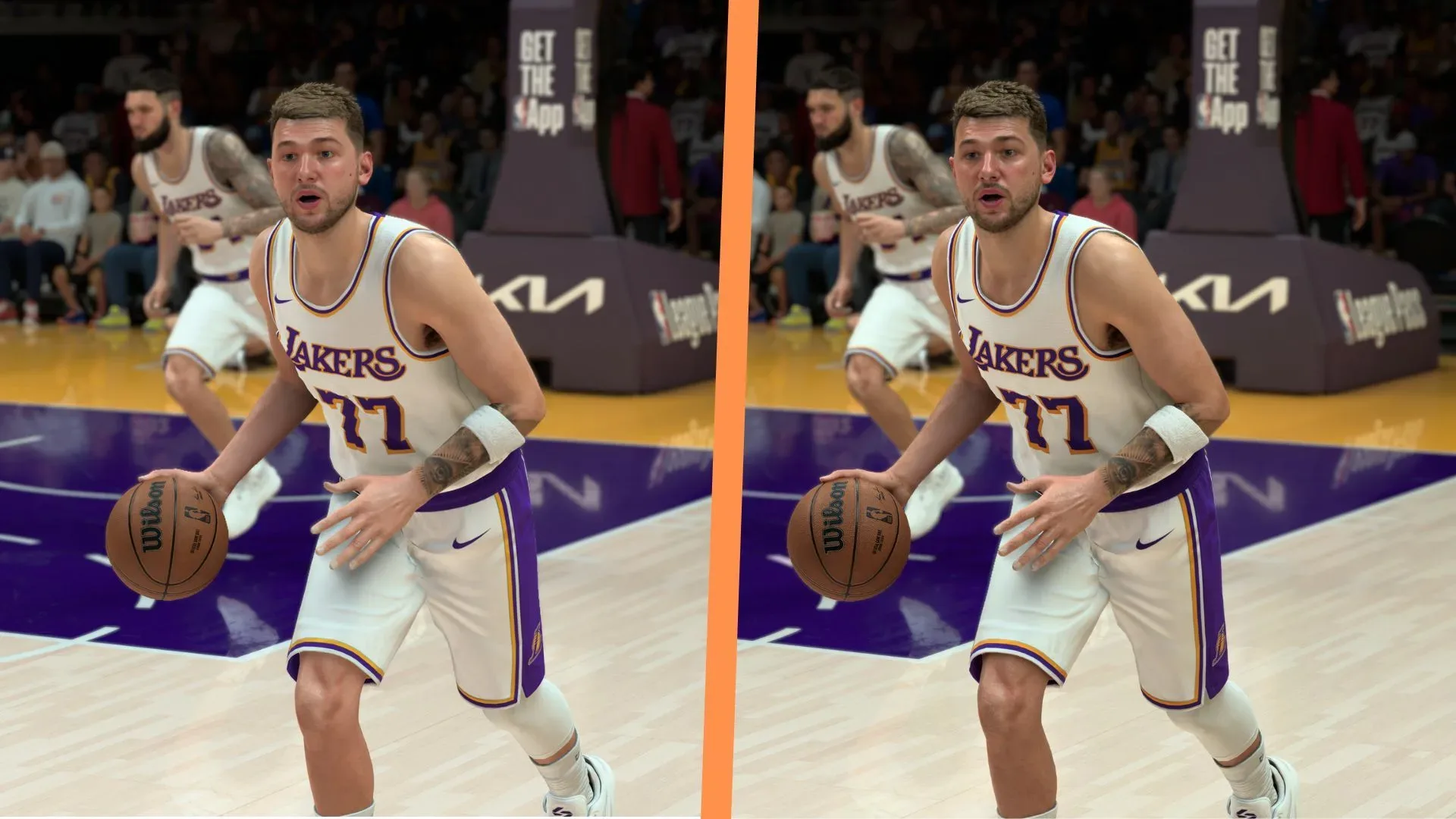
Nvidia’s DLSS 5 has made its official debut alongside NBA 2K27, and it appears to be less interested in the traditional upscaling sales pitch of “more frames for roughly the same image” than in pursuing a bolder goal: making a game look more physically, almost unnervingly, real. That ambition produces some striking results in a basketball simulation already built around broadcast-style authenticity. It also raises an awkward question for PC players: if the visual layer is expensive enough to crater native performance without frame generation, what exactly should they expect from a feature carrying the DLSS name?
At launch, NBA 2K27 is described as the only game with official DLSS 5 support. That makes it a useful, if narrow, first case study. Sports games are a relatively favorable venue for this sort of technology: arenas are packed with repeating detail, polished hardwood reflects lights and motion, crowds sit at varying distances, and the on-court camera spends much of a match far enough from players that subtle changes to faces are not always front and center.
Still, this is a new generation of Nvidia’s AI-driven rendering technology arriving under a cloud of debate about generative AI and game art. The conversation is not simply about whether an image is sharper. It is about whether algorithmic enhancement preserves an artist’s intended work, whether it introduces its own visual habits, and whether the hardware cost makes the trade worthwhile.
Where DLSS 5 appears most effective
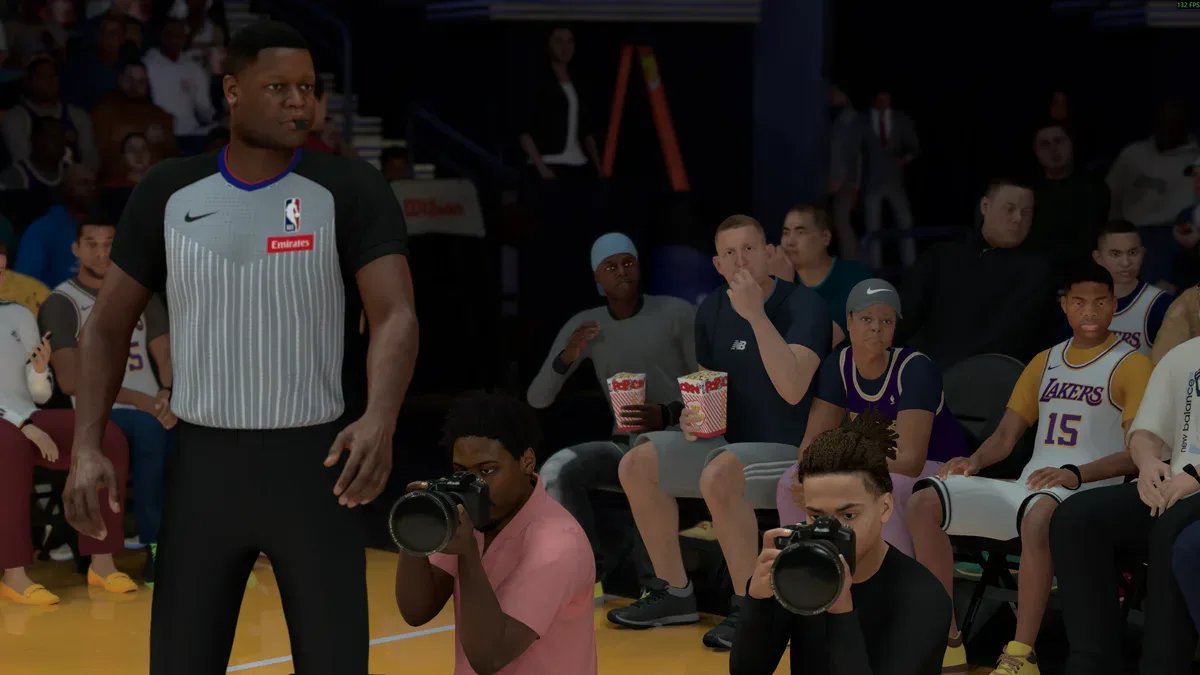
NBA 2K27’s core basketball action seems to give DLSS 5 its best material. Observations from play at launch describe a presentation that gains extra depth in arena backdrops, court surfaces, barriers, lighting, and background spectators. Rather than turning every frame into a radically transformed showcase, the technology seems most successful when it is doing its work quietly—adding tonal variation to the floor, a little more structure to surrounding objects, and greater polish to faces in the crowd.
That distinction matters. In a fast-moving match, the player’s eye is usually following the ball, a defensive rotation, a passing lane, or the mild catastrophe caused by trying a flashy dunk with precisely the wrong person. It is not conducting an inspection of every jawline in section 214. A system that improves the collective impression of an arena can therefore make a strong contribution without constantly demanding attention.
In that context, the added realism can be persuasive. The game is already aiming for a professional basketball broadcast look rather than a deliberately exaggerated arcade aesthetic, and DLSS 5’s apparent ability to deepen lighting and detail fits that target. It is less a slam dunk for every visual style than a technology whose early strengths may be tied to games that want to approximate live-action sports coverage.
That also means players should resist treating NBA 2K27 as a universal verdict on what DLSS 5 will look like elsewhere. A system that helps hardwood, stadium lights, and distant crowds may respond very differently to stylized animation, elaborate fantasy costumes, painterly environments, or close-up dramatic acting. The industry has spent decades proving that a game does not need to imitate television to be beautiful. DLSS 5’s first outing merely suggests it can complement a game that already wants that imitation.
The uncanny valley has excellent courtside seats
Close-up dialogue is where the rough edges become more noticeable. NBA 2K27 includes courtside interviews after quarters as well as career-mode scenes, putting virtual faces closer to the camera. If DLSS 5 makes those faces feel substantially more lifelike while the underlying mouth animation and lip-sync remain at a more conventional game-animation level, the mismatch becomes difficult to ignore.
This is a familiar uncanny-valley problem with a particularly modern twist. A less detailed face can leave room for viewers to accept imperfect animation as part of a game’s visual language. A hyper-detailed face makes a viewer expect more: accurate mouth shapes, natural timing, believable enunciation, and small expressions that match the spoken words. When those elements do not arrive together, added realism can paradoxically make the original weakness easier to see.
For NBA 2K27, this may be an intermittent annoyance rather than an issue that defines every game. Most of the action is basketball, after all. But it could become a more serious concern if DLSS 5 expands to dialogue-heavy single-player titles, where faces fill the screen and emotional performances carry the story. Rendering technology cannot automatically solve animation, voice direction, facial capture, or scene staging. In some cases, making one layer more convincing exposes the limitations of the layers beneath it.
That is not a small design consideration. The most useful graphics options are often the ones that improve a game without changing how its weaknesses are perceived. If a visual upgrade makes the crowd more credible but turns every cutscene into an accidental audition for “almost human,” developers will have to decide whether the enhancement belongs in every situation, or whether it needs careful tuning by scene and camera distance.
Performance is excellent—if Dynamic Multi-Frame Generation joins the lineup
The launch performance picture is just as split as the visual one. In one set of informal gameplay sampling, NBA 2K27 was run on a PC equipped with a PNY Slim RTX 5080. The game does not include a built-in benchmark, so the numbers should be understood as observations from a quick-play New York Knicks versus Los Angeles Lakers match, not a repeatable lab result with perfectly identical sequences.
At maximum settings, 4K resolution, ray tracing enabled, and Dynamic Multi-Frame Generation active, the experience was reported to play smoothly. Frame rates commonly sat around 222fps and reached a peak of 238fps. There were fluctuations rather than perfect consistency, plus occasional screen tearing noticed over character models. Notably, no obvious ghosting or loose, floaty input response was observed during that play.
Those results make the full package sound impressive. For players whose priority is a fluid high-refresh presentation, DLSS 5 combined with Nvidia’s frame-generation stack may deliver exactly the sort of spectacle a modern high-end PC is expected to produce. It is a reminder that generated frames are not a side feature in this setup; they look much closer to the foundation holding the performance story together.
Anyone building a living-room PC for sports games may also want to remember that smooth performance is only half the multiplayer equation. The rest is protecting the peace when somebody claims the controller “definitely ate” a pass input. Our guide to the unwritten rules of couch multiplayer has no DLSS setting, but it may prevent a more serious frame-rate dispute: the social kind.
Without frame generation, the numbers tell a harsher story
With the same broad game settings but Multi-Frame Generation disabled, DLSS 5 reportedly fell to roughly 49fps to 55fps on that RTX 5080 system and did not reach 60fps. Switching DLSS 5 off under the same conditions was said to produce about 150fps to 165fps. Because the gameplay slices could not be exactly duplicated, the comparison is not scientific proof. It is nevertheless a dramatic enough gap to make the underlying concern impossible to dismiss.
Historically, DLSS branding has been closely associated with easing performance pressure through AI-assisted upscaling. If DLSS 5’s more ambitious visual processing demands substantial horsepower and depends on generated frames to look performant, it functions differently from what many PC players will expect when they see the familiar label in a settings menu.
That does not automatically make it useless. Plenty of PC features are optional luxuries. Ray tracing can be beautiful while remaining too costly for a particular player’s preferred frame-rate target. Higher resolutions, heavier shadows, and ultra-quality textures all involve trade-offs. But DLSS 5 may be asking for a reframing: players may need to treat it as a separate visual enhancement layer, not as a straightforward route to a higher frame counter.
The early numbers also leave open major questions about hardware scaling. If an RTX 5080 can struggle to sustain 60fps with DLSS 5 enabled and frame generation off in this scenario, more modest hardware could face difficult compromises. Nvidia’s rendering tools have evolved considerably over time, so launch behavior is not necessarily permanent behavior. A report that an earlier DLSS 5 demonstration at GTC used two RTX 5090 cards remains unconfirmed, but, if accurate, it would underline how demanding the technology may have been during its development.
An optional layer, not an obvious necessity
The other complication is that NBA 2K27 reportedly looks good before DLSS 5 enters the locker room. Contemporary sports simulations already devote enormous effort to arenas, uniforms, players, crowds, broadcast lighting, and movement. They can include uneven face models or less animated spectators, certainly, but those imperfections have not stopped the series from delivering a convincing basketball atmosphere.
That makes the value proposition personal. Some players will welcome an extra layer of polish, especially when it is paired with Dynamic Multi-Frame Generation on powerful Nvidia hardware. Others may prefer the image authored directly by the game’s artists, particularly if the AI treatment occasionally looks too sharp, too synthetic, or distractingly artificial during a close-up.
For now, DLSS 5 looks like a fascinating technical experiment with a very specific opening role. In NBA 2K27, its arena-level enhancements can contribute to a convincing photoreal effect. Its dialogue close-ups reveal the danger of improving one piece of a visual pipeline in isolation. And its performance results suggest the feature is most comfortable when Nvidia’s wider frame-generation machinery is doing significant work.
PC graphics settings have never been short on choices that make everyone stare at menus longer than the actual game. DLSS 5 adds another, unusually philosophical one: do you want the clearest possible version of the game as built, or a more aggressively enhanced version that can look remarkable, occasionally look strange, and may ask a lot more of your GPU? For NBA 2K27 players, the sensible answer is likely to be the same as a well-defended possession: watch the situation closely, then make the right pass.
For another look at how emerging display technologies are chasing more shared and immersive experiences, see our coverage of Venice Immersive’s evolving XR focus.