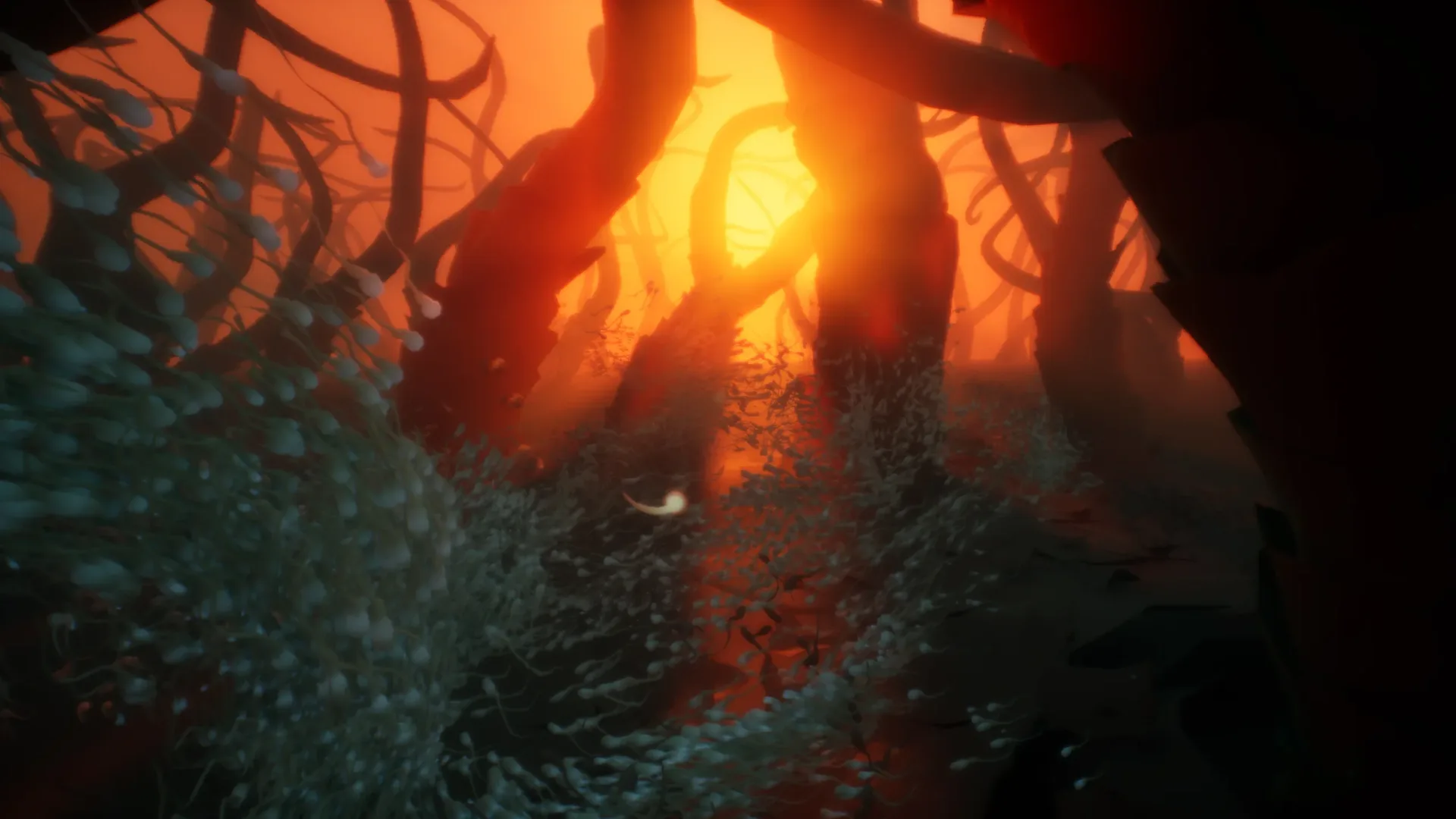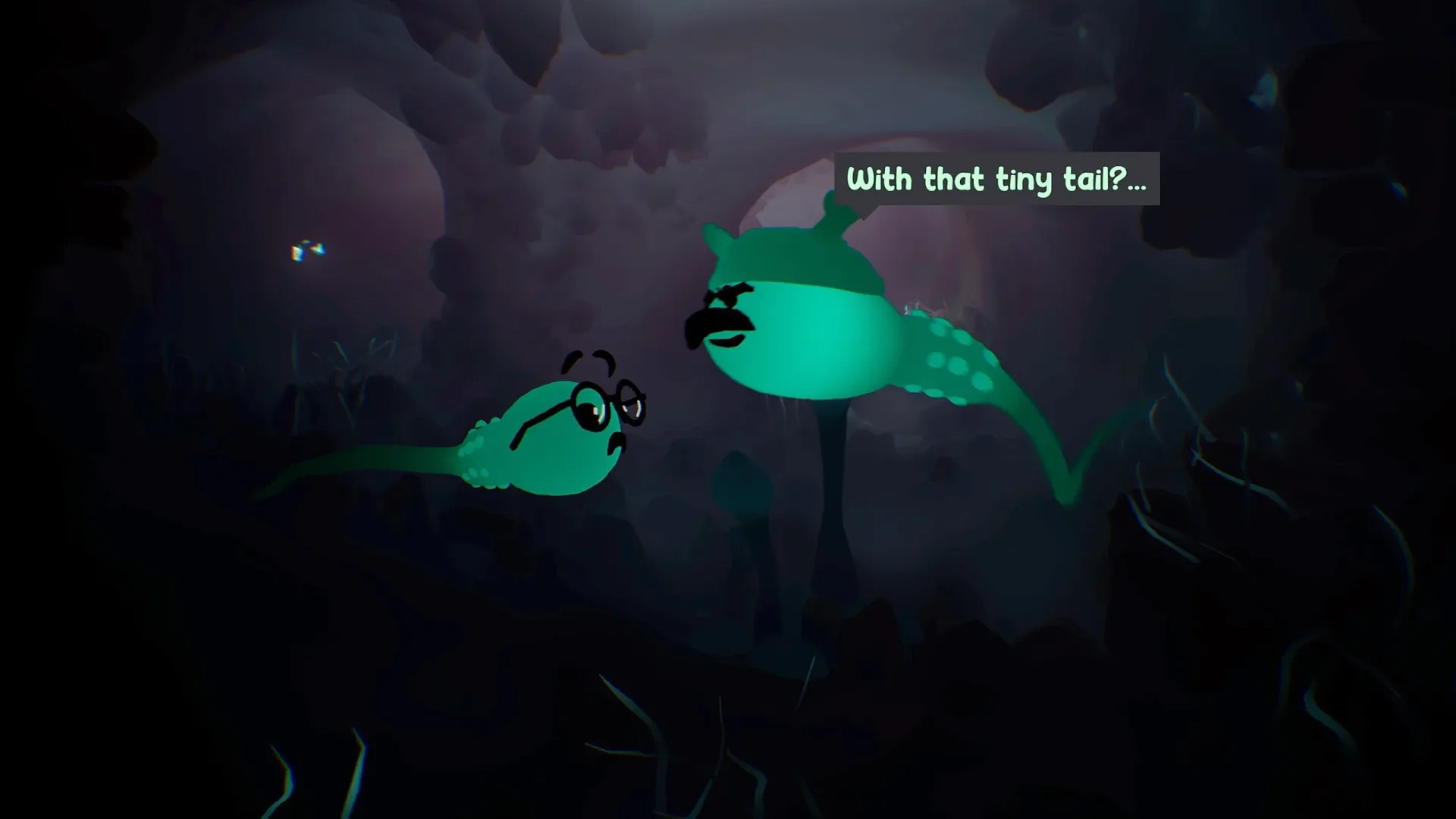
Become, the upcoming third-person adventure that puts players in control of one of millions of sperm on a microscopic trip through the human reproductive system, has passed 145,000 Steam wishlists. The game is planned for Steam in 2026, with development credited to ProtoSeed Games and Valentin Wirth.
The wishlist milestone arrives alongside a run of showcase recognition. At Tokyo Game Show in September, Become was one of seven Gold Award recipients in the Selected Indie 80 showcase. It also received the Pocky Award from the event’s official ambassador and became a finalist in Sense of Wonder Night. Elsewhere, at Game Access in Brno, the project won Best Pitch and was nominated for Best Game.
A very small journey with unusually large stakes
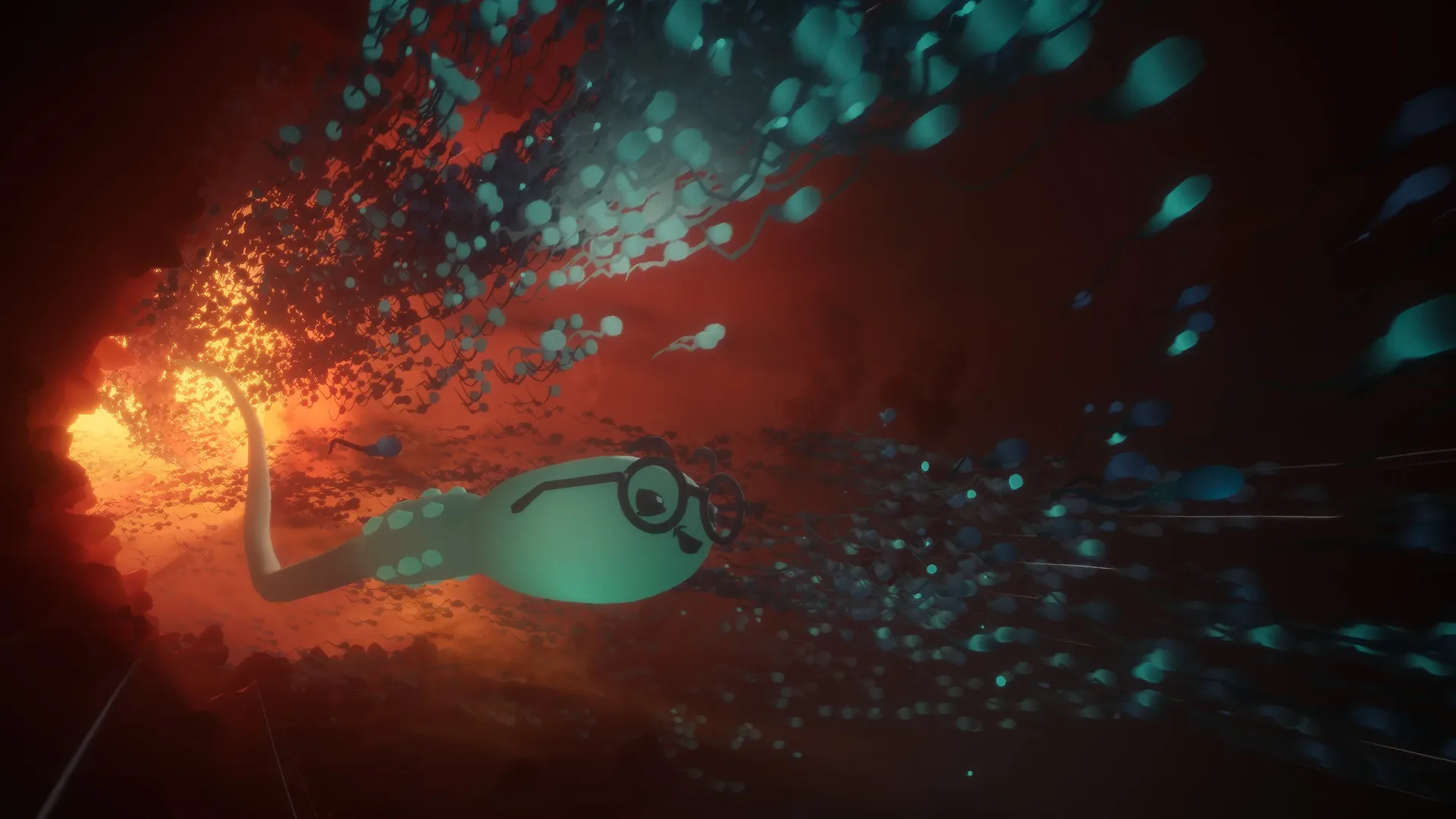
Become frames its adventure at a microscopic scale, but its premise is deliberately direct: players are one sperm among millions attempting to survive a hazardous internal journey. The game is described as a short, linear, single-player experience viewed from a third-person perspective. Its estimated length is two to three hours.
That concise structure is important context. Become is not being positioned as an open-ended simulation or a sprawling role-playing game. The available details instead point to a focused obstacle-course adventure, built around movement, survival and incremental growth. Players will have to navigate currents, avoid immune cells, endure acidic areas and deal with antibody attacks while progressing toward membranes that must be breached.
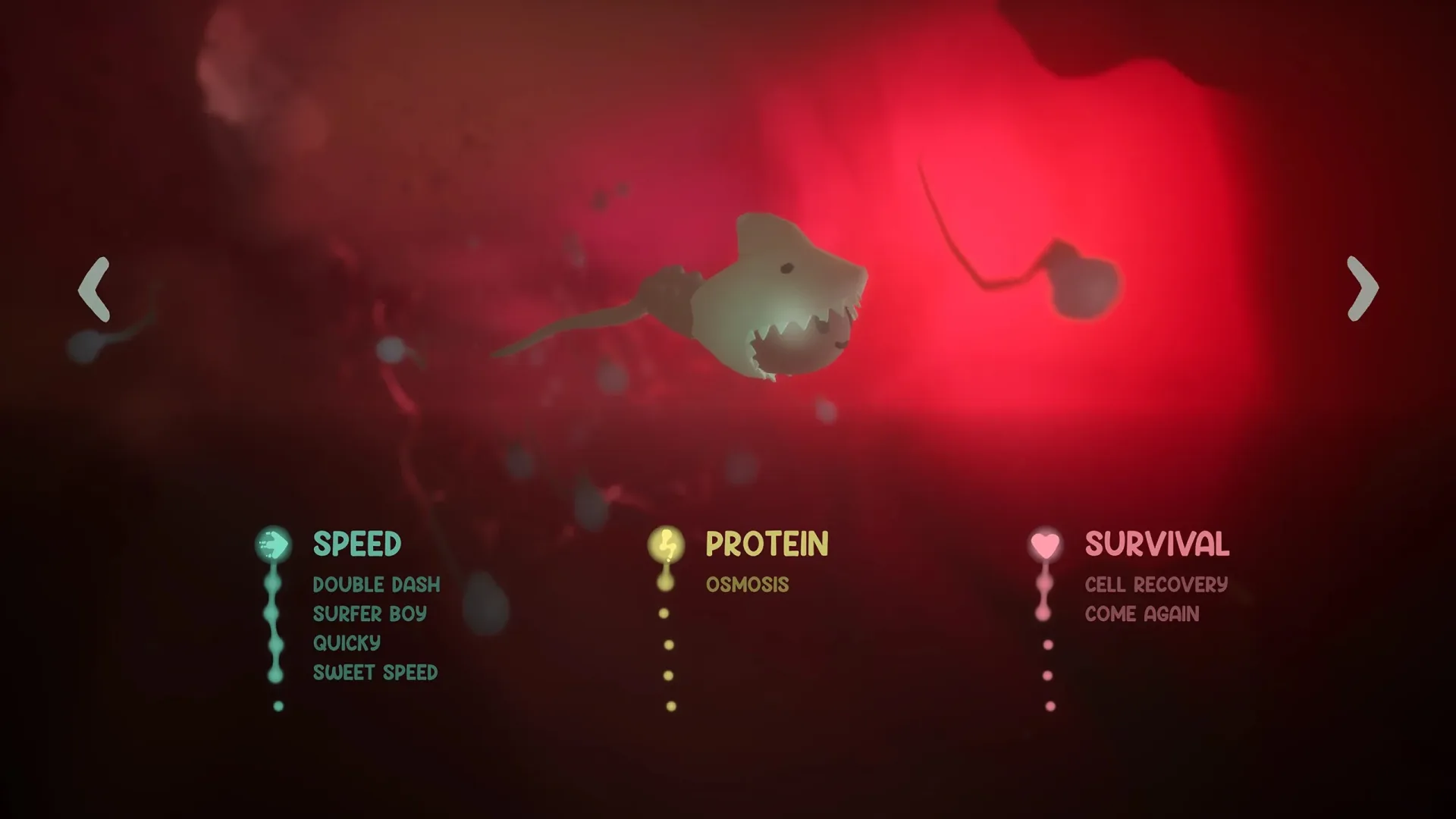
The game’s central systems are tied closely to that premise. Sugars and proteins can be collected, and these resources are used in the broader process of evolving the player’s cell. The sperm can also be customized visually. While cosmetic customization changes appearance rather than necessarily signaling a gameplay benefit, evolution is presented as part of getting stronger for the journey ahead.
Another stated mechanic involves rescuing fellow sperm. These buddies can help overcome obstacles, suggesting that progression will sometimes depend on gathering assistance rather than simply reaching the next point alone. It is a notable fit for a game whose basic concept begins with overwhelming numbers: the player’s character is an individual in a crowd, yet cooperation remains part of the route forward.
What the gameplay description tells us
The terms around Become’s play structure are worth separating. A third-person adventure generally means the player sees their character from an external camera rather than directly through that character’s eyes. In this case, that perspective could make sense for reading hazards around a tiny moving character, including hostile immune cells and environmental currents.
Linear, meanwhile, means the experience is designed around a directed progression path rather than multiple large regions that can be explored in any order. That does not rule out distinct obstacles, collectibles or moments of problem-solving. It does indicate that the stated objective is a crafted run through a particular journey, not a sandbox of branching destinations.
Related coverage includes Become Passes 145,000 Steam Wishlists After Showcase Awards.
The survival threats described for Become also establish a recognizable gameplay loop: move through the environment, avoid or escape dangers, collect useful materials, improve the character and find ways past barriers. Acidic baths and antibody attacks are not just thematic scenery in the game’s description; they are identified as challenges to survive. Currents, meanwhile, are something to master, making environmental movement as significant as enemies.
It remains unclear exactly how deep the evolution system goes, how companions function at each obstacle, or whether the sugar and protein pickups support different upgrades. Those details have not been outlined. The safer reading is that Become has specified its major ingredients without yet spelling out every rule and interaction behind them.
Why 145,000 wishlists matter — and what they do not prove
A Steam wishlist is a user marking a game for later interest on Valve’s PC storefront. It can be a useful measure of audience awareness before release, especially for an independent game trying to cut through a crowded platform. Clearing 145,000 wishlists means Become has attracted substantial advance attention for a project with an intentionally strange, instantly understandable hook.
However, a wishlist should not be treated as a sale, a pre-order or a guarantee of commercial performance. It shows that users chose to track the game, not that they have purchased it. Wishlists can be affected by trailers, festival visibility, social sharing and the unusual nature of a premise, as well as by a player’s genuine intention to buy. The milestone is therefore best understood as a strong interest signal ahead of launch rather than a final verdict on the game’s eventual audience.
That distinction is especially relevant because Become does not yet have a specific release day. Its stated release window is 2026, and its Steam platform plan is the only platform information currently provided. Players looking for an immediate Steam release may want to check the platform listing for updates rather than mistake the wishlist number for confirmation that launch is imminent. For another example of the shifting release calendar around PC games, see our coverage of Hubert’s Steam launch following a short delay.
Showcase awards give the project several kinds of validation
The accolades attached to Become cover more than one aspect of presenting a game. The Selected Indie 80 Gold Award at Tokyo Game Show places it among seven Gold Award winners in that showcase. The Pocky Award adds another piece of recognition from the event, while the Sense of Wonder Night finalist placement identifies the game as a project selected within that programme.
At Game Access in Brno, the Best Pitch win speaks specifically to how the project was communicated and presented. A pitch award is different from an overall game award: it does not independently establish how the finished game will play, but it does recognize the team’s ability to convey its idea. The Best Game nomination is a separate acknowledgement of the project itself within that event’s awards.
Taken together, these honors help explain why the game’s visibility has grown. Become has a concept that can be communicated in one sentence, but the details add a mechanical foundation beneath the initial joke or shock value. Rather than stopping at “play as a sperm,” the game describes hazards, collectibles, growth, companions, visual customization and a clear destination. Showcase juries and viewers have had several opportunities to encounter that fuller pitch.
A premise that must balance comedy, clarity and challenge
Become’s setting is plainly designed to be provocative and memorable, including its tongue-in-cheek release-window wording. Yet the announced design has to do more than make an initial impression. A two-to-three-hour linear game has limited time to establish movement, escalate threats, introduce progression and make its companion-based obstacles feel worthwhile. The promise of acidic baths, antibodies, immune cells, currents and membranes gives the journey a defined escalation path on paper.
The remaining question is execution, and the supplied information does not answer it yet. There is no confirmed price, no announced console version, and no detailed breakdown of upgrades, difficulty settings or accessibility options. Likewise, the awards and wishlist count do not substitute for a finished game. They establish attention and early recognition, not a review score or proof of how the complete release will be received.
For now, Become’s clearest appeal is a combination of an unusual biological setting and accessible adventure-game fundamentals. Players will be asked to survive a hostile microcosm, build up their cell, bring allies through obstacles and keep moving toward the ultimate breakthrough. With more than 145,000 Steam users now watching it, the game has already won the harder-to-quantify battle for curiosity. The next meaningful milestone will be turning that curiosity into a completed 2026 launch.