Nintendo’s Switch 2 price has gone up, but the average amount US consumers paid for the hardware in September barely moved year over year. Retail tracking figures put the average price paid per Switch 2 unit at $498, up just 2% from $486 in September 2025.
That is a striking result beside the other major console platforms. The average price paid for a PlayStation 5 was reported at $646, a 17% increase from $551 a year earlier. Xbox averaged $663, up 33% from $497. Switch 2’s $12 shift in the tracked average is notably modest, particularly because Nintendo implemented a $50 price increase for the console.
The apparently contradictory numbers have a fairly straightforward explanation: the product mix changed. Nintendo transitioned away from the Mario Kart World bundle and toward a standalone Switch 2. A console’s advertised price and the average price consumers pay across all units are related, but they are not interchangeable measurements—especially when a bundle enters or leaves the sales mix.
The number to watch is average price paid, not simply the sticker price
“Average price paid per hardware unit sold” is an average across the consoles sold during a defined month. It is useful for showing what customers actually spent at retail, but it does not identify every configuration, promotion, or package behind that result.
For Switch 2, the 2% year-over-year increase does not mean the retail price rise vanished. Nor does it establish that the standalone model costs the same as the older bundle. It means the combined mix of Switch 2 units sold in September 2026 averaged $498, compared with $486 for the mix sold in September 2025.
That distinction matters because bundles have two effects at once. They may carry a higher transaction price than a base console, and they include software or other extras that alter the buyer’s value proposition. When Nintendo removes a bundle that included Mario Kart World, buyers receive less in the box than before. Yet a larger share of sales can move to a lower-priced standalone configuration, holding the overall average relatively steady even after a base-price increase.
In plain English: a shopper may face a higher price for the standalone Switch 2 than before, while the monthly retail average still rises only a little because last year’s comparison included more bundle sales. It is a reminder that an average is a description of the market basket sold, not a one-line verdict on whether an individual deal became better or worse.
Why the bundle change changes the comparison
The Mario Kart World bundle added a game to the Switch 2 package. Its removal shifts the comparison from a product containing console hardware plus software to a console sold on its own. That creates two separate questions for potential buyers.
Related coverage includes Switch 2 Spending Barely Moved After Price Increase as Nintendo Bundle Shift Changes the Math.
- What is the upfront cash price? The $50 Switch 2 increase directly affects that question.
- What arrives in the box for that price? The move away from the game bundle affects this one.
Those questions should not be collapsed into the average-price figure. The figure is important for understanding September’s retail trends, but buyers deciding whether to purchase need to compare the current standalone package against whatever bundle, game purchase, or special-edition option is actually available to them.
For Nintendo, the change appears to have softened the reported change in average spending while allowing the company to sell a simpler standalone hardware offering. The result was characterized as a smart bit of product management, and the data explains why: the formal price increase did not translate into a proportionally large year-over-year rise in the monthly amount customers paid on average.
PS5 and Xbox tell a different pricing story
The September figures also show that Switch 2 is not the only console affected by higher pricing. Sony increased PS5 prices by $100 and PS5 Pro prices by $150. Xbox price increases included £130 for the 512GB Series S and £170 for 1TB Series X|S models. The reported average-price results were substantially higher on both platforms than Nintendo’s 2% year-over-year move.
PS5’s average rose $95, from $551 to $646. Xbox’s rose $166, from $497 to $663. These results cannot, on their own, tell us precisely how much each platform’s increase came from list-price changes versus the mix of models sold. Higher-priced versions making up a larger share of sales can pull a monthly average upward, just as the disappearance of a bundle can change the shape of Nintendo’s average.
Still, the gap is revealing. Across the three platforms, Switch 2 had the smallest reported change in average price paid in September. The reported backdrop for the wider increases is ongoing global RAM shortages. RAM, or random-access memory, is a type of computer memory used by devices while software is running. Shortages can raise costs within a hardware supply chain, though the retail figures here show how each manufacturer’s product lineup and packaging decisions can produce very different outcomes for the price shoppers ultimately pay.
A higher-priced Zelda system could change next month’s average
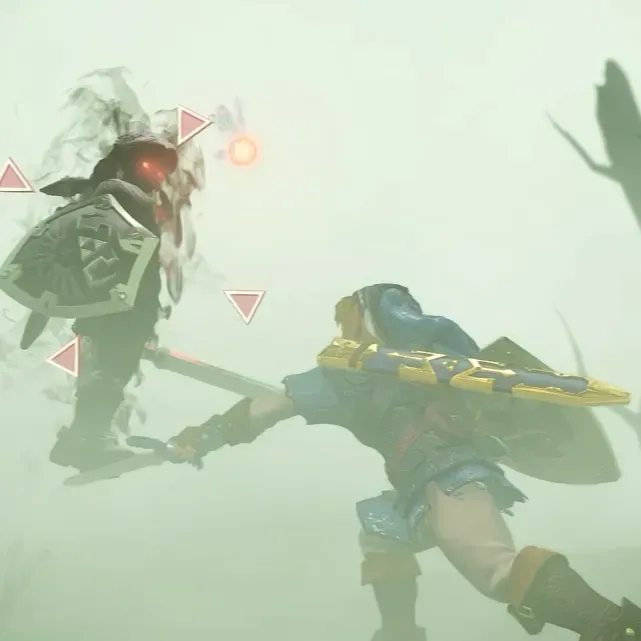
September may not be a durable benchmark. Switch 2 is entering its second holiday season, and an upcoming The Legend of Zelda: Ocarina of Time remake is tied to a Zelda 40th anniversary Switch 2 console. That system is set to cost $20 more than the base console.
If that edition accounts for a meaningful portion of Switch 2 sales, it could push the average price paid upward in the following month. That would not necessarily signal another broad Switch 2 price change. Instead, it would reflect another product-mix shift—this time toward a more expensive special edition.
Availability is an equally important uncertainty. A higher-priced edition can only influence the average to the extent that consumers can buy it and it represents enough of the month’s sold units. The available information does not establish how many systems Nintendo will offer, how many will sell, or what share of Switch 2 purchases they will represent. It is therefore sensible to treat a potential increase in the next figure as a possibility, not a prediction carved in Triforce stone.
What buyers should take from the data
For prospective Switch 2 owners, the practical lesson is not that the console escaped inflation or that the price rise is insignificant. The lesson is to examine the exact package. A lower average across a month does not restore the value of a bundle that included a game; likewise, a higher average next month would not automatically make every base unit more expensive.
- Check whether the unit is standalone, bundled with software, or a special edition.
- Compare what is included, not just the console’s headline price.
- Separate a one-off edition premium from a permanent base-model price increase.
- Remember that regional purchase details can matter when looking beyond local retailers; this guide to cross-border buying checks for Nintendo hardware and games outlines the kinds of region, tax, and return questions worth resolving before checkout.
For the industry, September’s numbers are a compact example of why hardware pricing deserves more than a look at the MSRP. MSRP is the manufacturer’s suggested retail price: the published reference price for a given model. Average selling price, as represented here by average price paid per hardware unit, describes the realized retail result across the configurations consumers selected. A bundle, a premium edition, and the proportion of each model sold can all change that result.
Nintendo’s September outcome is therefore less mysterious than it first appears. Switch 2’s $50 increase and the move away from the Mario Kart World bundle point in different directions when measured through an average. The first raises the cost of the console; the second changes the composition of the sales being compared. With the Zelda anniversary model waiting in the wings, the next month’s number may offer another useful demonstration of how much the box—not only the base hardware—can shape the headline.