Buying from another country can expand your options, but an attractive listing is only the starting point. The important question is not whether a game looks cheaper in another currency. It is whether the exact item will work with your console, arrive with the promised contents, clear customs at an acceptable total cost and remain recoverable if the listing is wrong.
The six games in this guide illustrate three different kinds of risk. Nintendo 64 cartridges require attention to physical region differences and video standards. Original PlayStation 2 discs are generally region-specific and must match the console. Standard Nintendo DS cards are more flexible, but a buyer still needs to distinguish original DS software from DSi-exclusive products and verify the actual edition. Taxes, duties and carrier fees are separate questions from compatibility, so check them independently before checkout.
Start with the console, not the listing
Write down the hardware you intend to use before searching. Record the console model, market or region, display connection, television standard and whether the system has been modified. Also decide whether your priority is playing the game, collecting a particular regional edition, or obtaining a complete package. Those goals can justify different levels of risk.
A North American Nintendo 64 owner considering Super Mario 64 or The Legend of Zelda: Ocarina of Time should not treat a Japanese or PAL cartridge as an ordinary substitute. Japanese and North American cartridges use different physical shell details, while PAL releases also raise video-timing and display questions. A cartridge that can be inserted after a hardware alteration is not automatically a normal, unmodified match for the console.
PlayStation 2 requires an even firmer match. Identify the console’s market from its model information, documentation or original packaging, then compare that with the disc and case. A North American console should not be assumed to run a PAL or Japanese copy of Shadow of the Colossus or God of War merely because the seller tested the disc successfully on another PlayStation 2.
For Nintendo DS, identify whether the intended hardware is a standard DS, DS Lite, DSi or DSi XL. Nintendo says older DS and DS Lite software is generally region-free, while cards made exclusively for DSi and DSi XL are region-locked. That distinction matters more than a vague listing statement such as “works worldwide.”
- Identify your console model and market before contacting the seller.
- Decide whether working compatibility, regional collecting, language or completeness matters most.
- Treat modified-console compatibility as a separate question and ask what modification is installed.
- For DS purchases, identify whether the hardware is a DS, DS Lite, DSi or DSi XL.
Separate Nintendo 64, PlayStation 2 and DS checks
Nintendo 64 imports need several checks at once. Ask for clear images of the cartridge front, rear, edge and product code. Compare the shell shape and label information with a reliable regional reference. PAL software also raises video-timing questions that a seller who tested only on a different television or console may not have discovered. Do not confuse a cartridge that fits after a physical alteration with a straightforward match for your system.
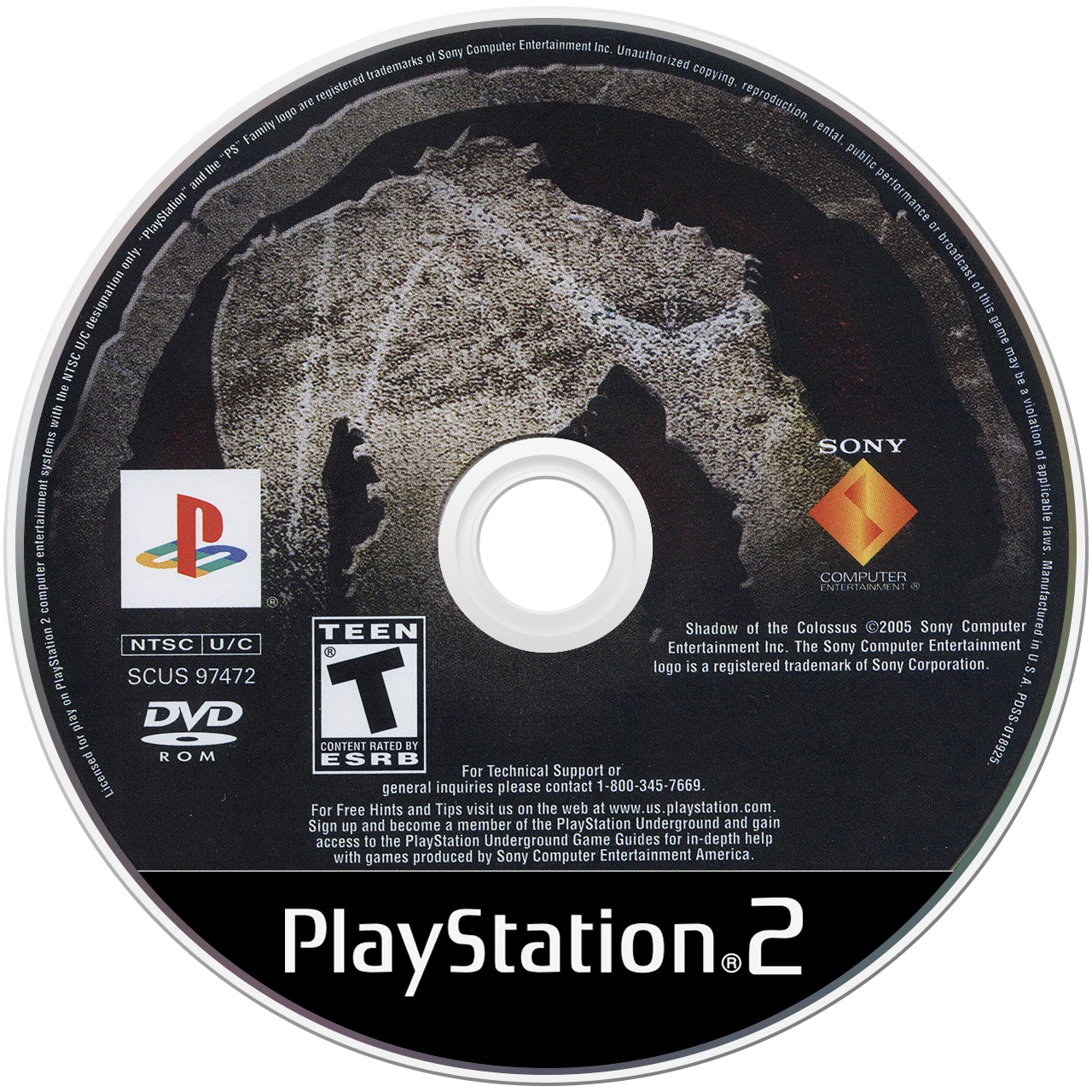
For PlayStation 2, request the disc label, inner ring, case spine, back cover and product code. The region marking and release identity should agree across those parts. The PlayStation 2 documentation identifies broadcast standard, disc region and disc format as relevant playback factors. A seller’s test on a European console does not establish compatibility with an American console.
Shadow of the Colossus and God of War each appeared in multiple regional releases, so the title alone does not identify the copy. The disc, case, rating marks and product code should tell the same story. If the seller only provides a front-cover image, the region remains unverified.
Nintendo states that standard Nintendo DS and DS Lite game cards are generally region-free in ordinary use, while DSi-exclusive game cards are region-locked. Phoenix Wright: Ace Attorney and Final Fantasy III are commonly encountered as original DS releases, but the listing still needs to identify the actual card and package. Language, edition, included inserts and regional packaging can matter even when the card runs.
- Match the N64 cartridge region, console region and display setup.
- Match the PS2 disc region to the console, not merely to the seller’s test system.
- For DS, confirm the product is a standard original DS card and check language or edition requirements.
- Ask for product-code photographs when a listing uses vague words such as import, European or Japanese.
Use photos as evidence, not authentication
A listing photograph can establish some visible facts, but it cannot answer every important question. A clear cartridge label may show a regional logo, yet it does not prove that the shell, board or label are original. A clean disc label does not prove that the data side reads. A matching case does not prove that the pictured disc belongs inside it. A sealed package does not independently prove authenticity, completeness or function.
For a cartridge, request the front and rear label, cartridge edge, product code and visible damage. If authenticity is important, ask whether the seller can provide a safe, lawful board photograph without destructive disassembly. Even a board image is only one piece of evidence; it should agree with the shell, label, release and seller history. Do not treat a screw type, seal, label texture or board glimpse as conclusive.
For a disc, inspect both surfaces under angled light, the inner ring, label, case, manual and product code. Look for deep scratches, cracks reaching the center, cloudy areas, warping or an incorrect disc in the case. A disc that reaches a title screen may still have reading problems later. Ask the seller to describe what was actually tested rather than accepting an unexplained “works.”
For complete-in-box collecting, ask which parts are included: original case, manual, inserts, registration materials, maps, cartridge or disc and any regional packaging. A front cover alone cannot establish completeness. If the listing uses stock images or photographs a different edition, stop until the actual item is shown.
- Ask which exact components are included: cartridge or disc, case, manual, inserts and original packaging.
- Request photos of every side needed to verify region and identity.
- Treat seals, labels, screws, boards and boot screens as clues rather than proof.
- Pass when photos are copied, contradictory, heavily edited or too poor to read.
- Do not treat a matching title and cover as proof that the contents belong together.

Calculate the landed cost in separate categories
Convert the listing into a total-cost worksheet before deciding whether it is attractive. Start with the item price and seller shipping. Add marketplace fees if they are charged separately, the marketplace’s currency-conversion spread, any foreign-transaction fee from your card issuer, import duty, tax, carrier brokerage or handling, domestic delivery and possible return postage.
Do not rely on a search-engine exchange estimate. A marketplace may offer its own U.S.-dollar checkout conversion, while your card issuer may use a different rate and add a fee. Refunds can also be affected by conversion timing and issuer rules. Record the displayed foreign price, displayed U.S. total, exchange rate or conversion disclosure, taxes collected and shipping charge before paying.
Customs outcomes depend on destination, merchandise value, country of origin, classification and import method. U.S. Customs and Border Protection explains that duties, taxes and other fees can apply. Low-value treatment is not a permanent promise that every parcel is automatically free of charges; U.S. import rules and low-value shipment treatment have changed. Check current CBP guidance for the shipment date and do not treat a seller’s estimate as a guarantee.
Also distinguish the seller’s shipping origin from the game’s manufacturing origin. A parcel shipped from one country may contain merchandise made in another, and customs treatment can depend on more than the seller’s location. The seller should provide accurate customs information. Never request that a game be declared as a gift, assigned a false value or described misleadingly.
Compare the imported total with completed sales and domestic listings only after adjusting for condition, edition, contents, shipping and protection. The goal is not to calculate a universal fair price. It is to decide whether the imported item still makes sense after every plausible cost category and the value of the extra risk.
- Item price.
- International shipping.
- Marketplace and payment charges.
- Currency-conversion spread and foreign-transaction fee.
- Import duty, tax, brokerage and carrier handling.
- Domestic delivery and possible return postage.
- Insurance or signature service, if separately charged.
- Potential cost of returning the item internationally.
Ask the seller questions that change the decision
Questions should resolve a specific uncertainty rather than invite a generic “yes.” Ask, “Can you photograph the product code and region mark on the actual disc?” instead of “Is this genuine?” Ask, “Which console model and region tested this copy?” instead of “Does it work worldwide?” Ask whether the pictured manual, inserts and case are included, and request a written description of scratches, cracks, corrosion, label lifting, writing or replacement parts.
For customs, ask which country the parcel will actually ship from, what shipping service will be used and whether the marketplace collects import charges at checkout. You may ask the seller to describe the merchandise and value accurately, but never request underdeclaration, a false gift designation or a misleading customs category. Those actions can create problems with customs, insurance and marketplace protection.
Ask about the return address, deadline, accepted reason codes, required tracking and who pays return shipping when the item is not as described. A seller who refuses to answer a compatibility question is not necessarily fraudulent, but the unanswered question remains your risk. Do not turn uncertainty into a purchase simply because the item is scarce.
Keep the questions inside the marketplace’s messaging system. Written answers attached to the listing or transaction are more useful than an informal promise made through an unrelated channel. Do not share payment details or accept a private invoice simply because the seller offers a lower total.
- What exact regional release is pictured?
- What is included, and what is not included?
- Which console region and model were used for testing?
- Was the item tested for reading, saving and visible damage?
- From which country will it ship?
- Are import charges prepaid, collected at checkout or potentially billed on delivery?
- What is the return address, deadline and responsibility for return postage?
- Will the seller provide current photographs of the actual item?
Choose shipping for evidence and recovery
International shipping is not only a delivery-speed choice. It determines how much evidence exists if a parcel disappears or arrives damaged. Compare acceptance scans, export scans, destination-country handoff, insurance, signature requirements and the carrier’s claim process. A tracking number that confirms acceptance but stops after export may be insufficient for a high-value item if the marketplace requires delivery evidence.
For cartridges and discs, packaging matters. Ask whether the item will be protected from case pressure, moisture and movement, and whether a disc will be secured inside its case rather than left loose. A seller’s packing promise does not replace a clear damage policy, but it can expose an avoidable risk before payment. Avoid assuming that the cheapest untracked service is sensible merely because the item itself is small.
Check the estimated delivery window and the date by which a non-delivery claim must be opened. Customs delays may consume much of a marketplace deadline. If tracking is stalled, keep all carrier updates and contact the seller through the platform, but do not close a claim merely because a new informal promise is made.
For an expensive imported copy, consider whether signature confirmation or insurance is appropriate. These services do not make a bad listing safe, but they may reduce the evidence gap when a parcel is lost or arrives visibly damaged. Confirm that the service is recognized by the marketplace rather than assuming any carrier receipt will satisfy a claim.
- Compare tracking continuity after export and destination handoff.
- Check insurance, signature and damage-claim conditions.
- Confirm the delivery estimate leaves time for a marketplace claim.
- Ask how the game and case will be protected inside the parcel.
- Avoid untracked shipping when losing the item would exceed your risk limit.
- Check whether the tracking method is accepted by the marketplace.
Read buyer protection before you pay
Marketplace protection is a process, not an automatic guarantee. Read the policy attached to the actual checkout site, including covered reasons, exclusions, deadlines, payment requirements and return instructions. eBay’s Money Back Guarantee covers many qualifying cases involving non-delivery, damage, faults or material differences, but eligibility depends on the transaction and the policy’s conditions. International purchases may be governed by the site where checkout was completed rather than the site where the listing was created.
Keep the transaction on-platform. Do not accept a request to pay by bank transfer, direct invoice, gift card, cryptocurrency or another method that removes the marketplace record. Save the listing, seller messages, checkout total, photos, tracking details and return instructions. If a claim becomes necessary, communicate through the official case process and follow its deadline.
Return economics deserve special attention. For an item that is materially different from the listing, the seller may generally be responsible for return postage under the applicable marketplace policy. A change-of-mind return can work differently, and international postage, customs paperwork or brokerage can make it expensive. Confirm the route before checkout rather than discovering that a technically available return costs more than the game.
Do not assume a marketplace guarantee is a product warranty. It may help with a transaction that is not delivered or does not match the listing, but it does not eliminate compatibility research or guarantee that a collectible is authentic. If the listing says “for parts,” “not working” or otherwise discloses the defect, protection may be narrower.
- Pay only through the marketplace’s protected checkout.
- Read the current policy and return terms for that transaction.
- Record the listing and checkout evidence before the page changes.
- Check who pays return shipping for wrong, damaged and unwanted items.
- Confirm the return country and deadline.
- Check whether the condition category limits protection.
Use a controlled arrival and testing plan
When the parcel arrives, photograph the unopened package and shipping label before discarding anything. Record visible dents, wetness, crushed corners or tampering. Open it carefully while preserving the packaging. Compare the received item with the listing photographs, description, product code, region marking, included parts and stated condition.
Test promptly, but stay within the platform’s rules and your hardware’s safe operating guidance. For an N64 cartridge, verify that the region and physical match are what you ordered and check ordinary boot and save behavior on the intended compatible setup. For a PS2 disc, confirm the console recognizes the correct regional release and inspect for damage before use. For a DS card, confirm it is the promised original DS product and check that its language and edition meet your needs.
Do not clean aggressively, polish a disc, open a cartridge or modify hardware while a return claim may be needed. Such actions can change the evidence or create a new fault. Do not force a cartridge into a slot or continue using a disc with a visible crack near the center. If the item is wrong, damaged, incomplete or incompatible because of a listing error, photograph the problem, preserve the packaging and open the official claim promptly.
Return only the same item through the required tracked method. Keep the return receipt, tracking number and photographs until the refund is complete. If the marketplace provides a label, use the instructed service unless its support team gives different written directions.
- Photograph the parcel before opening.
- Preserve packaging and compare every component with the listing.
- Document region, product code, condition and missing contents.
- Test early and within the allowed return window.
- Do not alter, repair or discard evidence before deciding whether to return.
- Keep return tracking and refund records until the case is closed.
Know when to stop before checkout
The best cross-border purchase is sometimes the one you decline. Stop when the seller cannot show the region mark or product code, when the pictured disc does not match the case, or when console compatibility depends on an unverified modification. Stop when the total cost is unknown because taxes, brokerage or currency charges are hidden. A scarce title does not make missing information safer.
Stop when the seller asks for off-platform payment, false customs information or an unsafe workaround. Stop when the only shipping option is untracked and the loss would matter. Stop when the return address, deadline or payer for return postage is unclear. Stop when the listing calls an item complete but refuses to identify the manual, inserts, case or original packaging.
Stop when the item’s identity is based on one supposedly decisive detail. A seal does not prove authenticity, a board photograph does not prove function, a matching label does not prove the board is original, and a boot screen does not prove the package is complete. If the evidence conflicts, treat the conflict as unresolved rather than choosing the most convenient explanation.
Finally, stop when the purchase only works if every optimistic assumption is correct. You should not have to assume that a PAL game will display properly, that a Japanese cartridge will fit, that a DS card is the standard version, that customs will charge nothing, or that a difficult return will somehow become affordable. Pass, save the evidence and continue searching for a listing whose important facts are observable.
- Unresolved region or console mismatch.
- Unreadable or contradictory identity evidence.
- Unknown total cost or suspicious customs request.
- No practical tracked return route.
- Off-platform payment request.
- Condition or completeness that cannot be verified.
- A total cost that no longer justifies the added cross-border risk.
- A seller unwilling to answer specific, decision-changing questions.
Cross-border buying becomes manageable when compatibility, identity, cost and recovery are treated as separate decisions. Verify the exact cartridge or disc, calculate the full landed cost, preserve marketplace protection and choose shipping that leaves usable evidence. Do not let a low displayed price conceal an unresolved region or return problem.
For Super Mario 64, The Legend of Zelda: Ocarina of Time, Shadow of the Colossus, God of War, Phoenix Wright: Ace Attorney and Final Fantasy III, the safest purchase is the one that matches your hardware and expectations before payment, not the one that requires the most generous interpretation after delivery.