Spoiler warning: This article discusses scenes, characters and a major item sequence from The Legend of Zelda: Ocarina of Time. The newly released Japanese TV spots are brief, but they include material that newcomers may prefer to discover in the game.
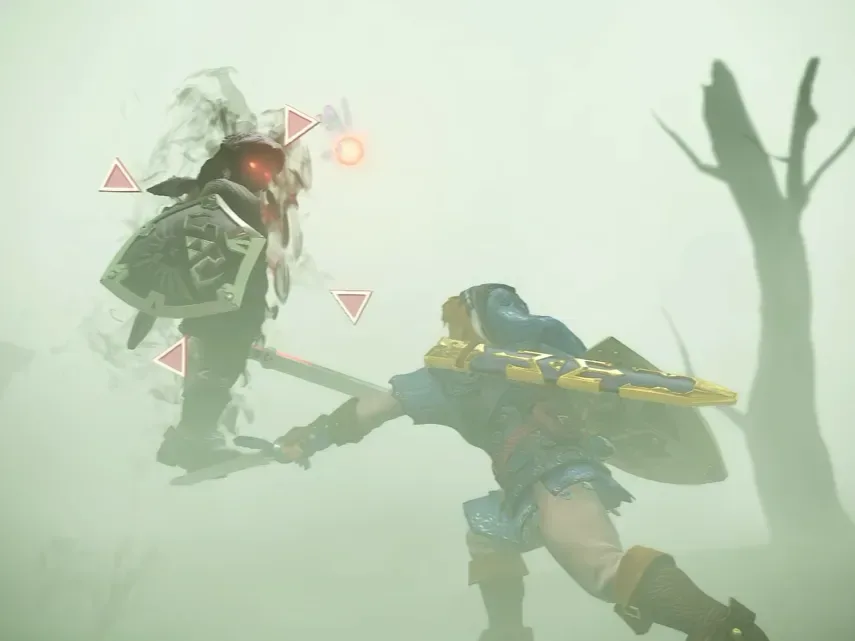
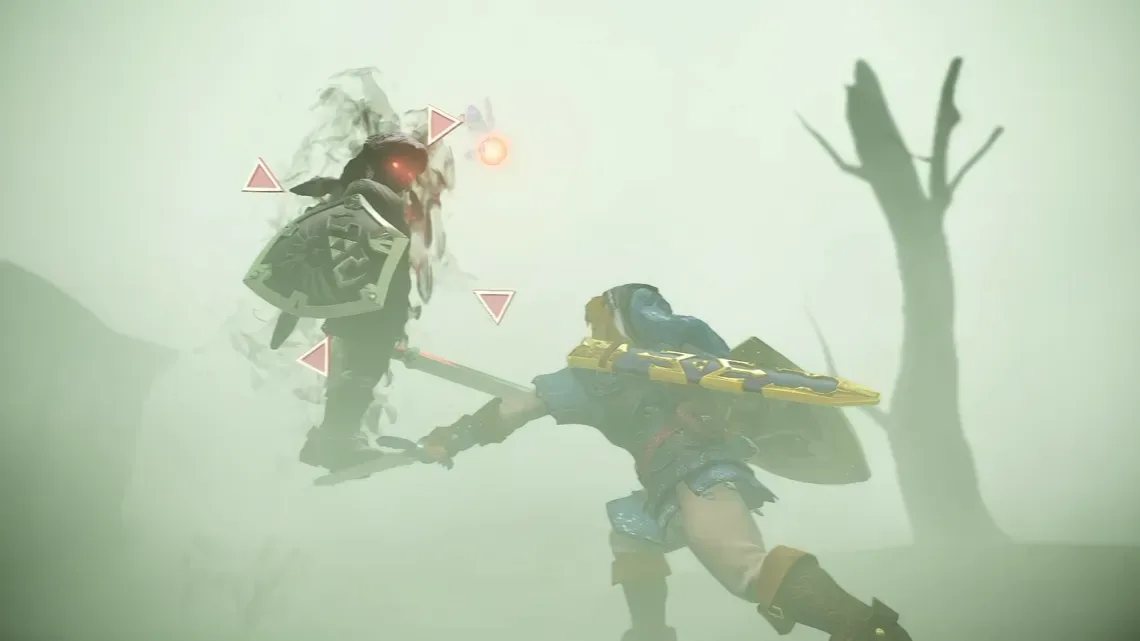
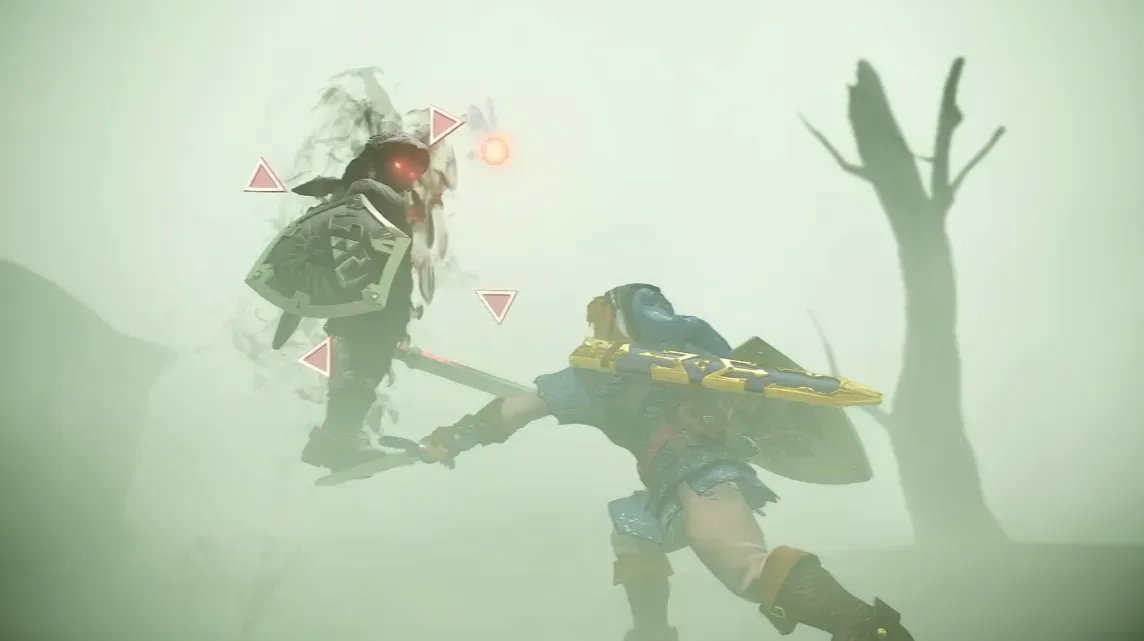
The Legend of Zelda: Ocarina of Time remake has offered a short but notable new glimpse at one of the original adventure’s most distinctive encounters: Dark Link. Two Japanese television spots for the Nintendo Switch 2 remake include footage of the Water Temple mini-boss, alongside flashes of Ganondorf, Link’s Ocarina, and the moment Link obtains the Master Sword.
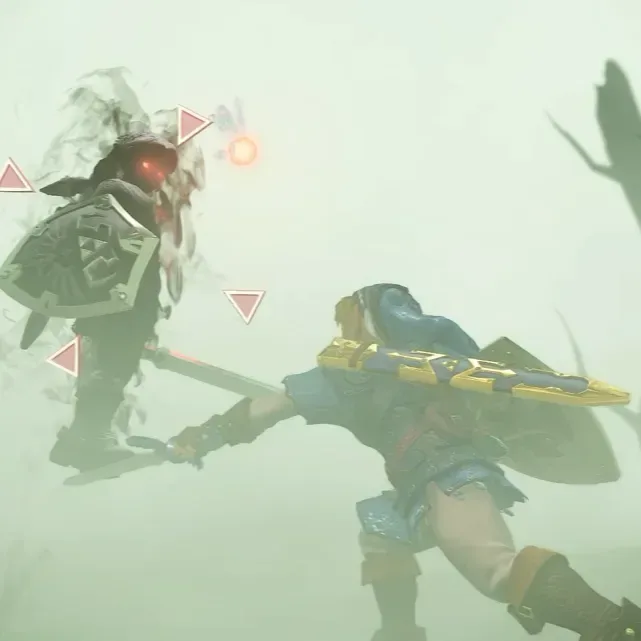
The footage does not explain how the confrontation has been redesigned or how closely it will follow the original battle. It does, however, show Dark Link emerging onto Link’s sword before looking down at the hero. It is a tiny piece of action, yet it is an evocative one for a foe defined by imitation, reflection and an unsettling ability to turn Link’s own presence against him.
The remake is scheduled to launch exclusively for Nintendo Switch 2 on November 5, 2026.
Why Dark Link remains such a memorable opponent
In the original Nintendo 64 game, Dark Link is a mini-boss: a significant enemy encounter that sits below the game’s principal dungeon boss but still functions as a major obstacle within a dungeon. The character appears in the Water Temple, a location remembered for its elaborate progression and now inseparable from its strange, quiet duel.
Dark Link is a shadowy doppelgänger of Link rather than a creature with an unrelated combat identity. He is effectively a mirror image of the player character, and that premise gives the encounter its force. The fight takes place in a foggy chamber containing shallow water and a dead tree at its center. Those details make the space feel less like a conventional arena and more like a deliberately unreal reflection: the water catches movement, the mist limits certainty, and the lone tree gives the room a stark focal point.
The new promotional footage appears to recognize that the scene’s atmosphere is as important as the opponent itself. Showing Dark Link spreading across Link’s sword is not a lengthy mechanical demonstration, but it foregrounds the idea that this foe is entwined with Link rather than simply standing across the room waiting to attack.
A fight built around the player’s version of Link
One particularly clever feature of the original battle is that Dark Link’s displayed name mirrors the player’s save-file name, as registered by Navi. Instead of presenting an entirely fixed label, the game turns the player’s chosen identity into part of the confrontation. That makes the “dark” counterpart feel more personal: the enemy is not merely another character named Link, but a distorted echo of the particular hero the player has named and guided.
Related coverage includes Ocarina of Time Remake Teaser Offers a Brief but Striking Look at Dark Link.
The original also adjusts Dark Link’s total health to match the exact number of Heart Containers Link has when the battle begins. A Heart Container is an increase to Link’s maximum health, represented by the heart-based life meter. In practical terms, that scaling means the opponent’s endurance is tied to the player’s current progression rather than being a completely static quantity for every playthrough.
That does not automatically tell us whether the remake will preserve the same system. The TV spots are too brief to establish combat rules, health behavior, difficulty tuning or any other behind-the-scenes details. Still, the appearance of the Water Temple sequence matters because it confirms that the remake is revisiting an encounter whose identity rests on more than its visuals.
Analysis: Dark Link’s enduring appeal comes from the overlap of presentation and design. A mirror opponent is an immediately understandable concept, but the original gave that idea texture through a spare arena, a personalized name and dynamically matched health. A new visual interpretation can make the duel more dramatic, but its most recognizable qualities ultimately depend on how those systems and the room’s uncanny mood fit together.
The trailers reach beyond a single Water Temple scene
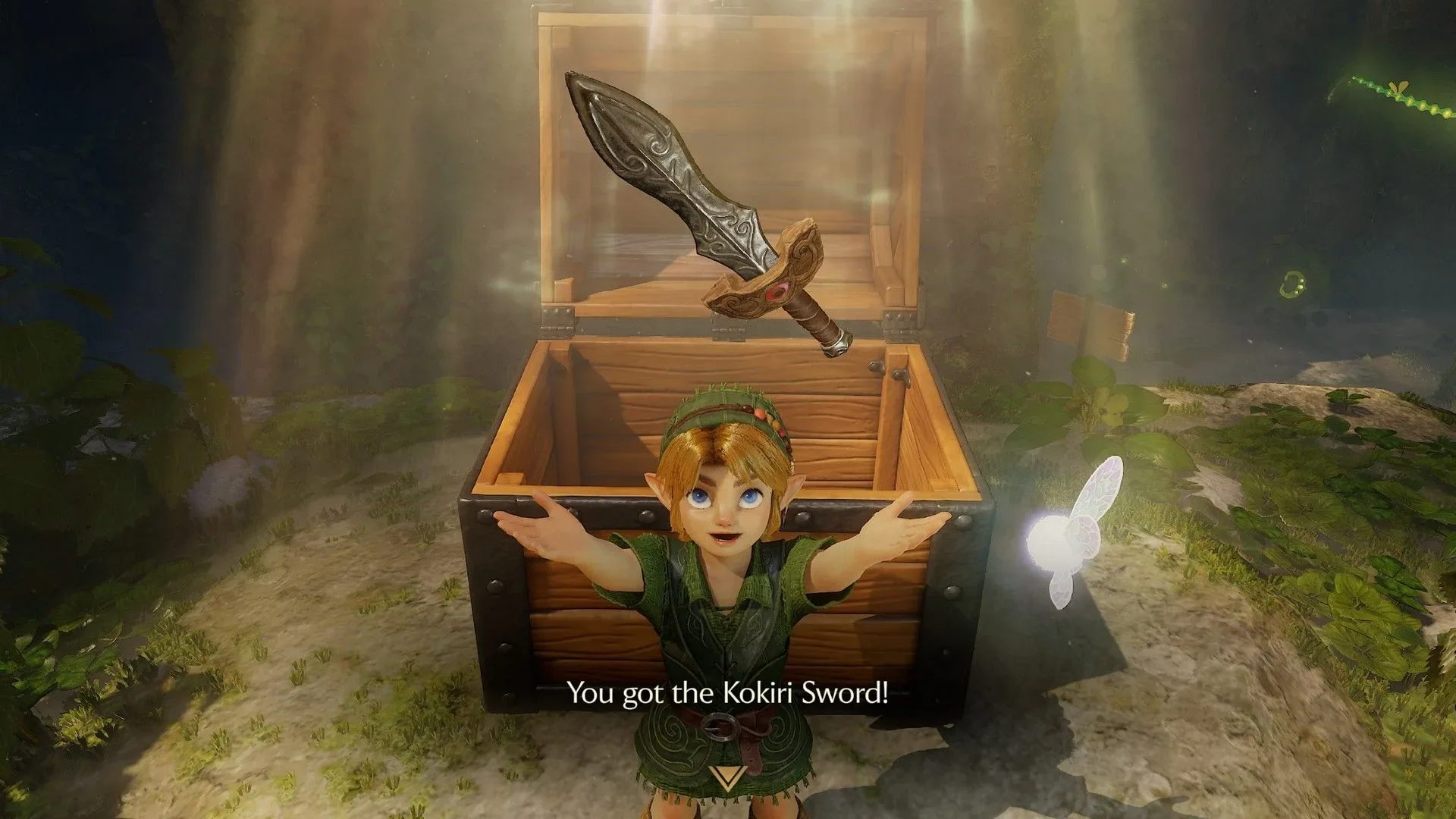
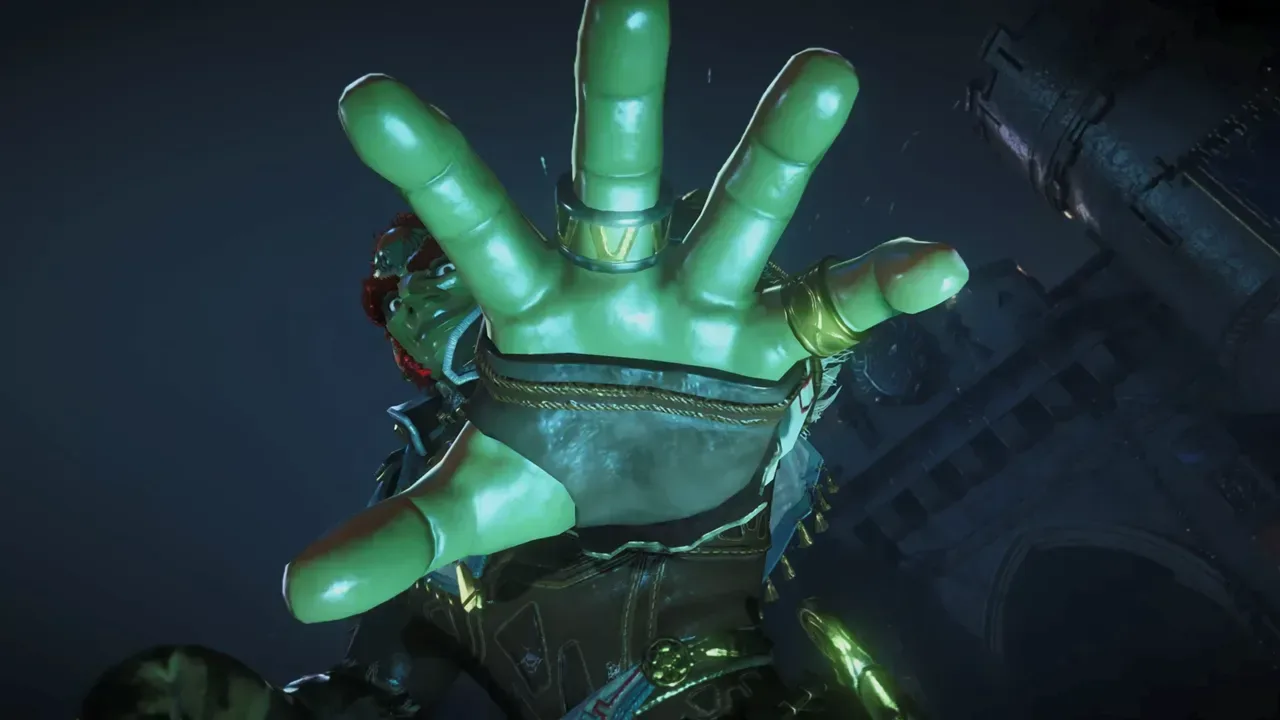
Dark Link is the standout reveal, but the pair of spots also survey several important parts of Ocarina of Time. Ganondorf is shown playing an organ, Link is seen playing his Ocarina, and footage includes the cutscene in which Link finally receives the Master Sword. There is also material from later in the adventure.
That breadth is useful for returning players looking for visual evidence of how the remake is interpreting well-known scenes. It also means the spots are not ideal as completely spoiler-free marketing. The Master Sword sequence is a pivotal story moment, and endgame footage naturally carries more context than a trailer can explain. Viewers playing Ocarina of Time for the first time may want to avoid both clips until they are ready for those reveals.
The Ocarina itself is central to the original game’s identity, and the Master Sword is likewise one of its most consequential story objects. The trailers’ decision to place both beside Ganondorf and Dark Link gives the spots a broad thematic sweep: music, transformation, rivalry and looming danger all receive a moment. Yet none of the clips, as described, confirms newly added story material or specifies changes to the underlying structure of these sequences.
That distinction is worth keeping clear. A remake can present a familiar scene with different camera work, models, lighting and animation while retaining the original narrative function. Conversely, a quick shot cannot on its own prove that a quest, battle or story beat has been substantially changed. The available footage is a look at presentation, not a detailed inventory of systems.
What can—and cannot—be concluded from the footage
- Confirmed by the TV spots: Dark Link appears in remake footage, and the clips also show Ganondorf at an organ, Link with his Ocarina, and the Master Sword acquisition cutscene.
- Confirmed from the remake’s release information: The game is a Nintendo Switch 2 exclusive scheduled for November 5, 2026.
- Not established by these brief clips: whether Dark Link’s original health scaling, player-name mirroring, arena behavior or full combat implementation will remain unchanged.
- Practical spoiler consideration: players unfamiliar with the original should treat the promotional material cautiously because it includes a major item scene and later-game imagery.
For longtime players, the value of the Dark Link glimpse is less about revealing the existence of the encounter than seeing a famous moment translated to a new version of Ocarina of Time. The Water Temple duel has a very specific visual language in the Nintendo 64 original: shallow water, fog, a solitary tree and an adversary that appears to be Link’s own shadow. The remake’s brief shot suggests that it intends to preserve the scene’s ominous, theatrical core, even though it offers no basis yet for a full comparison of how the fight plays.
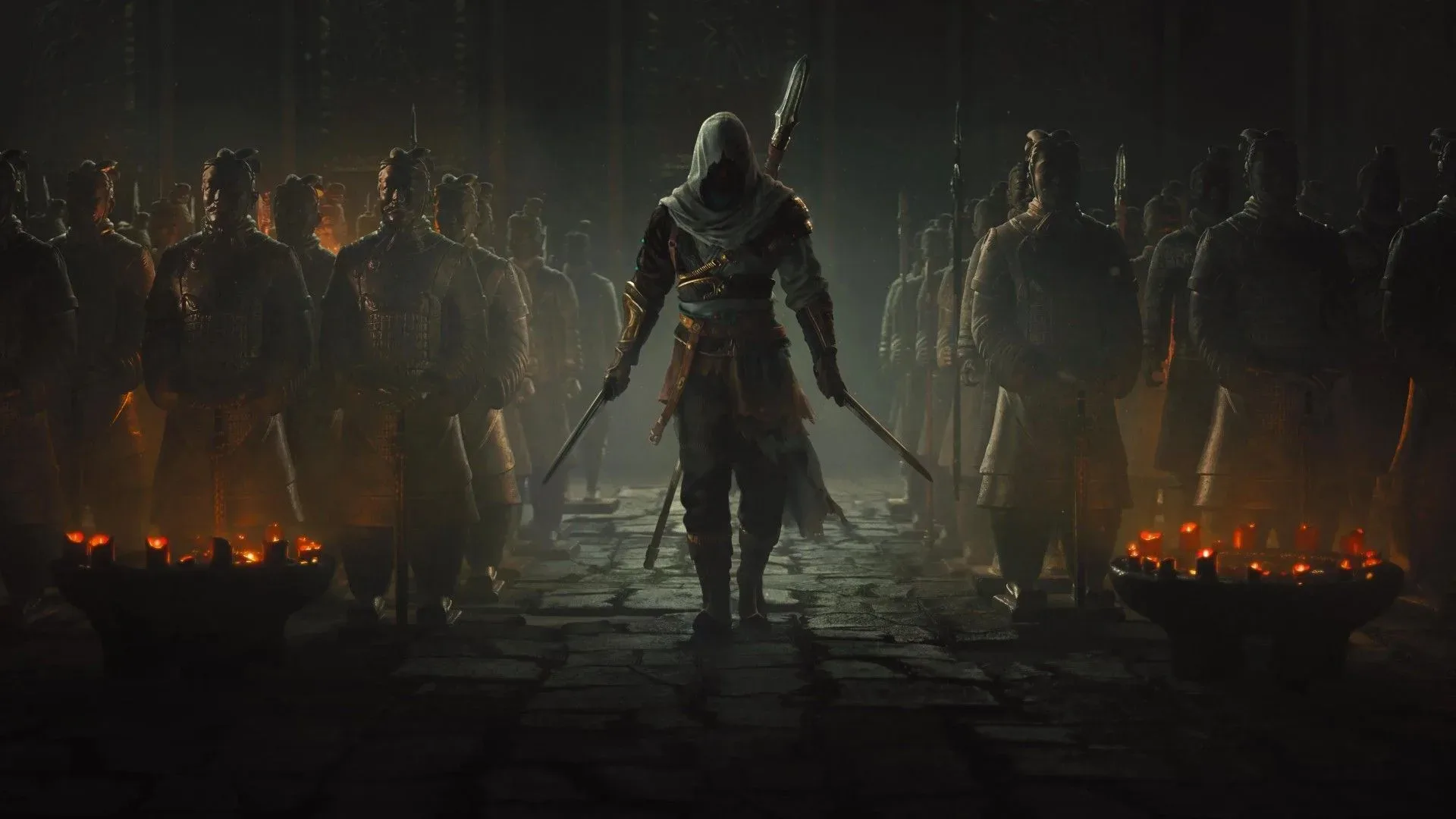
There is a broader reason remake footage often attracts this level of scrutiny. Games remembered for distinctive staging create expectations not only around maps and characters, but around the feeling of individual scenes. Similar interest follows projects connected to lost or re-emerging game material, such as footage from a canceled Assassin’s Creed project: a few seconds of imagery can prompt many questions, while still answering only a narrow set of them.
For now, Dark Link’s appearance is best viewed as a promising visual check-in rather than a mechanical verdict. The trailers establish that the remake will return to the Water Temple’s shadow duel and revisit several landmark Ocarina of Time moments. They do not yet reveal the full shape of those sequences. More extensive footage will be needed to judge how the remake balances its new presentation with the memorable design details that made Dark Link more than just another sword-wielding enemy.