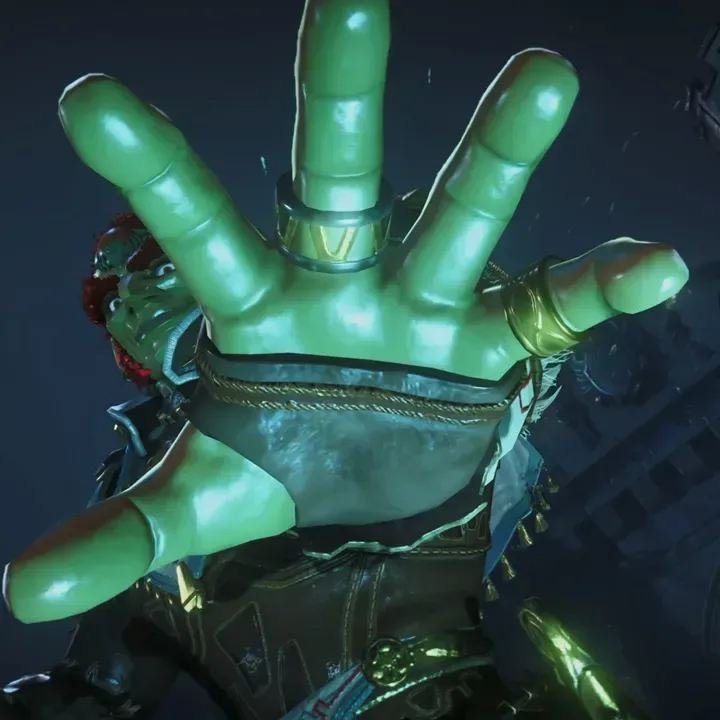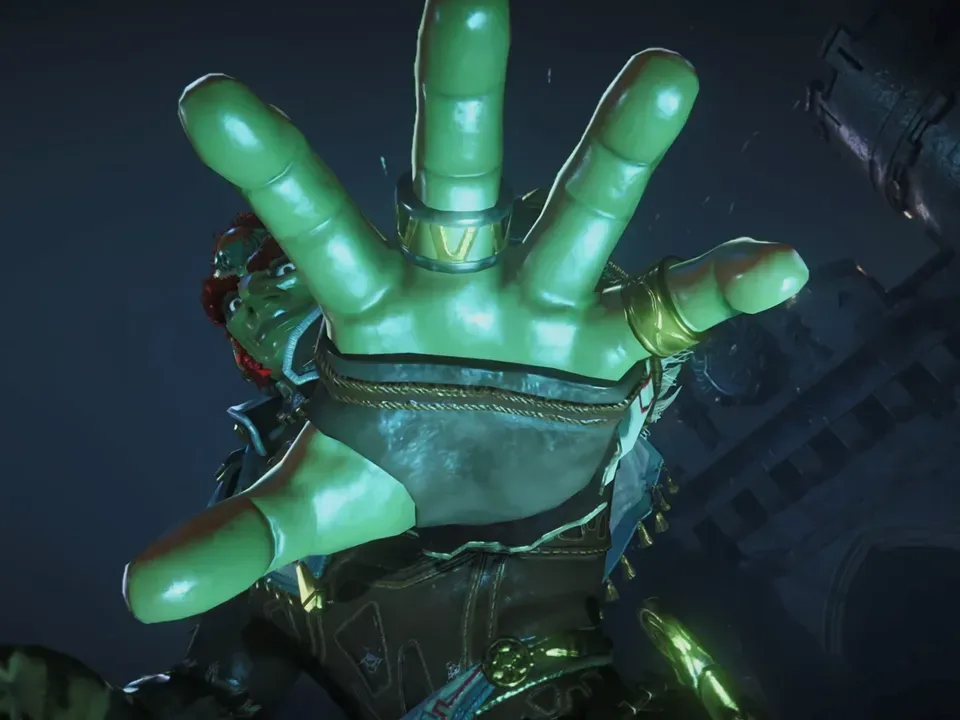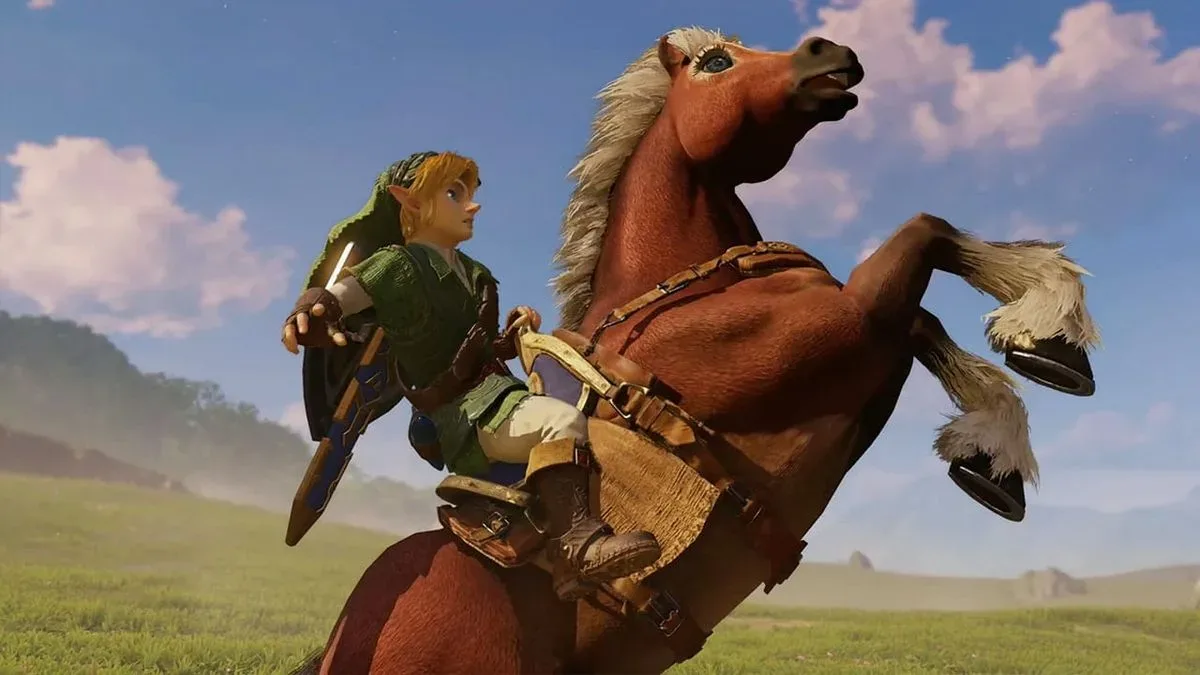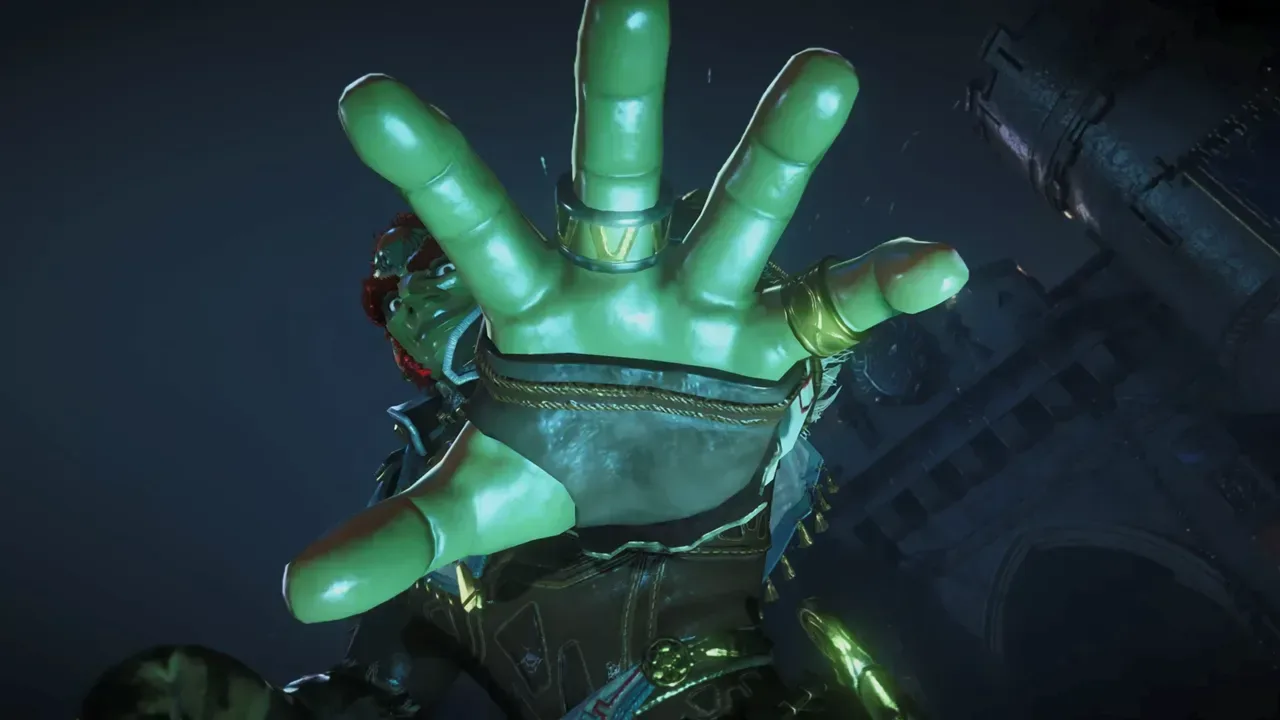
Nintendo has released a short new look at Ganondorf in The Legend of Zelda: Ocarina of Time remake, and its most telling detail is not simply the villain’s redesigned appearance. The 16-second clip expands the view of a dream-sequence moment that has been part of the adventure for decades: Ganondorf rides on horseback while the narration warns that an evil force has emerged in pursuit of power.
The remake is due for Nintendo Switch 2 on November 5, 2026. Although the footage is brief, it provides a more sustained look at how the new version frames one of Hyrule’s defining antagonists—and confirms a subtle staging change. Ganondorf’s ride plays in slow motion in the Switch 2 scene, unlike the equivalent presentation in the original Nintendo 64 release and the Nintendo 3DS remake, where he moves at a normal pace.
That does not establish a wholesale rewrite of the sequence, nor does it reveal how broadly such changes will apply across the game. It does, however, make the project’s approach clearer: this is a reimagining willing to adjust timing and dramatic emphasis, even when revisiting an extremely recognizable scene.
A familiar villain, reintroduced through a different rhythm
The footage returns to the remake’s updated version of the dream sequence previously shown in gameplay. Ganondorf appears on horseback as a voice says, “And now… An evil has appeared, yearning after that power.” The added time spent on the rider gives the introduction a more deliberate, ominous cadence than the older versions’ straightforward movement.
Slow motion is a filmmaking and game-direction technique that reduces the apparent speed of action to emphasize a person, object, or decisive instant. In this case, it is not a gameplay mechanic shown in action. It is a cutscene-presentation choice. Its purpose appears to be dramatic attention: viewers have more time to take in Ganondorf’s silhouette, horse, motion, and placement within the scene.
That distinction matters for expectations. A short cinematic adjustment does not, by itself, tell players whether combat, exploration, puzzle design, or story structure will be substantially altered. But it is meaningful because of where it occurs. Ganondorf’s horseback appearance is a foundational early image for many players who know Ocarina of Time, so even a small revision to its pacing can feel more conspicuous than an equivalent change in a lesser-known exchange.
Nintendo’s accompanying character description identifies Ganondorf as a man of the Gerudo, a people in which men are said to be born once every hundred years. It also reiterates his ambition to obtain the Triforce, the sacred relic said to grant the wish of whoever touches it. The clip therefore performs two jobs at once: it introduces the remake’s visual take on the character while restating the central desire that drives his role in the story.
The art style remains part of the conversation
Ganondorf had already appeared in the remake’s dedicated presentation earlier in the month, where audiences got their first sense of how he would sit within the game’s newly chosen visual style. Reactions to that style have been divided. The longer snippet does not settle that debate, but it gives a better opportunity to assess a character whose physical presence and menace are especially important to the game’s tone.
Related coverage includes Ocarina of Time Remake Clip Offers a Longer Look at Ganondorf.
Art direction is more than raw graphical detail. It is the combination of shape language, color, texture, lighting, animation, and the way a camera lingers on characters or environments. A remake can use far more modern rendering technology and still choose a stylized look rather than aiming for realism. Here, the new slow-motion treatment joins the character design as part of the overall reinterpretation: it changes not just what Ganondorf looks like, but how long the game asks the audience to look at him.
That is why a 16-second video can prompt outsized scrutiny. In a beloved game, major moments carry a kind of shared memory. Players do not approach them as blank-slate scenes; they compare a new rhythm, pose, color choice, or camera emphasis to an image they may have known for years. The comparison is especially immediate when Nintendo places footage of an established scene in front of an audience that can recall the Nintendo 64 and 3DS versions.
Small revisions are becoming a clear part of the remake’s identity
The horseback sequence is another indicator that the Switch 2 release will not be limited to updated visuals. Nintendo has already indicated other changes, including a dedicated jump button. At the same time, the remake will intentionally retain loading screens from the original experience. Together, those choices point to a project balancing modernization with preservation rather than pursuing a simple rule that every old feature must be replaced.
A dedicated jump button is a particularly visible example of a control change. Put plainly, it assigns jumping to its own input instead of tying it to another context or action. Such a revision can affect how freely players feel they move and how directly they interact with spaces. Yet the disclosed information does not establish the full design impact, so it would be premature to assume the game’s exploration or challenge structure has been rebuilt around it.
Likewise, retaining loading screens is a reminder that fidelity can mean keeping parts of an older game’s texture, even when a new platform could invite a different solution. The decision may be welcomed by players who want the remake to preserve recognizable beats of the original experience. Others may see it as an unnecessary holdover. Either interpretation reflects the central tension facing high-profile remakes: audiences often want both a version that feels newly made and a version that preserves what they remember.
The Ganondorf clip sits squarely inside that tension. The event itself is familiar. His underlying motivation remains familiar. Yet the scene’s tempo has changed, and that new tempo can alter the feeling of an entrance without changing the plot information being delivered.
What the footage does—and does not—tell us
There are a few reasonable takeaways from the footage. First, Nintendo is using the remake to reinterpret some scenes at the level of direction and timing, not solely models and textures. Second, Ganondorf’s presentation is being given special dramatic weight. Third, the project continues to invite close comparisons with both the Nintendo 64 original and the Nintendo 3DS remake.
There are also limits. The clip is too short to demonstrate performance, controller response, dungeon revisions, world layout, the extent of voice work, or any wider narrative changes. It also cannot answer whether slow motion is a recurring storytelling language in the remake or a one-off adjustment for this specific introduction. Those are the kinds of questions that need broader footage or direct details rather than extrapolation from a single scene.
For now, the value of the video is specificity. Instead of a general promise that a classic is being refreshed, it offers a concrete example of how that refresh may work: preserve the narrative function of a remembered moment, then reshape its emotional timing. Players who want an untouched reproduction may regard that as a warning sign; players interested in a more authored reinterpretation may see it as an encouraging signal.
Remake debates often become locked into a false choice between complete preservation and complete reinvention. This clip suggests a middle ground, where the broad outline remains intact but individual scenes are given new emphasis. That approach will likely be judged one moment at a time—and Ganondorf’s slow ride is now one of the first moments fans can place under that microscope.
It is also a useful reminder that visual identity and game identity are connected but not identical. The same question arises whenever developers revisit a formative work: which elements are essential mechanics, which are atmosphere, and which can be reinterpreted without losing the core? For a separate perspective on creative intent in game development, see Yoko Taro’s comments on making the RPG he wanted to make.
With a November 5, 2026 release date set for Switch 2, Nintendo still has time to show how its larger set of choices fit together. Until then, this small piece of footage has made one point unusually clear: even an entrance players know by heart can feel different when the remake asks it to slow down.