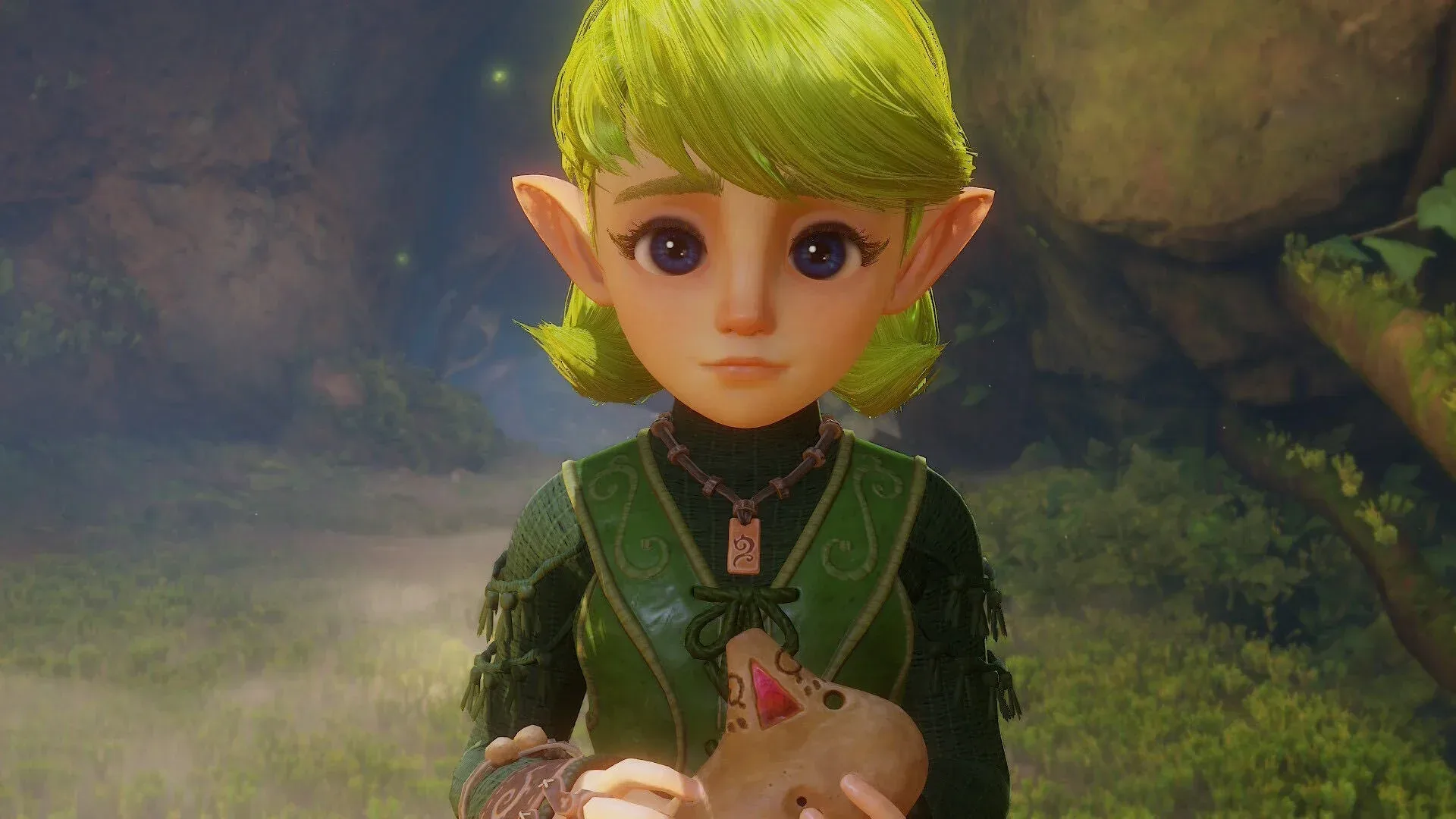
A button that seems routine in a modern action-adventure game has become one of the biggest adjustments in The Legend of Zelda: Ocarina of Time for Switch 2. The remake gives Link a dedicated short-jump input, replacing the automatic ledge jumps that helped define movement in the Nintendo 64 original.
For newcomers, pressing a button to clear a small gap may sound utterly ordinary. For returning players, it is a surprisingly fundamental rewrite of the game’s physical language. A generation of players learned that Link would hop when guided toward an appropriate edge. Now, walking toward the edge without pressing jump can instead result in a very different outcome: a plunge into Kakariko Village water, a collision with scenery, or an awkward tumble below.
Clips and posts from the remake’s opening weekend show the same small mishap repeating across Hyrule. Players approach a gap with the confidence built by years of automatic movement, then discover their thumbs have not received the memo. Link, unfortunately, is the person who has to absorb the lesson.
Why automatic jumping mattered
Auto-jump is a contextual movement system. Rather than asking the player to press a dedicated jump button, the game detects that the character is nearing a jumpable ledge or small opening and triggers the animation automatically. In the original Ocarina of Time, it made running around Hyrule simpler: players could focus on directional movement and camera control while Link handled minor traversal.
That design was not merely an absence of a button. It was part of how the original taught players to inhabit a 3D space. In an era when three-dimensional camera movement and character control were still being established for many players, reducing the number of actions required to cross a short gap made sense. A ledge communicated the action. Point Link at it, and he responded.
That relationship also created a memorable bit of character animation. Link’s small automatic hops made exploration look lively, and some returning players still see them as a distinctive strength of the original’s design. The new control scheme changes the responsibility: the environment may still suggest a jump, but the player must now explicitly authorize it.
Neither approach is inherently more sophisticated. They simply prioritize different things. Automatic jumping favors flow and lowers the number of moment-to-moment inputs. Manual jumping gives the player direct agency over positioning and timing. In a remake of such a familiar game, however, the crucial issue is not which option is better in the abstract. It is that one of the original’s quietest rules has changed.
Muscle memory is doing exactly what it was trained to do
Muscle memory is the informal term for learned physical habits: the actions a player performs with little conscious thought after enough repetition. It is why experienced players may reach for an item button without looking, turn a controller in a familiar way, or react to a hazard before they can explain their decision.
Related coverage includes Ocarina of Time's New Jump Button Is Sending Link Straight Into the Water.
In this case, the old habit is particularly stubborn because it is a non-action. Returning players were trained not to press a jump button near a small gap. The remake asks them to add an input at precisely the moment their learned behavior says no input is necessary.
That is why the adjustment can feel stranger than learning a wholly new game. A new player is forming a control habit from scratch. A returning player is overwriting one. The resulting mistakes are not necessarily evidence that the control change is confusing; they are evidence that the old system was legible and consistent enough to become automatic.
Reports of players falling soon after returning from a break underline the point. A pause can be enough for conscious familiarity with the remake’s controls to fade, allowing a decades-old instinct to reassert itself. Link approaches a gap, the player expects the old automatic hop, and the remake faithfully waits for a button press that never comes.
X by default, B as an alternative
The default placement of jump has generated a second, related complaint. Some players find the X-button assignment unnatural. The remake includes a settings option to remap jump to B, which offers a practical way to make the new mechanic feel closer to the layout a player expects.
Remapping will not restore automatic jumping, but it can reduce the friction of building a replacement habit. The distinction matters. A player who dislikes the location of the command may benefit immediately from changing it. A player who misses the original behavior is responding to a larger design change that button reassignment cannot solve.
For anyone repeatedly sending Link someplace unintended, a brief session dedicated to movement may be more useful than trying to fix the problem while handling enemies or puzzles. Run through ordinary terrain, deliberately approach small edges, and consciously press the jump input every time. It is mundane practice, but it targets the exact gap between expectation and the remake’s new rule.
- Check the settings and try the B-button jump option if X feels awkward.
- Practice the input in a low-pressure area before tackling more demanding sections.
- When returning after a break, assume the first few ledges may require a conscious reminder.
- Do not mistake a familiar-looking gap for an automatic interaction; treat it as a manual action.
These are adaptation tips, not a claim that players should prefer the new arrangement. The appeal of a remake often includes the return of old rhythms. When a core rhythm changes, it is reasonable for players to decide that it feels better, worse, or simply different.
Ragdoll physics make the errors hard to ignore
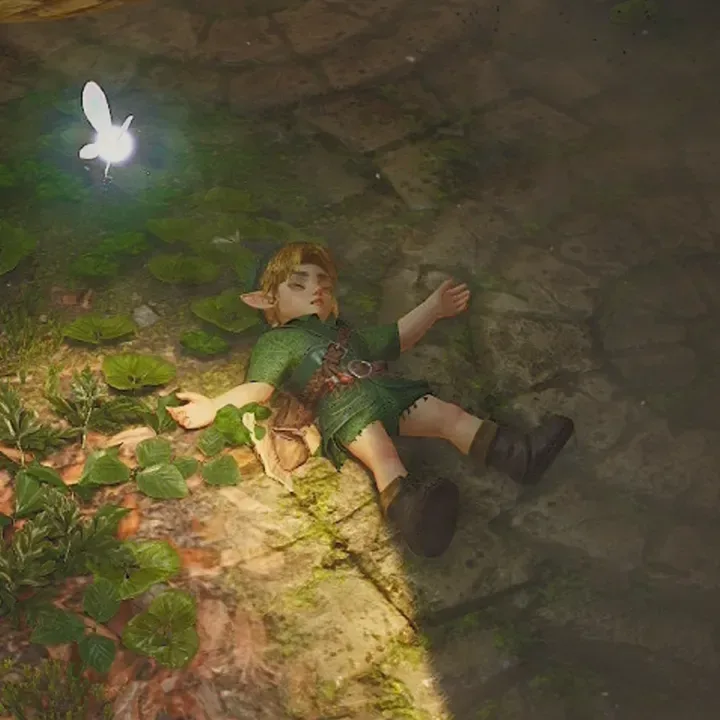
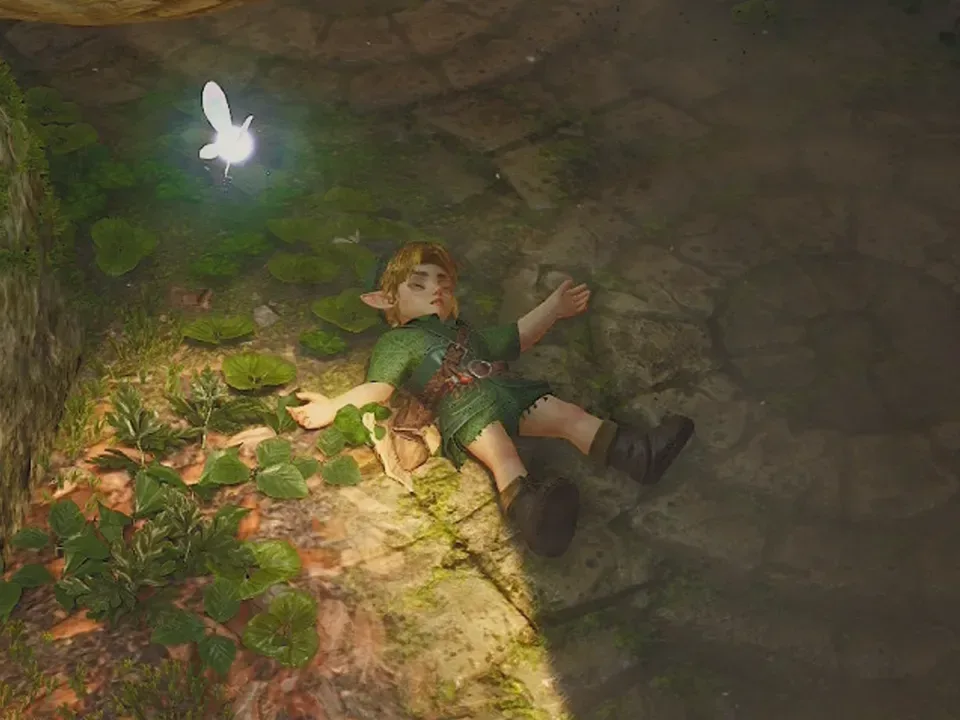
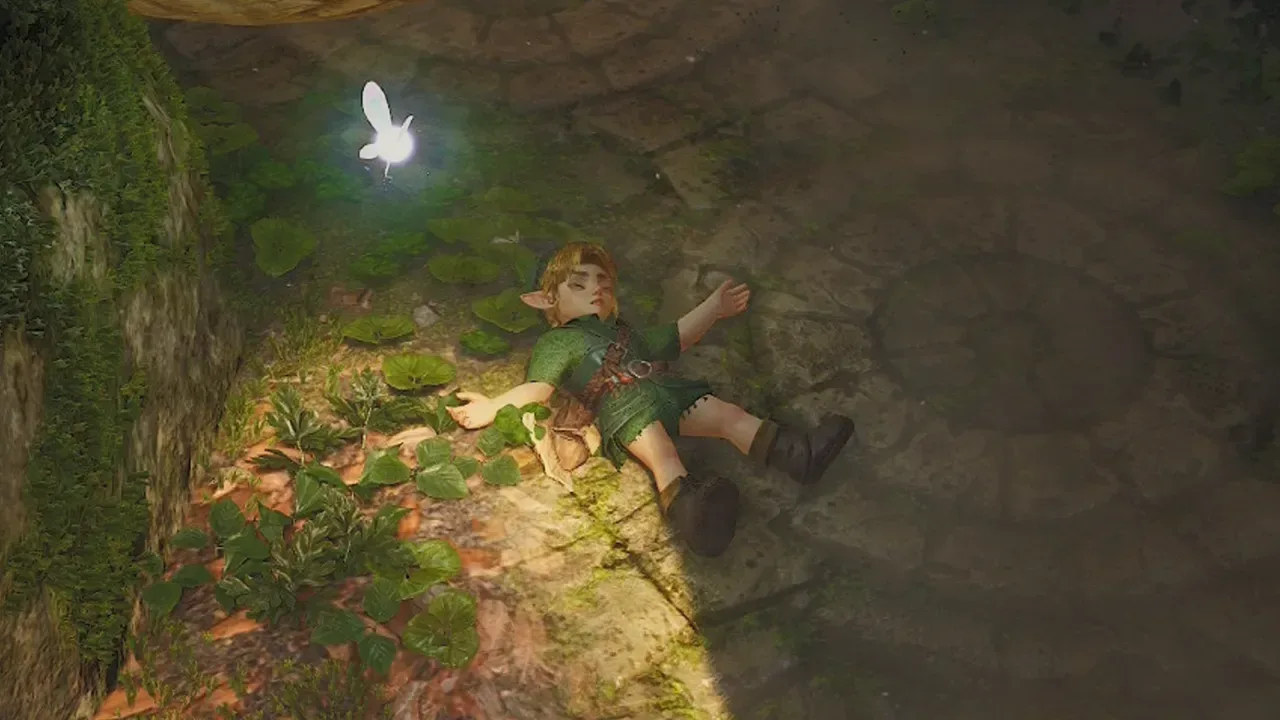
The remake’s new ragdoll physics have given this debate an especially slapstick edge. Ragdoll physics refers to a system that lets a character’s body react dynamically to impacts and falls rather than following only a fixed, pre-authored animation. A missed jump therefore does not just interrupt progress. It can produce an ungainly collision that makes Link’s failed landing look far more dramatic than the stakes usually are.
That visual response has helped turn routine mistakes into shareable comedy. A dip in water or a short drop is one thing; seeing Young Link bend, bounce, or crumple against the geometry makes the failed input memorable. The source material indicates that these falls usually do not inflict severe damage, so the humor comes largely from the animation and from the contrast with the heroic task at hand.
It is also a reminder that mechanical changes often interact with presentation changes. A manual jump button alone would create errors. Manual jumping paired with more expressive physical reactions creates moments players want to clip, replay, and joke about. The control debate may be serious for preservation-minded fans, but the immediate results can still be funny.
A remake can alter a game without changing its destination
The Switch 2 version launched on November 5, and the jump-button discussion has landed alongside wider attention on its changes from the 1998 Nintendo 64 release. The addition is small compared with a new dungeon, a rewritten story, or a different combat system. Yet it demonstrates why seemingly minor controls deserve attention in any remake.
Controls determine how players read space. They establish what a cliff means, how cautiously someone approaches a platform, and whether a movement sequence feels like an instruction or an improvisation. In the original, a short crossing could be an almost invisible exchange between level design and automatic character behavior. In the remake, it is a direct request for player input.
That shift also affects the texture of returning to Hyrule. A remake can preserve locations, characters, quests, and broad progression while still making familiar routes feel subtly unfamiliar. The destination may be the same, but the player arrives there with a different sequence of decisions.
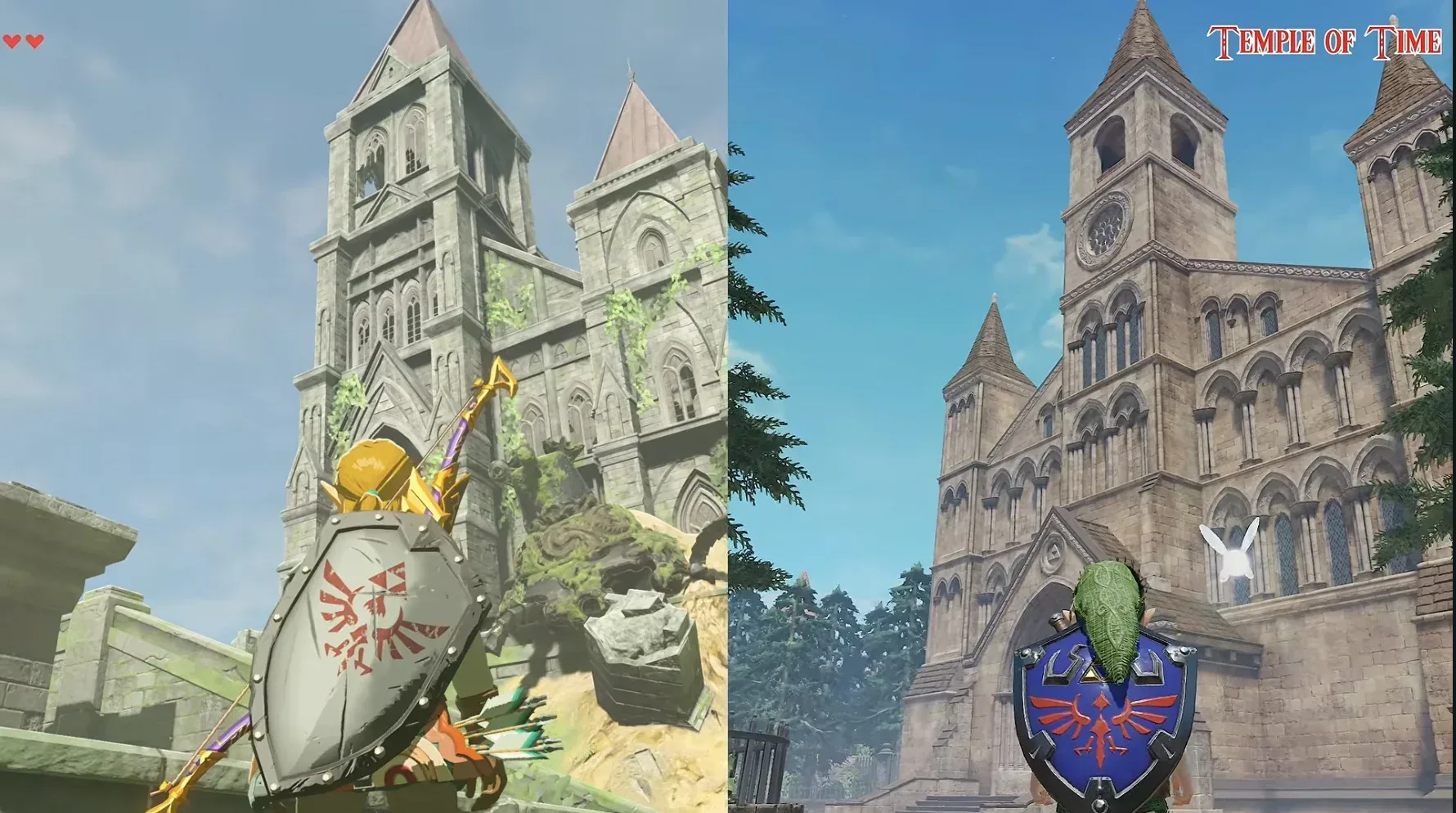
For a broader look at how the remake has invited comparisons with later Zelda landscapes, see our coverage of Ocarina of Time remake comparisons and Breath of the Wild’s Hyrule.
The real divide is about preservation versus permission
The discussion around jumping is not simply a clash between players who welcome modern conventions and players who reject them. The manual button can be understood as a form of permission: it lets a player decide exactly when Link leaves the ground. That can feel more responsive and more deliberate.
The automatic system can be understood as preservation of a particular design philosophy. It removes a routine command to keep the player moving through the world. For many veterans, its charm is inseparable from the original game’s identity, not because it was technologically limited, but because it turned a potentially fiddly task into a natural gesture.
There is no reported option to bring back auto-jump. As a result, returning players are not choosing between two philosophies; they are being asked to learn the remake’s preferred one. The B-button remap softens the transition for some, but it does not resolve the larger question of whether a remake of a landmark game should retain an unusual but beloved control convention.
For now, the answer is visible in every accidental river plunge. Link has a new ability, players have an old instinct, and Hyrule’s architecture is catching the consequences. The good news is that the falls are generally survivable. The better news is that they are apparently hilarious.