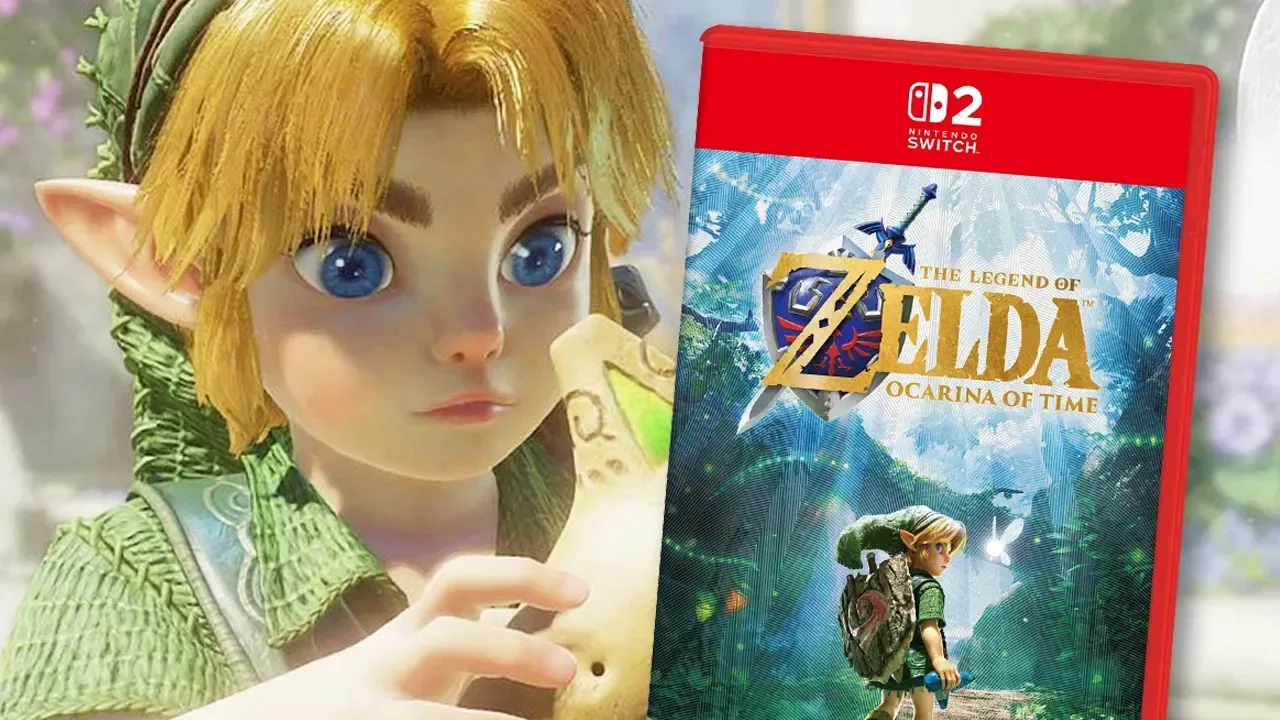
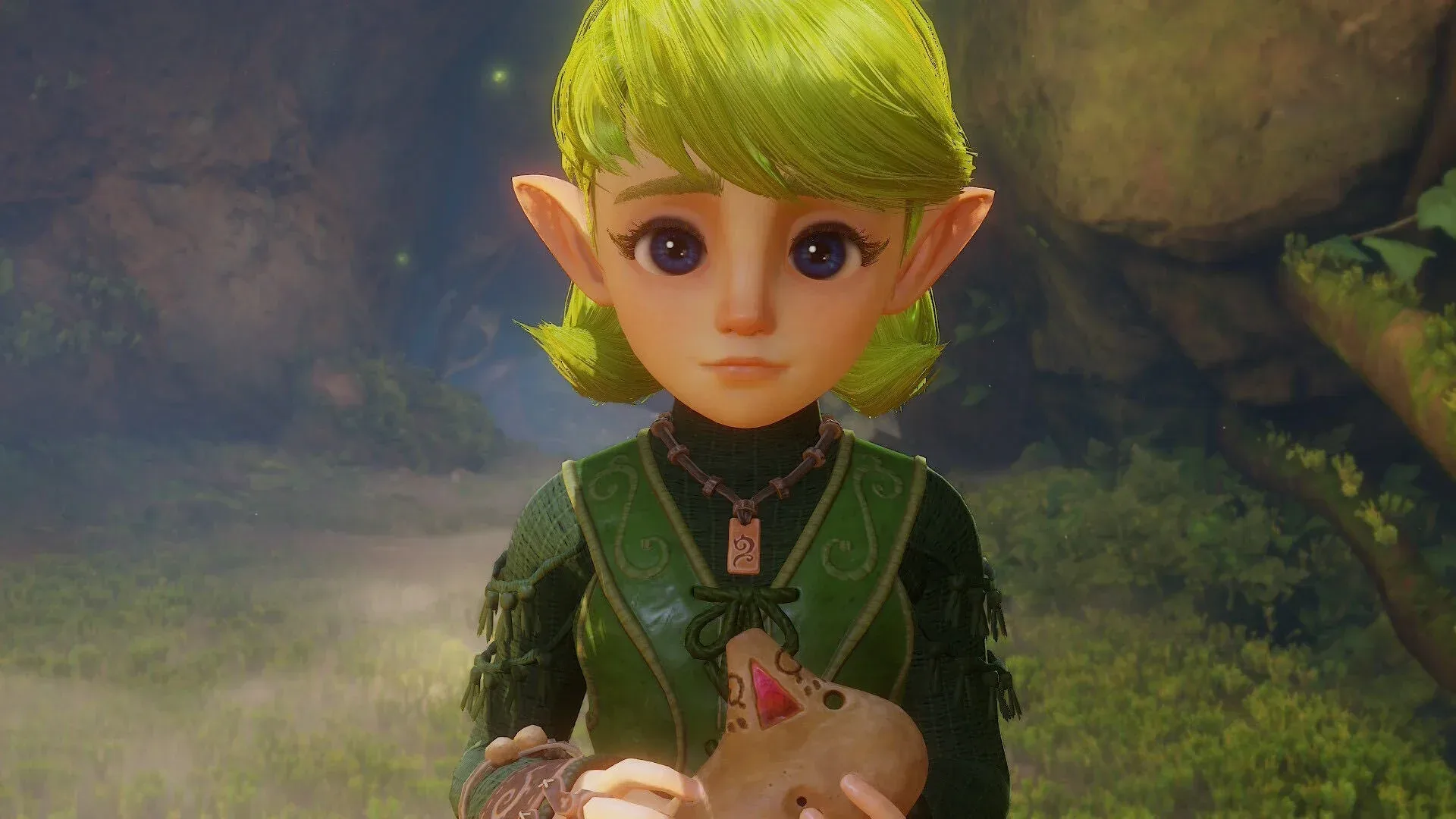
The ocarina has always been one of The Legend of Zelda: Ocarina of Time’s most memorable ideas: an in-game instrument that turns music into a practical adventure tool. Link uses learned melodies to solve puzzles, travel between locations and call his horse, Epona. The Switch 2 remake adds a very different way to invoke those tunes: players can hum or sing into the system’s built-in microphone, and the game can recognize a melody closely resembling one of Link’s playable songs.
That is a charmingly bold feature for a game built around a specific set of note inputs. It also appears to be far more forgiving—and much funnier—than a neat marketing bullet point might suggest. Players have been testing the recognition system with shouted melodies, real instruments, audio playing from another display, and a much older clip of someone only vaguely approximating Epona’s Song. The remake can apparently identify more than polished singing. It can make a plausible musical decision amid a surprising amount of noise, enthusiasm and human error.
For a series whose musical interaction is normally about deliberate button presses, that opens the door to a wonderfully unserious kind of play. Hyrule may now be saved by a player quietly humming in tune. It may also be saved by someone yelling approximately five notes at a microphone and waiting to see which magical effect the game thinks they meant.
What the microphone feature actually changes
The core task remains familiar. Link’s songs have gameplay functions, so the player needs to tell the game which melody they want. Traditionally, that means entering the relevant sequence through the ocarina controls. The new microphone option instead listens for a recognizable tune and, when it determines that the sound resembles one of Link’s songs, plays that song in-game.
That distinction matters. The feature is not presented as a tool for turning any vocal performance into a brand-new magical composition. It is a recognition system for the established melodies in the game. In practical terms, the player supplies a version of a known tune; the game matches it to its musical library and triggers the corresponding ocarina performance.
This is potentially useful for anyone who remembers the sound of a song more readily than its controls. A player may know exactly what melody calls Epona but blank on the required input pattern. Humming provides another route. It is not necessarily the faster route—button inputs remain direct for people who know them—but it can be a more intuitive one.
That makes the feature an accessibility-minded convenience as much as a novelty. “Accessibility” here does not mean that every player will find microphone use easier in every circumstance. Rather, it gives players another way to communicate the same intended action. Memorization can be musical instead of mechanical. For an adventure so closely tied to melody, that is an unusually fitting alternative.
Recognition, not a recital score
The player experiments suggest the system is designed to seek a match rather than demand a concert-hall-perfect performance. It can recognize sung and yelled attempts, instrument performances and audio routed from another monitor. The important factor seems to be that the game can find enough of a familiar melodic shape to associate the sound with one of Link’s available songs.
Related coverage includes Ocarina of Time Remake’s Microphone Can Turn Humming Into Ocarina Songs.
A melody is the ordered pattern of musical notes people usually recognize as the “tune” of a song. The reports around this feature point to the game prioritizing that recognizable contour over the particular way it is produced. A human voice, an actual instrument and audio playback can sound radically different in tone, volume and texture. If each can lead to recognition, the useful part is not a single pristine audio signature; it is the musical information the game can extract from an attempt.
That flexibility is the impressive half of this story. The hilarious half is that the software does not always seem to respond with a simple failure when a player offers something that barely resembles a valid melody. Instead, it can make its best guess about the tune being attempted. That turns a failed rendition into an accidental guessing game between player and software.
There is a natural trade-off. A strict system would reduce ambiguity but reject more imperfect attempts. A forgiving system welcomes rough humming and loud living-room experiments, but it must occasionally interpret a mangled attempt as the wrong song—or choose a song when the player did not really produce one. For this particular feature, that trade-off feels appropriate. The ocarina’s magic has always invited experimentation; the microphone system simply makes room for the player’s off-key contribution.
Why it may not replace button inputs
For routine use, manually entering a song is likely still the most dependable option for players who have memorized the controls. There is no microphone uncertainty to account for, no concern about background sound, and no need to repeat a melody if the first attempt is interpreted differently than intended. A known sequence is a known sequence.
But speed is not the only value in an adventure game. Singing a tune into the console can make the action feel more performative, especially for players who connect the song itself with its effect. Calling a horse by making the call, rather than selecting a perfectly remembered input sequence, is an appealing piece of role-play even when it takes longer.
It may also be ideal for casual repeat visits. Someone returning to the game after years away could remember a melody through pure familiarity while forgetting the controls attached to it. The microphone gives that memory a chance to be useful. In a game whose musical moments have stayed with players since the 1990s, that is a sensible bridge between nostalgia and a new interface.
There is a social angle, too. Conventional input is private and efficient; voice recognition invites spectators, attempts, corrections and inevitable jokes. A roomful of people can recognize a famous melody, argue over whether it was close enough, then watch the game decide. The act of using the ocarina becomes something closer to a party trick without changing the underlying adventure function.
The old ocarina was already a playground
The remake’s microphone feature is new, but the original ocarina interaction already had room for players to experiment beyond the required songs. Link normally has access to five notes while playing. By moving the analog stick, players can transpose—shift the notes into a different pitch range—rather than staying within that same five-note scale.
Transposition does not mean inventing a new instrument or expanding the game into a full music-production suite. In this context, it means changing the pitch position of notes available through the ocarina controls. That gives determined players more musical flexibility than the basic five-note layout initially suggests.
As a result, fans who understand the input tricks have long used the ocarina to perform material beyond the melodies needed for progression. The results can range from legitimately clever arrangements to deliberately cursed experiments. The Switch 2 remake adds a fitting new layer to that culture: players are no longer limited to making Link perform unusual music themselves. They can now test whether the game recognizes their own rendition of its sanctioned songs.
That combination is where the remake’s feature becomes more than a shortcut. There is the formal game language—learn a melody, activate a power, proceed through the world—and then there is the player language around it: recreate tunes, stretch the system and discover what happens when an earnest mechanic encounters unserious creativity. The microphone option clearly supports both.
A small feature with a big personality
Voice input in games can sometimes be framed as a utility: an alternate command, a menu tool or a communication channel. Here, it is attached to the most thematically appropriate possible action. A game called Ocarina of Time now lets players use their own voices to evoke the music at the heart of its adventure.
Its value will vary from player to player. People who want the quickest result can stick to inputs. Players who remember tunes instead of commands may find it genuinely helpful. And everyone else has a new way to see what happens when a game tries to interpret an enthusiastic but inaccurate performance as ancient Hyrulean magic.
The broad lesson is that a remake does not always need to reinvent an entire game to find a fresh identity. Sometimes it can take an existing ritual, preserve its purpose and add a new method that is equal parts expressive, approachable and ripe for nonsense. For more on how games can carry music into new audiences, see the discussion of GTA: San Andreas and its musical legacy.
In this case, the serious achievement is a flexible melody-recognition feature. The much more entertaining achievement is that it apparently remains willing to hear a questionable noise, search for the nearest song-shaped idea, and let Link take it from there.