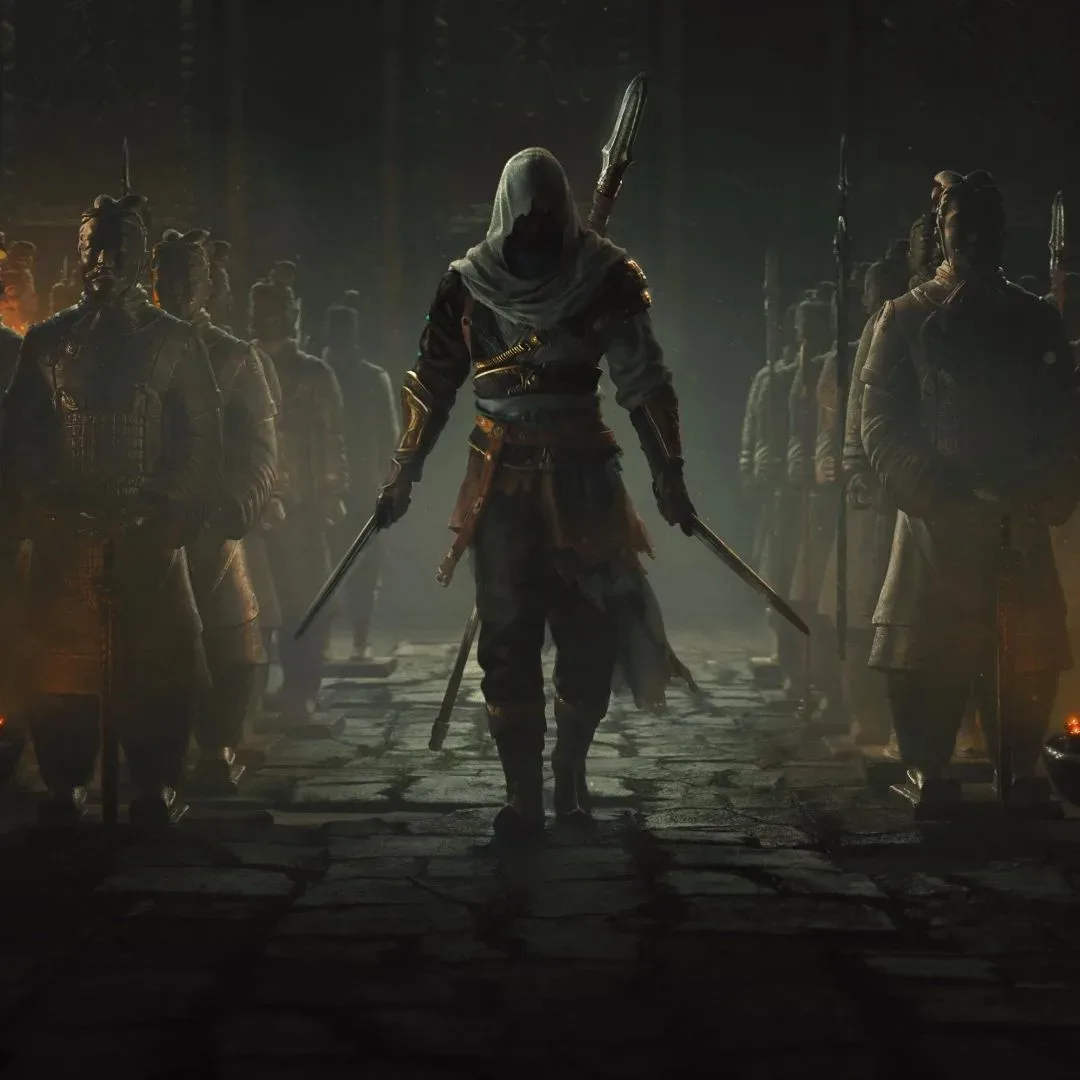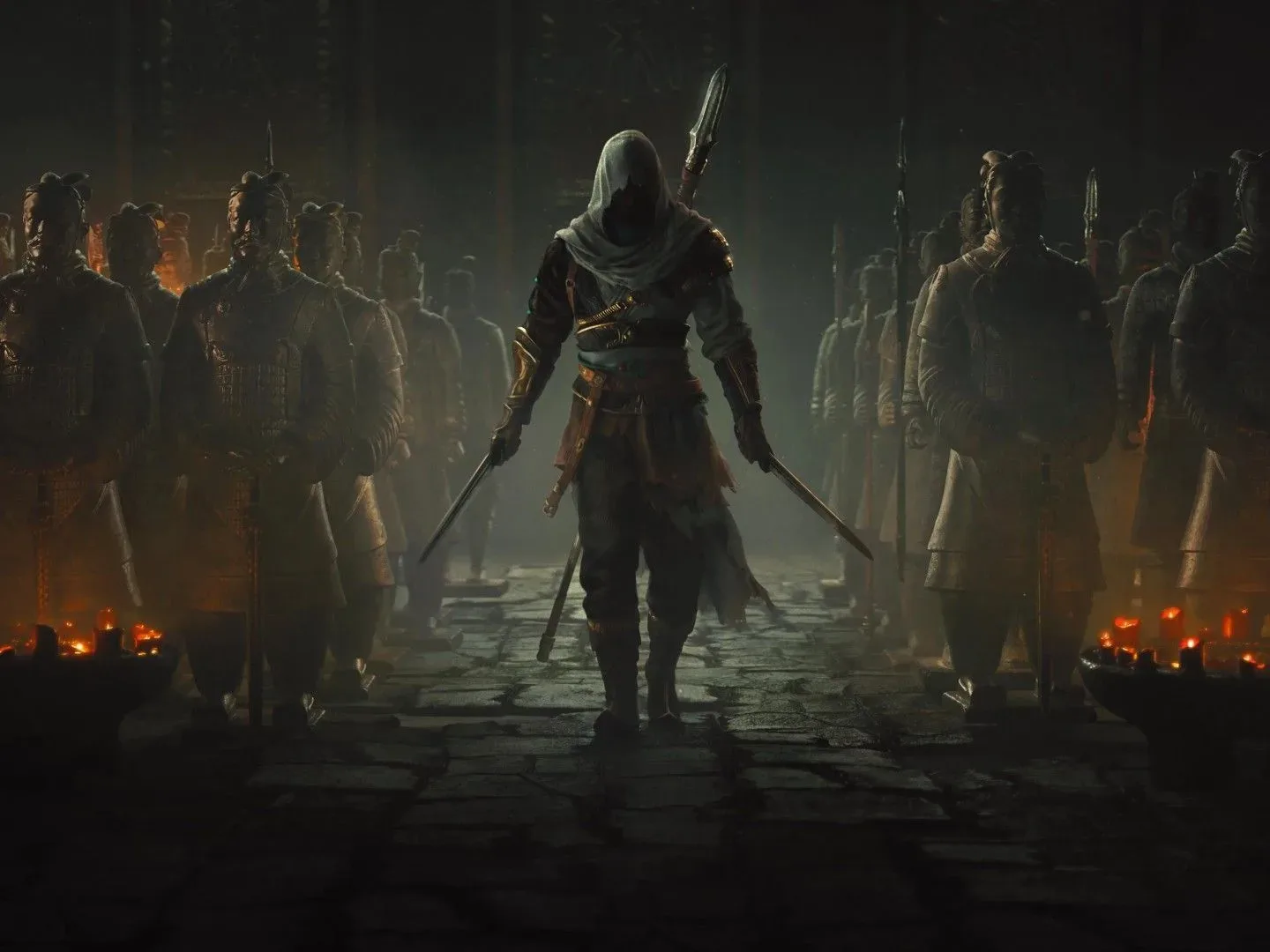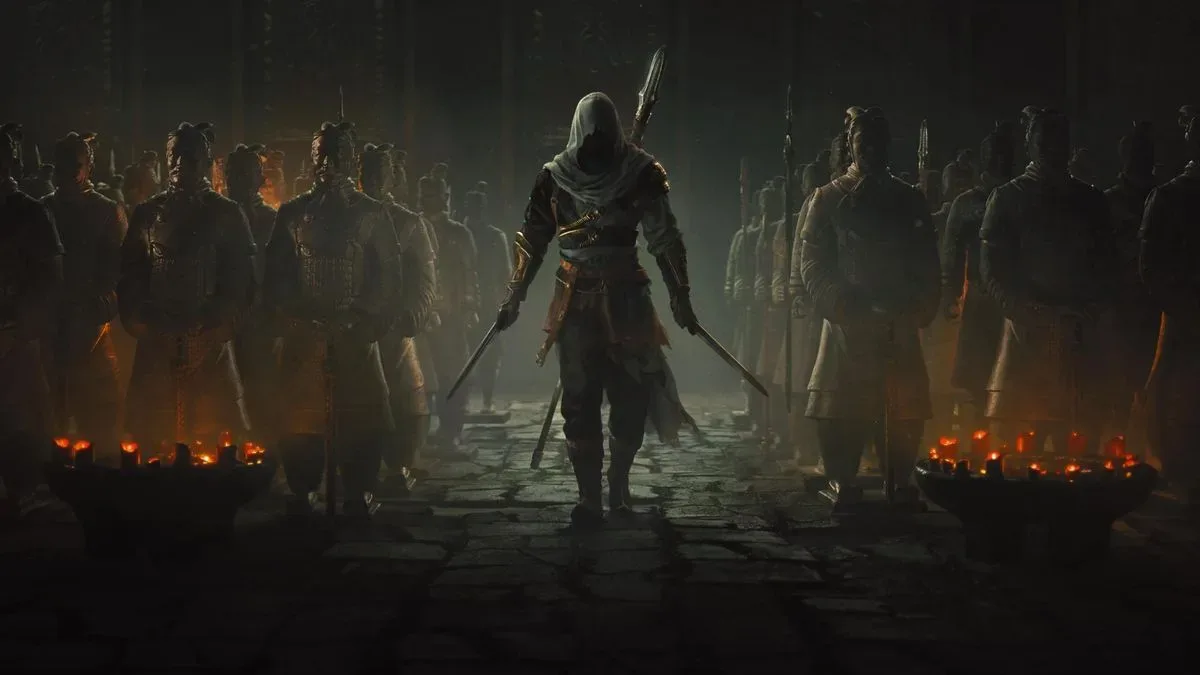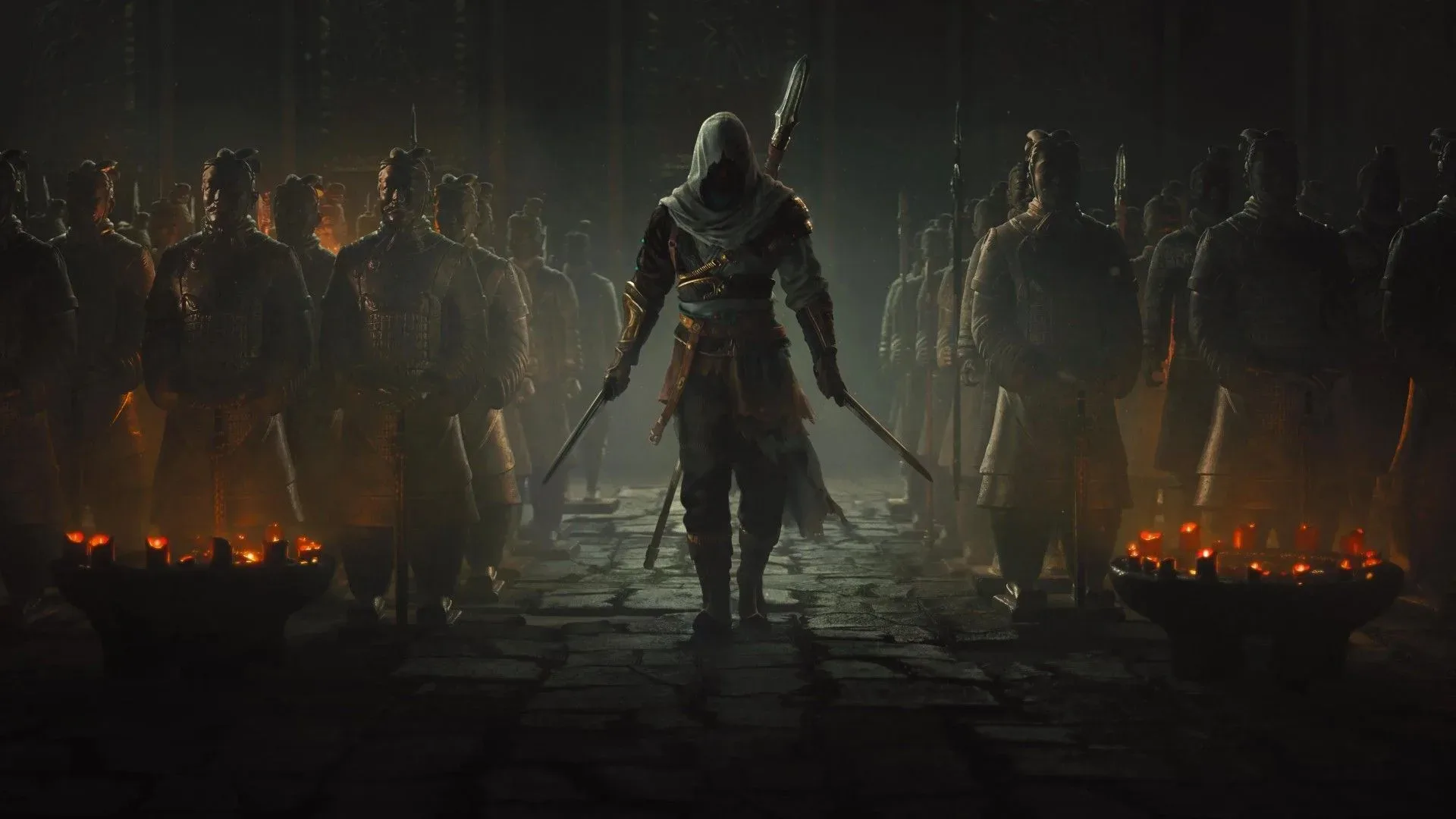
Assassin’s Creed has no shortage of unrealized projects, but newly surfaced images and gameplay clips from Assassin’s Creed Destiny make this particular cancellation harder to shrug off. The project was planned as a full, triple-A Assassin’s Creed game for modern hardware, developed by TiMi Group through the Ubisoft and Tencent collaboration. It was canceled amid restructuring at TiMi, and the material now in circulation offers a limited but tantalizing view of the game it might have become.
The most important qualifier is also the simplest: Destiny is not an upcoming release, and the available footage cannot establish how complete its systems, missions, performance, or final presentation were. It is a snapshot of work that did not make it to market. Still, that snapshot appears to show a recognizably large-scale Assassin’s Creed experience built around stealth, traversal, armed conflict, and a historical Chinese setting.
A China-set Assassin’s Creed built at a different scale
Destiny was reportedly set in China around 206 BCE, nine years after the period used for Assassin’s Creed Jade. Both projects arose from the Ubisoft-Tencent relationship, but their intended formats were very different. Jade is a mobile game first announced in 2022, while Destiny was intended as a traditional big-budget production for modern hardware.
That distinction matters because “triple-A” generally describes a project planned with the production scale, audiovisual ambition, development resources, and broad-market expectations associated with major publisher releases. It is not a guarantee that every aspect of the finished design would have matched that goal—especially in a canceled project—but it explains why the revealed clips have drawn interest. The environments appear designed for a more expansive version of the series’ familiar movement-and-stealth loop, rather than simply serving as small combat arenas.
A China-set entry on this scale would also have represented a return to the setting after 2015’s Assassin’s Creed Chronicles. That earlier game and Destiny should not be treated as directly comparable productions: Destiny was being positioned as a modern, full-scale release, whereas Jade is pursuing the setting through mobile. The shared historical territory makes Destiny particularly interesting, but it does not prove that the games shared characters, missions, technology, or assets.
What the visible material appears to show
The clips and images depict a player character moving through a palace environment in an apparent Qin Empire-era scenario. The objective described for this sequence is to stop an invading force from taking a treasure. That premise is firmly in Assassin’s Creed territory: a political or military crisis gives the protagonist a reason to infiltrate guarded territory, navigate vertical architecture, avoid detection, and remove threats when discretion fails.
Palace spaces look especially suited to the kind of environmental navigation associated with the franchise. Rooflines, elevated paths, layered courtyards, walls, corridors, and guard positions can all create choices between staying hidden, finding a higher route, or confronting opponents directly. In game-design terms, this is the value of stealth traversal: movement is not merely a way to get from one objective marker to another, but part of how players manage risk and choose an approach.
The footage suggests the game would have supported that approach with a mixture of skulking, enemy takedowns, and increasingly direct combat. Soldiers appear equipped with swords and spears, while the action is presented as forceful and physical rather than weightless. That visual impression alone cannot reveal the underlying combat depth—such as timing rules, enemy behavior, weapon variety, or progression—but it does indicate a project aiming for combat with more impact than a purely cinematic skirmish.
Related coverage includes Canceled Assassin's Creed Destiny Footage Reveals a Promising China-Set Adventure.
One particularly notable item is a spinning bladed weapon that resembles an umbrella in silhouette. The available material makes it look like a potentially memorable part of Destiny’s combat identity. Whether it functioned as a melee option, a thrown tool, a defensive device, or something else is not clear. It would be a mistake to turn a brief glimpse into a confirmed feature list. Yet even at this early stage, the weapon stands out because it suggests the project was seeking a visual hook beyond the standard swords, spears, and hidden-blade associations audiences expect from Assassin’s Creed.
Why early footage can look convincing—and why it remains incomplete evidence
Unreleased footage often produces an awkward reaction: it can look polished enough to invite disappointment, while still being too incomplete to show the actual game that would have shipped. Both responses can be true. A strong-looking palace layout, appealing animation, or intriguing weapon concept demonstrates that a team had promising ideas and tangible work underway. It does not reveal how those pieces would have held together across a full campaign.
For Destiny, several central questions remain unanswered:
- How far development had progressed when the project was canceled.
- Which gameplay systems were finished, experimental, or representative only of a narrow slice.
- What platforms on “modern hardware” were specifically targeted.
- Whether the palace sequence was an opening mission, a vertical slice, a late-game scenario, or another kind of internal demonstration.
- Whether any of Destiny’s concepts, environments, or design work were carried into Assassin’s Creed Jade.
A vertical slice is a useful term here. It refers to a compact piece of a game built to demonstrate how different elements—art, movement, combat, mission design, interface, and sound—might work together at a desired quality level. The surfaced clips have not been identified as a vertical slice, so they should not be labeled one as fact. But the distinction is important: an impressive self-contained demo can exist long before a project has solved the hard work of building a complete, stable game around it.
That is also why the footage cannot settle debates about whether Destiny would have been “better” than Jade. The two were intended for different scales and formats, and the mobile game has its own separate development path. Jade has no stated release window in the available information. Destiny, meanwhile, is a canceled project with no indication of revival or release.
The cancellation leaves a visible gap in the franchise’s history
Destiny was canceled only last year as part of restructuring at TiMi. Restructuring can alter or end projects for reasons that are not visible in a trailer, gameplay clip, or concept image: teams may be reassigned, priorities may shift, partnerships can change direction, and a project’s budget or long-term fit can be reassessed. The newly visible material makes the loss feel more immediate, but it does not explain the internal decision-making behind the cancellation.
What it does show is that the Ubisoft-Tencent collaboration was at one point exploring more than one way to approach Assassin’s Creed in China. Jade remains the known active expression of that setting, while Destiny seems to have been the larger modern-hardware counterpart that never reached players. Their proximity in both setting and chronology makes the unfinished project feel less like an abstract canceled pitch and more like an alternate route the franchise briefly considered.
For fans, the practical takeaway is caution alongside appreciation. The clips are worth examining for their art direction, architectural ideas, stealth staging, and weapon concepts, but they are not a promise of content arriving in Jade or another future Assassin’s Creed. No connection between Destiny’s shown mechanics and Jade has been confirmed. No release window has been provided for Jade, either.
There is a wider industry lesson, too. A cancellation is not necessarily evidence that a project lacked talent, imagination, or playable material. Sometimes the fragments left behind make that clearer than a bare project name ever could. The Destiny footage presents an adventure with a coherent setting, recognizable Assassin’s Creed instincts, and at least one striking combat flourish. Its existence will understandably encourage players to imagine the finished game. But the responsible way to view it is as evidence of a promising direction, not proof of a completed one.
That uncertainty is familiar across major-game development, where strategic changes can halt projects even after tangible progress. In another recent example of a project ending before release, RuneScape Reignited was canceled following pushback to its MMO reset plan. Destiny’s circumstances are different, but both cases underline how quickly a game’s path can change before it reaches an audience.
For now, Assassin’s Creed Destiny belongs to the franchise’s archive of unrealized possibilities: a China-set, modern-hardware project from TiMi Group, planned around 206 BCE and apparently built to let players slip through palace shadows before violence became unavoidable. The material that has surfaced makes the premise easy to mourn. It also leaves the most consequential questions—what the final game would have been, how far it got, and what may survive elsewhere—unanswered.