Ubisoft appears to be putting a memorable umbrella label around its generative-AI work: Motherbrain. Trademark applications using that name describe artificial-intelligence software for creating video games and interactive content, as well as AI research, development, data analysis and human interaction services.
That makes Motherbrain sound less like the title of an imminent game and more like a name for a broad technical initiative. It is reportedly already used internally for Ubisoft’s AI efforts, though there has been no public-facing rollout of Motherbrain as a consumer product, game feature or player service.
The name also carries an obvious gaming echo. Mother Brain is the formidable artificial intelligence associated with Nintendo’s Metroid series. Whether that association is deliberate, it is certainly a striking choice for a publisher exploring systems designed to make games appear more responsive to players.
What the trademark language actually suggests
Trademark filings can describe a wide range of potential uses, so they should not be read as a release schedule. They do, however, indicate the kinds of products or services a company may want to protect under a name.
One Motherbrain filing covers downloadable software using AI to create games and interactive content. Another covers research, design and development of AI software, plus “AI as a service” for data analysis and interacting with people. AI as a service, often shortened to AIaaS, generally means AI capabilities made available as a software service rather than a single boxed tool.
In practical game-development terms, that language leaves room for several possibilities: internal creation tools, systems that help developers process information, or technology used to support player-facing interactions. It does not establish that any particular Ubisoft game will use Motherbrain, that a particular feature is ready for release, or that players will see the name in a menu.
The most grounded interpretation is that the term could organize multiple experiments and tools that have previously been discussed separately. Ubisoft has publicly shown work in several distinct generative-AI areas already, from dialogue support to conversational characters and reactive squadmates.
The projects already on the board
Ubisoft announced GhostWriter in 2023 as a tool intended to help writers generate NPC dialogue for projects including Far Cry and other major franchises. NPC means non-player character: a character controlled by the game rather than another person. The important distinction here is that GhostWriter was presented as assistance for writers, not as a system meant to eliminate the writing process or independently determine narrative direction.
Related coverage includes Ubisoft's Reported "Motherbrain" AI Initiative Raises Questions for Game Development.
The following year, Ubisoft discussed Neo NPC, an initiative aimed at making side characters more dynamic and engaging through AI. That is a more outward-facing ambition. Traditional game dialogue is commonly written, recorded and triggered through prepared conditions. A generative system seeks to produce or shape a response based on what a player does or says, potentially creating the impression of a more flexible exchange.
Then came Teammates, described as Ubisoft’s first playable generative-AI research project. The small demonstration resembled a Ghost Recon-style scenario in which AI-voiced allies could respond in real time to player speech. Ubisoft director of GenAI gameplay Xavier Manzanares characterized the work as a glimpse of games that can listen, understand and react more extensively than current titles, while still building on established game systems.
“Games of tomorrow will listen, understand, and react to players far more than today, and our research gives a glimpse of what adaptive, generative play could add on top of proven game systems.” — Xavier Manzanares, Ubisoft director of GenAI gameplay
Those three efforts illustrate why Motherbrain, if it is indeed an internal umbrella, matters more as a signal of organizational direction than as a standalone label. GhostWriter concerns a development workflow; Neo NPC concerns character interaction; Teammates concerns live voice communication and teammate behavior. They all draw on generative AI, but they answer very different design questions.
Technical terms: LLMs, generative AI and “reactive” play
Generative AI refers to systems that produce new output—such as text, voice or images—in response to instructions or inputs. In the context described by Ubisoft, it has been explored for dialogue generation, character conversations and spoken responses from virtual allies.
Large language models, or LLMs, are one type of generative AI focused on language. They process and produce text, and can be adapted into systems that interpret a player’s spoken request or produce an NPC reply. An LLM alone is not a complete game character: it would still need to be connected to the game’s rules, narrative restrictions, objectives and performance systems.
That last point is crucial. “Reactive” does not automatically mean unrestricted. A useful game companion needs to respond convincingly, but it also needs to respect mission logic. A teammate cannot merely acknowledge an order; it has to understand enough of the game state to act appropriately, avoid breaking a scripted encounter and not distract from the intended experience. Similarly, an NPC conversation needs to feel natural without contradicting the setting, plot or character.
So the technical challenge is not just generating an answer. It is making that answer fit inside a designed game. Ubisoft’s phrasing around adding adaptive, generative play on top of proven systems reflects that tension. The company’s public examples point to generative layers augmenting conventional design rather than replacing all authored content with open-ended output.
Why players may care even before a product appears
A shared initiative name suggests that generative AI is being treated as a durable area of research and development, rather than a one-off experiment. For players, the relevant questions are likely to be concrete rather than branding-driven: Does an AI-assisted conversation make a mission more engaging? Do voice-responsive allies follow instructions better? Does a creation tool help developers produce richer encounters without flattening the writing?
The answers will depend on implementation. A system can offer more ways to interact, yet still be frustrating if its responses are unreliable or poorly matched to the action on screen. It can produce more incidental dialogue, yet make a character feel less specific if it loses the authored voice that gives them personality. And a workflow tool may speed up early drafting while still requiring significant human review to ensure dialogue is appropriate and consistent.
There is also a quality-control dimension. Ubisoft’s Anno 117: Pax Romana was among games that drew attention for apparent AI-generated mistakes in artwork that made it into the released game. The problematic visual artifacts were later removed. That episode does not establish how Motherbrain-related work will function, but it is a useful reminder that generative output still requires careful review before it reaches players.
For a publisher working across large, long-running series, that review is not a minor detail. Dialogue, art and player interaction all contribute to trust in a game world. The most ambitious AI concept can still create an unhelpful result if errors, inconsistencies or strange edge cases are allowed through. That is why an internal platform or umbrella program, if Motherbrain becomes one, would be judged by safeguards and execution as much as by the novelty of its models.
A name is not a feature list
For now, Motherbrain is best understood as a reported name associated with trademarks and Ubisoft’s wider AI interests. The filings identify broad categories of AI software and services, but do not promise a particular game, platform, launch date or player feature.
What is clearer is the direction of travel. Ubisoft has publicly explored AI tools for writers, more conversational side characters and real-time voice interaction with AI allies. A single label for that work would make sense internally, especially if the company is trying to connect research, tooling and gameplay experiments across teams.
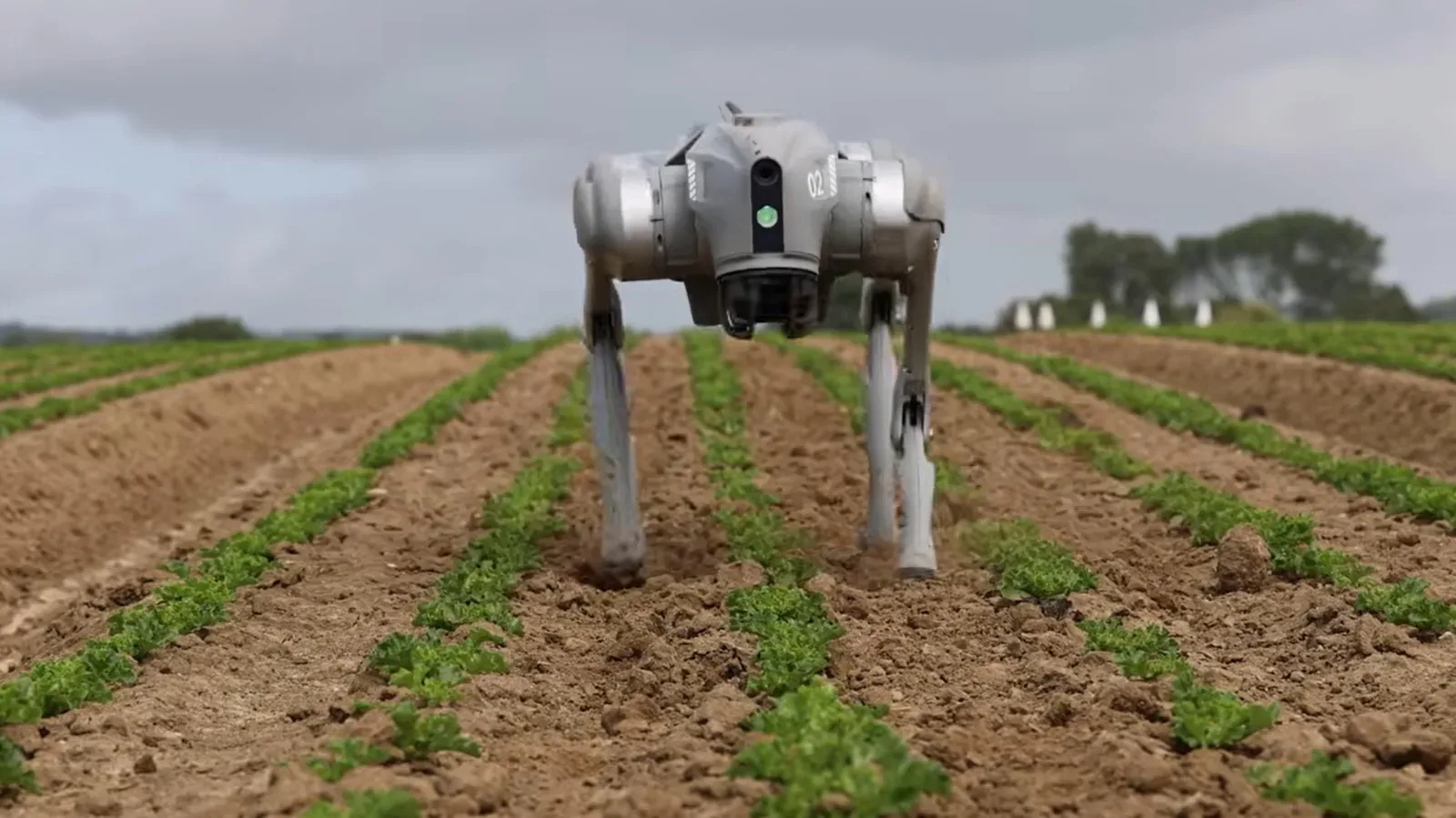
It is an evocative name for a technical program—perhaps almost too evocative, given its famous sci-fi association. The real test will not be the reference. It will be whether future uses of this technology are clearly purposeful, reliably controlled and meaningfully better for the people making games and the people playing them. Ubisoft’s effort arrives amid a broader rush to apply AI to interactive systems; as other automated technologies move from demonstrations into specific real-world jobs, the key question remains how well each implementation handles the conditions around it, as seen in this look at robot dogs shifting from security work to crop surveillance.