Nintendo’s public commitment to physical games is getting more scrutiny after PlayStation’s stated plan to end physical disc production in 2028. Bill van Zyll, who oversees Nintendo’s Latin America operations, has said the company has no plans to leave physical media behind and emphasized that Nintendo knows fans enjoy it. Former Nintendo marketing lead Kit Ellis believes that phrasing is not accidental.
Ellis’s assessment is not a confirmation from Nintendo that its messaging was changed in response to a rival. It is an informed interpretation of how a famously controlled company communicates. But it highlights why a short statement about cartridges can carry more weight than it initially seems to. In a console market that increasingly includes disc-free hardware and download-first purchasing, Nintendo is presenting continued physical support as a direct answer to a customer preference.
That is a valuable position to occupy. It also comes with an important caveat: Nintendo’s current physical strategy includes game-key cards, a hybrid format that has generated its own objections from players who expect a cartridge to contain the full game.
Why the wording matters
Van Zyll’s central message is straightforward: Nintendo does not intend to abandon physical media, and the company recognizes that fans value it. On its own, that is a conventional reassurance. In the current circumstances, however, it also distinguishes Nintendo from competitors whose hardware lineups include discless options or whose plans point further toward digital distribution.
Ellis argues that the statement reads as approved corporate language rather than an executive speaking off the cuff. His view is that the emphasis on what fans enjoy is especially purposeful. It does more than say Nintendo continues to sell physical games; it frames that decision as a customer-focused choice.
“This is definitely not Bill firing from the hip,” Ellis said of the comments, describing them as messaging likely cleared for Nintendo representatives to use.
That distinction matters in marketing terms. A company can describe a feature as a technical option, a business decision, or a response to demand. The third approach invites consumers to see the company as listening to them. Ellis’s point is that Nintendo’s wording positions physical releases as a benefit that the company understands and intends to preserve, especially while the future of discs is being debated elsewhere.
There is no need for Nintendo to name a competitor for the contrast to register. The decision to pair continued physical support with the assertion that fans enjoy it lets players make that comparison for themselves.
Related coverage includes Nintendo's Physical Media Messaging Draws Attention as PlayStation Plans Disc Production Exit.
Nintendo has a clear hardware-side advantage in the conversation
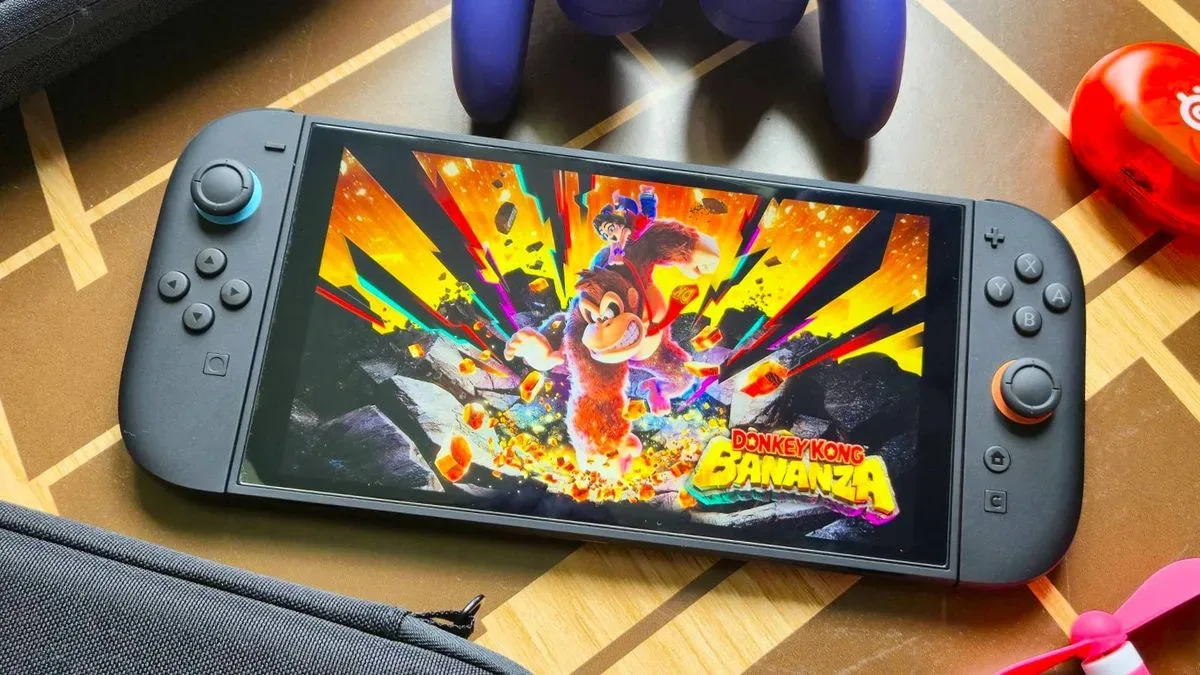
Nintendo released its current console in 2025 with full support for physical games and without a digital-only version. That is a simple, tangible fact for people deciding how they want to buy games. By comparison, the current PlayStation and Xbox families include discless models.
A discless console is hardware without an optical-disc drive, meaning users cannot insert standard game discs into that model. It does not automatically mean that every owner must reject physical media across their household, but it does make digital purchases the built-in path for that specific device. Nintendo’s cartridge-based approach avoids that exact tradeoff for its current system.
For players who prefer a shelf of boxed releases, the appeal is easy to understand. A physical format is an object that can be kept, displayed, lent or traded where the format and local rules permit. It also gives purchasers something separate from a storefront account at the point of sale. None of those benefits guarantees that a game will remain fully playable forever, particularly when updates, network services, or download requirements are involved. Still, format choice matters to many buyers, and Nintendo is signaling that it sees those buyers.
The broader competition is not solely about whether a plastic case exists. It is about the degree of independence the item provides after purchase. That is where Nintendo’s message is strongest in principle, but where game-key cards make the practical picture less clean.
Game-key cards are physical products with a digital dependency
A traditional cartridge stores game data on the cartridge itself. Put it into compatible hardware and the game can be read from that physical media, subject to whatever patches, online functions, or other requirements the title may have.
A game-key card is different. It is sold in a physical case and comes as a cartridge, but it prompts the Switch 2 to download a game key through the internet rather than storing the complete game data on the card. The buyer still receives a physical item, yet the full game is not contained on that item in the same way it is with a traditional cartridge.
That design is why game-key cards have become controversial. For players who define physical ownership as receiving the complete playable game on cartridge, the format can feel much closer to a download entitlement packaged for retail. The case and card are real, but an internet connection is part of obtaining the game itself.
Nintendo still ships most physical Switch 2 games on conventional game cartridges. However, game-key cards have appeared more frequently among major releases, including Assassin’s Creed Shadows, 007: First Light, and Borderlands 4. Their presence means that “physical” is no longer a complete description by itself. Buyers who care about data being on the cartridge need to check which kind of release they are considering.
A practical buyer checklist
- Confirm the media type: Determine whether a Switch 2 release is a traditional game cartridge or a game-key card.
- Consider internet access: A game-key card requires downloading the game, so the initial setup depends on connectivity.
- Separate packaging from preservation: A boxed release is not necessarily a complete on-cartridge release.
- Watch for title-specific requirements: Even conventional cartridges can receive patches or use online features, which are separate considerations from the base game data.
This is not an argument that one format is universally better for every player. A buyer with reliable internet and a preference for retail packaging may be satisfied with a game-key card. Someone focused on offline access, long-term archiving, or the idea of a self-contained cartridge may reach a different conclusion. The key is that those groups are not evaluating the same thing when they say they want a “physical game.”
The marketing opportunity, and the limitation
PlayStation’s planned end to disc production in 2028 gives Nintendo a timely opening to stress continuity. Ellis believes Nintendo has recognized that opportunity and refined its public language accordingly. If that interpretation is right, the strategy is subtle: Nintendo is not merely defending a legacy format, but tying its format choice to fan enjoyment at a moment when physical access is a visible concern.
The limitation is equally clear. Messaging about physical media will be judged not only by Nintendo’s console design or its general support for cartridges, but title by title. Game-key cards make the company’s physical offering broader than a binary choice between boxed games and digital downloads, yet that middle ground is exactly what many enthusiasts question.
For Nintendo, then, the strongest version of the argument is not simply that it has physical products while other platforms move further digital. It is that many Switch 2 releases remain traditional cartridges and that the company says it does not plan to abandon physical media. The weaker point is any assumption that every boxed Switch 2 release provides the same self-contained experience.
That nuance should shape how consumers read the latest comments. Nintendo can plausibly present itself as a major platform holder still committed to physical media. At the same time, buyers should not treat the word “physical” as a guarantee that all game data is on the cartridge. The case format and the actual delivery method are increasingly separate questions.
The wider industry discussion will continue as hardware manufacturers balance retail formats, digital storefronts, storage demands, and consumer expectations. For another example of how corporate plans and product expectations can collide in games, see EA’s still-unclear plans for the return of Fight Night. In Nintendo’s case, the immediate takeaway is more concrete: its leadership is publicly defending physical media, while the meaning of that promise depends on whether a given release is a full cartridge or a game-key card.