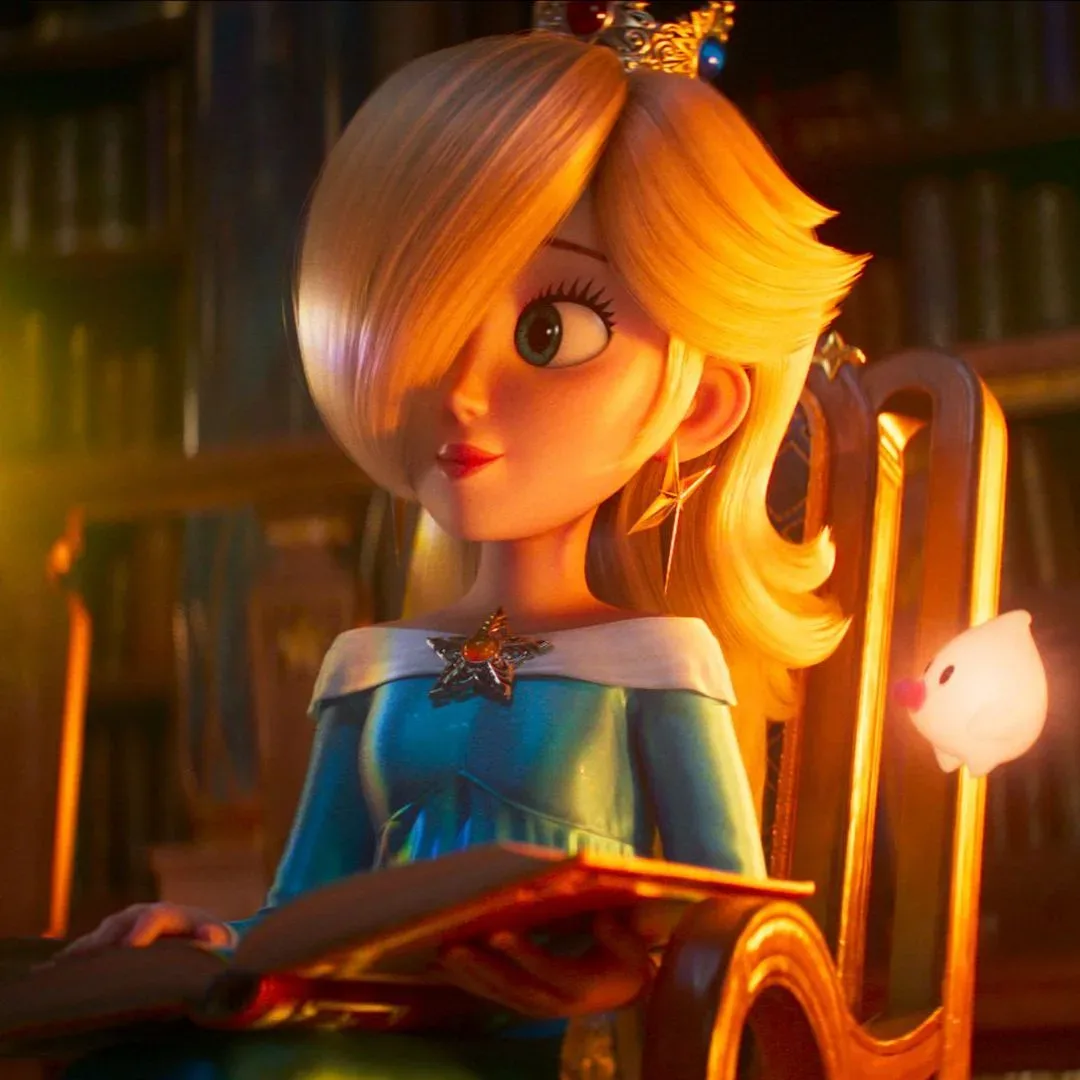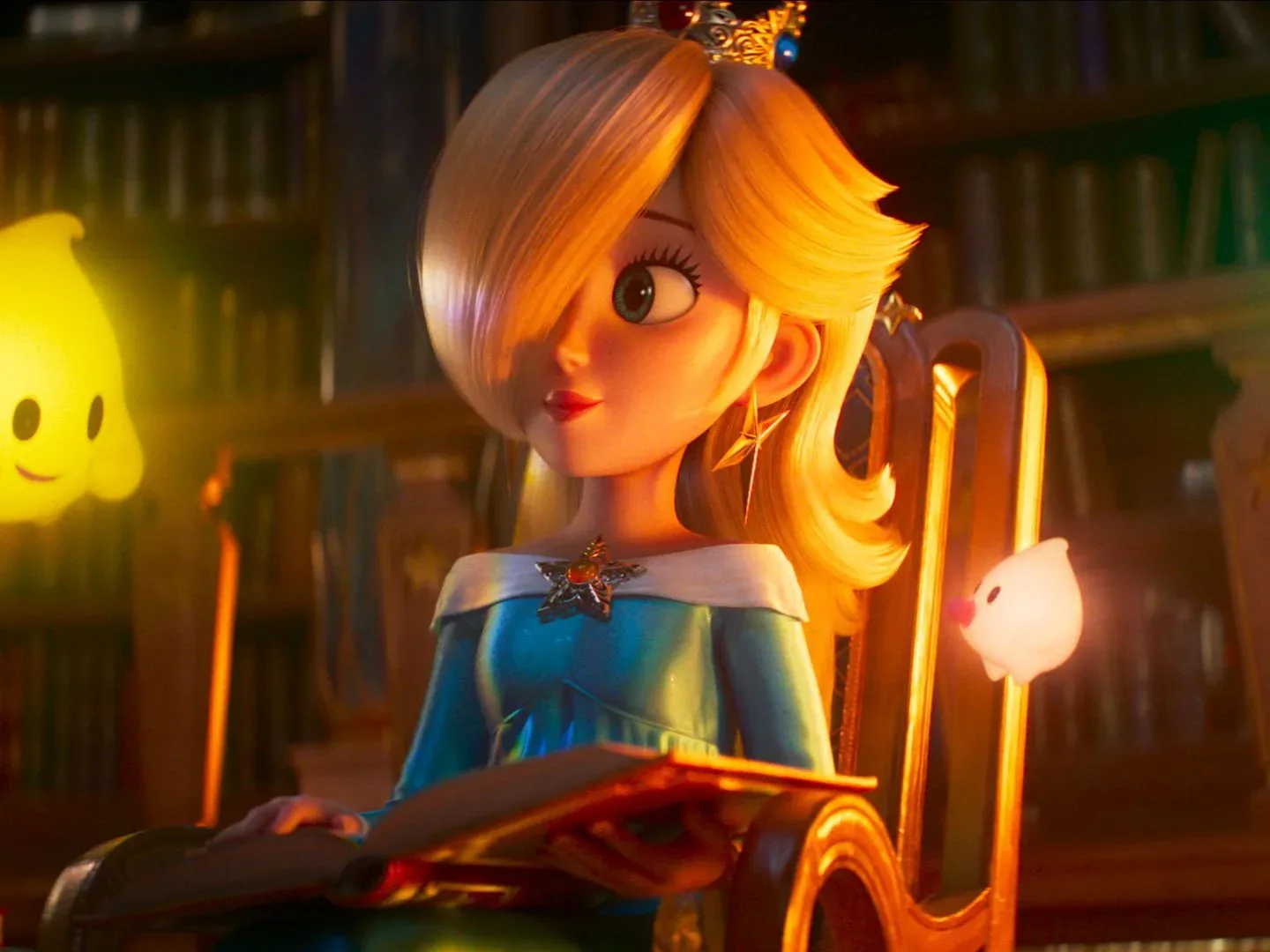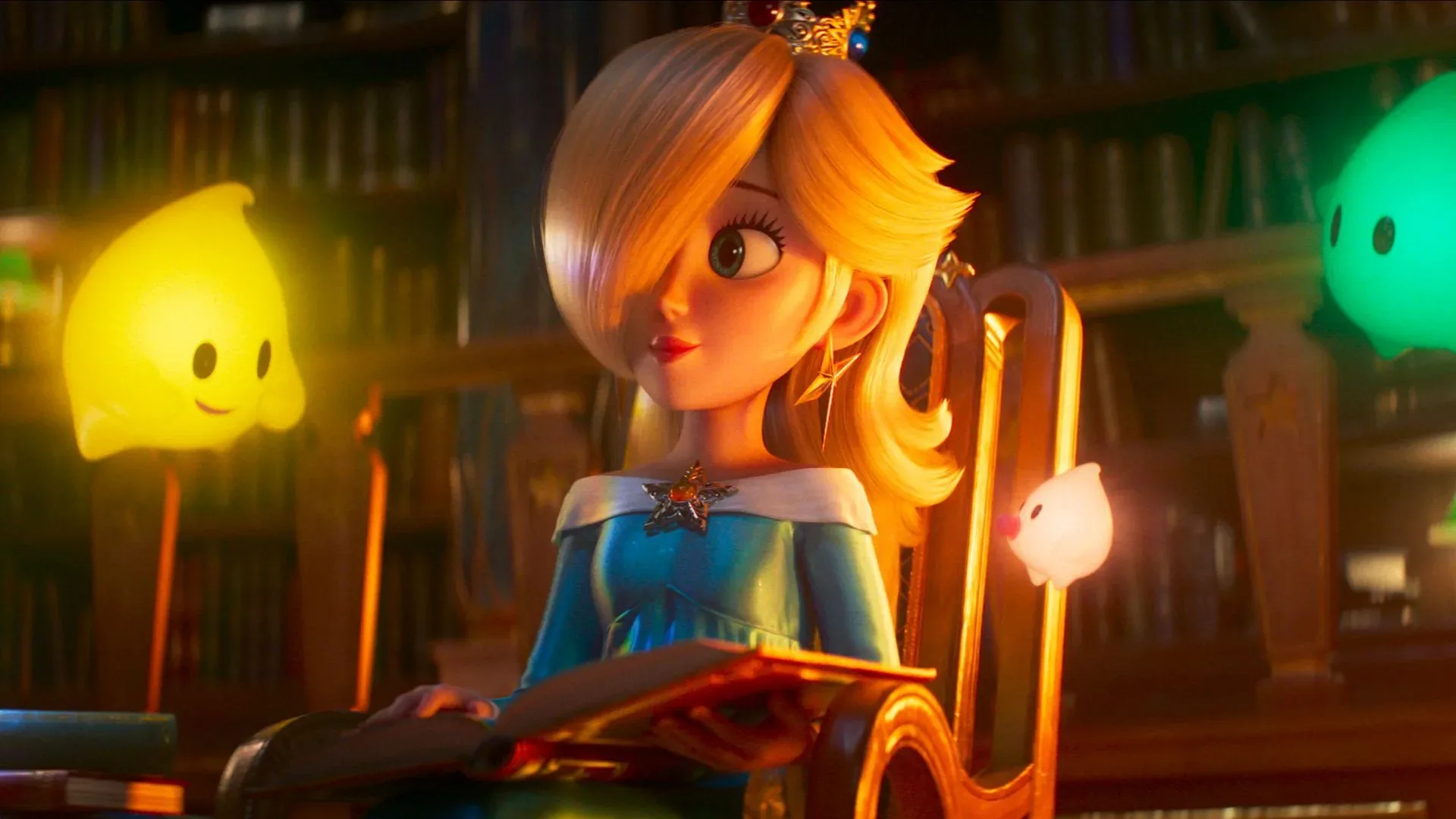
Mercedes Rose, the original voice performer for Rosalina in the games, has weighed in on Brie Larson’s portrayal of the cosmic Mario character in The Super Mario Galaxy Movie. Her reaction is both warmly supportive and unmistakably candid: Larson was “a great Rosalina,” Rose wrote, but the character needed substantially more screen time.
Rose also made clear that she would have welcomed the chance to reprise the role herself. “And I DO wish it was ME! :)” she added, pairing a direct sentiment with a lighthearted sign-off.
The response puts words to a tension that can surround major game adaptations. A familiar character’s original game performer may be deeply associated with the part among longtime players, while a movie production can choose a separate actor for its own creative and commercial reasons. Rose’s comments do not diminish Larson’s performance; instead, they distinguish two connected complaints: that Rosalina did not receive enough space in the film, and that Rose would have liked to have played her again.
“Brie was a great Rosalina although I think we can all agree she needed much more screen time. And I DO wish it was ME! :)”
For more context, explore Pixel Lineage Codes for October 2026: Gold, Knowledge, Potions, Lives and Rerolls.
The full reaction has also been recapped by GamersExtra.
Rose’s history with Rosalina
Rose voiced Rosalina from 2007 through 2010, making her the original game voice actor for the character. That history matters because Rosalina occupies a distinctive place in the Mario universe. Rather than simply being another familiar face inserted into an ensemble, she carries a cosmic, storybook-like identity that is closely tied to the Galaxy side of the franchise.
When adaptations bring such a character to the screen, audiences can evaluate more than a vocal match. They may look at how much agency the character has, how the script uses their lore, whether their relationships are developed, and how fully the performance is allowed to land. Screen time, in this context, is not just a stopwatch measurement. It is the narrative room required to establish motivations, choices, reactions and relationships.
Rose’s post specifically praises Larson’s work, so it should not be read as an attack on the film’s casting. Her point is more precise: she believes the movie did not provide enough of Rosalina. That is a criticism of prioritization and storytelling focus rather than a suggestion that Larson was the wrong performer.
A central character with limited room to breathe
The film revolves around Rosalina, yet the supplied assessment of the movie likewise argues that she does not receive much time on screen. That disconnect is a meaningful one. A story can be about a character in the broad structural sense—through its stakes, mystery, conflict or emotional premise—without consistently putting that person at the center of individual scenes.
That kind of structure can leave viewers with the feeling that an important idea has not been fully explored. In an animated event film, a large cast, action beats, comedy and franchise references all compete for a finite running time. If a character is positioned as crucial to the premise but appears less than audiences expect, the result can be a sense of imbalance even if the plot technically remains centered on them.
The criticism attached to the film described it as energetic and creative, while also finding its treatment of Rosalina strange and its story underdeveloped. Rose’s reaction aligns with the first part of that concern at least: regardless of how viewers rate the movie overall, more Rosalina material may have helped clarify the film’s intentions and give Larson’s performance more opportunity to define the role.
The Peach connection changes the usual lore
The Super Mario Galaxy Movie also makes a major lore change by revealing Rosalina and Peach as sisters. That is a notable departure from the usual understanding of the characters. A familial twist of that size naturally raises expectations for scenes that explore what the connection means emotionally and dramatically.
It can affect how viewers interpret both characters, as well as the stakes of the larger story. But a reveal alone is not the same as development. For a relationship twist to feel earned, audiences generally need enough material to understand the bond, its complications and its consequences. That is another reason a perceived shortage of Rosalina screen time could stand out so sharply: a character at the heart of a new family connection needs space for the relationship to register.
None of that establishes what a different version of the film would have been like. It does, however, explain why Rose’s concise social-media response has resonated. Her observation touches the film’s treatment of one of its biggest creative decisions, not merely a cameo or a minor piece of casting trivia.
Critical response and audience response point in different directions
The movie’s reception presents a split picture. It holds a 42% critics’ score on Rotten Tomatoes and an 87% audience score, while earning more than $1 billion worldwide at the box office. Those figures measure different things, and they should not be treated as interchangeable.
- Critics’ score: an aggregate of reviews from critics, useful as a snapshot of professional critical consensus rather than a universal verdict on quality.
- Audience score: a separate aggregate based on audience response, reflecting how participating viewers rated the film.
- Box office: ticket revenue, which demonstrates commercial performance but does not by itself reveal why each ticket buyer liked, disliked or chose to see a film.
Together, those results suggest a release that found a very large audience despite a substantially cooler critical reception. The gap also leaves room for multiple reactions to coexist. Some viewers may embrace the film’s pace, visual imagination and Mario-world spectacle; others may find that those strengths do not compensate for a thin story or a mishandled character arc. Rose’s take fits neatly into that broader divide because it praises Larson while questioning how the movie used Rosalina.
Why original performers remain important to players
Video-game voice actors can become part of a character’s identity over years of play, particularly when a performance accompanies formative moments in a series. The connection is not always based on sheer quantity of dialogue. It can be rooted in tone, timing, emotional texture and the particular way a performer helped make a newly introduced character feel distinct.
Rose’s statement shows the positive and complicated side of that connection. She did not frame Larson as a rival to be dismissed. She called her a great Rosalina. At the same time, Rose acknowledged a feeling that many returning performers might recognize: wanting the opportunity to revisit work that remains meaningful to fans.
For audiences, the point is not that an adaptation must always duplicate game casting. Film and game productions operate differently, and the supplied information does not offer a reason for the movie’s casting decision. What Rose’s response does illustrate is the value of recognizing a character’s performance history. The original actor’s relationship to Rosalina is real, even when a movie takes the character in a separate casting direction.
Collaboration remains part of Mario’s film approach
Illumination CEO Chris Meledandri has previously described bringing Shigeru Miyamoto and the team into the center of the movie-making process as an important part of the Super Mario films’ approach. He characterized that arrangement as new for Illumination, which had made its earlier films entirely within the studio.
That collaboration is relevant to the current discussion because adapting Mario is not simply a matter of transferring recognizable names and imagery to another medium. It involves choices about lore, character relationships and which pieces of a vast game legacy become central in a single film. The Rosalina-and-Peach sibling reveal is a vivid example of the kind of choice that can emerge from that process: familiar material can be preserved, reinterpreted or expanded.
Whether viewers embrace those choices often comes down to execution. In Rosalina’s case, Rose’s response and the reaction summarized above arrive at a similar practical point. If the film asks audiences to treat Rosalina as pivotal, then the character needs enough presence for that importance to feel visible on screen.
What Rose’s response actually says
It is easy for a short post to be reduced to a simple casting grievance, but Rose’s words are more balanced than that. She offers a compliment to Larson, argues for more Rosalina material and openly expresses her own wish to have returned. Each part is important.
Her response is therefore less about denying the movie’s version of Rosalina than it is about asking for a fuller one. It also serves as a reminder that a successful box-office adaptation can still leave players and performers wanting more from a specific character. With a worldwide gross above $1 billion and strong audience scoring, the film plainly reached an enormous public. Yet its treatment of Rosalina remains a focal point for those who expected the Galaxy character to have more room in the story.