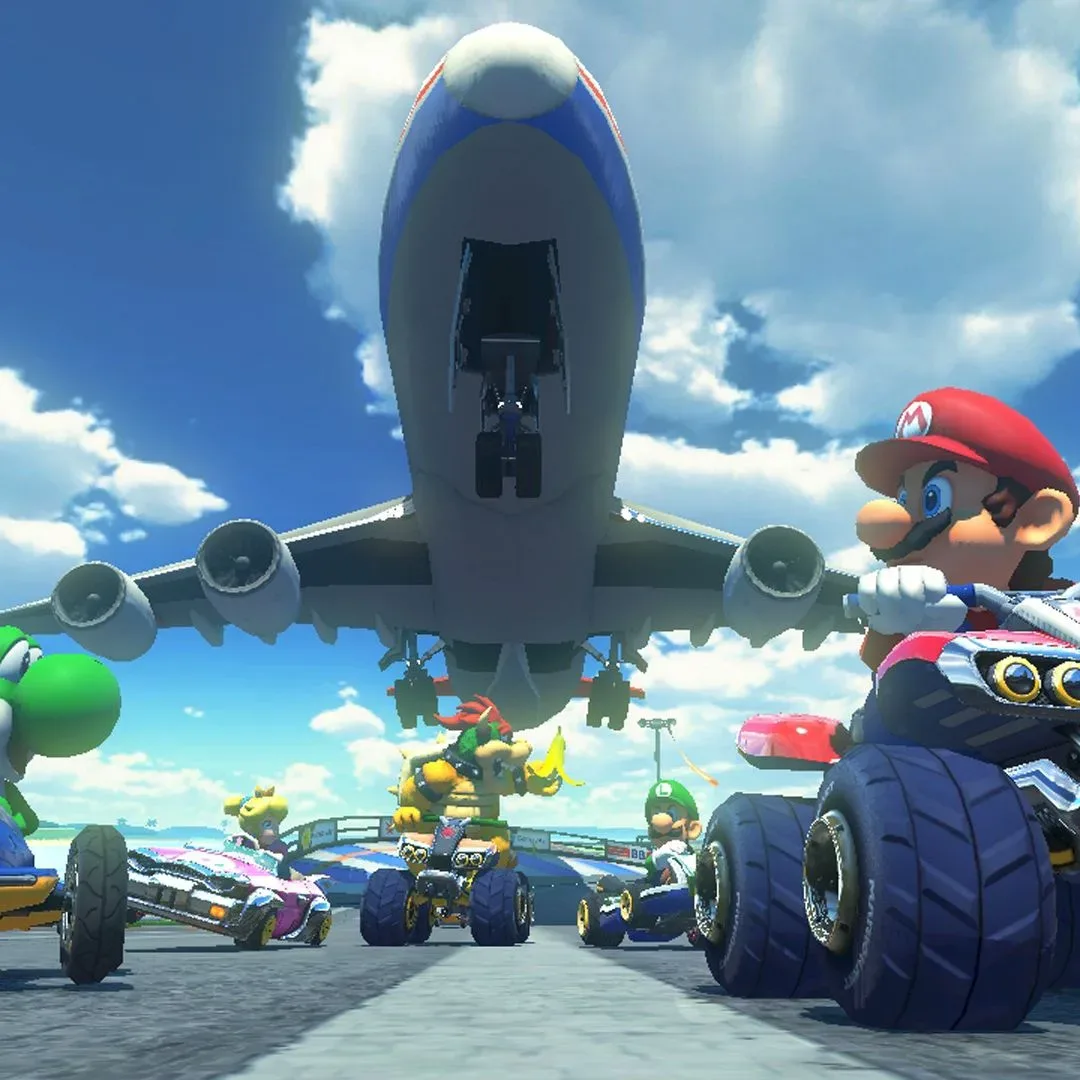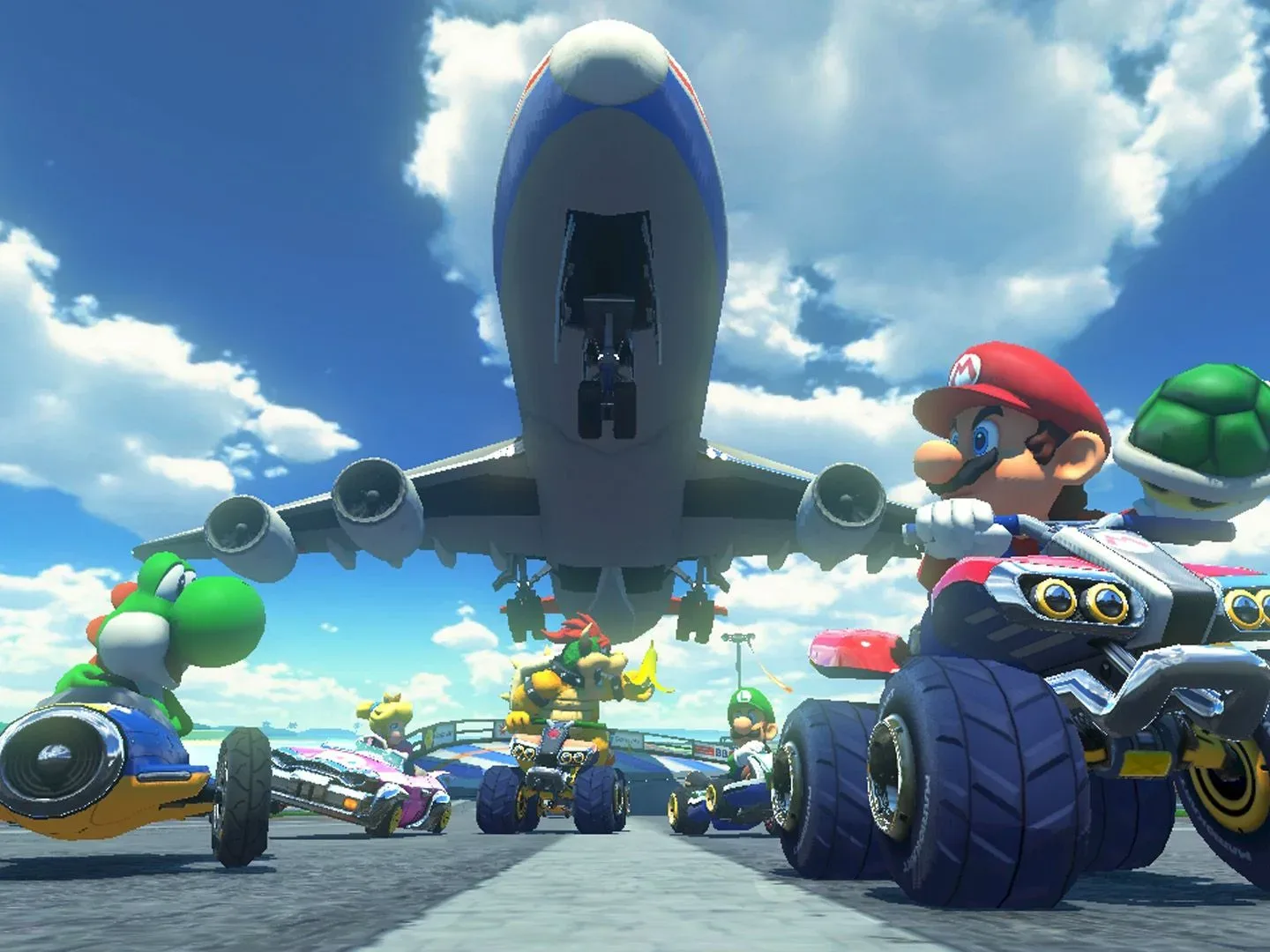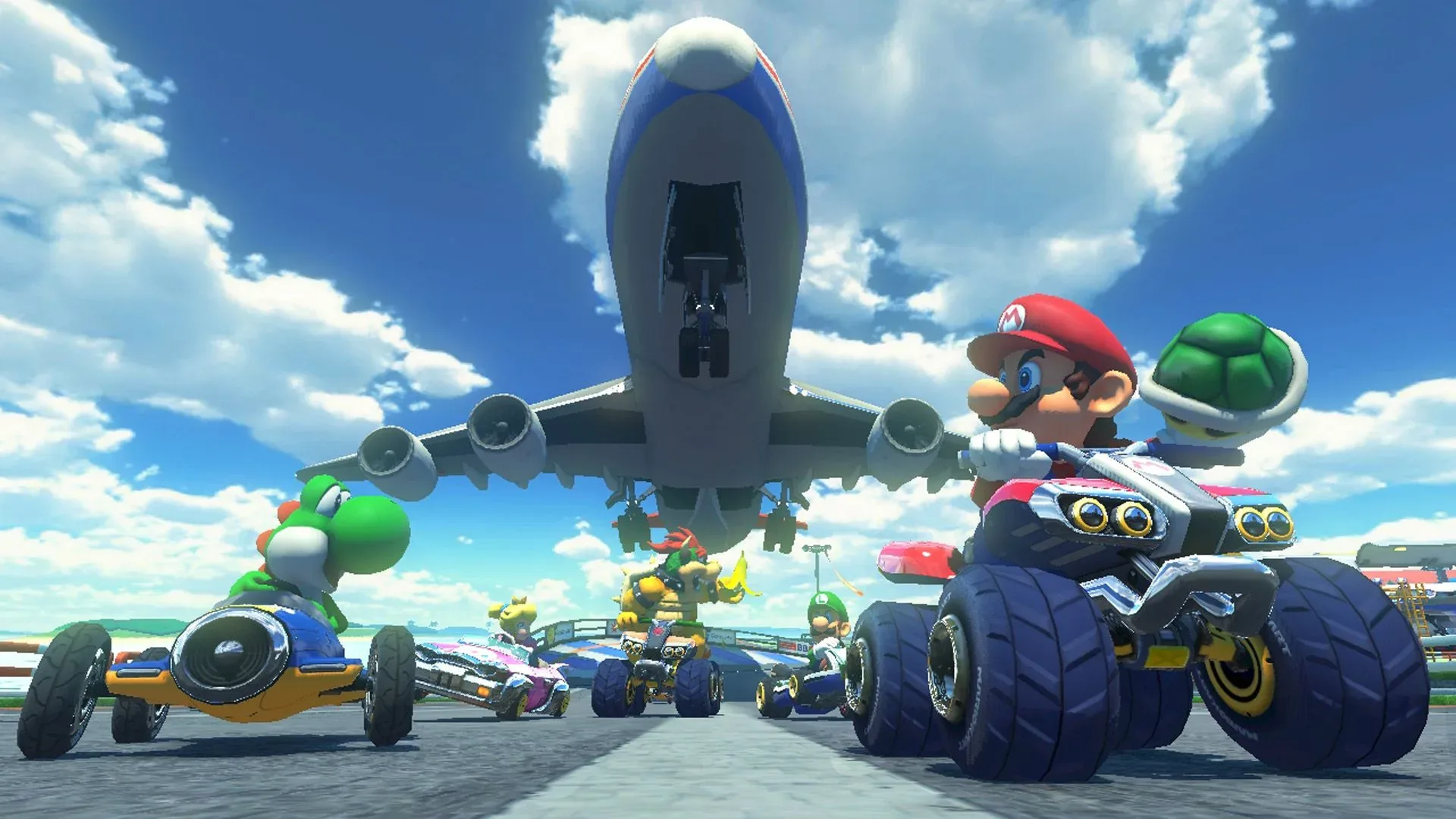
There are racing games that age gracefully, and then there is Mario Kart 8 Deluxe, which appears to have found the secret item that grants eternal relevance. Nintendo’s Version 4.0.0 update gives the long-running racer a substantial set of Nintendo Switch 2-focused improvements: support for the new system’s display and high-resolution televisions, reduced waiting before races and battles, CameraPlay support, and larger local multiplayer possibilities.
It is an unusually consequential refresh for a game whose roots reach back to Mario Kart 8 on Wii U in 2014. The Deluxe edition has already had a famously long second life, bolstered by its Booster Course Pass, and this patch makes it even easier to picture the game remaining a regular fixture at living-room gatherings. In the Mario Kart household, apparently, retirement means receiving a fresh coat of paint, a quicker loading screen, and seven additional people who can all throw shells at you.
What Version 4.0.0 changes on Switch 2
The headline addition is visual support aimed at Nintendo Switch 2 and high-resolution TVs. Nintendo describes the result as clearer visuals. The patch notes do not turn this into a separate remake, nor do they promise a catalog of broader technical specifications, but the stated display support is meaningful for players moving the game onto a newer console and a modern television.
For a game built around reading the road at speed, recognizing hazards, and identifying the extremely suspicious friend lining up behind you with an item, image clarity is not merely decorative. Mario Kart’s tracks are overflowing with moving parts, bright scenery, particles, shortcuts, traffic, and the occasional existential banana. A cleaner presentation should make the transition to a higher-resolution screen feel more fitting for a title that has spent years as one of Nintendo’s all-purpose multiplayer staples.
Version 4.0.0 also shortens the loading time before races and battles begin. This is not the sort of feature that dominates a trailer, but it matters precisely because Mario Kart is so often played in repeat sessions. One race becomes three; three become a tournament; the tournament becomes an argument over whether the person in last place was “targeted.” Small reductions in the gap before the action resumes can add up during a long gathering.
CameraPlay enters the kart garage
The update adds CameraPlay support for GameChat users. The patch notes establish that support, although they do not spell out every possible way groups may choose to use it. Still, its arrival positions Mario Kart 8 Deluxe alongside the social features of Nintendo’s newer hardware. This is a series with a long history of turning friendly competition into a noisy shared event, so any feature connecting faces, reactions, and last-second item disasters feels thematically on-brand.
CameraPlay does not change a drift line or make a red shell less personally insulting. It does, however, potentially make the victorious celebration and the anguished response available to the group in a more immediate way. That is both a feature and an escalation. Anyone organizing a game night may want to review the unwritten rules of couch multiplayer before handing the crown to the person who treats every race like a parliamentary inquiry.
Eight-player multiplayer is the party-sized upgrade
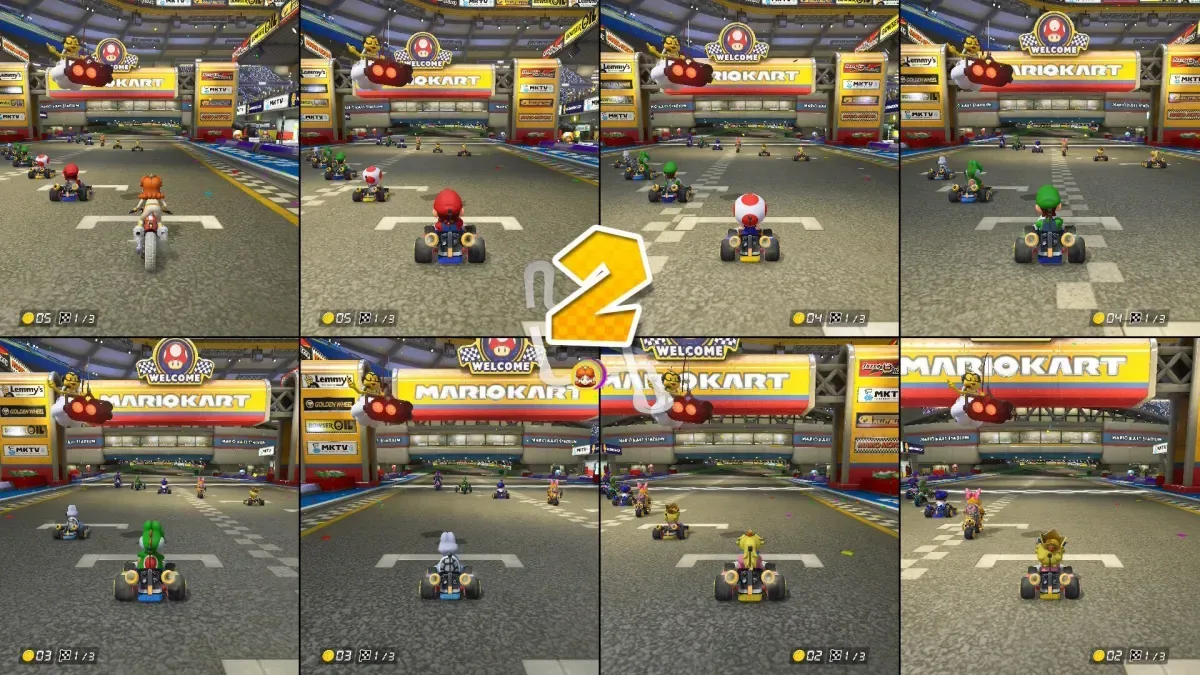
Perhaps the most immediately chaotic addition is expanded multiplayer support on Switch 2. Mario Kart 8 Deluxe can now accommodate five to eight players in multiplayer mode, with up to seven Nintendo Switch controllers connected to the system. That creates a very different kind of Mario Kart gathering from the traditional four-player setup.
Eight players means bigger grids of people in the room, more controller logistics, and a higher likelihood that somebody is asked to sit uncomfortably close to the television. It also means Mario Kart 8 Deluxe can serve a larger group without splitting the room into separate sessions. The practical appeal is straightforward: fewer people waiting their turn, more people racing at once, and a much healthier supply of witnesses when somebody insists that the blue shell was a targeted act of sabotage.
Nintendo’s wording specifically identifies the five-to-eight-player range and the ability to connect up to seven controllers on Switch 2. Players considering a large session should keep that hardware requirement in mind rather than assuming every multiplayer arrangement behaves identically. The patch does not provide a sweeping redesign of every mode; it gives Switch 2 owners a larger social lane to drive in.
That focus makes sense for Mario Kart. Its endurance has never rested on a single competitive format or a fleeting novelty. The game works because it can be a quick rematch between two people, a family activity, a dorm-room ritual, or a full-scale group event where the real championship is surviving the post-race debate. Increasing the player count takes one of the game’s core strengths and simply gives it more chairs.
Small racing tweaks may create large feelings
Version 4.0.0 includes a pair of gameplay adjustments worth noting. First, Nintendo has increased player speed during races by the equivalent of one coin. The change is broadly phrased in the notes, and Nintendo has not attached an elaborate explanation to it, but it is a material rule adjustment: the baseline pace of racing is now faster by that stated amount.
Second, racers using Boo to become invisible will no longer slow down upon entering an off-road area. Boo has always been an item capable of shifting a race’s emotional temperature in a hurry, and this revision removes a particular movement penalty while its invisibility effect is active. It is a targeted change, but Mario Kart has repeatedly proved that targeted changes can become the basis for extremely broad opinions.
Neither adjustment should be overstated as a total reinvention of the driving model. Yet their inclusion shows that this is not only a resolution-and-convenience patch. Nintendo is still modifying the way races feel and how at least one item interacts with track terrain. Veteran players, competitive groups, and anyone who has a favorite shortcut to defend will likely notice the implications over time.
Booster Course Pass owners get a longer VS Race option
There is also a change for players with the $24.99 Booster Course Pass. In the VS Race rules, the available setting now includes 96 Races. That number is delightfully excessive in the way only Mario Kart can make sound reasonable. A 96-race setting is not a casual “one more before bed” proposition. It is a scheduling commitment, a beverage-planning exercise, and perhaps an opportunity to discover who among your friends is secretly powered by pure Rainbow Road determination.
Importantly, this particular option is tied to access to the Booster Course Pass. The update does not say that every player receives that expansion content automatically; it identifies the new 96-race setting for those who have the pass. For groups that already own it, the option offers a more marathon-like framework for VS play and a clear excuse to turn a single evening into an unnecessarily serious motorsport season.
A veteran racer still gets the new-console attention
The timing inevitably invites comparison with Mario Kart World, the newer entry in the series. Mario Kart World received two new Knockout Tour routes at the beginning of July, but the information available here does not point to a similarly sized new update for it now. That does not establish what Nintendo’s next plans for Mario Kart World will be, and it would be premature to treat a gap in updates as a final verdict on the newer game’s future.
Still, Mario Kart 8 Deluxe getting a conspicuous Switch 2 patch is notable. It reinforces the remarkable durability of a game that began life in the Wii U era and later became an even larger cultural fixture in Deluxe form. Its history of outselling its successor has helped fuel the sense that Nintendo’s oldest active kart celebrity remains especially well cared for.
For Switch 2 players, the immediate takeaway is less philosophical: Version 4.0.0 offers clearer visuals on compatible displays, faster starts, CameraPlay support, bigger multiplayer groups, a modest speed increase, a Boo off-road adjustment, and a giant VS Race count for Booster Course Pass owners. That is a generous maintenance package for a game that apparently sees no reason to stop taking the podium. If you are preparing an eight-person session, bring controllers, patience, and a house rule against invoking friendship during the final lap.