The most useful Nintendo Switch 2 accessory may also be the least theatrical. Orzly’s Carrying Case for Nintendo Switch 2 does not arrive wrapped in character art, packed with a battery, or trying to turn a backpack into a spacecraft. Its pitch is more grounded: a molded home for the handheld, a substantial game library, and the little bits of gaming equipment that otherwise spend travel days roaming loose in the bottom of a bag.
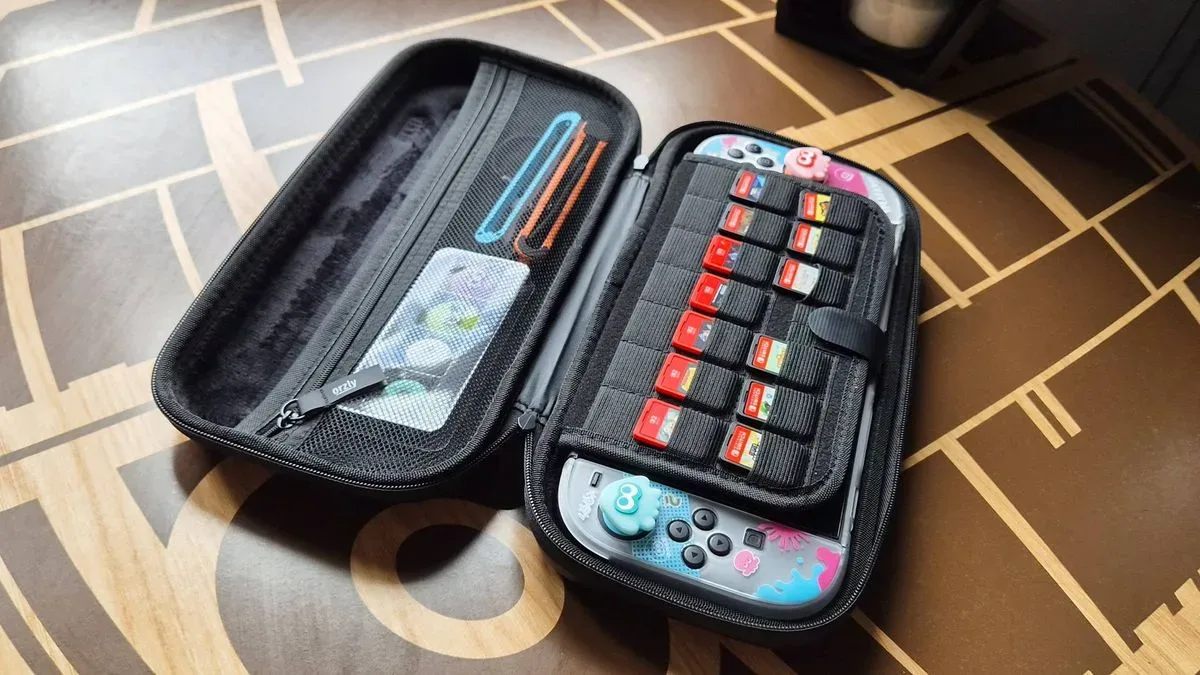
That restraint is important in a case category where “slim” can mean “one cartridge and a prayer,” while “storage” can sometimes mean putting a lumpy bundle of accessories directly against a console screen. The Orzly case appears aimed at the middle ground. It is a clamshell hard case with a molded Switch 2 compartment, a zipped mesh section for smaller gear, extra document space, and a game flap said to hold as many as 21 physical titles.
At a listed $29.99 in the US and roughly £20 in the UK, it is positioned as a budget-minded option rather than a premium travel vault. That makes its central tradeoff refreshingly clear: buyers get meaningful carrying capacity and a broad color selection, but should expect a case with more bulk than a minimalist shell.
A deliberately plain exterior leaves room for personality
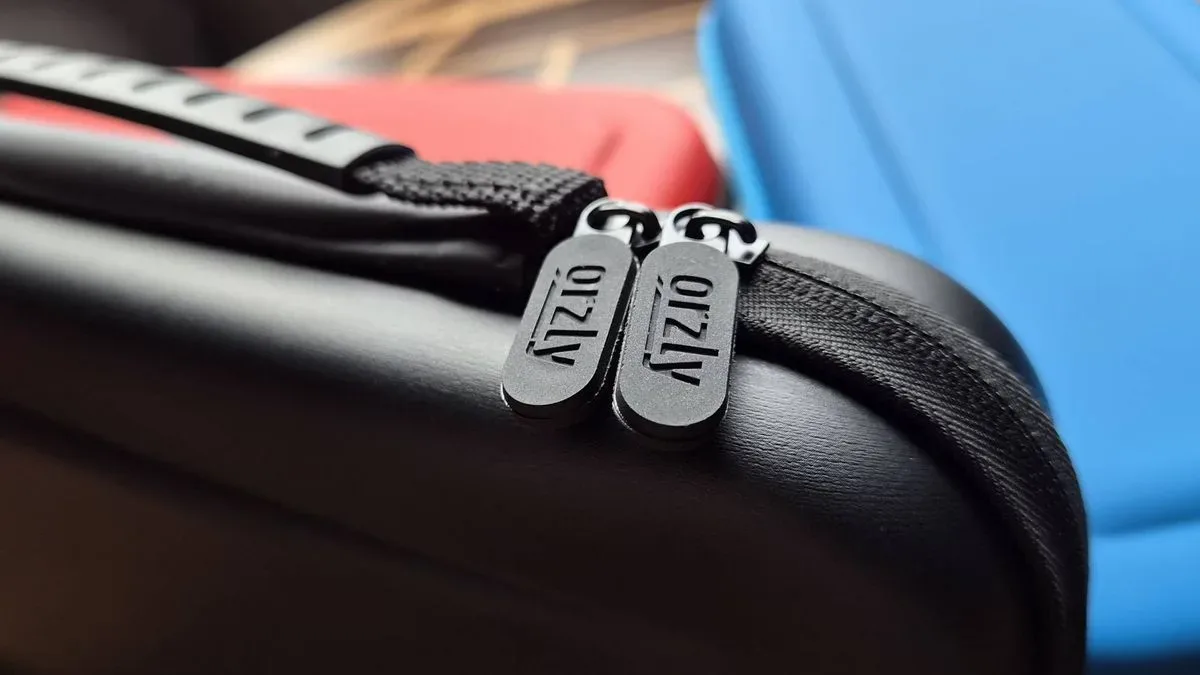
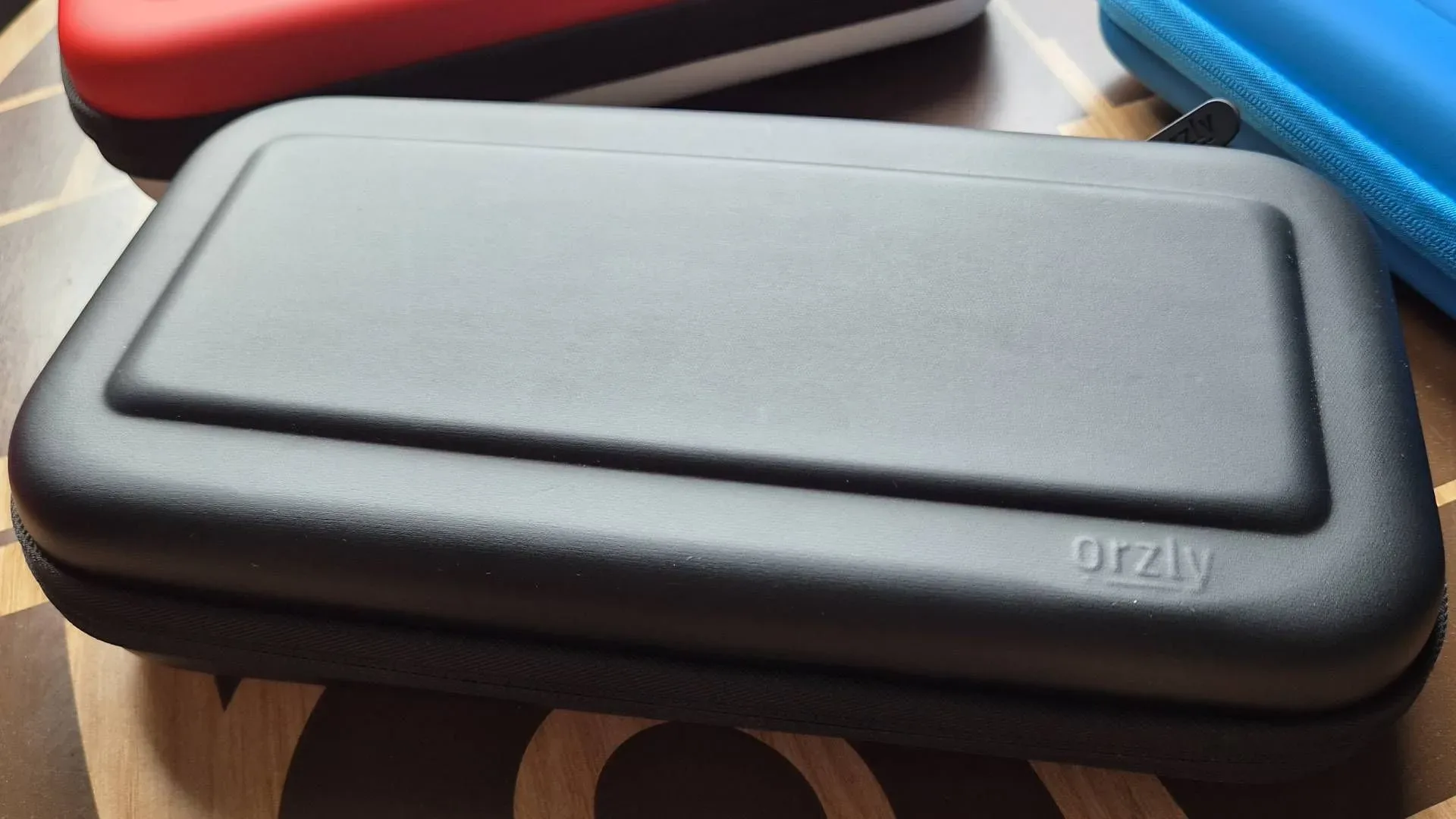
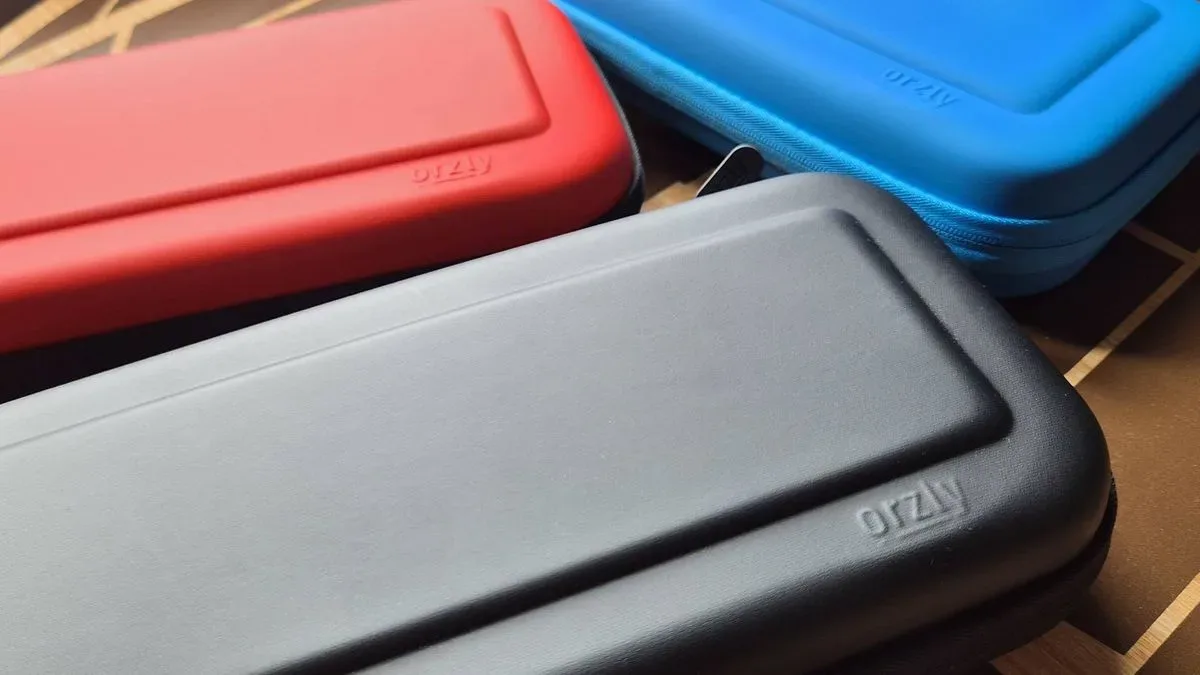
Orzly has made cases since the first Nintendo Switch era, and the Switch 2 version continues the company’s familiar formula of uncomplicated protection in multiple colors. The outside is glossy, with an embossed rectangle in the middle and small Orzly branding toward the lower-right corner. There are no oversized logos or busy licensed graphics competing for attention.
That can sound almost too plain on a product page, but it serves a genuine purpose. A case without permanent character art is easier to match with a player’s preferred handheld colors, bag, stickers, or broader setup. It can also work as a blank canvas for those who enjoy personalizing accessories. The restrained look should appeal just as much to someone who wants their Switch 2 gear to look discreet on a commute as it does to a collector planning a custom design.
Reported color options include black, blue, and a “Poke” treatment that uses a red-and-black combination. The latter is a nod toward Pokémon styling without leaning as hard into the bright, officially licensed look common to many Nintendo accessories. Black is the safe, professional choice; brighter versions offer a bit more personality. One limitation, however, is that colorful exteriors apparently do not bring matching colorful interiors. The inside remains black across those variants, which is practical but less exciting for buyers choosing a case specifically to add color to their kit.
That decision may well be part of how Orzly holds the price down. The real question is not whether a black lining wins any design awards. It is whether the storage layout makes daily use easier without jeopardizing the console it is meant to protect.
The layout prioritizes separation, not just empty space
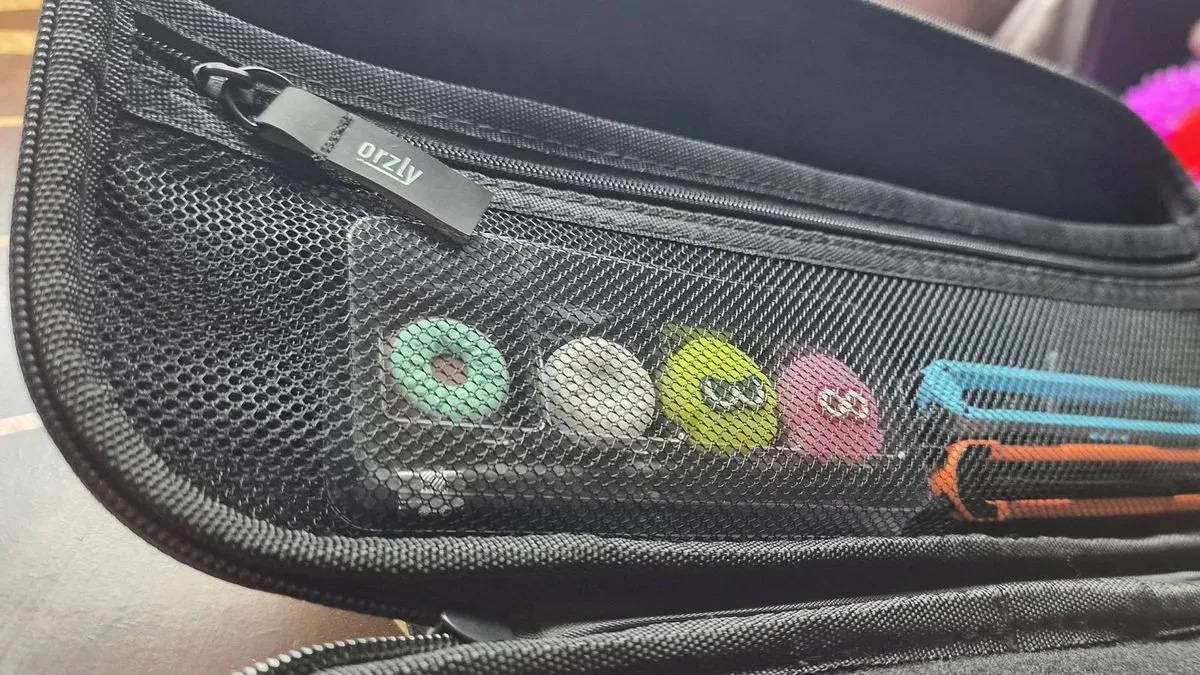
The upper half contains a zippered fabric-mesh pocket for small accessories. Beneath or behind that pocket is an additional open sleeve-like area suited to thin materials: paperwork, notes, a cleaning cloth, or other flat items. Game manuals are no longer the standard packing material they once were, but players who keep printed notes, maps, or accessibility reminders could find a reason to use the space.
The lower half is shaped for the Nintendo Switch 2 itself. A soft, velvet-like lining is intended to limit everyday scuffs while the molded form keeps the handheld from wandering around inside. A central Velcro strap works with a protective fabric flap, adding a layer of retention over the console. That flap is also where the cartridge storage lives, with capacity for up to 21 games.
Twenty-one slots is an unusually generous number for a carry case at this price. It will not matter much to all-digital players, of course, but it has obvious appeal for cartridge buyers, library builders, families sharing a system, and anyone who likes to keep a variety of multiplayer options nearby. There is a particular kind of joy in having a portable “pick one” library rather than discovering that the one game you packed is the one nobody wants to play.
That makes the case a neat companion to the social logistics described in the unwritten rules of couch multiplayer. A well-stocked case does not solve every group-gaming disagreement, but it does make it easier to pivot from a failed choice to something everyone can actually enjoy.
Why depth in the accessory pocket matters
The case’s most valuable feature may be the depth of its upper storage section. Accessory pockets are useful only when the things inside do not create pressure against the handheld below. A mesh pouch loaded with controller pieces, storage cards, cables, grips, or other hard objects can become a concern if it is compressed directly over the display during transit.
Orzly’s design reportedly creates a more recessed compartment above the console, leaving clearance between the stored accessories and the Switch 2. That does not mean users should treat the pocket as a suitcase for every cable and controller component they own. Sensible packing still matters. But it is a more reassuring arrangement than a thin lid pocket that bulges inward as soon as it is used.
Small, lightweight items make the most sense here. Joy-Con 2 rails, a stylus, thumb grips, a slim cleaning cloth, or a few compact essentials are examples of the sort of gear that fits the case’s purpose. An owner should be especially cautious with bulky chargers, large power banks, or densely packed bundles of equipment. The case has room, but room is not an invitation to convert its lid into a hydraulic press.
A carrying case earns its keep when it protects the console without forcing players to choose between bringing accessories and protecting the screen.
Players with a growing physical library should also consider the case part of a broader organization plan, not the entire plan. Keeping every cartridge permanently in a travel case can be convenient, yet a labeled storage approach at home helps prevent duplicate purchases, missing games, and the familiar ritual of searching every pocket before a trip. The principles in how to store retro games so a collection stays playable translate well to modern physical games too: protect, identify, and keep the library easy to locate.
The compromise is bulk, and it is a real one
There is no escaping the physical consequence of a deeper accessory cavity, game storage for 21 titles, and a secure molded console bay. This is not the ideal case for someone already playing backpack Tetris with a laptop, lunch, water bottle, camera gear, and half a wardrobe. It is expected to be larger than a basic hardshell case, precisely because it attempts to carry more.
For players who need the smallest possible footprint, the PowerA Slim Case is a notable alternative. Its listed price is $19.99 / £9.99, undercutting Orzly, and its slim format is better suited to packed bags. The compromise goes the other way: accessory storage is essentially absent. It is a choice between volume and versatility, not a case of one design being universally superior.
- Choose the Orzly Carrying Case if you want console protection, a sizable cartridge collection on hand, and space for small accessories.
- Consider a slim case instead if every inch in a bag matters more than carrying rails, grips, a stylus, or other extras.
- Look higher up the market if charging functions or more feature-heavy travel solutions are priorities; the Belkin Charging Case Pro occupies that more elaborate end of the spectrum.
- Pack thoughtfully either way because no interior design eliminates the risk of stuffing hard, heavy items against a handheld.
What the value proposition really is
Orzly’s Switch 2 case is not trying to dethrone feature-rich products by copying them. It skips the charging hardware, the flashy licensing, and the premium-case ambition. Instead, it offers a functional storage arrangement in a design that can blend in or be customized later. For a player with about $30 or £20 to spend, that is a sensible set of priorities.
The product is especially compelling for a Switch 2 owner who buys cartridges, carries small controller accessories, and has enough bag space to accept a thicker case. The 21-game capacity is not merely a specification to put in bold type; it changes what the case can do on a weekend away, a trip to a friend’s house, or a family visit where co-op options are useful. The recessed accessory compartment is equally practical, because it addresses the central anxiety of travel cases: whether “extra storage” is secretly just extra pressure on the screen.
There are caveats. The plain black interior may disappoint anyone selecting a vibrant exterior. The overall size will turn off minimalists. And buyers should verify current pricing, color availability, and compatibility details with retailers, particularly because sales can bring the listed $29.99 price lower. But the core appeal remains simple: this looks like a straightforward Switch 2 case because it is one, and its storage-focused design may be exactly what many players need.