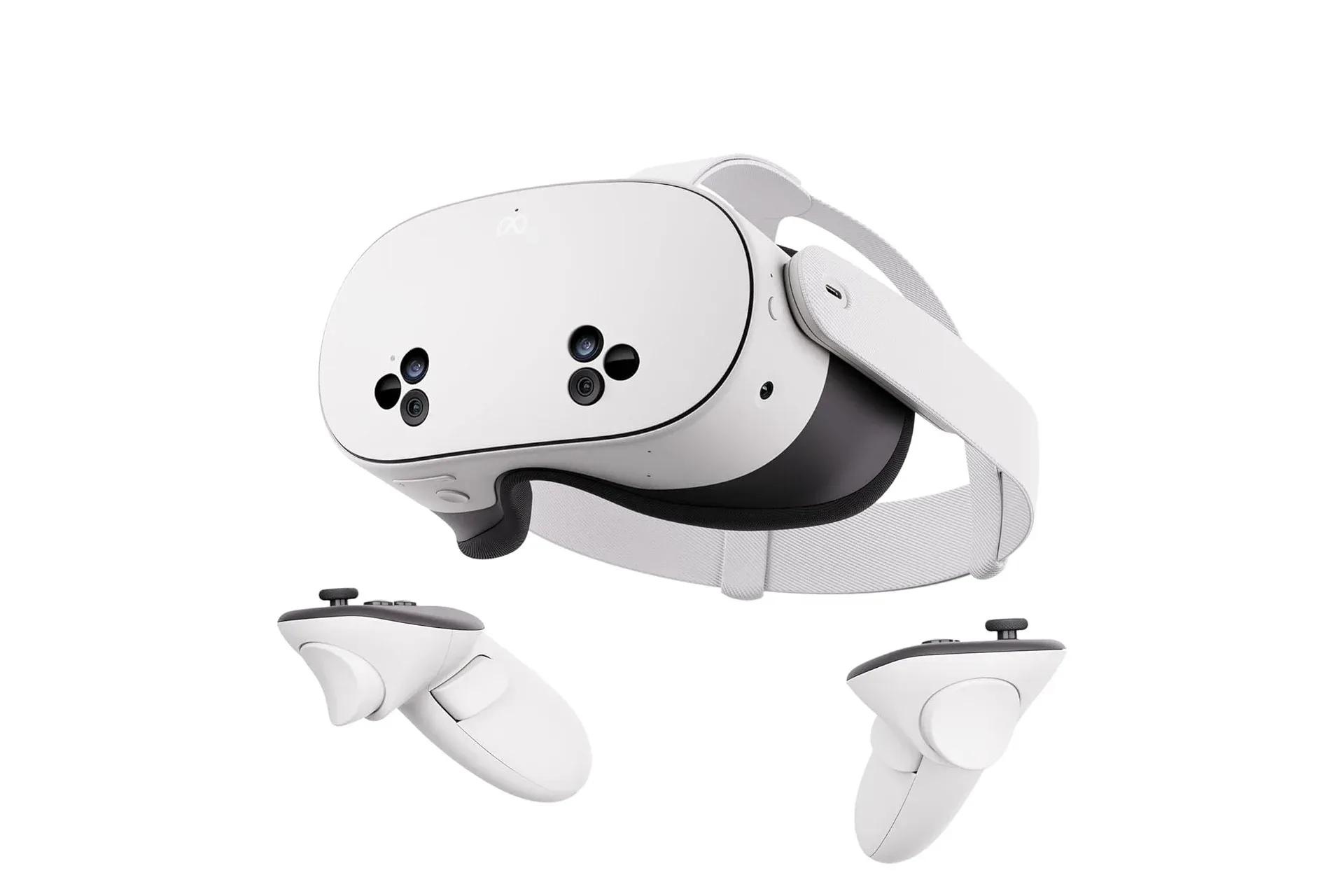
The Meta Quest 3S 128GB is currently listed at $297, reduced from $350. That is a $53 difference, or 15% off the stated regular price, for a self-contained VR headset that includes Touch Plus controllers and does not require a gaming PC, console, external tracking camera or base station to run.
For people considering their first VR headset, the most consequential detail is not a single specification: it is the Quest 3S’s standalone approach. The headset contains its own Qualcomm Snapdragon XR2 Gen 2 processor, 8GB of memory and 128GB of internal storage. In practical terms, that means it is designed to run compatible games and apps without adding another major piece of hardware to the purchase.
Its feature set spans conventional virtual reality, full-color mixed reality, video viewing and fitness applications. The discount makes the entry price lower, but prospective buyers should still judge the device around their expected use, their storage needs and their tolerance for a headset with an estimated 2.5-hour battery life.
What the $297 listing includes
The listed model has 128GB of built-in storage and comes with Touch Plus controllers. It has two RGB color cameras on the front, which provide the view of a room used for color passthrough and mixed-reality functions. The package also includes a glasses spacer, while the head strap and lens spacing offer adjustments intended to help users fit the headset.
The headline price applies to the 128GB configuration. Storage is worth treating as a separate buying consideration rather than an invisible specification. Because this is a standalone device, its internal storage is where compatible games and apps reside. A buyer expecting to keep a broad selection of installed content should account for that capacity from the outset; the supplied information does not establish how much space any particular game or app requires.
The headset weighs about 1.14 pounds and connects over Wi-Fi 6E. Wireless networking matters for online experiences, downloads and connected media uses, though Wi-Fi support does not change the central point that the Quest 3S can operate on its own rather than being tethered to a PC or console.
Standalone VR explained: fewer components, different trade-offs
Standalone VR means the computing hardware and motion-tracking systems are built into the headset. Rather than arranging external sensors around a room or connecting a cable to a separate gaming machine, the user puts on the headset and uses its integrated system to track movement. The Quest 3S is described as tracking movement internally, with no external camera or base station required.
That can simplify the setup for gaming, exercise programs and casual media viewing. It also makes the device more practical for someone who does not own a console or gaming PC, since those systems are not prerequisites for its core use. The Meta Horizon Store provides the stated catalog for games and apps, including action, puzzle, fitness and social categories.
Related coverage includes Meta Quest 3S 128GB Drops to $297 With Standalone VR and Mixed Reality Features.
There is a useful distinction here: being standalone is not the same thing as having unlimited storage, nor does it mean the headset never depends on a network. Internal capacity determines how much content can be retained locally, and Wi-Fi is relevant to downloading content and online functionality. Still, the lack of a required external computer or tracking installation is the feature likely to have the greatest impact on convenience.
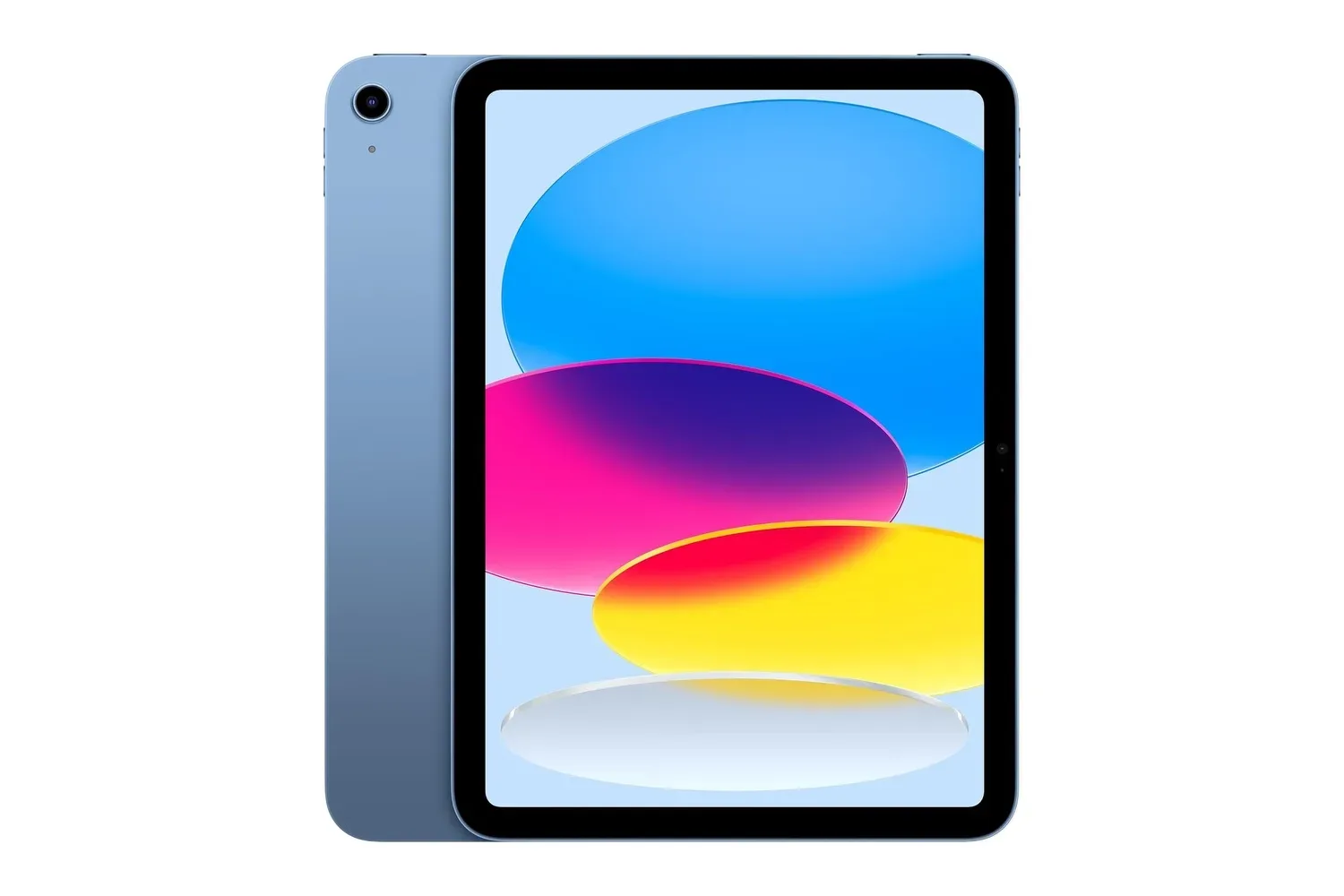
For another look at how a sale price can change the appeal of a self-contained gaming device, see our coverage of the A16 iPad price drop and its App Store gaming role. The devices serve very different formats, but both illustrate that the surrounding software catalog and everyday setup can matter as much as raw specifications.
Mixed reality and color passthrough: what they mean
The Quest 3S supports full-color mixed reality. Mixed reality is the blending of digital content with the user’s actual environment. On this headset, the front cameras can show the room in color while virtual objects, game elements or app windows are overlaid within that view.
The supplied examples are straightforward: a game may put digital objects on a coffee table or connect virtual elements to real walls and furniture, while an app can position windows around the user without fully hiding the room. That differs from a fully enclosed VR view, where the physical environment is replaced by a virtual scene.
Passthrough is the camera-fed view of the real surroundings presented through the headset. It can be used to check the room without removing the device. Color passthrough is especially relevant for users moving between a game, a video screen and everyday awareness of their space. It should not be confused with seeing the room directly through an open visor; the view is created through the headset’s cameras.
For gaming, this opens a different style of experience from traditional VR. Instead of transporting the player entirely to a virtual setting, a mixed-reality app can treat the room itself as part of the experience. For general apps, it can provide a way to keep digital windows nearby while retaining awareness of what is around the user.
Display, lenses and refresh rate
The Quest 3S has a resolution of 1832 by 1920 pixels per eye, Fresnel lenses, a 96-degree horizontal field of view and a 90-degree vertical field of view. Its available refresh-rate options are 72Hz, 90Hz and 120Hz.
These terms describe different aspects of the image rather than interchangeable measures of quality. Resolution refers to the number of pixels used for each eye’s display image. The field of view describes how much of the scene is visible across and up-and-down. Refresh rate, expressed in hertz (Hz), is the number of display updates per second. A 120Hz mode updates more often than 90Hz or 72Hz, although an app must support the relevant mode for it to be used.
Fresnel lenses are the optics between the displays and the user’s eyes. The Quest 3S also provides three lens-spacing positions, allowing users to alter the distance between the lenses. This adjustment is intended to better suit different eye spacing. The included glasses spacer creates more room for people who wear glasses, but fit remains personal: an adjustment feature improves flexibility, not a guarantee that every wearer will find the same level of comfort.
Controllers when precision matters, hands when it does not
Touch Plus controllers are included for interactions that rely on buttons, triggers and accurate controller tracking. That is the conventional input approach for many games, where a physical trigger or button press is an essential part of the control scheme.
The headset also supports hand tracking. With controllers set aside, users can navigate compatible menus and apps with movements such as tapping, swiping and pinching. The two methods are complementary rather than direct replacements. Controllers offer physical controls for titles designed around them; hand tracking is presented as a way to interact naturally with supported interface elements and applications.
Anyone shopping chiefly for game controls should therefore note that both options are part of the product’s design. The headset is not restricted to hand gestures, and users do not have to hold controllers merely to operate every menu or application. Conversely, not every game should be assumed to use the same input method.
Battery life and comfort are practical limits
Meta lists the Quest 3S battery life at about 2.5 hours. That estimate frames the headset as suitable for shorter gaming sessions, a movie or a workout, but it also means battery planning remains part of ownership. The available information does not provide charging-time details or a claim about longer play beyond that estimate.
Comfort is similarly more than a spec-sheet footnote in VR. The headband has multiple adjustments, the headset weighs around 1.14 pounds, and users can adjust lens spacing or add the included glasses spacer. Those are meaningful accommodations for fitting the device, particularly for active applications such as boxing, dancing and cycling. They do not eliminate the need to take account of one’s room, movement and preferred session length.
Who the current deal is most relevant to
The $297 listing is most straightforward for someone who wants an all-in-one route into VR or mixed reality. The Quest 3S combines onboard processing, storage, inside-out tracking, controllers, hand tracking and color cameras in one product. A buyer interested in games, a large virtual screen for movies, fitness apps or mixed-reality experiments does not need to pair it with a PC or console for those stated uses.
It is also relevant to shoppers for whom setup friction has been a barrier. Not needing external base stations, cameras or a wired host system means fewer components to place, connect and maintain. The trade-offs visible in the supplied specifications are the finite 128GB capacity and estimated 2.5-hour battery life, both of which should be weighed against how the headset will be used.
The price reduction is specific: the Meta Quest 3S 128GB is listed at $297, down from $350. Availability and pricing can change, so the important comparison is the live listing at the time of purchase rather than assuming the reduction will remain in place.
Shop the products
Check current price, model and availability at the retailer.