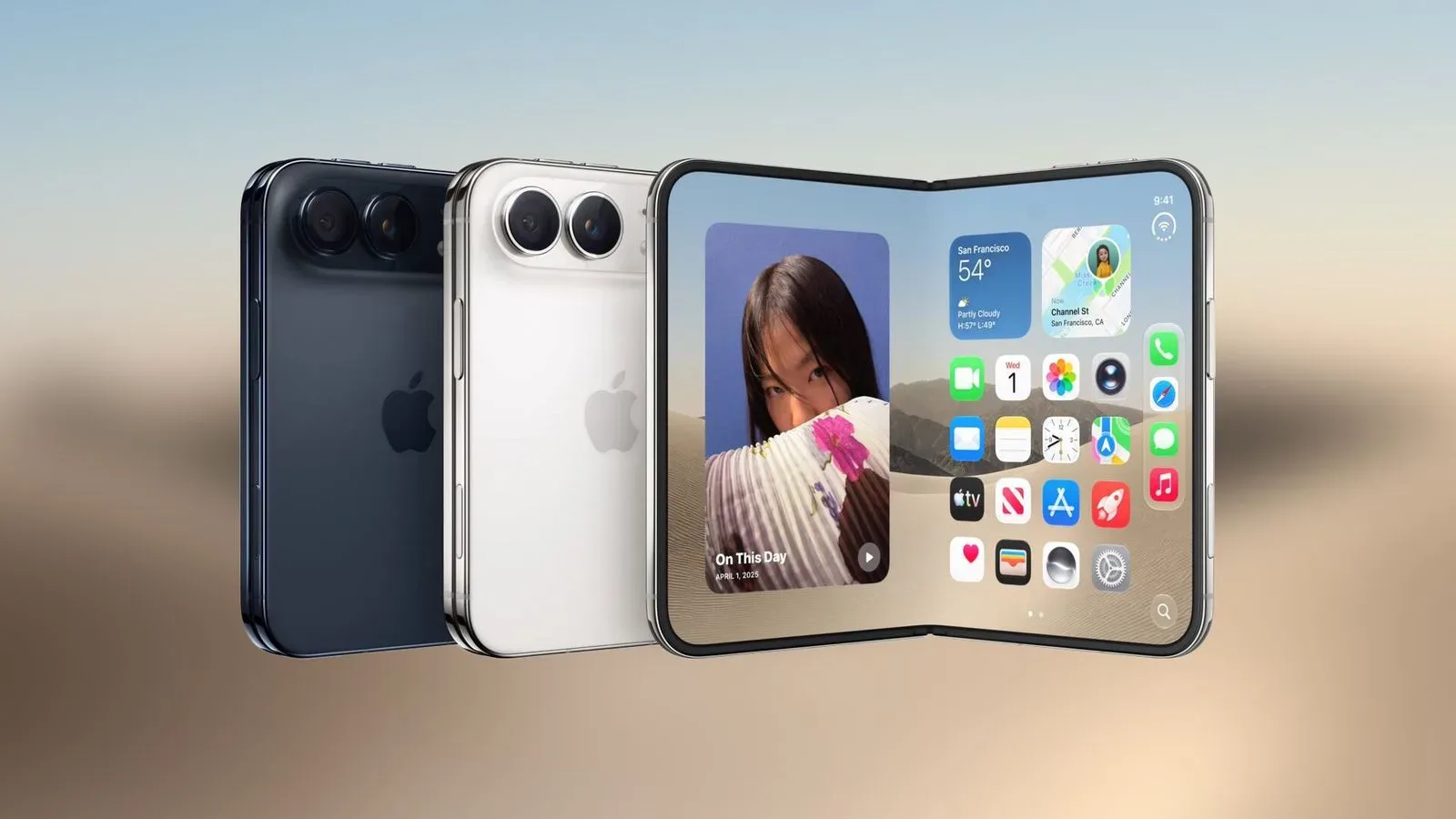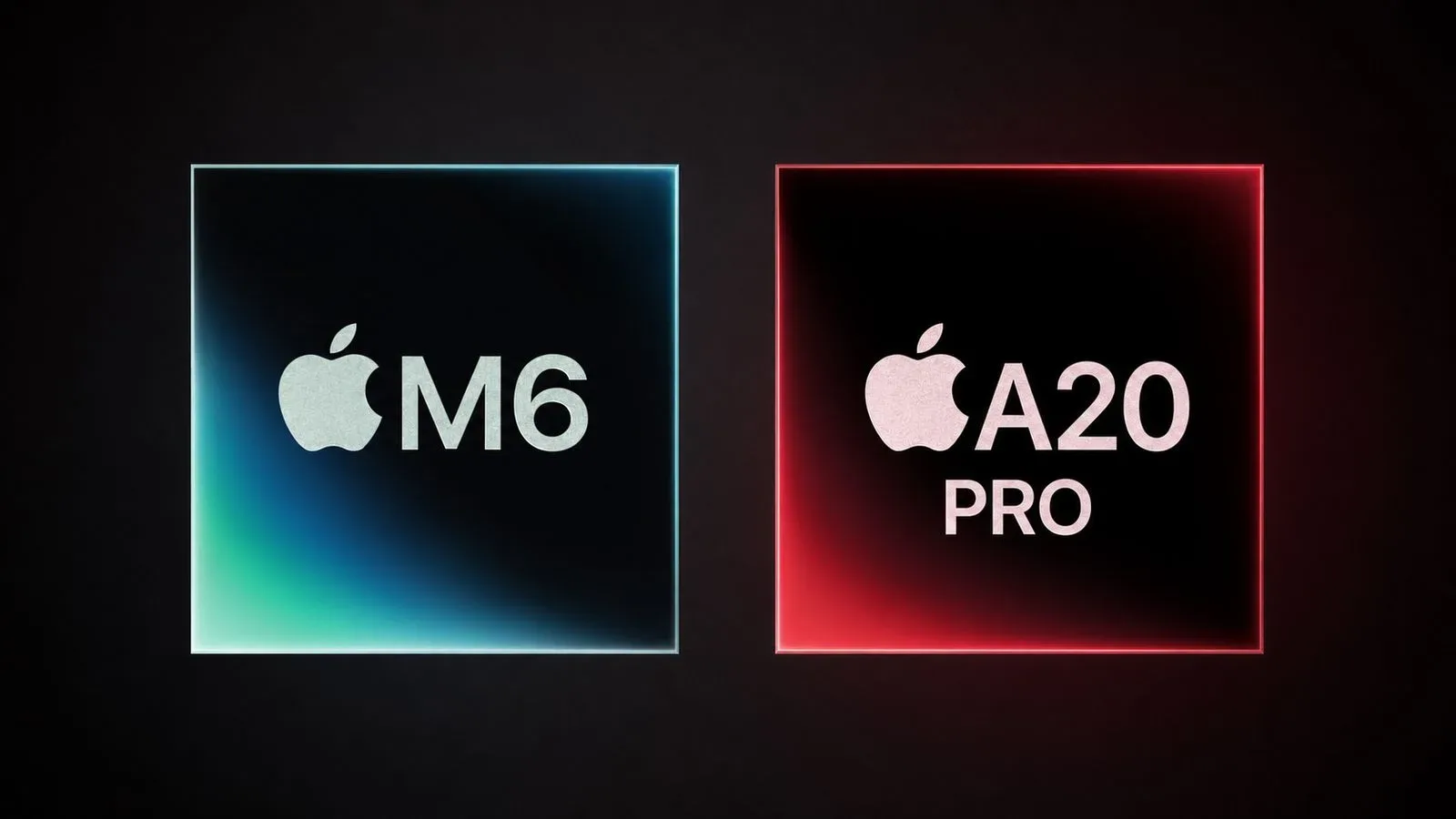
Apple’s M6 chip may live in a Mac, but it offers a useful early map of the silicon likely to power the next high-end iPhone generation. The company’s A-series phone processors and M-series computer processors are not identical chips shrunk, stretched, and sent off to different lunch tables. Still, they commonly share major architectural ideas. That makes the M6 a meaningful clue set for the A20 and A20 Pro expected to sit at the center of the iPhone 18 family.
For players, the interesting part is not simply a bigger benchmark number to argue about in a group chat. The M6 points to a package of possible changes: a 2nm manufacturing process, better graphics fundamentals, continued acceleration for AI workloads, and an approach to memory that could help on-device models feel more responsive. The caveat is important: Apple has not detailed an A20 or A20 Pro in the information available here. Any connection from M6 to an iPhone chip is an informed inference, not a specifications sheet.
The big clue is 2nm, not a magic “everything runs twice as fast” button
The M6 is Apple’s first processor made using TSMC’s 2nm N2 process. A smaller process can fit more transistors into a given area, which gives a chip designer more room to pursue performance, efficiency, or a blend of the two. Reports have placed the A20 Pro as much as 18% faster and as much as 30% more power efficient than the A19 Pro. Those reported ranges broadly line up with the sort of generational movement associated with M6 versus M5.
If the A20 and A20 Pro use that same 2nm process, the story for a gaming phone is potentially as much about sustaining performance as chasing a spectacular first-minute burst. Modern mobile games lean on high-quality materials, bigger environments, more elaborate lighting, and demanding frame-rate targets. Better energy efficiency can help a handset do that work while consuming less power, or devote a portion of the power budget to graphics instead. It does not remove thermal limits, and it does not guarantee every game will suddenly look console-class. It does give Apple more options when balancing speed, battery demand, and heat.
There is also a small but notable shift in the usual Apple silicon timeline. New process technologies have often reached the iPhone A-series first, partly because iPhone scale provides a major proving ground for production yields. This time, the M6 arrived first, on August 25, in a Mac mini priced at $899. That means a future iPhone 18 announcement would not be able to claim Apple’s first 2nm chip. It could, however, still be the first iPhone chip on that process—and that distinction would matter far more to phone buyers than the marketing phrasing.
A dual Neural Engine could change the AI conversation
The iPhone Neural Engine has stayed at 16 cores and around 35 trillion operations per second since A17 Pro, covering three chip generations. M6 changes the equation with a Dual 16-core Neural Engine. Apple says software frameworks can address both engines at once, allowing up to twice the prior generation’s peak neural compute.
The obvious question is whether the A20 Pro gets the same arrangement. It is plausible, particularly in the Pro model, but far from confirmed. Phone dies have stricter constraints around physical area and heat than desktop-oriented hardware. Apple could reserve dual-engine hardware for A20 Pro, choose a different implementation, or maintain a single engine while improving it in other ways.
For games, a stronger Neural Engine is not automatically a visual-effects switch that developers can flip. Its practical uses depend on game engines, Apple frameworks, developer adoption, and the kinds of workloads Apple permits and promotes. But AI capacity increasingly matters outside a game’s rendering loop too: voice handling, image understanding, system-level writing and summarization features, and local models that avoid a round trip to the cloud. More capable on-device AI could be especially useful when a player is travelling, dealing with unreliable connectivity, or simply unwilling to let a mobile game turn every small task into a network request.
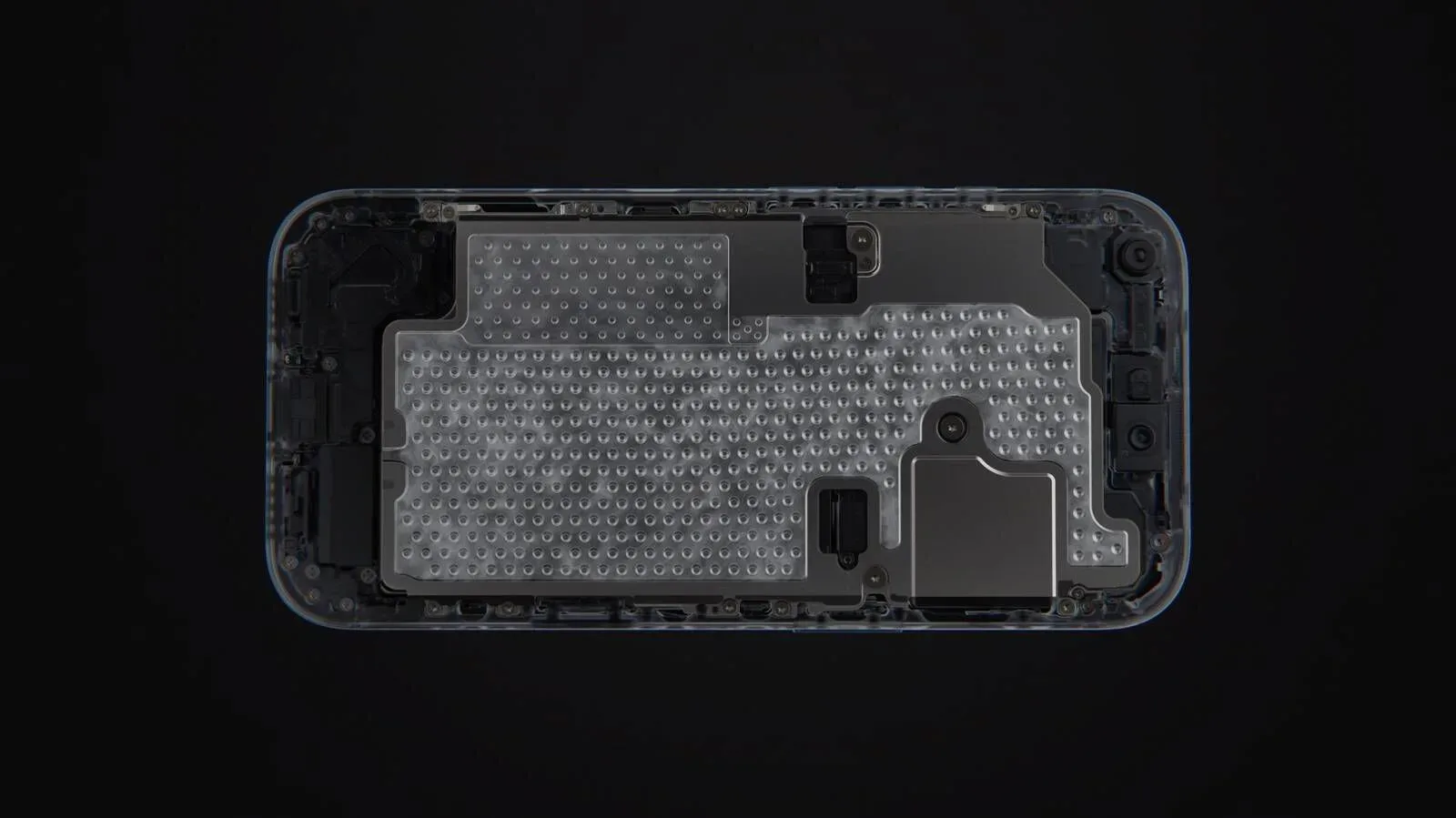
The reported packaging shift may be just as consequential as the headline core count. WMCM packaging is said to place memory on the same wafer as the CPU, GPU, and Neural Engine. In plain terms, it could shorten the route that data takes between the chip’s major parts. Faster or more direct data movement can benefit AI tasks that repeatedly pull on memory, even when raw memory bandwidth does not leap dramatically.
GPU AI performance may rise, but the huge multiplier era looks over
Last generation brought an attention-grabbing jump because Neural Accelerators were incorporated into GPU cores. M5 was described as delivering more than four times the M4’s peak GPU compute for AI, while A19 Pro made a roughly comparable fourfold generational advance in the iPhone 17 Pro. When an entirely new capability enters the design, percentages can become enormous very quickly.
M6, by comparison, is rated at nearly 30% above M5 for peak GPU AI compute. That suggests a second-generation refinement rather than a second revolution. If the same direction carries to A20 Pro, buyers should not expect another four-times-AI headline from the GPU. That would not make the upgrade unimportant. A roughly 30% rise in a maturing feature can still be substantial, particularly if software learns to use the hardware more intelligently. It simply sets a more realistic expectation: progress, not an annual escape velocity event.
That distinction matters in the mobile gaming space, where flashy AI claims can be misunderstood. Neural acceleration does not necessarily mean an existing game gains frames per second. A title needs code and workflows that can use it, and developers may prioritize conventional rendering performance first. Think of this as extra horsepower for specific compute tasks rather than a universal frame-rate multiplier stamped onto every App Store icon.
The conventional graphics upgrades are the gamer-friendly part
M6 contains several graphics-side changes that should sound familiar to anyone who watches mobile game performance: geometry rates are up 50%, shader cores have been updated, Dynamic Caching has been revised, and hardware-accelerated ray tracing remains part of the design. These are foundational GPU architecture improvements, and Apple has historically carried comparable generation-level graphics work between its M-series and A-series chips.
Geometry throughput affects how readily a GPU can process the shapes that make up a scene. More of it can assist with complex environments, character models, foliage, and objects competing for attention in a busy frame. Updated shaders influence the programmable visual work developers use for surfaces, effects, lighting, and other graphical details. Dynamic Caching, meanwhile, is designed to use available memory more efficiently, which can help a GPU avoid wasting resources.
Ray tracing is the feature that will draw the easiest comparison to high-end consoles and PCs, but it deserves measured expectations on a phone. Hardware acceleration makes ray-traced effects more practical than they would be through software alone. It does not mean every game will use them, nor does it establish what resolution, effects quality, or frame rate a particular title can sustain. The meaningful signal from M6 is continuity: Apple appears to be continuing to refine advanced graphics hardware rather than treating ray tracing as a one-generation spectacle.
Players who use an iPhone as a serious gaming device will also care about the less glamorous supporting act. Performance gains only feel useful if the phone can remain comfortable and stable through longer sessions. Chip efficiency, game optimization, display behavior, and the handset’s cooling design all share responsibility. The M6 suggests the A20 Pro could arrive with a healthier graphics toolkit, but final real-world results will depend on the phone Apple actually builds and the games developers actually update.
Memory bandwidth points to a smaller numerical jump
M6 reaches up to 170GB/s of memory bandwidth, a 10% increase from M5’s 153.6GB/s. That is still an improvement, but it is not the kind of increase that would normally suggest a move to LPDDR6 memory. Instead, the data is consistent with faster LPDDR5X. Reports have also indicated that Samsung could supply high-speed LPDDR5X memory for the iPhone 18 line.
A19 Pro is rated at 76.8GB/s. Applying a similar 10% uplift would put an A20 Pro near 85GB/s, though that rough calculation is not a confirmed specification. The key implication is that iPhone 18 Pro memory bandwidth may improve modestly rather than dramatically.
That matters most for large local AI models, where memory movement can become a major bottleneck. If WMCM packaging really does reduce the travel distance between memory and the processor’s compute blocks, perceived responsiveness may improve even without a huge bandwidth number. For gaming, bandwidth remains important for textures, scene data, and graphics workloads, but it is only one piece of a larger design puzzle.
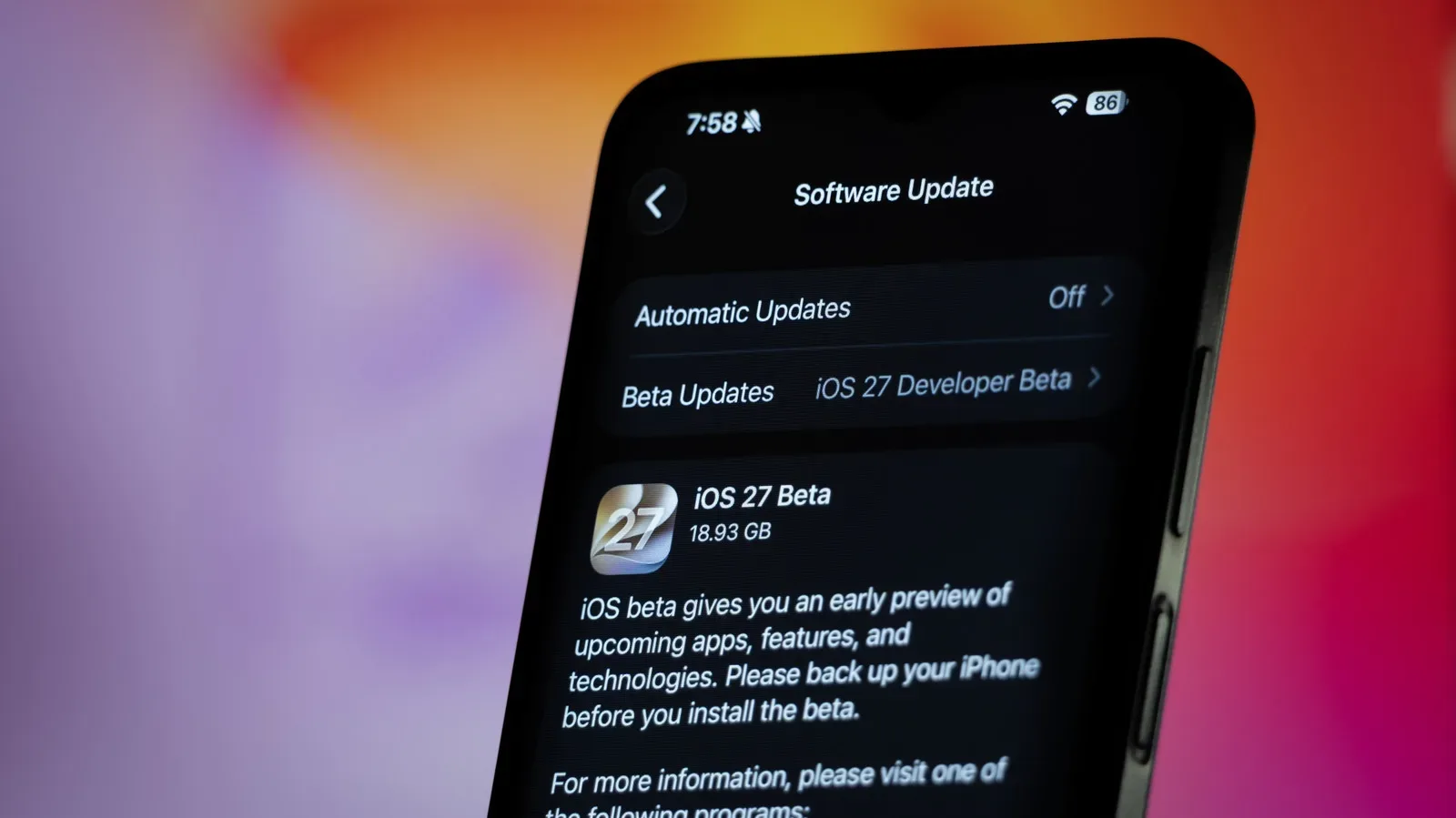
Anyone tempted to install unfinished platform software to chase future AI features should remember that benchmark curiosity is not worth losing save data, authenticator access, or a carefully tuned controller setup. If you ever do opt into iOS public betas, make an archived backup first.
Do not expect AV1 hardware encoding from A20 Pro
The M6 Media Engine accelerates H.264, HEVC, ProRes, and ProRes RAW in hardware. It can decode AV1, but it does not encode AV1, matching M5. Because that omission persists on Apple’s new process node in M6, AV1 hardware encode looks unlikely for A20 Pro.
That is mainly a consideration for creators who record, edit, and share video from their phones, or who care about efficient modern codecs in a streaming workflow. AV1 decode remains useful for playing compatible video, but encode support is a separate capability. Nothing about the M6 guarantees the A20 Pro will match its media engine feature-for-feature; nonetheless, the current evidence does not support assuming AV1 encoding is about to arrive on the Pro iPhone.
What the M6 can—and cannot—tell us
- Reasonable expectation: A20-class iPhones are likely candidates for 2nm manufacturing, with efficiency as a central benefit.
- Strong possibility: A20 Pro inherits at least some M6 graphics architecture changes, including continued ray-tracing support and shader/cache refinements.
- Plausible but unconfirmed: A dual Neural Engine and WMCM packaging, potentially as Pro-only advantages.
- Likely modest: Memory-bandwidth gains, with faster LPDDR5X a more likely direction than an LPDDR6 jump.
- Unlikely based on M6: Hardware AV1 encoding in A20 Pro.
In other words, M6 makes the A20 generation look more like a well-equipped progression than a single-figure-specification stunt. For mobile players, that could be the more valuable outcome: improved graphics hardware, greater efficiency, and a better foundation for on-device AI, all without pretending that a chip announcement alone can answer the questions of heat, battery life, game support, or sustained performance. Those answers will have to wait for Apple’s actual A20 details and the devices that carry them.