LG is widening the feature set of its premium Sound Suite home-theater platform with new support aimed at people building flexible, multi-speaker living-room setups. The update adds DTS:X compatibility to the H7 soundbar, Google Cast streaming, the option to use two W7 subwoofers, and expanded Wi-Fi configuration support. LG has also previewed a separate Media Connect Hub for DTS:X devices, although the company has not yet explained exactly how that forthcoming product will work.
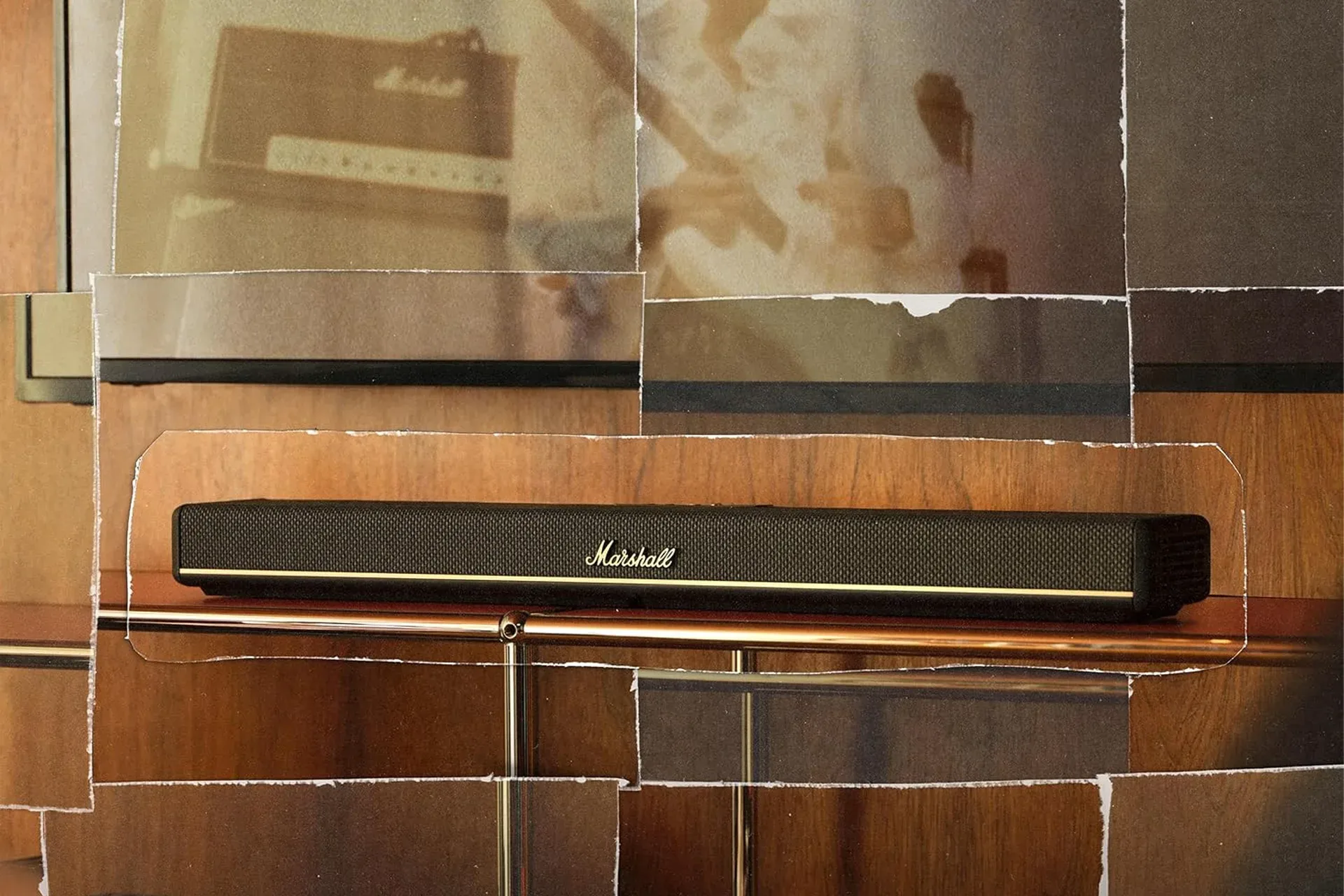
The software updates are already rolling out in some regions, but availability and timing can vary by location. For existing Sound Suite owners, the most immediately meaningful change is DTS:X support on the H7, the soundbar at the center of the system.
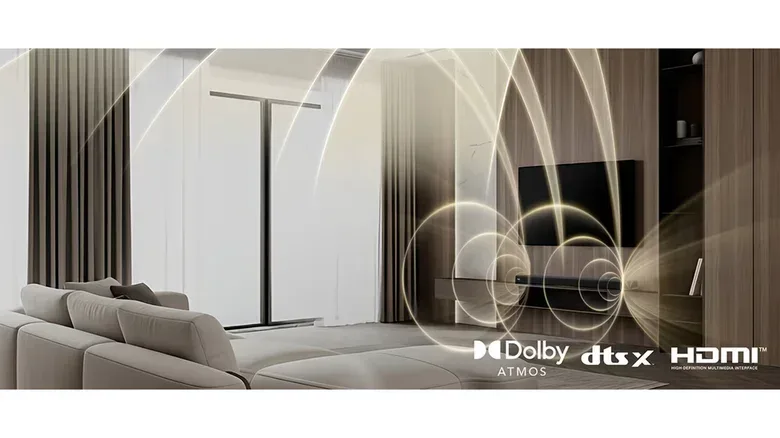
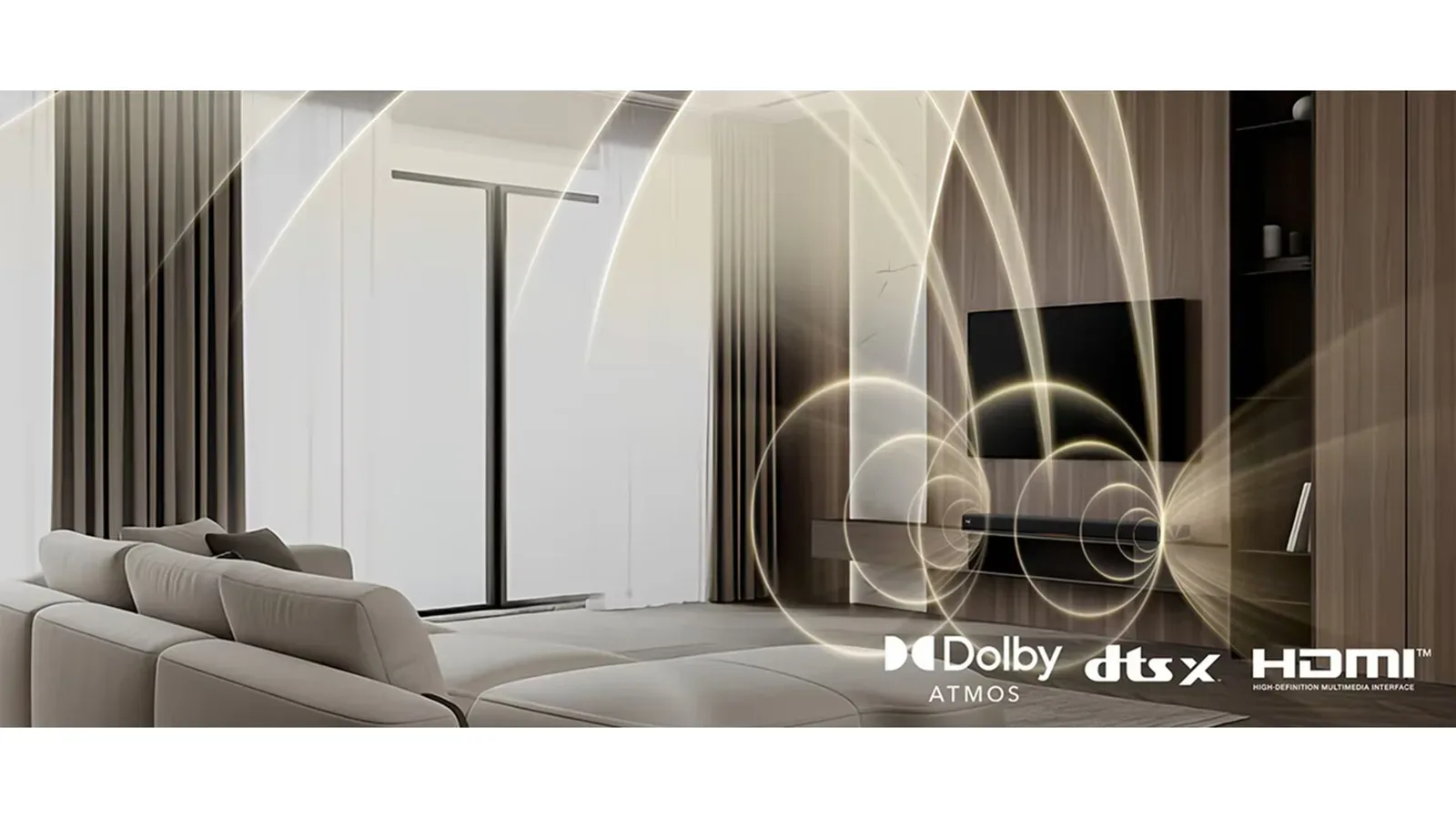
DTS:X expands the H7’s immersive-audio options
DTS:X is an immersive, multi-dimensional audio format. In practical home-theater terms, the new H7 support gives Sound Suite users another compatible format for material and source devices that provide DTS:X audio. LG positions the addition as a way to broaden surround-sound options for compatible content rather than as a replacement for the system’s existing Dolby Atmos FlexConnect-based approach.
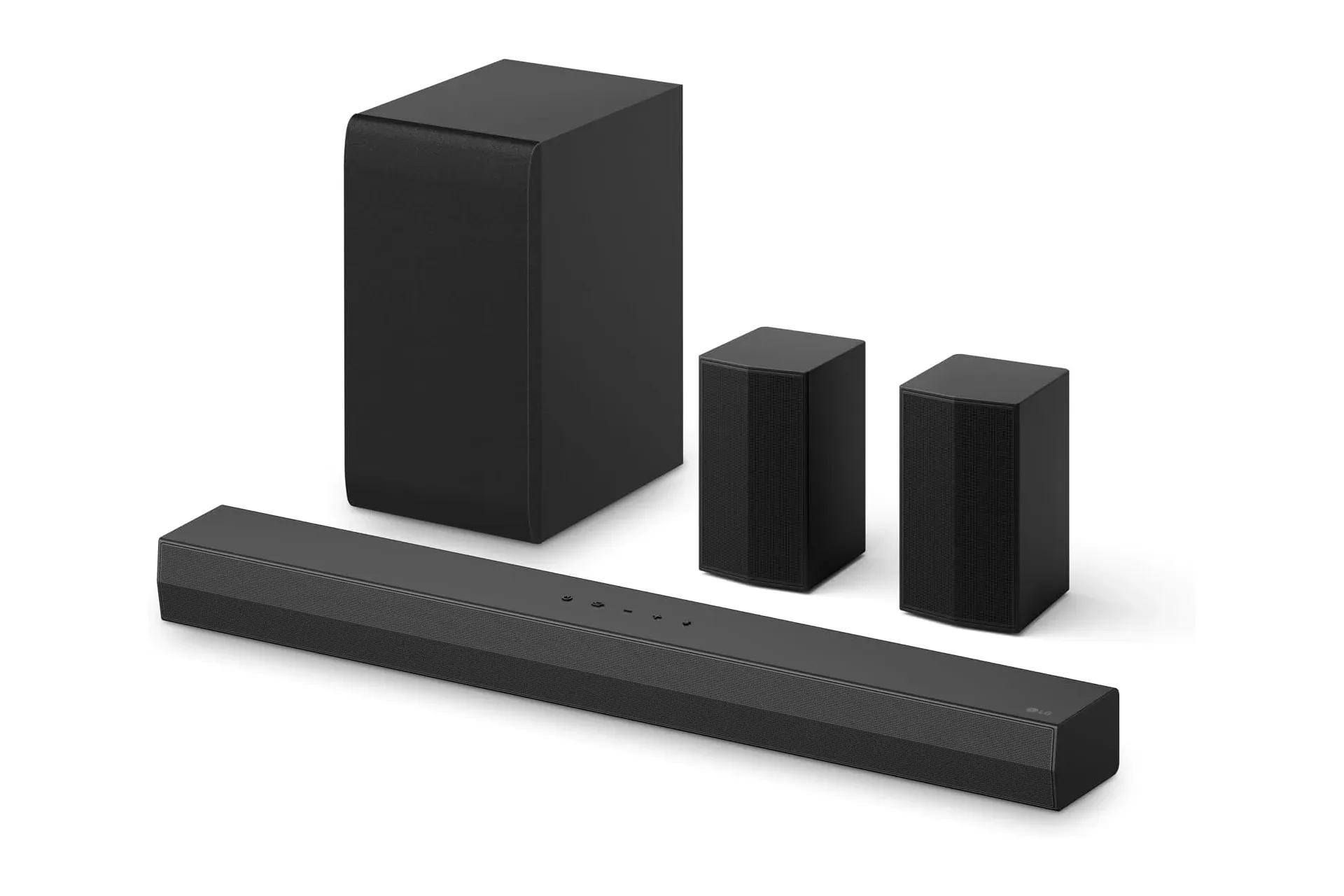
That distinction matters because Sound Suite is built around placement flexibility. Rather than treating a home theater as one fixed package with a prescribed speaker layout, the platform allows buyers to choose select speakers individually and place them to suit their room. Dolby Atmos FlexConnect is the technology LG uses within that concept to help the system work with those more adaptable arrangements.
The DTS:X addition therefore broadens format compatibility at the soundbar while keeping the central Sound Suite idea intact: owners can configure a system around their available space instead of starting from a single, rigid speaker bundle. Whether the extra format support changes a particular setup will depend on the content being played and the source device feeding that content to the system.
What “compatible content” means here
The update does not mean every film, show, game, disc or stream will suddenly use DTS:X. The format needs to be present in the content and supported by the relevant source device. LG’s language specifically frames DTS:X on the H7 around compatible material and hardware, so it is best viewed as an additional path for immersive audio, not a universal upgrade to every soundtrack.
For shoppers weighing a modular premium sound system, that is still a useful change. Audio-format support can shape what a soundbar accepts from the rest of a home-entertainment setup. Adding DTS:X gives H7 owners one more supported option in a category where formats, devices and speaker layouts frequently overlap.
Google Cast brings direct music and podcast streaming
The H7 is also gaining Google Cast support. This lets users send supported music and podcast content directly to an LG Sound Suite system. It is a different use case from sitting down for a surround-film session: the soundbar and connected speaker setup can also serve as a straightforward destination for everyday listening.
Direct casting is particularly relevant to a platform designed around multiple speakers. Sound Suite owners can use the system as more than a TV-audio upgrade, with Google Cast providing a route to playback across the Sound Suite environment without the update being described as tied solely to video content.
It also puts the H7’s new capabilities alongside the wider personal-audio market, where wireless listening is increasingly shaped by convenience as much as raw audio performance. For a smaller portable example, see Razer’s Kuromi Hammerhead earbuds. LG’s update concerns a very different, room-scale product category, but the shared takeaway is that streaming and wireless integration remain important parts of how audio hardware is judged.
Two W7 subwoofers are now an option
LG is adding support for dual W7 subwoofer configurations. A subwoofer handles low-frequency sound, the part of a soundtrack associated with bass-heavy effects and musical low end. Supporting two W7 units means Sound Suite users who want to push further into that side of the presentation can build a system with a pair rather than a single subwoofer.
The announcement does not establish which room layouts will benefit most, how the system will tune a two-subwoofer arrangement, or what individual results owners should expect. Those details should not be assumed. What is confirmed is the new configuration option itself: the Sound Suite platform will support two W7 subwoofers for buyers pursuing a more substantial low-end setup.
That fits the broader philosophy behind Sound Suite. The system is intended to be assembled from select components, so another supported configuration gives owners more freedom to tailor their setup. It is also a reminder that the update is directed at an enthusiast-oriented platform: a dual-subwoofer path is unlikely to be essential for everyone, but it can be important to people planning a more ambitious room system.
Expanded Wi-Fi choices may help more multi-speaker setups fit a home network
LG is also extending Sound Suite compatibility in networked homes with support for Wi-Fi 6 GHz networks and 5 GHz DFS channels. Wi-Fi is the local wireless network connection used by networked devices in a home. The newly supported 6 GHz network option and 5 GHz DFS-channel option give the platform more supported ways to operate within that environment.
LG says the network additions will provide more stereo and multi-speaker configuration options within Sound Suite. The company has not made a blanket performance promise for every home, and Wi-Fi conditions can differ substantially from one setup to another. Still, the practical significance is clear: users with more complicated wireless environments, or people considering a system spanning more than one speaker, gain additional supported network configurations to work with.
For prospective owners, this is the update most likely to reward a quick check of the home network before making assumptions. The announcement names 6 GHz networks and 5 GHz DFS channels specifically, but it does not say that every router or every regional configuration will deliver the same experience. Since the rollout itself also varies by region, confirming local compatibility remains sensible.
The Media Connect Hub is real, but its role remains unclear
LG has teased a Media Connect Hub that is currently in development. The stated purpose is to enable DTS:X from compatible external source devices and expand access to DTS:X content. Beyond that, the announcement leaves key questions unanswered.
There are no confirmed specifications, release timing, supported-device list, connection details or explanation of how the hub will fit into an existing Sound Suite installation. It would be premature to treat it as a confirmed solution for any particular player, console or other external component. The important point for now is narrower: LG intends the hub to extend DTS:X access from compatible external devices, but has not fully outlined the implementation.
The Media Connect Hub is a future-looking part of this news, while DTS:X on the H7, Google Cast, dual W7 support and the new Wi-Fi options are the changes already entering rollout in some regions.
What Sound Suite owners should take from the update
- H7 owners gain DTS:X support: The centerpiece soundbar adds another immersive-audio option for compatible content and source devices.
- Google Cast adds a direct streaming route: Music and podcasts can be sent to Sound Suite systems through Google Cast support on the H7.
- W7 configurations can now include two subwoofers: Buyers can pursue a dual-subwoofer setup if that suits their system plans.
- Network compatibility is broader: Sound Suite now supports Wi-Fi 6 GHz networks and 5 GHz DFS channels, which LG says opens more stereo and multi-speaker configuration options.
- The Media Connect Hub needs more details: It is in development and intended to expand external-device DTS:X access, but its capabilities have not been fully specified.
Overall, LG’s changes are less about introducing a new Sound Suite identity than making its existing modular premise more accommodating. The H7 receives a new immersive-audio format and casting support; W7 buyers get a newly supported dual-subwoofer arrangement; and multi-speaker users get more network options. The most interesting unanswered question is the Media Connect Hub, whose eventual role could matter for people who rely on external DTS:X-capable devices. Until LG provides further information, though, it remains a teaser rather than a feature owners can plan around in detail.
Shop the products
Check current price, model and availability at the retailer.