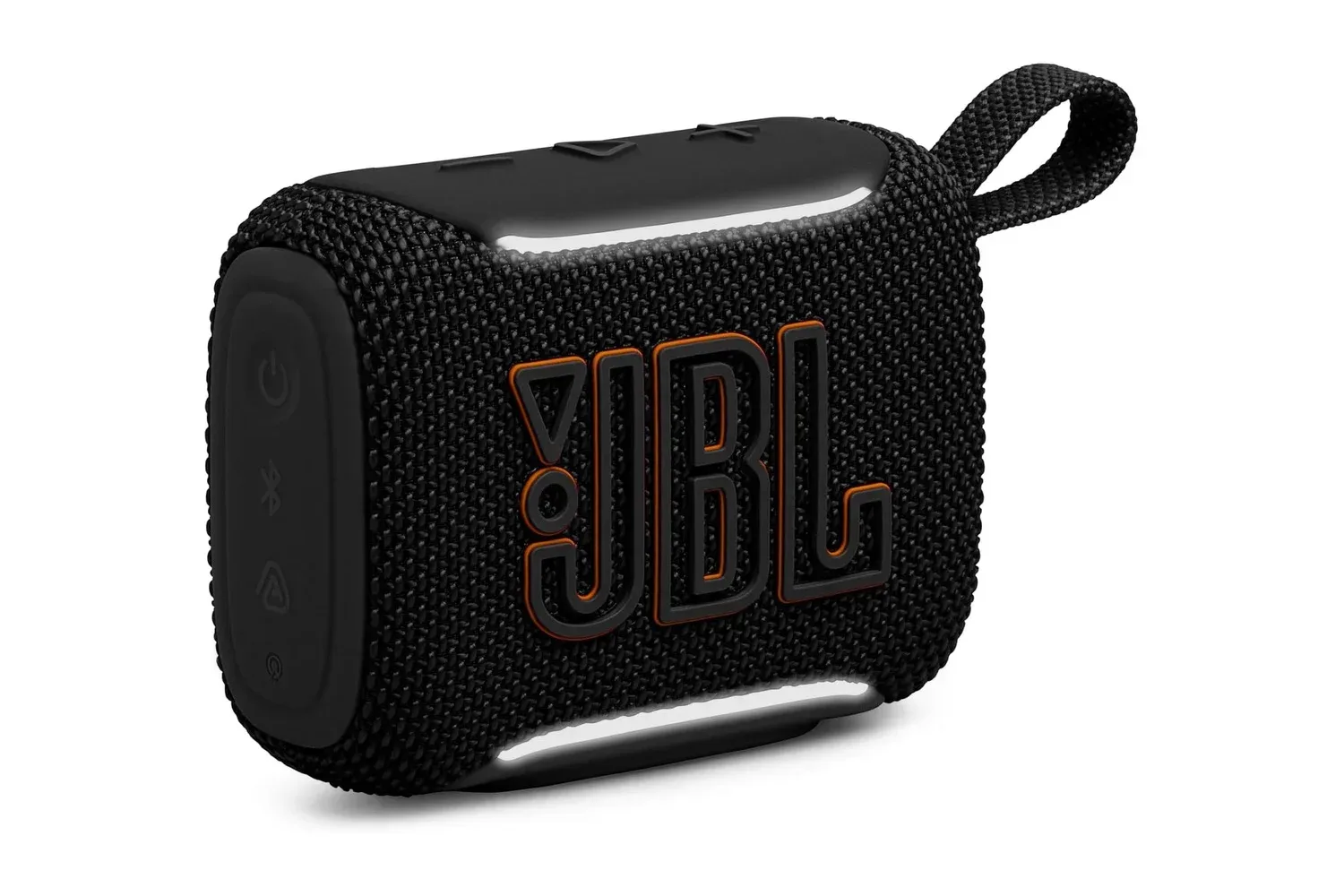
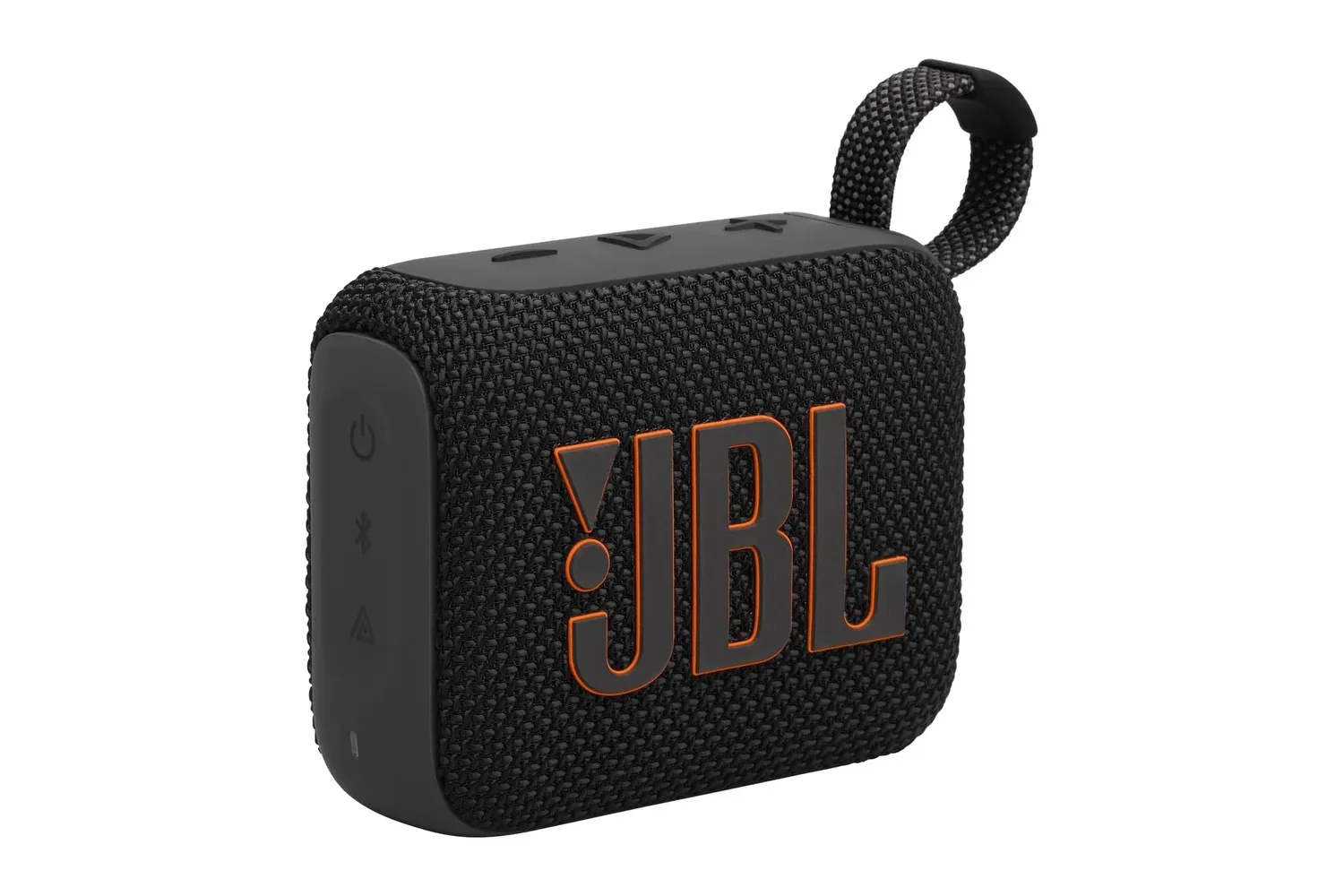
The JBL Go 4 Ultra-Portable Bluetooth Speaker is currently listed at $32, down from $50. That is an $18 reduction, or 36%, for a compact wireless speaker built around portability rather than room-filling size. For people putting together a lightweight kit for gaming, travel, picnics, poolside music or a temporary desk setup, the notable point is not just the lower price: the Go 4 combines a small footprint with water and dust resistance, app-based sound controls, and options to expand beyond a single speaker.
At 3.7 by 3.0 by 1.7 inches and roughly 6.7 ounces, the Go 4 is designed to occupy little more space than a small accessory in a backpack. It has a 1.75-inch driver, 4.2 watts of output power, and a stated frequency response of 90Hz to 20kHz. Those specifications place clear limits on what a speaker this size can physically reproduce, especially at the deepest bass frequencies, but they also frame its intended role: a convenient personal or casual shared-listening speaker rather than a replacement for a larger home audio system.
A compact speaker with an outdoor-friendly rating
The Go 4 carries an IP67 rating. In practical terms, the first number, 6, denotes protection against dust ingress; the second number, 7, denotes protection against temporary immersion in water under the rating’s test conditions. The useful everyday takeaway is that the speaker is positioned to cope with sand, dust, splashes, and an accidental trip into a pool. That makes it a more flexible option for a beach bag, campground, backyard, or pool deck than an unprotected desktop speaker.
Water resistance should still be understood as durability protection, not a reason to disregard care. The product can be rinsed off when needed, and the rating supports use around water, but users will still want to make sure its charging connection is dry before connecting the USB-C cable. The supplied USB-C cable is used for charging, and a full charge is stated to take about three hours.
JBL rates the speaker for up to seven hours of playback per charge. A feature called Playtime Boost can add up to two further hours, for a stated maximum of nine hours. Playback claims naturally depend on listening volume and usage, so the seven-hour figure is the core expectation to keep in mind, while the extra two hours can be useful when a charging outlet is not immediately available.
What the sound specifications mean
“Driver” is the term for the component that moves air to create sound. A 1.75-inch driver helps explain both the Go 4’s appeal and its boundaries. Smaller drivers enable a speaker small enough to fit in a palm, but they do not move as much air as the larger components in bigger speakers. JBL describes the Go 4’s sound as having punchy low end and clear vocals for its size, which is the appropriate comparison: this is sound designed to exceed expectations for a very compact unit, not to deliver the scale of a large portable speaker.
The stated 90Hz-to-20kHz frequency response further illustrates that trade-off. Frequency response describes the range of sound frequencies a device is designed to reproduce. The upper end reaches the conventional top of human hearing, while 90Hz at the low end means the deepest sub-bass is outside the stated range. That is not unusual for a speaker of these dimensions. For podcasts, game-show soundtrack playlists, background music, and vocal-forward tracks, clear midrange and vocal reproduction can matter more than extremely deep bass.
The Go 4 uses Bluetooth 5.3 for wireless connections and supports multipoint connectivity. Multipoint means more than one device can remain connected at once. In the practical example provided, an iPhone and iPad can both stay connected, making it easier to change whose device controls the next track without a full disconnect-and-reconnect routine.
That convenience may suit households where a speaker shifts between a tablet used for video and a phone used for music. It may also be handy for a casual gaming space where one person handles a soundtrack or stream from a mobile device while another uses a tablet. Bluetooth audio can be convenient, but the listing does not present the Go 4 as a specialist low-latency gaming audio device, so buyers looking for competitive-game audio should evaluate it primarily as a portable music and general-use speaker.
Two paths to a bigger setup
A single Go 4 is intended for compact listening, but the speaker has two expansion options. Two Go 4 speakers can be connected for stereo sound. Stereo pairing assigns left and right channels to separate speakers, giving music a wider presentation than a single unit can provide. That can be particularly useful when two people are sitting apart or when a small outdoor gathering needs a broader sound field rather than simply more volume from one location.
The Go 4 also works with JBL speakers that support Auracast. Auracast is presented here as a way to link compatible JBL speakers wirelessly across separate spaces, such as a living room and backyard. This is distinct from the two-speaker stereo arrangement: stereo pairing is focused on a left-right pair, while Auracast is intended to broaden listening across multiple areas with compatible speakers. Buyers considering that route should note the compatibility qualifier carefully. The feature applies to JBL speakers with Auracast technology; it is not a claim that every Bluetooth speaker can join the setup.
The JBL Portable app adds an adjustable EQ, preset sound choices, and firmware updates. EQ, short for equalization, changes the balance between portions of the audio range. A listener who wants more perceived low-end weight can favor bass, while someone prioritizing spoken voices may prefer a different balance. Presets are simpler ready-made profiles. Firmware updates are software updates for the speaker itself, which can keep the device on the latest available software.
Color, size, and practical buying considerations
The listed color options are Black, Blue, Red, Purple, White, and Camo. Since the speaker is made to travel, color is not merely cosmetic for everyone: a brighter choice may be easier to spot in a crowded bag or outdoors, while black can better suit a more understated desktop or living-room setup.
At $32, the current listing makes the Go 4 an inexpensive entry point for somebody who wants a highly portable speaker with an IP67 rating and the option to add a second matching unit later. The lower price is especially relevant because a stereo pair requires two units; even so, a buyer should assess whether they actually need that expansion before treating the deal as a reason to buy multiples.
Its trade-offs are straightforward. The Go 4 is exceptionally small, but its single 1.75-inch driver and 4.2-watt output mean it is best evaluated in the context of its size. It offers a stated seven-hour battery life, with up to two more through Playtime Boost, rather than a claim of all-day operation without qualification. Its water and dust resistance makes it practical for messy or outdoor environments, while USB-C charging makes topping it up simple after use.
For shoppers comparing compact electronics ahead of seasonal sales, the listing joins other lower-cost hardware options, including a Meta Quest 3S offer that brings standalone VR and mixed reality below $300. They are very different purchases, but both illustrate the value of matching a deal to the actual use case instead of focusing on the percentage discount alone.
The JBL Go 4’s strongest case is portability with resilience: a speaker light enough to carry easily, protected enough for poolside and beach-adjacent use, and flexible enough to work alone, as a stereo pair, or alongside compatible Auracast JBL speakers. The current $32 listing reduces the cost of entry, while its physical limits remain those of a pocket-size Bluetooth speaker.
Shop the products
Check current price, model and availability at the retailer.