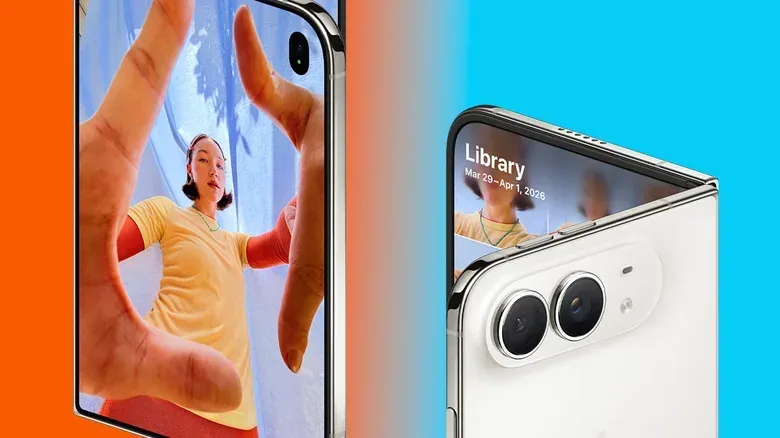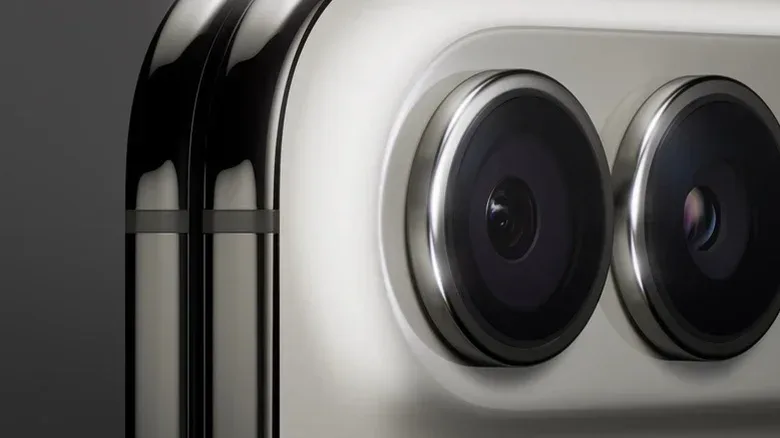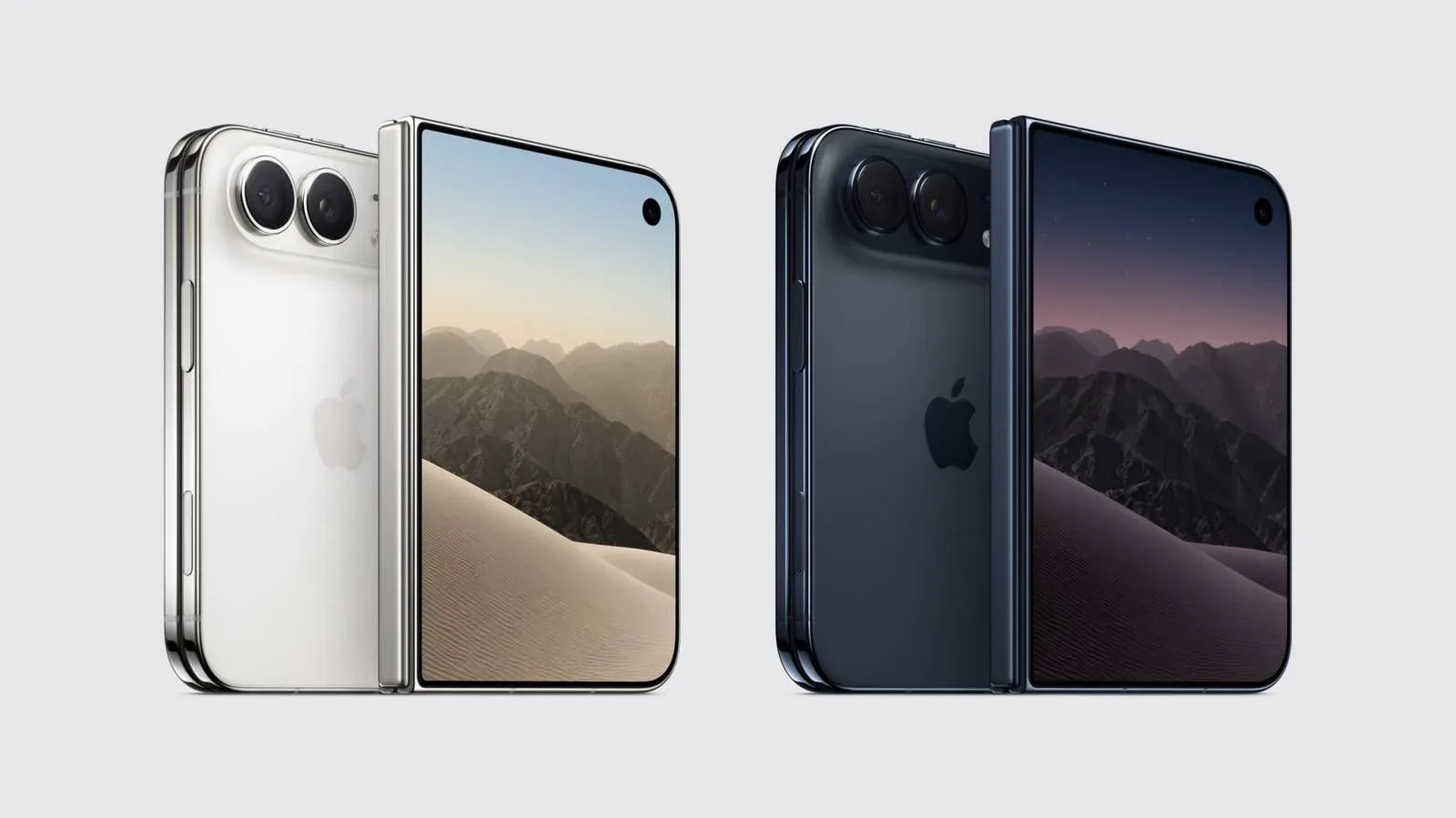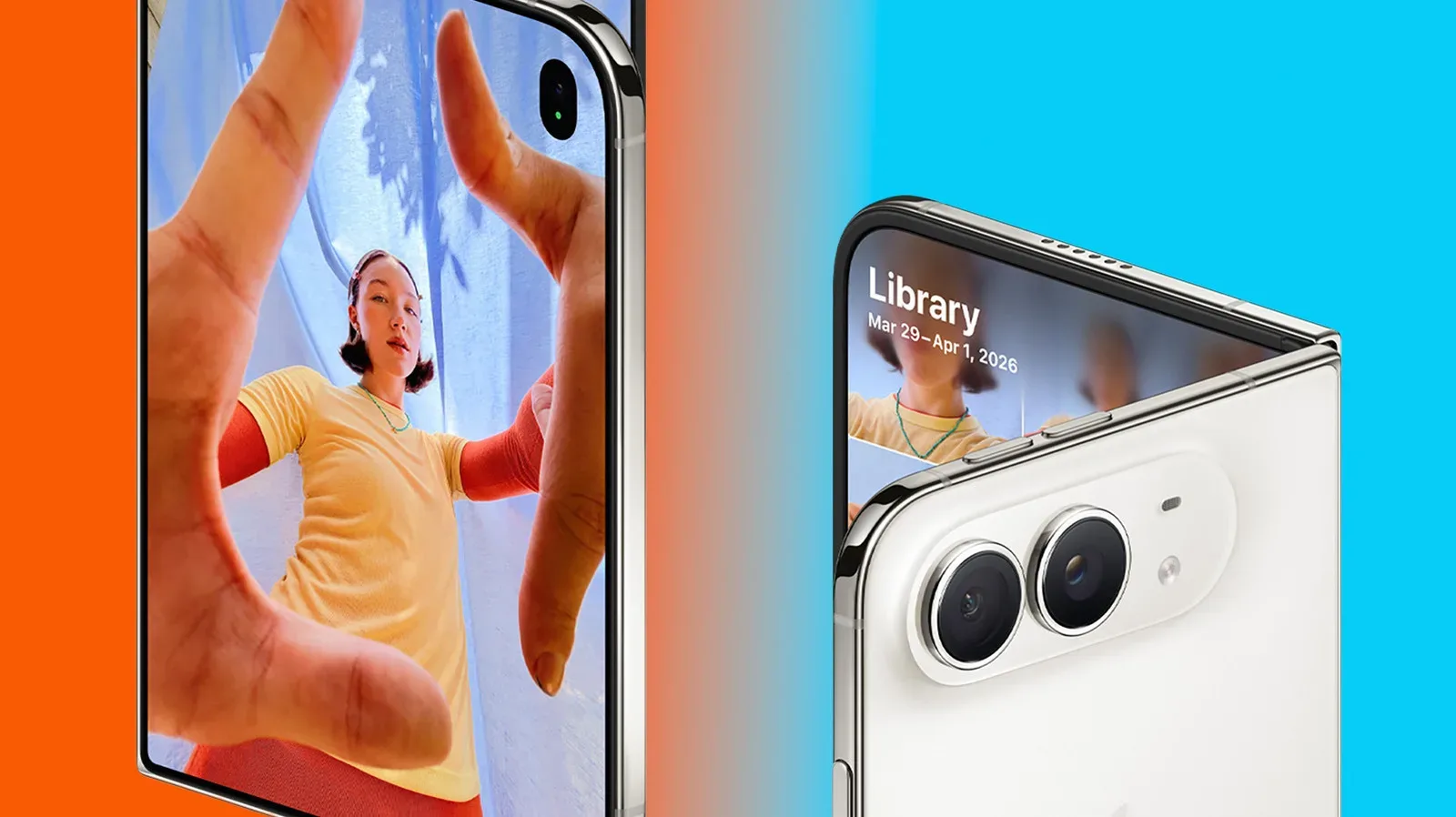
The iPhone Duo is not an iPhone 18 Pro that happens to fold in half. Its camera system makes that distinction particularly clear. Apple’s $1,999 foldable has two 48-megapixel rear cameras, a main lens and an ultrawide that also handles macro photography, plus several photography and calling tricks made possible by its two displays and partially folded stance. But the iPhone 18 Pro remains the more complete camera-first handset.
The headline compromise is not megapixels. Both phones can capture 24MP and 48MP stills, and both can use a crop from the high-resolution main sensor for a 2x optical-quality view. The split comes after that point. The iPhone Duo stops at 2x optical-quality zoom, while the iPhone 18 Pro adds a dedicated 4x telephoto camera and can crop that 48MP telephoto sensor for a 12MP, 8x optical-quality image.
That leaves a straightforward buying question: is the foldable form factor more valuable than a conventional flagship camera toolkit? For people shooting family photos, casual video, group pictures and high-resolution selfies, the Duo has legitimate, unusual advantages. For people who frequently photograph a concert stage, sports action, distant scenery, or material destined for serious post-production, its omissions are much more consequential.
The zoom gap is the Duo’s clearest camera trade-off
A telephoto camera is designed for subjects that are physically far away. Rather than enlarging a small central portion of a standard image, it uses a longer focal length to make the subject occupy more of the frame from the outset. The iPhone 18 Pro’s 4x telephoto therefore gives it a meaningful advantage when distance is unavoidable.
The Duo can still digitally zoom beyond 2x, but digital zoom generally means magnifying or computationally reconstructing less image information. The farther a photographer pushes beyond the camera’s optical-quality range, the more likely detail is to give way to a softer or less convincing result. Cropping a 48MP sensor to make the 2x view is a different proposition: there is enough sensor resolution available for the phone to retain an optical-quality result at that crop.
On the iPhone 18 Pro, the dedicated 4x telephoto creates a second useful high-resolution starting point. Its ability to produce a 12MP 8x optical-quality shot does not mean every zoomed photo becomes perfect automatically, but it offers framing latitude the Duo cannot match with its two-camera rear setup.
This is likely to matter more than a specification sheet suggests. A person at the edge of a playing field, a performer under stage lighting, or a distant detail in a travel scene often cannot be approached. With the Duo, the user must either accept a wider shot, physically get closer when possible, or rely on digital zoom past 2x. With the Pro, 4x and 8x optical-quality options provide more room to compose.
Why a foldable may make that harder
Apple has not explained why the Duo does not include a telephoto camera. Still, the basic engineering pressure is easy to understand. A foldable opens into a larger device, but the camera hardware must fit within one exceptionally thin half. Camera modules are competing for internal volume with components including the battery. That makes the Duo’s camera layout a product-design compromise rather than simply a case of Apple withholding a familiar feature.
It is not necessarily a permanent limitation for the product line. Other foldable makers have fit telephoto hardware into their devices, and a future Duo could address the gap. For this model, though, anyone paying the Duo’s $1,999 starting price should treat the absence of a telephoto lens as a real limitation, not a minor bullet-point difference.
Variable aperture separates the Pro’s camera controls
The other major hardware divide is variable aperture. An aperture is the opening through which light enters a camera. A variable-aperture lens can physically alter that opening: widening it can admit more light, while narrowing it can change how much of a scene appears in focus.
The iPhone 18 Pro has this capability; the iPhone Duo has a fixed aperture, as earlier iPhones did. Both phones can create portrait-style background blur, but the distinction matters. Portrait blur is a digital effect, while an aperture change is an optical property of the lens. They can sometimes produce a similarly appealing subject-against-background look, but they are not the same method or the same degree of photographic control.
Variable aperture also supports the iPhone 18 Pro’s Pro Controls, which provide manual adjustments for shutter speed, white balance and aperture. Shutter speed controls how long the camera gathers light, and white balance adjusts the interpretation of color under different lighting. These settings are most useful for photographers and videographers who want to direct a result rather than delegate every decision to the phone’s automatic processing.
The Duo is not presented as a manual-camera alternative. That does not make it incapable of attractive images; its 48MP main and ultrawide cameras retain substantial everyday capability. It does mean the Pro has the stronger case for users who want to deliberately manage exposure, color and depth of field.
The Duo turns its hinge and outer screen into camera tools
Where the Duo gives up conventional camera flexibility, it gains a different kind of flexibility: physical positioning. When partially folded, it can stand upright on its own. In practical terms, that makes the phone resemble a small built-in tripod for a group photo, self-shot or video call.
That is more useful than merely avoiding a stack of books. A user can place the Duo down, move into the group rather than remain behind the camera, and use the outer display to check the composition. A traditional slab-shaped iPhone needs a separate support or another person to achieve the same setup conveniently.
The outer display is also a viewfinder for the Duo’s 48MP rear cameras. When the device is unfolded, a user can point those rear cameras toward themselves while still seeing the frame. This creates a higher-resolution selfie option than relying only on the external 12MP selfie camera.
The Duo also contains a separate 1080p FaceTime camera beneath the inner folding display. Its 12MP outer selfie camera, hidden inner camera and rear-camera viewfinder option reflect the unusual choices a dual-screen phone can make available: different cameras suit different postures and different ways of holding the device.
Group shots and calls are where the Duo gets playful
Several Duo-specific features lean into this setup. Smart Take recognizes when the people in a group image are ready and automatically takes the photograph. Duo FaceTime lets someone near the user participate through the outer display and camera instead of squeezing around the main inner screen. Kid Cue puts Peanuts animations on the outside display to draw a child’s attention toward the phone.
These are not substitutes for a telephoto lens or advanced recording format. They solve different problems. But for a household that regularly takes group photos, calls relatives, or tries to persuade a child to look at the camera for one fleeting second, the physical design can be more meaningful than another abstract camera score.
The broader takeaway is that the Duo’s camera appeal is based on positioning and participation. It is easier to set down, easier to use while appearing in the picture, and more capable of showing people what the camera sees from the opposite side. The Pro’s appeal is based on reach, capture control and maximum format flexibility.
Shared photo and video fundamentals remain strong
The comparison should not obscure what the two phones share. Each supports 24MP and 48MP photos, adjustable portraits, and updated Photographic Styles with texture and grain adjustments. Both record 4K Dolby Vision video at up to 120 frames per second, and each can apply Cinematic effects after recording.
That overlap matters for users who primarily want polished images and video without a deep editing workflow. The Duo is not being positioned as a low-resolution foldable that fails at standard phone photography. Its main and ultrawide cameras cover the familiar wide, ultrawide and macro bases, while the higher-resolution rear cameras can be used for selfies through the outer display.
For a buyer whose camera routine is mostly people, pets, food, holiday moments and social video, the decision may come down to which type of convenience feels more valuable: a foldable that can stand on its own and display a rear-camera preview externally, or a more conventional phone that reaches farther and offers more professional options.
Pro formats and stabilization stay on the Pro model
The iPhone 18 Pro further separates itself with formats intended for advanced editing. The Duo does not support ProRAW, which preserves additional sensor data for editing in software such as Lightroom. It also lacks ProRes, ProRes RAW and Apple Log 2 video.
Those labels are not automatically important to every buyer. Their value lies in post-production latitude: how much flexibility an editor has to adjust color, exposure and other characteristics after capture. For someone who shares photos largely as they were taken, they may offer little practical benefit. For a creator who expects to shape footage or stills extensively after the fact, their absence can be decisive.
Other Pro-only advantages include second-generation sensor-shift stabilization, while the Duo uses an older version; an Adaptive True Tone flash instead of a non-adaptive flash; and a studio-quality four-microphone array. The Duo also cannot capture spatial photos or videos, and it lacks Reference Image, Apple’s feature that records signed sensor data alongside an image to help verify what the camera originally captured.
For more Apple-platform context, see our coverage of Apple’s watchOS and visionOS developer betas.
Which camera system fits which buyer?
- Choose the iPhone 18 Pro camera system if: distant subjects are a frequent priority; a 4x telephoto and 8x optical-quality capture are important; manual settings matter; or you use advanced still and video formats in an editing workflow.
- Choose the iPhone Duo’s camera approach if: you value the folding design itself, want a phone that can prop itself up for shots and calls, take many group images, or want to use the rear cameras for high-resolution self-portraits with a live external preview.
- Do not decide based on megapixels alone: both devices offer 48MP rear-camera capture. Lens selection, optical reach, aperture behavior, stabilization and editing formats explain far more of the practical difference.
At $1,999 and up, the Duo asks buyers to make a clear trade: pay for a distinctive foldable experience while accepting a less comprehensive traditional camera system than the iPhone 18 Pro offers. The Duo’s tricks are practical rather than frivolous, especially when a self-standing phone can get everyone into the frame. Yet anyone seeking the broadest photography and video toolbox should view the iPhone 18 Pro as the more capable option.