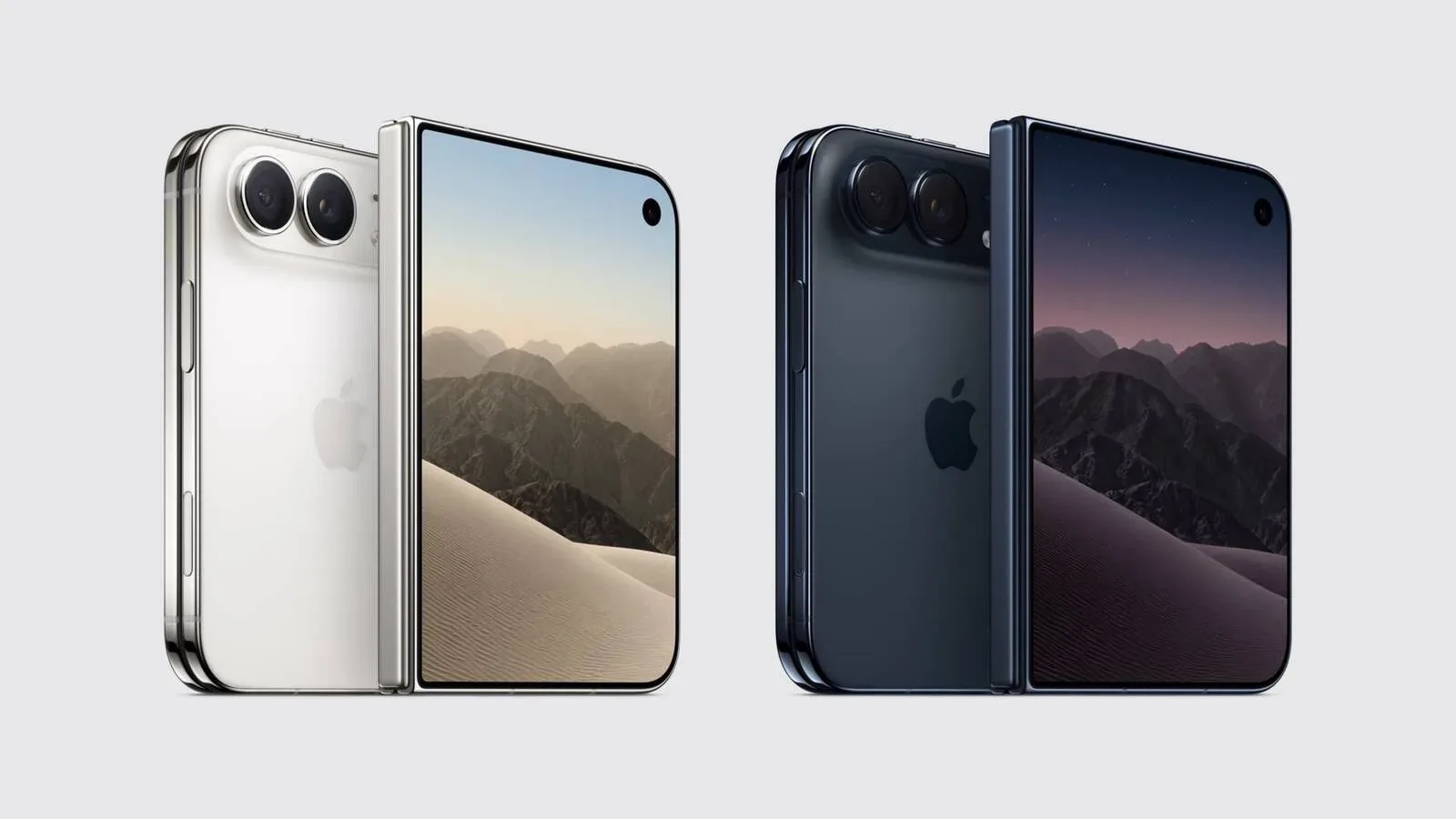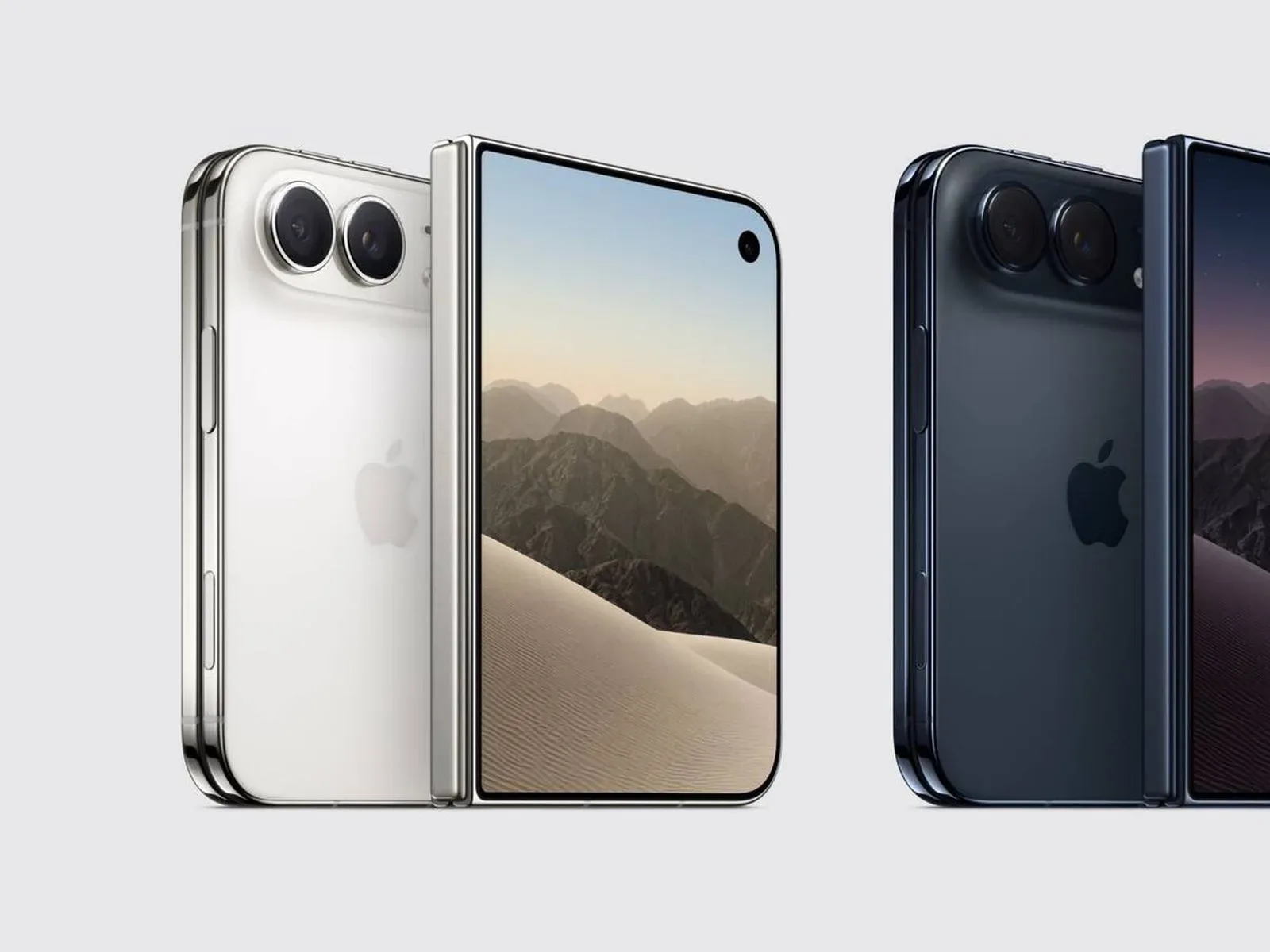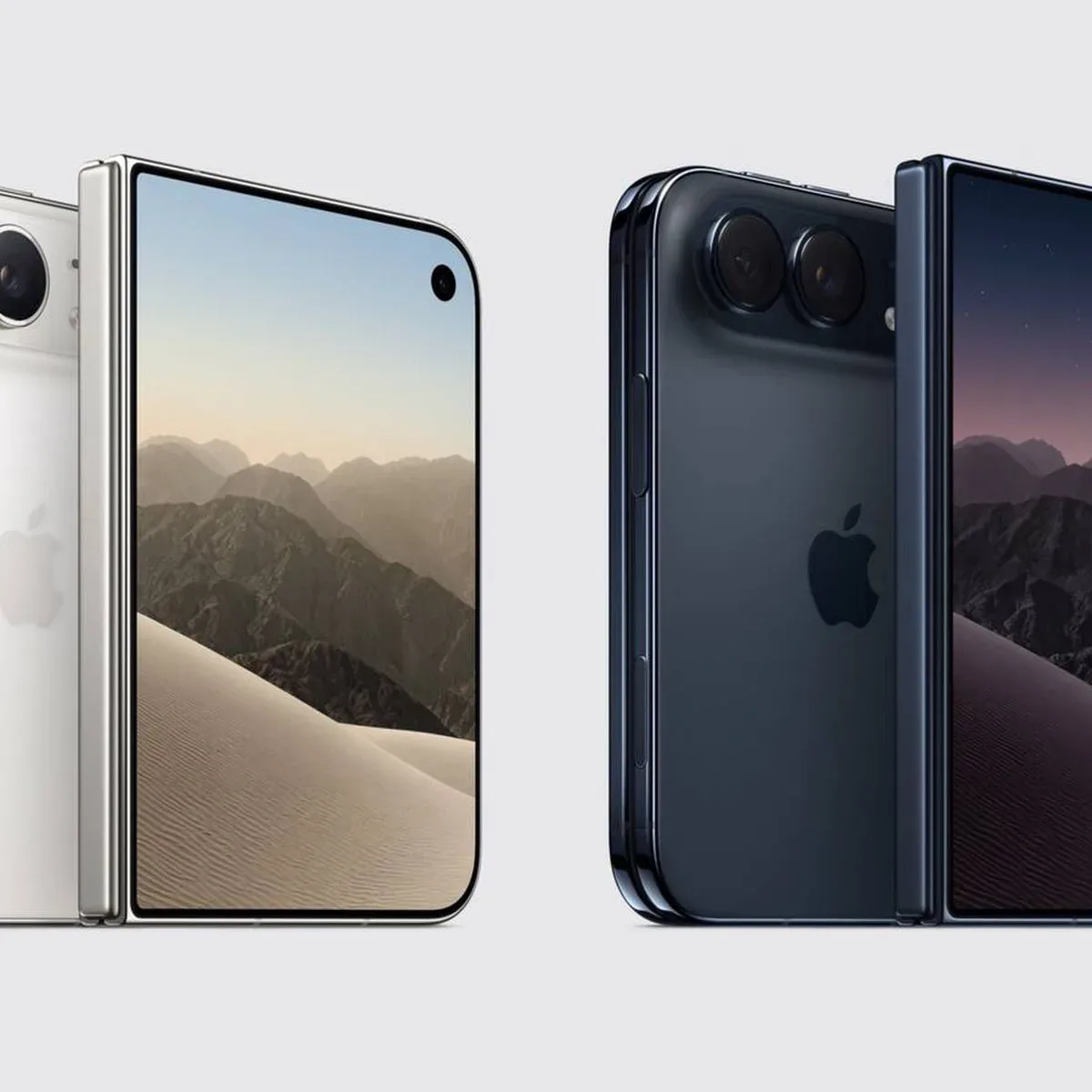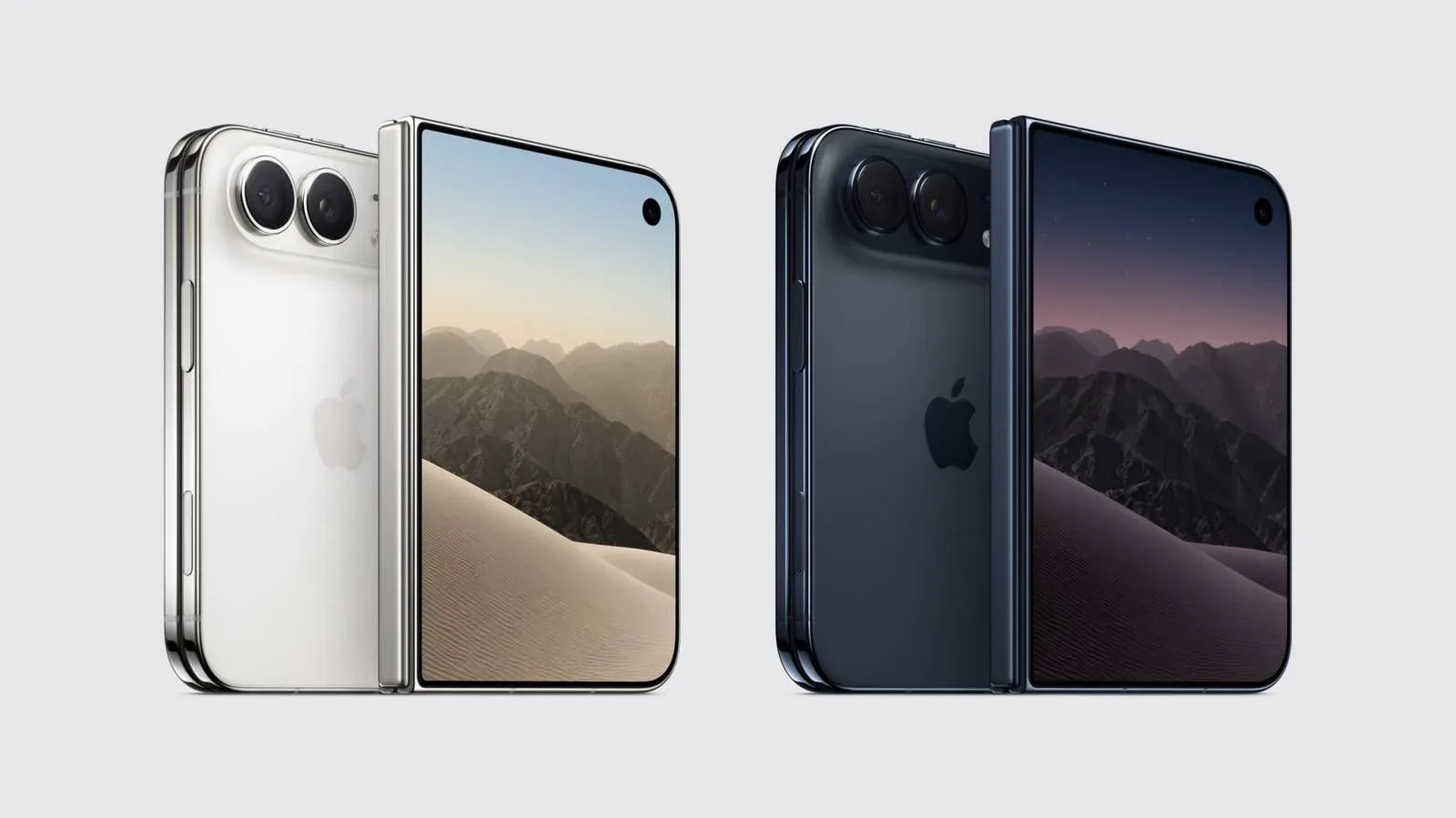
Apple has published a small, curated gallery of six photographs captured with the iPhone Duo, offering an early look at what the device’s imaging system can produce in a professional photography project. American photographers Jake Michaels and Jason Nocito shot the images for a project commissioned by Apple.
The gallery is promotional material, not a controlled comparison between phones. That distinction matters. Professionally made photographs can demonstrate the potential of a camera system, but they cannot by themselves establish how every shooting mode will perform for every owner. Even so, the collection puts the iPhone Duo’s most consequential camera trade-off into clearer view: it carries two high-resolution rear cameras but no separate dedicated telephoto camera.
What cameras are on the iPhone Duo?
The iPhone Duo has four cameras in total, spread across its outer and inner sides:
- 48-megapixel Fusion Main camera: the primary rear camera.
- 48-megapixel Ultra Wide camera: a second rear camera intended for wider fields of view.
- 12-megapixel Center Stage front camera: located in the outer display.
- Front camera under the inner display: placed beneath the inner screen.
For photo buyers, the first two entries are the central hardware story. The Fusion Main camera is the main imaging option, while the Ultra Wide camera lets users include more of a scene without stepping back. The front cameras serve the device’s two display configurations: one on the outer display and another integrated beneath the inner display.
“Fusion” is Apple’s label for the main-camera system. The supplied camera specifications identify its resolution, but do not provide further technical detail about image processing, sensor format, aperture, video modes, or how the under-display front camera compares with the outer 12-megapixel camera. Those are therefore open questions beyond this gallery.
The missing telephoto lens is the key limitation
The iPhone Duo’s main camera supports what Apple calls optical-quality 2× Telephoto. In practical terms, that gives the phone a closer framing option from its main camera system. But it is not the same thing as including a separate telephoto camera designed for longer-distance shooting.
The difference becomes especially important for people who regularly photograph subjects that cannot be approached: a performer on a stage, a child on a field, wildlife, distant architectural details, or gameplay setups from across a room. A dedicated telephoto camera is built around a longer focal length, which narrows the angle of view and makes faraway subjects occupy more of the frame. Without one, photographers must either move nearer, accept a wider composition and crop later, or use the 2× option available from the main camera.
Apple’s own Pro-model comparison sets the scale of the compromise. The iPhone 17 Pro and iPhone 18 Pro can reach up to 8× optical zoom, whereas the iPhone Duo’s stated telephoto capability is 2×. That does not make the Duo’s camera setup weak; it makes it more specialized. Its rear-camera priorities are main-camera photography and ultra-wide composition rather than extensive long-range reach.
There is also a terminology point worth keeping straight. Optical zoom refers to changing framing through the optics rather than merely enlarging part of an image digitally. The available information describes the Duo’s 2× result as “optical-quality,” while the Pro models are described as achieving up to 8× optical zoom. Those phrases should not be treated as interchangeable specifications. What is clear is the substantial gap in stated reach between the Duo and the Pro phones.
What the six images can—and cannot—tell prospective buyers
A commissioned gallery can show that experienced photographers can make compelling images with the iPhone Duo. Michaels and Nocito’s work is meaningful in that narrower sense: the device is evidently capable of serving a polished professional shoot, at least for the kinds of scenes represented in the six selected photos.
It cannot settle every purchase question. Curated images are selected outcomes, and the project’s six-photo scale is limited. The gallery does not establish comparative performance against the Pro models, nor does it answer how the phone handles every kind of difficult scene. Most importantly, it does not erase the hardware reality that customers needing long optical reach will have more flexibility on an iPhone 17 Pro or iPhone 18 Pro.
That is not an unusual split in the phone market: a device can have a strong main camera and still be a poor fit for someone whose priority is telephoto shooting. The useful takeaway is to match a camera system to the photographs a buyer actually expects to take. Wide travel scenes, environmental portraits, interiors, group shots, and everyday photos may place the main and ultra-wide cameras at the center of use. Subjects at a distance place much more weight on dedicated telephoto hardware.
How the layout may matter on a foldable phone
The iPhone Duo’s camera list also reflects a device with both an outer display and an inner display. Its 12-megapixel Center Stage front camera sits in the outer display, while another front-facing camera is under the inner display. Center Stage is Apple’s name for its front-camera framing system; the specifications supplied here identify the outer camera by that name but do not detail its behavior on the Duo.
An under-display camera is, by definition, positioned beneath the screen rather than in a conventional visible cutout. The available information confirms its presence but does not state its resolution or describe its intended use. Buyers should avoid assuming identical output from the two front cameras until Apple provides fuller specifications or independent testing clarifies the distinction.
For now, the rear camera pair is easier to evaluate from the disclosed information. Two 48-megapixel rear cameras give the Duo a substantial main-and-ultra-wide foundation, while the absence of a dedicated telephoto is the conspicuous omission. Apple’s six-image gallery functions as an argument that this foundation remains creatively useful—not as proof that it is designed to replace an 8× optical-zoom system.
Pre-orders begin October 16
Apple says iPhone Duo pre-orders open Friday, October 16, at 5 a.m. Pacific Time. Potential buyers who place photography high on their priority list may want to decide first whether a 2× optical-quality telephoto option covers their usual needs. If it does, the Duo’s main and ultra-wide cameras are the relevant strengths highlighted by this campaign. If long-distance photography is non-negotiable, the iPhone 17 Pro and iPhone 18 Pro’s stated 8× optical zoom is the more consequential specification.
The timing also places the Duo among a broader set of current iPhone conversations, including reported developments involving iPhone inactivity reboot protections. That issue is separate from imaging, but it is a reminder that a phone purchase involves more than cameras alone.
Ultimately, Apple’s gallery makes a modest but credible case: the iPhone Duo can produce strong photographs in capable hands despite not having a dedicated telephoto module. The unanswered question for shoppers is less about whether the phone can take a good picture, and more about whether its particular mix of main, ultra-wide, outer-display, and under-display cameras fits the kinds of pictures they want to make.