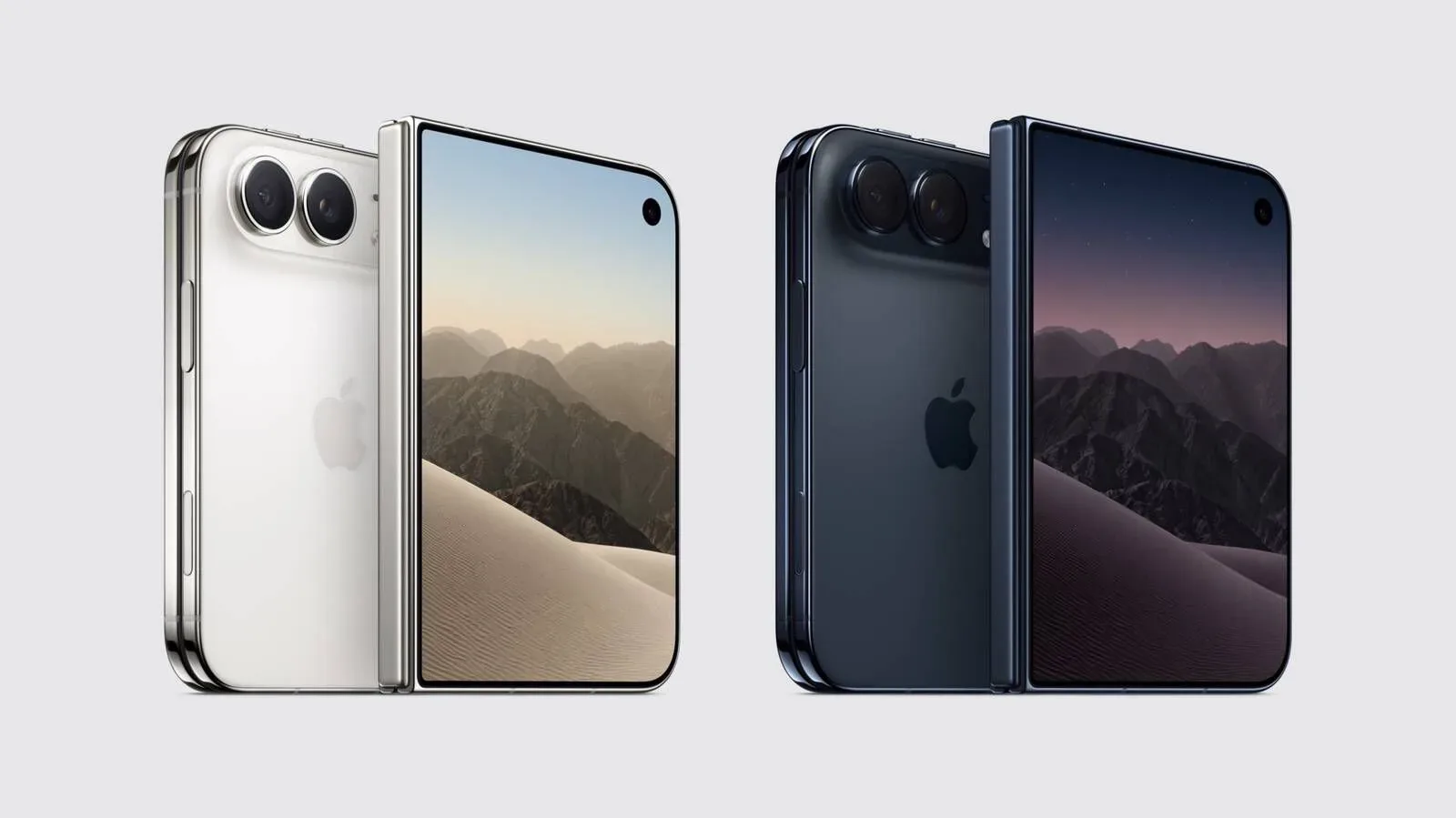
The iPhone Duo has pulled off a neat visual trick: its inner front camera largely disappears into the display when it is not needed. That is a meaningful design win for anybody who finds a visible camera cutout distracting on a large screen. Unfortunately, the camera’s other trick appears to be turning an otherwise premium-looking device into a reluctant participant in a low-resolution video chat.
Early assessments of the Duo’s under-display camera have been harsh, particularly for still photos. The inner camera is reported to be 4 megapixels, while Apple has highlighted 1080p video recording rather than making a case for its photo output. Descriptions of the resulting images include low-resolution, washed-out and soft. Video calls fare better than selfies, but have still been characterized as muddy.
That creates a very clear split in the Duo’s camera story. The hidden inner unit is a convenience camera: it is there for an unobstructed inner screen and basic face-to-face communication. The 12-megapixel camera on the outer display is the obvious choice when the goal is a conventional front-facing selfie. And when image quality matters most, the Duo’s dual-display design offers a more interesting route: use the rear cameras while the outer screen becomes the viewfinder.
A clean display comes with a conspicuous compromise
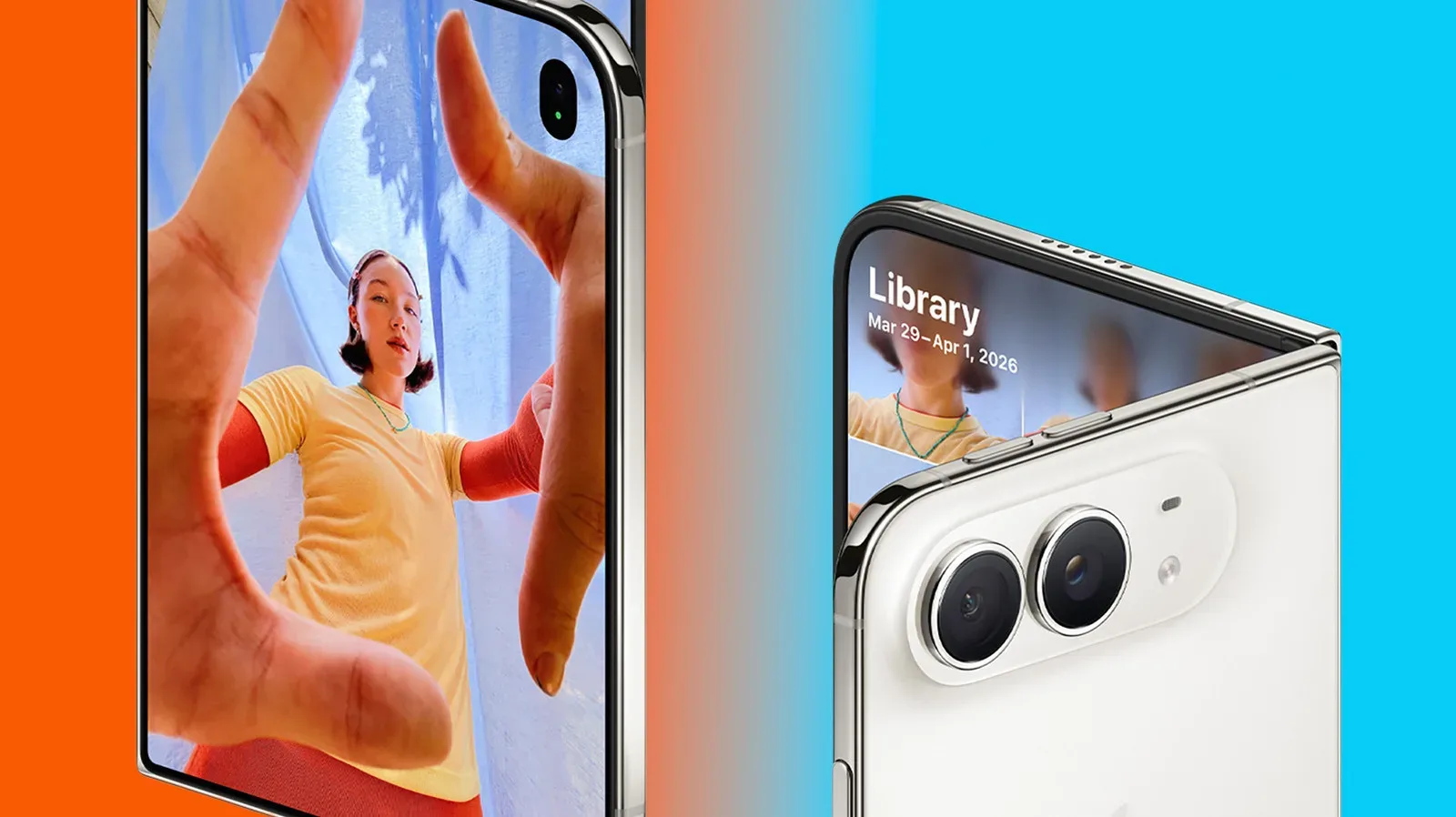
Under-display cameras are exactly what the name suggests: front-facing cameras placed beneath the active display area rather than inside a notch, hole-punch or separate bezel. On the iPhone Duo, that placement means the camera can fade into the background during normal use. For a device built around two displays, that is not a trivial benefit. A big inner panel looks more continuous when no dark camera island is announcing itself at the top of the screen.
The trade-off is much less charming when the camera is opened. The available reports frame this as a first-generation result, not a quiet triumph. One prominent tech reviewer called the photo quality “trash” and described the implementation as “very first gen.” The criticism is not merely that the inner camera loses a spec-sheet contest. It is that the images are said to lack sharpness and have washed-out color, the traits people notice immediately when looking at faces.
That distinction matters. A photograph can be technically usable while still feeling disappointing. “Washed out” generally describes an image whose colors or contrast do not look sufficiently rich. “Not sharp” refers to weak definition in fine details, which can be especially obvious around hair, eyes, facial edges and text. Those are not obscure pixel-peeping complaints when the intended subject is a person holding the phone at arm’s length.
At 4 megapixels, the under-display unit also sits far below the Duo’s 12-megapixel outer front camera in stated resolution. Megapixels are a count of the image’s pixels, not a complete verdict on camera quality. Processing, lighting and optics all matter in principle. But the reported experiences give prospective owners no reason to assume the hidden 4MP camera is a sleeper pick for portraits. Here, the lower-resolution number and the visual criticism point in the same direction.
1080p video is not a promise of great calls
Apple says the inner camera records 1080p video. In plain terms, 1080p is a video-resolution label. It tells buyers something about the frame’s pixel dimensions, but it does not by itself guarantee flattering, crisp or clean-looking footage. The reports about muddy video calls demonstrate why that distinction is useful.
A call can meet a particular resolution standard and still look flat, hazy or lacking in detail. That does not make the feature useless. Reviewers have said the inner camera performs better for video than it does for still photography, and video calling is the use case where its placement makes the most immediate sense. On an unfolded device, looking toward the center of a broad, uninterrupted screen during a conversation has an intuitive appeal.
But “better than its stills” is a carefully limited compliment. Someone who frequently uses video meetings for work, streams from a phone, or simply expects modern calls to look especially polished should treat the 1080p claim as a capability listing, not an image-quality guarantee. The early feedback suggests the Duo can make the call; it does not necessarily make the caller look their best.
There is a precedent worth keeping in mind. Samsung previously used under-display camera technology and later moved away from it because of image-quality problems. That history does not decide the Duo’s future, but it makes the question hanging over Apple’s implementation more understandable: is an almost invisible camera worth the visible concessions once it starts taking pictures?
The better selfie tools are already on the phone
The fortunate part of this story is that the Duo is not limited to that hidden inner camera. It has a 12-megapixel front-facing camera on its outer display, and early assessments indicate it is much better suited to selfies. For the simple task of opening the phone, framing a face and taking a quick photo, that is likely the practical default.
The more distinctive option comes from the Duo’s two-screen arrangement. When the device is unfolded and pointed back at its user, its controls can be moved to the outer display. That outer screen then acts as a viewfinder for the rear cameras. Instead of blindly aiming the phone’s main cameras and hoping for the best, the user can see the composition on the outside display while using the rear camera hardware for the image.
That setup has an obvious appeal for intentional self-portraits, group shots and any situation where the rear cameras are preferable to a front-facing alternative. It also changes how the camera issue should be read. The Duo is not a device with one compromised camera and no escape hatch. It is a device whose most visually ambitious front camera is its weakest apparent photography option, surrounded by more capable alternatives.
In practice, this creates a simple hierarchy:
- For an uninterrupted inner display: the hidden camera delivers the aesthetic benefit.
- For ordinary front-camera selfies: the 12MP outer camera is the better choice based on the reported comparison.
- For higher-priority selfies: unfold the phone, use the rear cameras and frame the shot on the outer display.
- For a quick call on the inner display: the under-display camera is convenient, though early reports advise restrained expectations about clarity.
Why the criticism is more useful than the insult
“Trash” is a memorable verdict, but it is less helpful than the pattern underneath it. The useful takeaway is not that every photo from the inner camera is automatically worthless. It is that the camera appears purpose-built around hiding in the display, with image quality paying the bill. Buyers should decide whether that exchange matches how they use a phone.
For people who prize a clean large screen and only occasionally use the inner camera for casual chats, the compromise may be tolerable. The camera vanishing into the panel is a real quality-of-life feature, and the Duo provides other ways to take better selfies. For people who often photograph themselves from the inner screen, frequently join important calls, or want every camera on an expensive phone to be broadly dependable, the criticism has more weight.
It is also a reminder that camera count and camera placement are not the same as camera versatility. The Duo offers several paths to get a photo, but each path has a job. The outer front camera is the straightforward tool. The rear cameras plus outer viewfinder are the quality-minded solution. The hidden inner camera is the design-forward compromise.
Apple’s willingness to use an under-display camera for the first time is notable precisely because it exposes that compromise so directly. The company has given the Duo an almost invisible camera, 1080p video recording and a clean inner screen. Early reviewers agree that the invisibility is the best part. The less flattering part is what happens when the camera is asked to look back.
For more on the broader design language around Apple’s services and products, see Apple Music’s recent visual-identity shift.