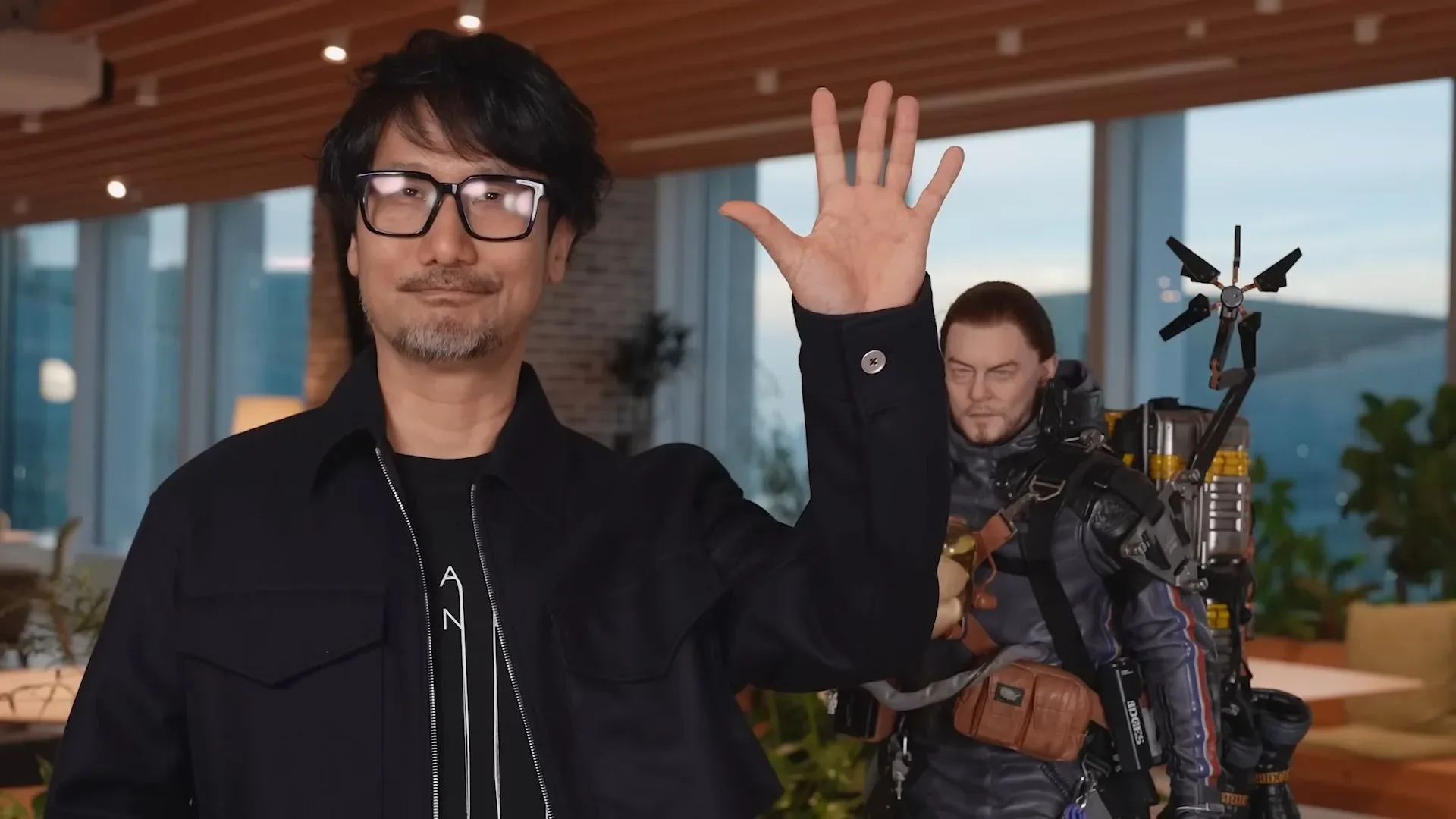
Yuji Horii, the creator of Dragon Quest, has shared a new project called Interrogation Room Komiya and says generative AI enabled him to create it in about 30 minutes. It is a small claim with a much larger shadow: Horii is not merely another developer experimenting with prompt-based tools, but a central figure behind one of gaming’s defining role-playing series.
The project arrives after Horii has repeatedly expressed optimism about generative AI’s potential. He has suggested the technology could help JRPG characters feel more human, while also arguing that these systems rarely fabricate information. Those views put him on one side of an increasingly sharp creative divide. Some prominent game creators have warned against treating generative AI as a substitute for the imaginative work at the heart of game development.
For players, the immediate story is not that a 30-minute AI experiment somehow equals a full-scale game. It plainly does not establish that. Instead, it offers a striking example of how quickly an experienced designer can turn an idea into something presentable when a generative system handles some of the production burden. The more consequential question is what that attitude might mean for future work associated with Horii—especially Dragon Quest XII.
From Portopia’s one-person creation to a prompt-led experiment
Horii framed the new project against The Portopia Serial Murder Case, his 1983 adventure game. He recalled making that earlier title himself, handling its writing, programming and art. That comparison is doing important work: it contrasts the labor-intensive reality of early personal game creation with an era in which written instructions can ask a system to generate an interactive result.
The two situations should not be flattened into a simple “then versus now” contest. A creator writing code, artwork and scenario for an adventure game is performing several distinct disciplines. A person using generative AI may still be supplying the initial concept, choosing among outputs, revising prompts and deciding when a result is usable. But the claimed 30-minute timeframe makes the change in workflow hard to miss. The process has shifted from building each component directly to directing a tool that can produce components—or a prototype—at high speed.
Generative AI is the broad label for systems that produce new text, images, audio, code or other material in response to an input. In this context, a prompt is the written instruction that guides the system. Neither term guarantees quality, coherence, ownership rights or technical reliability. They describe a method of generating output, not a completed creative standard.
That distinction matters particularly in games. A game is not only a premise, a visual look or a sequence of dialogue. It involves rules, player feedback, interface clarity, pacing, accessibility, technical compatibility, testing and the often invisible effort required to make all of those pieces work together. A short AI-assisted project can demonstrate speed. It cannot, on its own, settle whether the same method can sustain a lengthy commercial RPG.
Why the response to AI remains so divided
Generative tools appeal for understandable reasons. They can make rapid iteration possible: an individual can explore a rough idea without first assembling a full team or becoming proficient in every discipline. For a veteran creator looking back at the solo work required by an early adventure game, that compression of effort is understandably compelling.
Related coverage includes Yuji Horii Shares AI-Made Interrogation Room Komiya, Created in About 30 Minutes.
Yet the objections are not just resistance to new software. Critics worry that treating AI as a replacement for creative roles could reduce opportunities for writers, artists, programmers and other specialists. There are also quality questions. A system can return fluent-looking text or plausible-looking assets without understanding the game’s themes, systems or audience in the way a human team can. Fast output may be useful at the idea stage but still require extensive human judgment before it belongs in a finished product.
Another issue is factual reliability. In AI discussions, a hallucination means an answer generated with confidence that is inaccurate, unsupported or invented. It does not mean a machine is dreaming or intentionally deceiving anyone; it refers to a model producing a result that looks convincing but cannot be trusted without verification. In a game-development setting, that can become a practical risk if generated dialogue contradicts established lore, generated code behaves unpredictably, or generated information is accepted without review.
Horii’s favorable assessment of AI’s tendency not to make things up therefore sits at the center of the debate. The useful takeaway for audiences is not to assume that every AI result will fail, nor to assume that the output is dependable because it arrives quickly and confidently. The important factor is oversight: who checks the result, who revises it, and who takes responsibility for what reaches players?
Interrogation Room Komiya is a provocation as much as a project
There is a certain symmetry to Horii invoking The Portopia Serial Murder Case while showing an AI-assisted project titled Interrogation Room Komiya. The earlier game represents a formative adventure-game accomplishment credited to a single creator working across multiple responsibilities. The newer experiment is being presented as an illustration of a radically altered creative process.
Still, “made in 30 minutes” should be read carefully. It describes the reported time to make this particular project with a generative system, not a universal development benchmark. It does not tell players how much earlier experience informed the prompts, how much work may have gone into choosing a direction, or how the project compares with traditionally built games in scope and polish. An established creator carries decades of design instinct into even a quick experiment; that knowledge does not suddenly appear because an AI tool is available.
The claim nevertheless has value as a signal. It suggests that Horii sees AI not simply as back-office assistance but as a creative medium capable of making a game-like project directly. That is a more expansive position than using a tool to organize notes, locate bugs or assist with repetitive production tasks.
For developers, this distinction will be familiar. AI used to support routine tasks raises one set of questions. AI used to generate player-facing writing, art, characters or systems raises another. The latter affects the identity of the work itself, because those are the things players see, read, hear and remember.
What this does—and does not—say about Dragon Quest XII
The natural follow-up is Dragon Quest XII, though there is no confirmation here that the new project’s workflow is being used on it. The next mainline entry has faced a difficult development path: its concept was reworked and development restarted. It was also announced with work connected to artist Akira Toriyama and composer Koichi Sugiyama, both of whom have died since that announcement.
Those facts place unusual weight on continuity and stewardship. Dragon Quest has recognizable creative pillars, and a new mainline game must negotiate its future while carrying the work of major contributors who are no longer alive. AI enthusiasm from its creator will inevitably prompt questions about how, or whether, such tools might touch that process. At present, however, a 30-minute experiment is not evidence of any specific role for generative AI in Dragon Quest XII.
That uncertainty deserves to remain explicit. It would be inaccurate to treat Horii’s public interest in AI as proof that an unannounced production decision has been made. The useful question is narrower: if generative tools were used in a project with the cultural importance of Dragon Quest, what would players reasonably want to know? Clear disclosure of where a tool was used, meaningful human review, and preservation of intentional creative direction would likely matter far more than whether AI was involved at all.
The wider technology conversation is moving quickly in many sectors, with companies such as Google pursuing AI-linked product initiatives alongside other platform work; its planned Fitbit health and workout features are a separate example of how broad that push has become. Games, though, bring a particular sensitivity because creative authorship and player trust are so tightly connected.
Speed is not the same thing as authorship
Horii’s experiment is likely to be interpreted through two competing lenses. One sees a legendary creator enthusiastically testing a new means of turning an idea into an interactive work. The other sees a prominent creative voice endorsing a technology that may displace artistic labor and produce unreliable material. Both responses stem from the same fact: generative tools are no longer being discussed only as a hypothetical future capability.
The more practical lesson is that production speed is only one measurement. A game can be assembled quickly and still need a human creative vision, careful revision and technical validation. Conversely, a creator can use a tool without surrendering authorship, provided they remain responsible for the decisions that shape the final work. The hard part for studios and audiences will be distinguishing genuine assistance from a process that simply automates away the work people value.
Interrogation Room Komiya does not answer that question. It does make the question more immediate. When the person making the case is Yuji Horii, the conversation will extend well beyond a single half-hour experiment.