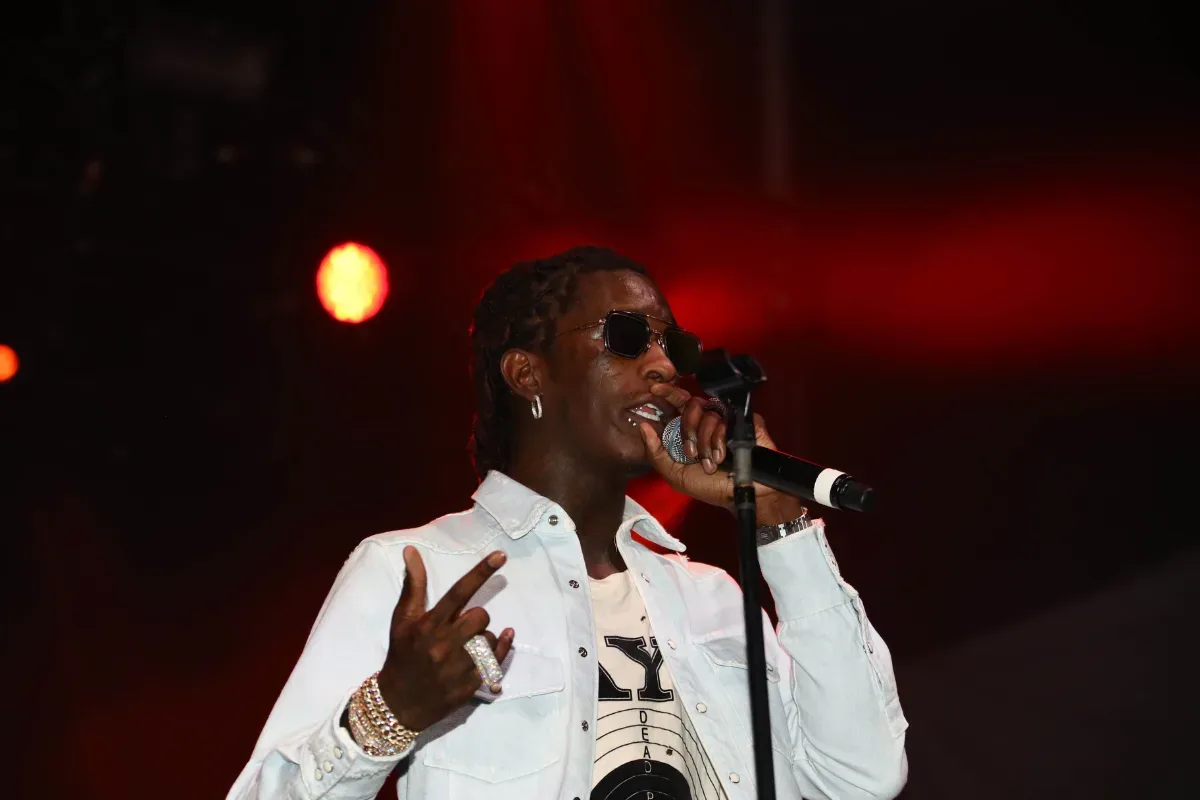
Young Thug has launched Primal, a holding company built around a straightforward proposition with unusually large implications: the talent creating commercial value should have an ownership stake in the business that value helps build.
Primal is being positioned as something other than a conventional management firm or an endorsement marketplace. Its stated role is to create intellectual property, acquire existing ventures, invest capital and help scale businesses into standalone companies. The intended partners include artists, athletes and creators, with equity stakes and continuing participation in the value those businesses create at the center of the pitch.
That distinction matters because an endorsement and an ownership position are structurally different deals. An endorsement generally pays a person for lending their image, audience or public credibility to someone else’s product. Equity means owning part of the company itself. If the business grows in value, ownership can provide a longer-term share of that growth; it also carries the uncertainty that comes with the company’s performance.
“I’m bringing up a new generation of founders. I want talent to build, own, and keep the upside. Ownership over endorsements,” Young Thug said.
What Primal says it will do
Primal’s planned mandate is broad. The company intends to operate across consumer products, sports, entertainment, media, fashion, technology, hospitality and licensing. That does not mean every category has a venture attached today. Its first portfolio companies have not yet been named, and an initial slate is expected in the coming months.
What has been described is the operating model. Primal plans to identify opportunities, supply capital and creative resources, and use distribution relationships to move a venture toward a functioning company with its own infrastructure. It also expects to work selectively with operators, investors and strategic brands that can contribute specialist knowledge or reach.
In practical terms, infrastructure is the unglamorous but decisive part of the proposal. A public figure can supply an idea, a following and a recognizable aesthetic, but a durable business also needs people and systems to develop products, manage operations, handle partnerships and bring work to market. Primal’s premise is that talent should participate in that machinery as an owner rather than merely serving as its promotional face.
The company is also describing a deliberately selective approach. Rather than acting as a high-volume incubator, it plans to focus on fewer, larger opportunities where it can commit meaningful capital, creative support and distribution. An incubator, in this context, is a business that helps early-stage ventures develop; Primal’s stated preference is to avoid spreading those resources too thinly across a long list of small bets.
SP5DER is the clearest example behind the strategy
The most concrete reference point is SP5DER, Young Thug’s Atlanta-founded fashion brand. The brand grew into a global streetwear business and is presented as the proof of concept informing Primal’s wider ambitions.
In 2026, SP5DER partnered with adidas Originals on a World Cup collection featuring Spanish footballer Lamine Yamal. The collaboration put a creator-founded fashion label alongside a major sportswear brand and a football star, crossing fashion, sport and licensing in a way that closely resembles Primal’s proposed multi-industry scope.
That example does not reveal the terms of SP5DER’s ownership structure, nor does it guarantee that a new Primal-backed venture will follow the same trajectory. It does, however, illustrate why the company’s pitch is rooted in building a brand rather than simply arranging a one-off appearance. A brand with its own products, identity and partnerships can outlast a particular campaign—provided it develops the operational foundation to do so.
The key idea: value creation versus value capture
Primal’s language is focused on a familiar tension in creator-led commerce. Talent can generate attention, cultural relevance and demand, while investors, operators, retailers and platforms may own most of the underlying business. Young Thug’s argument is that the structure should be adjusted so the people responsible for much of that value retain more of its upside.
“At the highest level, talent has always created value. Primal is about creating the structure for the talent to own more of that value,” Young Thug said.
That is an ownership argument, not simply a branding argument. A celebrity-backed product can still be fundamentally owned and controlled elsewhere. By contrast, a creator who receives real equity has a claim tied to the enterprise. The details matter enormously: the size of a stake, what rights accompany it, how decisions are made and what happens if a company raises money or is sold are all central questions. None of those deal-specific details have been announced for Primal’s future ventures.
It is also worth distinguishing ownership from guaranteed wealth. Equity may gain value, but it can also lose value or become difficult to sell. Building a standalone company requires more than visibility, and a holding company’s ability to supply capital and connect partners does not remove business risk. Primal’s stated model is best understood as an effort to give talent a bigger potential share of the outcome, rather than a promise of a particular result.
Why curation could define the company
The decision to pursue fewer opportunities is significant. A crowded portfolio can create lots of announcements, but it can make it hard for any one venture to receive sustained attention. Primal says it will instead concentrate resources on selected businesses. That approach could allow a project to receive more support, though it necessarily means the company will have to decide which creators, categories and concepts merit that commitment.
The reliance on outside partners is equally important. Operators bring practical experience in running a business; investors can supply financing; strategic brands may add manufacturing, retail or distribution capacity. Primal says it will choose these relationships carefully to speed a company’s growth. Its role, then, is not framed as replacing every specialist. It is framed as assembling the ownership and operating structure around creator-led ideas.
For creators, that can be a more demanding path than signing a campaign. Endorsement work can be comparatively direct: agree on terms, make the appearances or content, and receive the contracted payment. Building a company introduces a longer horizon, operational decisions and exposure to performance. The potential upside is the ability to build an asset rather than simply monetize a moment of attention.
What to watch when Primal reveals its first companies
Primal’s first ventures will be the real test of how its mission translates into execution. The most useful signals will be concrete rather than rhetorical: what each company actually sells or produces, who operates it, which partners are involved, and how the creator’s ownership role is defined. Announcements may also show whether the company is using its cross-category brief to build distinct businesses or simply connecting familiar celebrity-brand collaborations.
The launch also lands in a wider environment where creators are increasingly surrounded by tools and infrastructure aimed at turning an audience into a business. On the production side, products such as the Razer Kiyo V2 Pro creator-focused webcam reflect that growing ecosystem. Primal’s stated focus is different: less about the gear used to make content and more about who owns the companies created around talent and audience.
For now, Primal is a newly launched framework with a clear thesis, a broad set of target industries and SP5DER as its most visible precedent. Its promised initial portfolio will determine how that thesis takes shape—and whether its “ownership over endorsements” message can become a repeatable business model for the creators it aims to support.