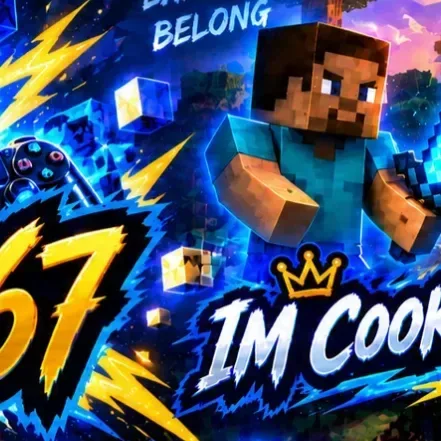
Mighty Mike Plays has become one of gaming video’s strangest recent flashpoints: a small YouTube channel built around Roblox, Minecraft and a nine-year-old creator suddenly says it is dealing with an alleged $118,000 advertising spend. The family’s explanation is dramatic. The public response has been even more dramatic.
The channel’s father, Dave, says his son ran high-cost campaigns without his knowledge after a company bank card had been connected to an account used for Robux purchases. He says an initial roughly $20 promotional push for a video snowballed into an advertising bill that his employer discovered, costing him his job and leaving him 30 days to repay the money. He has said selling the family home is among the possibilities being discussed.
That account has propelled Mighty Mike Plays from a modest gaming channel into an internet-wide spectacle. But it has also been met with substantial skepticism. The key issue is simple: the story has been widely repeated and intensely debated, yet its central financial claim remains unverified in public. That distinction matters, particularly when the situation involves a child creator, a rapidly growing audience and merchandise marketed around the alleged loss.
What Mighty Mike Plays says happened
Mighty Mike Plays began publishing in early August, with frequent uploads covering Roblox and Minecraft. Its channel description presents the videos as the work of a nine-year-old who enjoys gaming with his father.
On September 14, a video titled Message from Dad…Mighty Mike Plays is Over changed the channel’s direction. In it, the child says the channel will be shut down before Dave explains that he had learned of allegedly expensive campaigns being run through the account.
Dave’s account is that a company card was associated with the account for Robux, Roblox’s virtual currency. He says he also spent about $20 to give one upload a small promotional boost. He alleges that the subsequent ad activity eventually totaled $118,000, that his employer confronted him about the charge, and that he then lost his job.
It is important to separate two different kinds of spending in that description. Robux is in-game currency that can be used within Roblox’s ecosystem. Paid video promotion, by contrast, means money is spent to put a video in front of more viewers as an advertisement. The claimed bill concerns advertising, not a claim that $118,000 of Robux was purchased.
The channel’s view history has been a major part of the conversation. Several uploads drew relatively low counts, including videos with hundreds or low-thousands of views. Others gained far more traction. A Minecraft series episode published on August 8 was listed with 386,000 views, while a video uploaded the same day about Roblox had 805. Other high-view uploads prompted commenters to say they had first encountered them as advertisements.
Related coverage includes Mighty Mike Plays' $118,000 Ad-Spend Story Sparks Viral Debate.
That uneven performance is compatible with the basic idea of paid promotion reaching more people than ordinary uploads. It does not, on its own, establish how much was spent, who approved it, how the account was configured, or whether the wider $118,000 narrative is accurate.
Why viewers are not treating the claim as settled
The viral spread has not produced a consensus. Some viewers see a familiar cautionary tale about children, saved payment methods and weak account oversight. Others say the circumstances raise too many unanswered questions to accept at face value.
Among the questions being raised are how a company card could remain usable long enough for such a large total to accrue, what controls were in place around the advertising account, and why the family’s public evidence has not persuaded many skeptics. Dave has said a card-balance image was uploaded as proof and later removed. The available description of that image does not independently resolve all of the questions surrounding the alleged ad spend.
Nor do views offer a reliable shortcut to a verdict. A paid campaign can generate exposure, but public view totals do not reveal the campaign budget, targeting, billing history, refund status or whether an account’s financial settings were changed. They also cannot show who clicked the relevant controls. In other words, a video being visibly promoted is evidence of promotion; it is not a receipt for a specific total.
The uncertainty is especially important because the story’s most consequential elements are personal: reported job loss, possible repayment within 30 days and the prospect of selling a home. Those are serious claims, but they remain allegations without public documentation sufficient for outside observers to verify the entire chain of events.
The central question is not whether a young creator’s videos appeared to receive advertising. It is whether the full financial and employment story attached to that promotion has been established publicly. It has not.
A viral narrative turned into a storefront
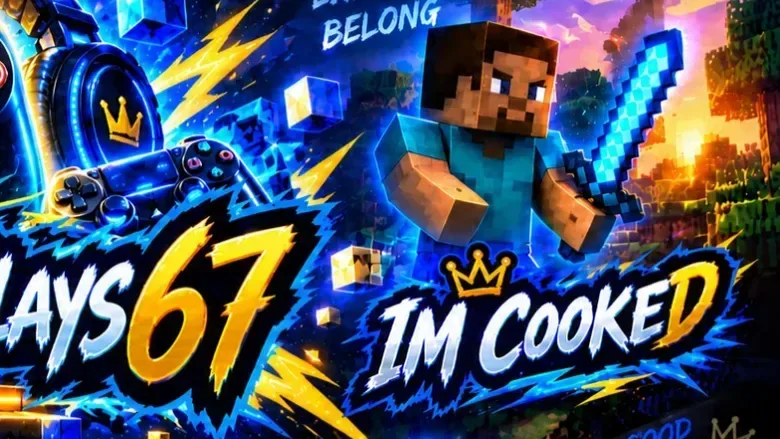
The situation shifted again when Mighty Mike Plays did not launch a GoFundMe and instead opened a merchandise site. The available shirts reference the channel’s “wassup chat” introduction, the number 67 meme and the alleged $118,000 total. Prices were listed from $67 to $97.
That decision changed the nature of public reaction. A crowdfunding page would have made the transaction explicit: supporters would be giving money to help with an alleged emergency. Merchandise presents a purchase instead, but the products are still framed in relation to the controversy and its claimed financial consequences. For critics, that creates an uncomfortable connection between a difficult family story and a newly monetized viral moment. For supporters, it is a way to back the channel without a direct request for charity.
The shirts also prompted arguments over the use of AI-generated design assets. Dave responded in a reportedly deleted post that AI was used to help create the graphics and defended the choice. The issue is not just whether software assisted the artwork; it is how a channel asking for trust handles creative disclosure, presentation and criticism while its audience is growing quickly.
AI-assisted design is not itself proof of deception, just as premium shirt pricing is not proof that the underlying story is false. But both decisions have made it harder to separate the alleged incident from the business opportunity created by its virality. The wider technology debate is evolving quickly as well, as seen in a recent dispute over an AI shopping agent and platform access. In this case, the immediate practical concern is transparency: viewers should know what they are being offered, how it was made and what claims are actually substantiated.
The child-safety question is real, regardless of the claim
Comment sections became increasingly hostile as scrutiny grew. Mighty Mike Plays said it shut comments down to keep a child from being exposed to aggressive posts, with a plan to turn them back on after things calm down. That is a reasonable concern on its own terms. A nine-year-old should not be placed at the center of a prolonged, adversarial public argument over money, alleged misconduct or a family’s housing.
At the same time, removing comments cannot answer the factual questions that triggered the backlash. It only changes where the debate happens. The proper response to uncertainty is neither harassment nor automatic belief. It is careful language, skepticism without personal abuse, and clear boundaries around a minor’s participation in the controversy.
This episode also offers a practical warning for families with gaming, video and app accounts. Saved cards are convenient, but convenience is not a control. Purchases, virtual currency and paid promotion can be distinct systems with different settings. An account used to buy in-game currency may also have access to other transaction tools if its configuration permits it.
Basic safeguards worth checking
- Remove payment methods from accounts a child uses unless an adult is actively supervising a purchase.
- Review advertising access separately from game-store or virtual-currency purchasing access. They are not the same function.
- Use spending caps and alerts where those tools are available, rather than relying only on a child to ask before spending.
- Keep work and family finances separate. A company card should not be an informal household payment method.
- Review recent activity regularly, including subscriptions, game purchases and promotional tools attached to creator accounts.
- Set a publishing plan for young creators that includes adult review of descriptions, links, comments and any monetization.
What is actually known—and what remains unresolved
The known public outline is narrower than the viral version. Mighty Mike Plays is a channel that began uploading in early August. It posted videos involving Roblox and Minecraft. Some videos appear to have been promoted, and commenters had previously said they encountered certain uploads as advertisements. In mid-September, Dave posted videos alleging an unauthorized $118,000 ad spend, job loss and a 30-day repayment window. The channel then gained hundreds of thousands of subscribers and millions of views across its recent update videos. It opened a merch site, and it says it disabled comments after the reaction turned toxic.
The unresolved portion is also central: whether the claimed $118,000 total, the circumstances of the transactions, the employer’s response and the broader financial stakes occurred exactly as described. Publicly visible channel growth, ads and merchandise do not settle those matters.
For now, the fairest reading is not to declare Mighty Mike Plays proven or disproven. It is to recognize a story with real implications for child creators and account security, while refusing to turn allegations into established fact. The ads may have made the channel visible. The unanswered questions are what made it impossible to look away.