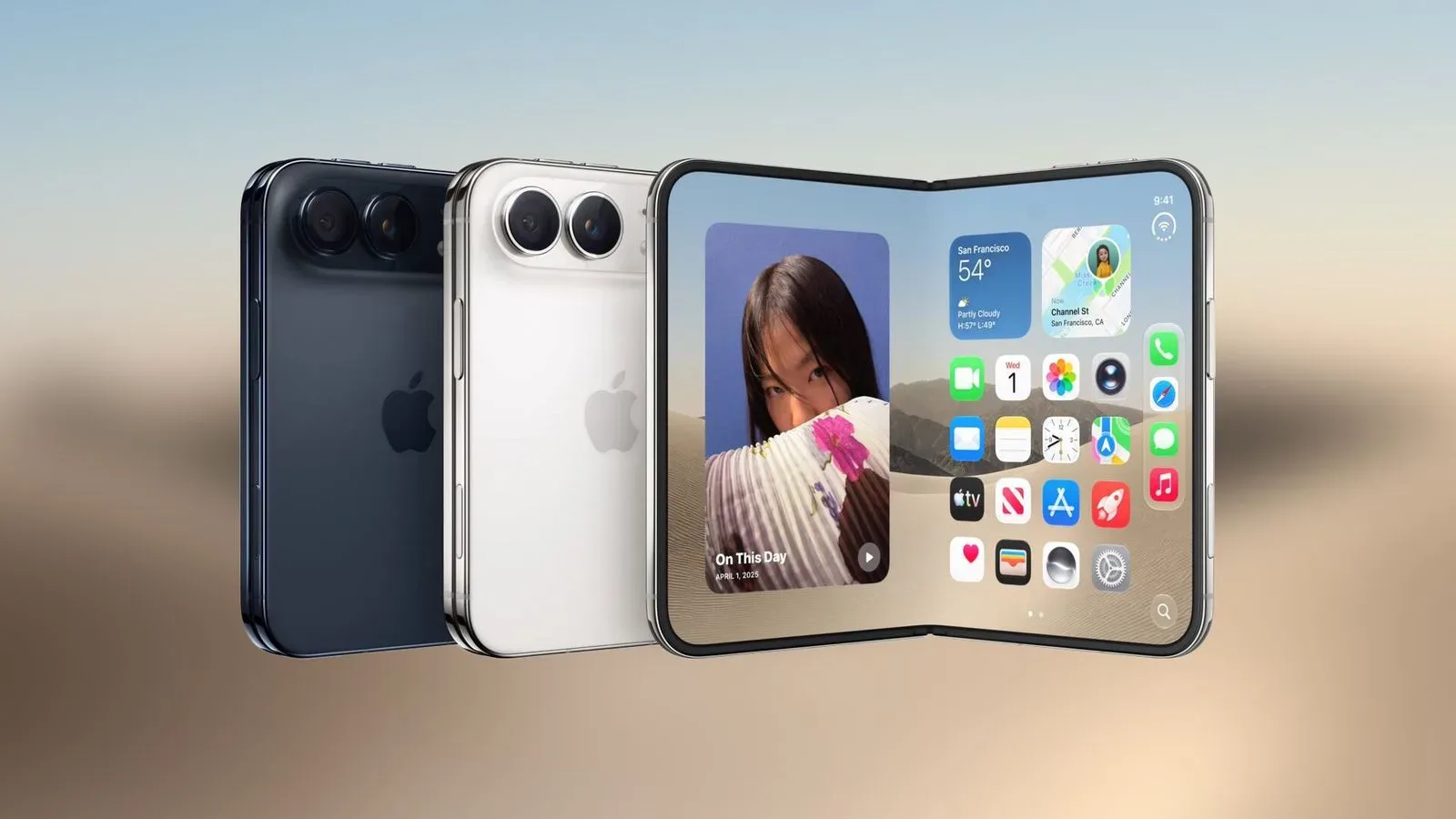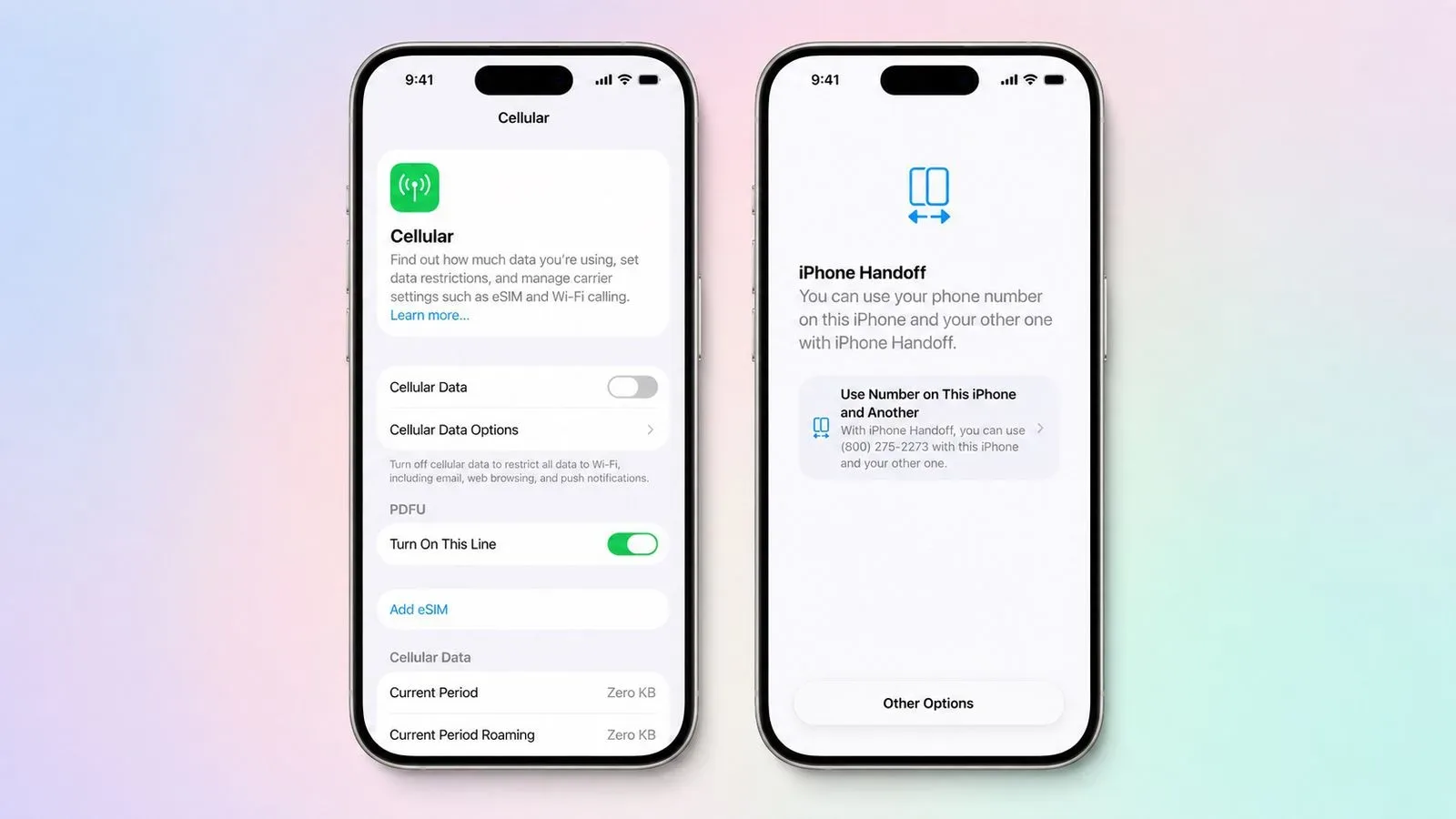
Verizon is preparing to offer Apple’s iPhone Handoff feature for $10 per month, letting eligible customers use one Verizon phone number across two compatible iPhones. The carrier says the option is coming soon for compatible models running iOS 27, and has specifically identified the iPhone Duo and iPhone 18 Pro as supported hardware.
The service is built around an appealingly simple idea: someone who owns two iPhones can move their usual number between them rather than maintaining a separate number for each device. Verizon frames the use case as pairing the pocketable iPhone Duo for time away from a desk with an iPhone 18 Pro for work. It is an unusual convenience feature with a very specific boundary, though: the number may be associated with both phones, but it can be active on only one iPhone at a time.
What iPhone Handoff actually changes
In this context, iPhone Handoff is a carrier-supported way to switch a single phone number between a main iPhone and a companion iPhone. “Active” is the key word. This is not an offer to make one Verizon number ring on two iPhones simultaneously, nor does the announced description establish that both devices can independently use that number at the same moment.
Instead, the owner can change which of their two compatible phones currently has active status. The practical value is in avoiding a permanent choice between devices: a person may carry one model while out, then switch the number to the other when their needs change. Verizon says the active device retains access to its 5G network.
That limitation matters for anyone reading “shared across two iPhones” as a full duplicate-line replacement. It is better understood as one identity that can move between two pieces of hardware, rather than two fully active versions of the same phone line. Users considering the feature should therefore judge whether regular switching is useful enough to justify an ongoing monthly charge.
Verizon’s price is higher than the existing U.S. alternative
Verizon’s $10 monthly rate is twice the price charged by T-Mobile, which already supports iPhone Handoff for $5 per month. That gives prospective users a clear comparison point, although carrier choice involves far more than the cost of a single add-on. Existing plans, coverage needs, device eligibility and the broader cost of moving service can all matter more than a $5 monthly difference.
Still, the gap is easy to express in annual terms. Verizon’s add-on comes to $120 over 12 months, while T-Mobile’s listed rate amounts to $60 over the same period. The difference is $60 annually, before any changes to pricing or plan terms.
AT&T, the other major U.S. carrier named in the current landscape, has indicated that it does not have imminent plans to support the feature. For customers who specifically want Apple’s two-iPhone number-switching setup, the early U.S. choice is consequently limited.
Availability remains a “coming soon” proposition
Verizon has supplied a price and named compatible iPhone families, but it has not provided a firm launch date in the information currently available. Its wording is “coming soon.” Apple had previously said Verizon would adopt iPhone Handoff before the end of the year, but customers should distinguish that expectation from a dated carrier rollout.
The requirements currently stated are also worth taking literally. The feature is for compatible iPhone models running iOS 27, and Verizon’s announcement confirms compatibility for iPhone Duo and iPhone 18 Pro models. Nothing in the available details supports assuming that every iPhone capable of installing iOS 27 will qualify, or that unsupported older hardware will receive the option.
That device focus arrives as interest in the iPhone Duo has been notable enough to push new orders into 2027, as covered in Apple’s iPhone Duo demand update. Handoff gives owners of a Duo and an iPhone 18 Pro a carrier-sanctioned reason to treat the pair as complementary devices rather than separate lines of service.
How international carrier pricing compares
The feature’s pricing is not uniform outside the United States either. In the United Kingdom, EE says it will support iPhone Handoff soon. It will be included with the carrier’s Full Works Plus plan, while customers on other EE plans will be able to add it for £5 per month.
In Germany, Deutsche Telekom has already added support. Its listed charge is €6.95 per month, though the service is included at no added charge with MagentaMobil L and XL plans. These examples illustrate two different approaches: sell the capability as an add-on, or use it as a bundled benefit on selected higher-tier plans.
For Verizon customers, the announced $10 rate is a standalone monthly figure. The announcement does not say that any Verizon plan will receive iPhone Handoff at no additional cost, so it should not be presumed to be bundled.
Who the add-on is for—and who can skip it
iPhone Handoff is aimed at a narrow but understandable group: people who genuinely own, use and alternate between two compatible iPhones. A conventional upgrade customer with one phone has no reason to add it. Likewise, anyone needing both handsets to be reachable on the same number at once should recognize that the one-active-iPhone restriction does not describe that experience.
For the right owner, the feature can reduce the friction of dividing life across a smaller portable handset and a work-oriented device. For everyone else, it is another monthly line item in a phone bill that may already include service charges, device payments and plan add-ons.
Before signing up, keep these points in view
- Verizon lists the service at $10 per month.
- Both phones need to be compatible models running iOS 27.
- Verizon has identified iPhone Duo and iPhone 18 Pro models as supported.
- One number can be used across the two devices, but only one iPhone can hold active status at a time.
- The carrier says the feature is coming soon, not that it is already available.
- T-Mobile already offers the same feature at $5 per month; AT&T has no imminent support plans.
The larger takeaway is less about a new iPhone setting than a changing carrier role. Apple has supplied the iOS 27 feature, but whether it works—and what it costs—depends on network participation. Verizon’s entry expands the available U.S. options, while its $10 price places a tangible premium on the flexibility of moving one number between two compatible iPhones.