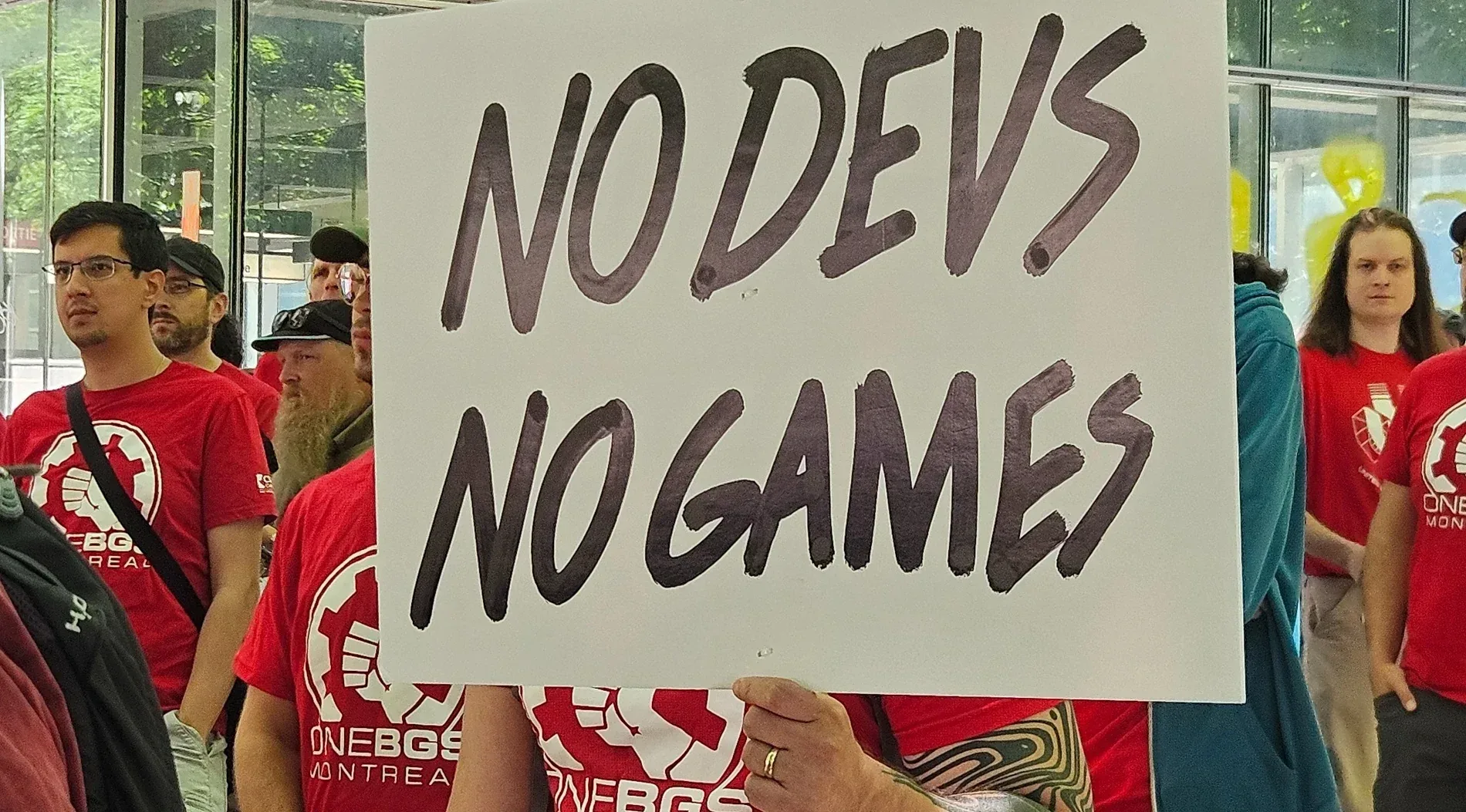
United Video Game Workers-CWA says its hardship fund for laid-off game developers has raised and distributed $290,000, offering immediate financial support to more than 150 people across the industry. The fund was created earlier this year with Necrosoft Games and drew money from an itch.io bundle, union dues and outside donations.
The two-week fundraising total is meaningful not simply because of its size, but because of the expenses recipients said it could address: rent, medical bills and other debt. For a worker between jobs, that is the difference between a headline-level discussion of layoffs and the very practical question of whether an essential bill can be paid this month.
The union says the full amount has now been disbursed. It also intends to hold similar fundraisers in the future while continuing its organizing work and pursuit of stronger worker protections.
What a hardship fund does—and what it does not do
A hardship fund is emergency aid intended to help people through an acute financial setback. In this case, the need is tied to job loss in game development. It is not a replacement for a salary, severance package, health coverage, unemployment support or a permanent solution to instability. Its role is narrower and more urgent: helping recipients bridge a gap until new work or other support arrives.
That distinction matters. The reported uses of the money—housing, healthcare-related bills and debt—are recurring obligations that do not pause when a project ends or a studio cuts staff. A worker can be highly experienced and still be exposed to immediate costs when their income disappears. Emergency assistance is therefore less about solving every consequence of a layoff than buying time and preventing a short-term crisis from becoming harder to reverse.
One recipient described the support as arriving when they “deeply, deeply needed a hand to pull me up while I’m drowning.” That reaction captures the human scale behind a total that might otherwise read as a simple fundraising milestone.
The applicants reflect layoffs across major employers
The union’s report lists applicants who were laid off from studios and companies including Xbox, Activision Blizzard, EA and Ubisoft. Those names underscore that the fund’s beneficiaries do not represent one isolated closure or a single part of the business. The assistance reached workers from across the industry’s larger corporate landscape.
There is an important limit to what this information establishes: a list of applicants is not a full census of layoffs at those employers, nor does it explain each person’s employment circumstances. It does, however, show that workers affected by job loss sought help from a collective fund spanning multiple companies and disciplines.
Related coverage includes United Video Game Workers Distributes $290,000 Hardship Fund to Laid-Off Developers.
The central fact remains straightforward: more than 150 game workers received aid after a rapid two-week drive. The effort combined a digital game bundle on itch.io with money from union dues and outside donors, demonstrating how a support program can draw on several sources rather than relying on a single campaign channel.
Experience is a major part of the story
Among hardship-fund applicants, 32 percent reported having worked in the games industry for 10 years or more. That figure is especially significant because experience in game development is not just a count of years on a résumé. It can include knowledge of production processes, the tools and pipelines used to build games, how teams coordinate, and the practical judgment accumulated through shipping projects.
“Brain drain” is the term often used when a field loses experienced people faster than it can retain or replace their knowledge. It does not mean every laid-off developer will leave games permanently; the fund data does not make that claim. Instead, it describes a risk. When veteran workers are repeatedly displaced, some may find new roles elsewhere, and studios can lose expertise that is difficult to rebuild on a short timetable.
That risk is particularly relevant in an industry built around collaborative work. A game is not created by a single specialty in isolation. Artists, designers, engineers, producers, quality-assurance staff and many others depend on institutional knowledge: the unwritten understanding of a team’s processes, a project’s technical constraints and the ways prior problems were solved. New hires can bring valuable ideas and skills, but continuity also has value.
The report’s applicant figure should not be read as a measurement of the entire industry’s workforce. It is a measurement of people who applied to this particular fund. Still, it offers a clear warning that lengthy careers do not automatically shield workers from layoffs or financial pressure.
Retention is a competitive advantage, not just a staffing statistic
The contrast between layoffs and long-term retention helps explain why these numbers resonate. The ability to keep workers over many years can allow companies to develop future leads internally and preserve knowledge from one project to the next. That does not make any company immune to change, but it can make teams more resilient when productions become complex.
One cited example puts 21 percent of Rockstar staff—about 1,000 people—at 10 or more years with the company. That statistic is distinct from the hardship-fund applicant data and should not be used to draw a direct comparison between workforces. It does, however, illustrate the broader point: veteran staff can represent a substantial part of a major studio’s capacity.
For readers following the business side of games, the key issue is not whether experience can be assigned a simple dollar amount. It cannot. The more useful question is what gets disrupted when experienced teams are broken apart: mentoring, project memory, relationships between disciplines and the ability to recognize a problem early because someone has seen a similar one before.
Rockstar’s place in the wider discussion is also inseparable from attention around its next major release. For a separate look at how its upcoming game is being discussed in culture and marketing, see this coverage of a GTA 6 in-game retail joke.
Why the fund’s speed matters
The union says it raised the $290,000 over two weeks. A short fundraising window matters because layoffs create immediate needs. Rent due dates, healthcare costs and debt payments follow their own schedules; they do not wait for a job search to conclude. Rapid disbursement is therefore a key part of a hardship fund’s practical value.
There is also a collective dimension. Union dues contributed to the pool alongside public donations and proceeds from the itch.io bundle. That structure links members and supporters to direct relief for workers who have lost jobs, while the union’s wider goals remain focused on protections and organizing.
It is worth keeping the scale in perspective. More than 150 recipients is a substantial group of people, but the program was designed as a targeted response to hardship, not an industry-wide guarantee. The fact that the entire $290,000 has been distributed indicates both that donors and contributors supplied meaningful help and that demand for the help was real.
What the report says about the present moment
Industry coverage can often frame layoffs through company strategy: changing pipelines, project cancellations, financial performance or restructuring. Those are relevant business terms, but they can obscure the personal aftermath. The hardship fund brings that aftermath into focus by identifying the kinds of bills that needed paying and the breadth of workers affected.
Its most concrete takeaway is not a prediction about where every developer will work next. It is that peer-supported assistance helped more than 150 laid-off game workers meet urgent expenses, with $290,000 collected in two weeks and fully distributed. The accompanying experience data adds another layer: nearly one-third of applicants reported at least a decade in games.
As UVW-CWA plans future fundraising efforts, the results establish a clear model for what those campaigns can do in the immediate term. They can give displaced workers breathing room. They cannot eliminate the insecurity caused by layoffs on their own, which is why the union’s stated focus on organizing and worker protections remains central to the story.