Tymon Smektala, whose 13-year spell working on Dying Light included time as franchise director, has joined Broken Mirror Games as executive director. His stated ambition is not merely to add more horror games to a release slate. It is to identify creators with a strong point of view while they are still making smaller projects, then give them the backing and genre expertise to grow.
That is a lofty goal, and Smektala frames it in equally lofty terms: finding a creator who could become “the next Kojima.” The comparison is best read as a description of the kind of authorial impact Broken Mirror hopes to discover rather than a prediction about a particular developer. The central idea is a publisher spotting an unmistakable creative vision early, then helping it become more ambitious without sanding down the qualities that made it stand out.
Broken Mirror is a publishing division connected to Bloober Team, and it already has multiple horror projects in development. The company’s comments suggest its approach will prioritize games that bring a new perspective, format, or thematic concern to horror—not just familiar scares presented with a new coat of paint.
What Smektala says Broken Mirror is looking for
Smektala’s model begins with a smaller game from a developer whose vision is already evident. In his view, the publisher’s role is to provide experience and support that can help that developer make larger and stronger work over time. He specifically points to the value of Broken Mirror’s accumulated knowledge of making horror games.
That distinction matters. A publishing relationship can mean many things, from financing and marketing to production assistance and platform planning. Here, the emphasis is on creative development: locating a promising voice, recognizing what is distinctive about it, and helping that creator reach a bigger stage.
Smektala described the search through recent horror-film examples, citing Obsession, Backrooms, and Weapons as works that offer a fresh take on the genre. One of those examples came from a content creator, underscoring his belief that compelling horror ideas can emerge from outside established development pipelines. For Broken Mirror, the desired project is not simply unusual for its own sake; it should contribute something recognizable and individual to horror.
In practical terms, “vision” is not a technical feature list. It is the coherent identity behind a game: its perspective on fear, its atmosphere, the way players interact with its world, and the reason its ideas belong together. A title may have a modest scope yet still demonstrate that identity clearly. That is the sort of early signal Smektala says the team wants to find.
Why the Kojima comparison is deliberately big
The “next Kojima” line is inevitably attention-grabbing, but it also conveys the scale of Broken Mirror’s aspiration. It is not a promise that another individual will duplicate any existing creator’s work. Rather, it points to a desire for horror makers whose games are immediately associated with a personal creative signature.
Related coverage includes Tymon Smektala Wants Broken Mirror Games to Discover Horror's 'Next Kojima'.
That is a difficult target for any publisher because signature-driven projects also carry uncertainty. The more a game departs from established formulas, the harder it can be to predict how an audience will respond. Yet that uncertainty is also where a new horror idea can find its power. A publisher focused entirely on proven structures may reduce risk, but it is less likely to uncover the sort of project that changes how people talk about the genre.
Smektala’s own background gives the goal some context. During his long tenure on Dying Light, he worked on a series associated with open-world survival horror and a day-and-night structure that changes the challenges players face. The important lesson is not that Broken Mirror plans to repeat Dying Light. Instead, it is that Smektala arrives from a franchise where a major structural choice—the relationship between time of day and danger—helped define the player experience.
For creators pitching horror games, that kind of background may signal a publisher open to a design concept that reaches beyond monsters, setting, or jump scares. A game’s core interaction can be part of its horror identity too.
Horror as more than a delivery system for scares
Bloober Team CEO Piotr Babieno has put a broader creative principle behind the initiative. He argues that the strongest horror works do more than entertain or appear unique: they engage with fears that exist in society. In that view, horror becomes a way to explore the anxieties people already carry, rather than a genre defined only by immediate shocks.
This does not mean every game needs to make a sweeping statement. It does clarify what Broken Mirror means when it says it wants “something behind” the work. The company is looking for ideas with an underlying subject or perspective, whether that arrives through story, themes, mechanics, or the tension between them.
Babieno also sees content creators as potential contributors to that variety of viewpoints. The implication is that a developer’s path into horror need not look traditional for the work to have value. What matters is whether the creator can address fear from a perspective that feels specific and meaningful.
For players, this could translate into a more varied lineup than one built around a single template. Horror has room for survival systems, psychological unease, multiplayer pressure, tactile play, and other approaches. Broken Mirror’s stated interest is in projects that make a case for their own approach, rather than treating the genre as a fixed set of ingredients.
Projects already point to different horror formats
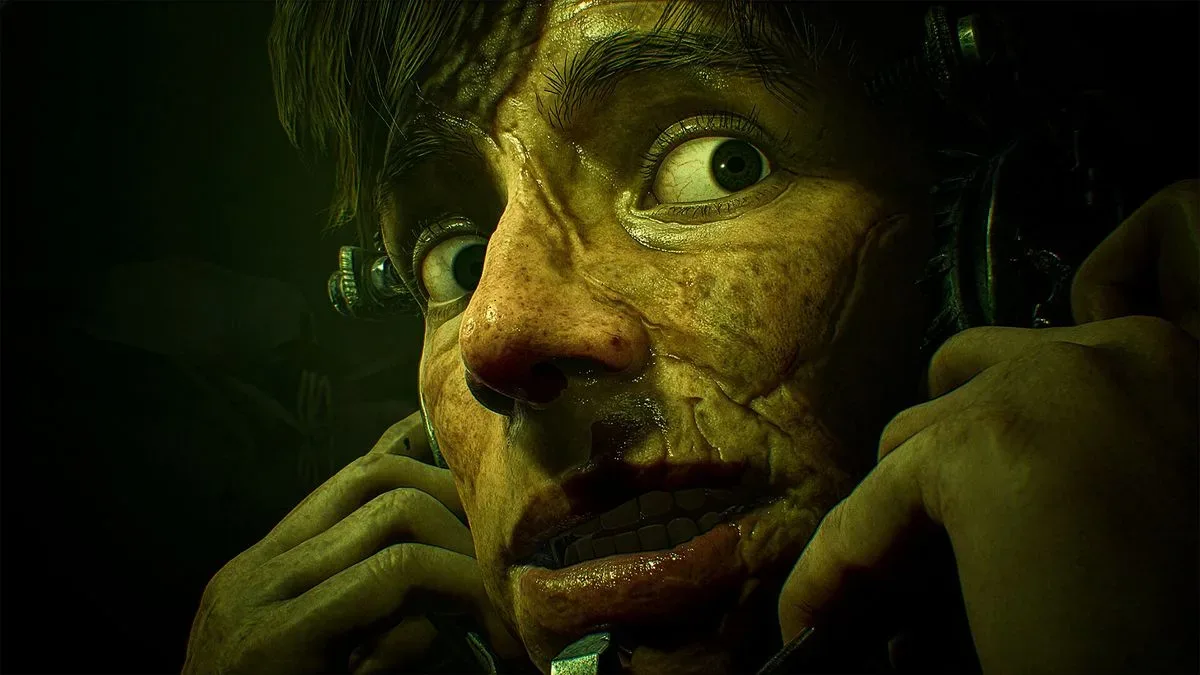
The division’s existing projects offer a glimpse of that range. Saw: Genesis is described as taking a more involved approach to asymmetrical multiplayer. Asymmetrical multiplayer is a format in which players have different roles, abilities, objectives, or information rather than competing on identical terms. In horror, that imbalance can create tension because participants do not experience the threat in the same way.
Meanwhile, Onyx: The Dark Grip is an upcoming Switch 2 exclusive designed around handheld play. Broken Mirror’s description of “putting fear back into your hands” signals that the team is treating the handheld context as part of the game’s intended horror experience, not just a destination for a release.
That is a useful distinction. Platform specificity can refer to more than technical performance or controls. It can shape how a game is encountered: close to the player, in a portable form, and through interactions designed with that setting in mind. The supplied details do not explain exactly how Onyx: The Dark Grip will implement that idea, so any further assumptions would be premature. But the stated focus makes it one of the clearest examples of Broken Mirror seeking a format-driven horror concept.
Broken Mirror also has additional Nintendo exclusives in the works. Together with Onyx: The Dark Grip, that indicates a meaningful Nintendo-facing component in the publisher’s current plans, even as the wider strategy centers on new horror voices.
What to watch from the publishing division
The immediate measure of this strategy will not be whether every game invokes a blockbuster comparison. It will be whether Broken Mirror can articulate why each project deserves to exist and preserve the strongest parts of a developer’s identity as the project grows. That is where the company’s stated mix of creator discovery and internal horror experience will face its real test.
For now, the clearest takeaway is a creative brief: seek horror that is distinct in form or perspective, recognize promising work at a smaller scale, and help its makers develop further. Smektala brings experience from a major survival-horror franchise; Babieno is emphasizing horror’s ability to reflect deeper fears; and the announced slate already spans asymmetrical multiplayer and a handheld-first Switch 2 project.
It is an ambitious framework, but it is also specific enough to watch. As more Broken Mirror projects are revealed, the key questions will be what each game is trying to add to horror, how its platform or mechanics serve that goal, and whether its creator’s voice remains visible in the finished result. For more on the wider business and people behind games, see our video-game industry coverage.