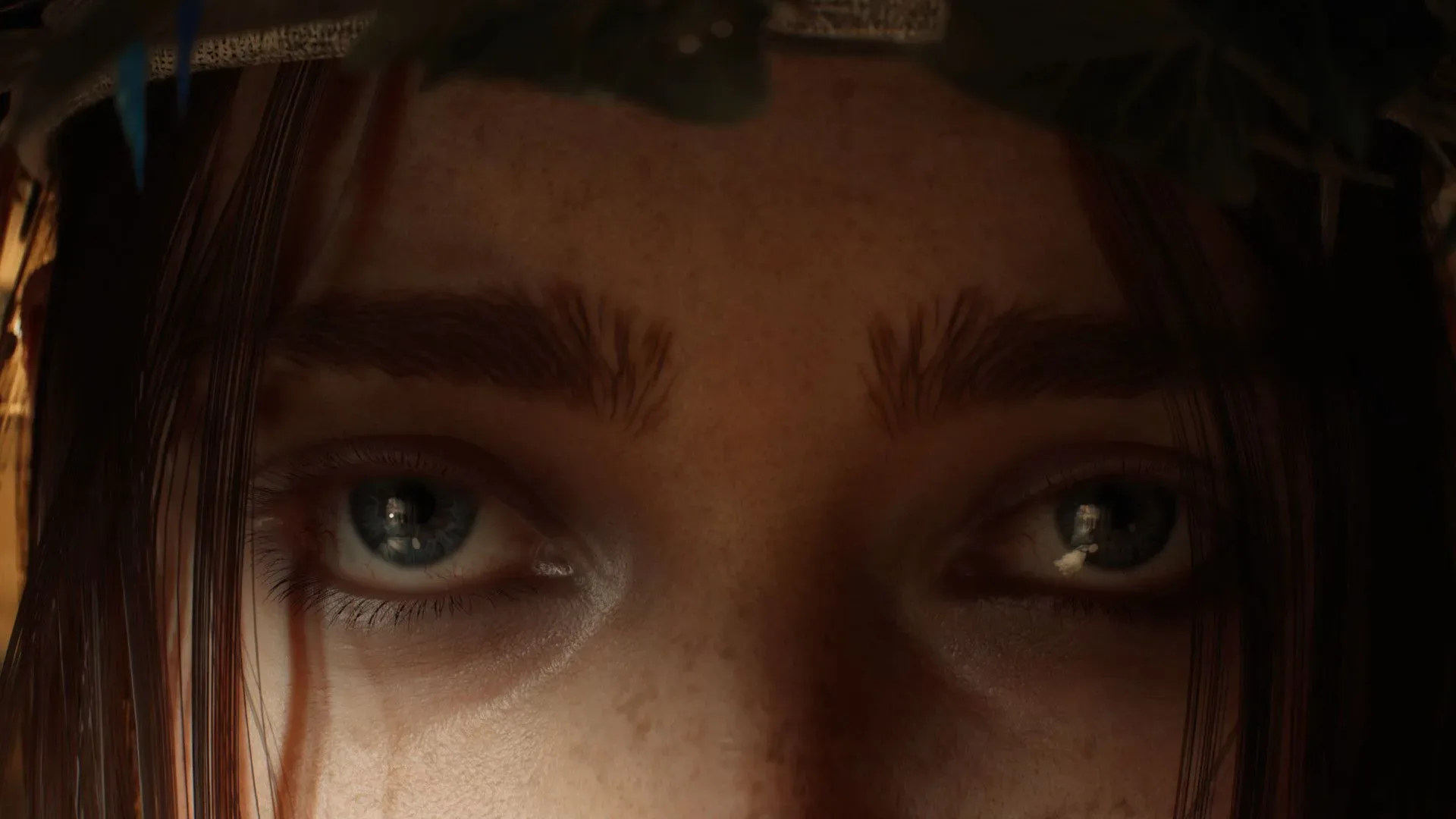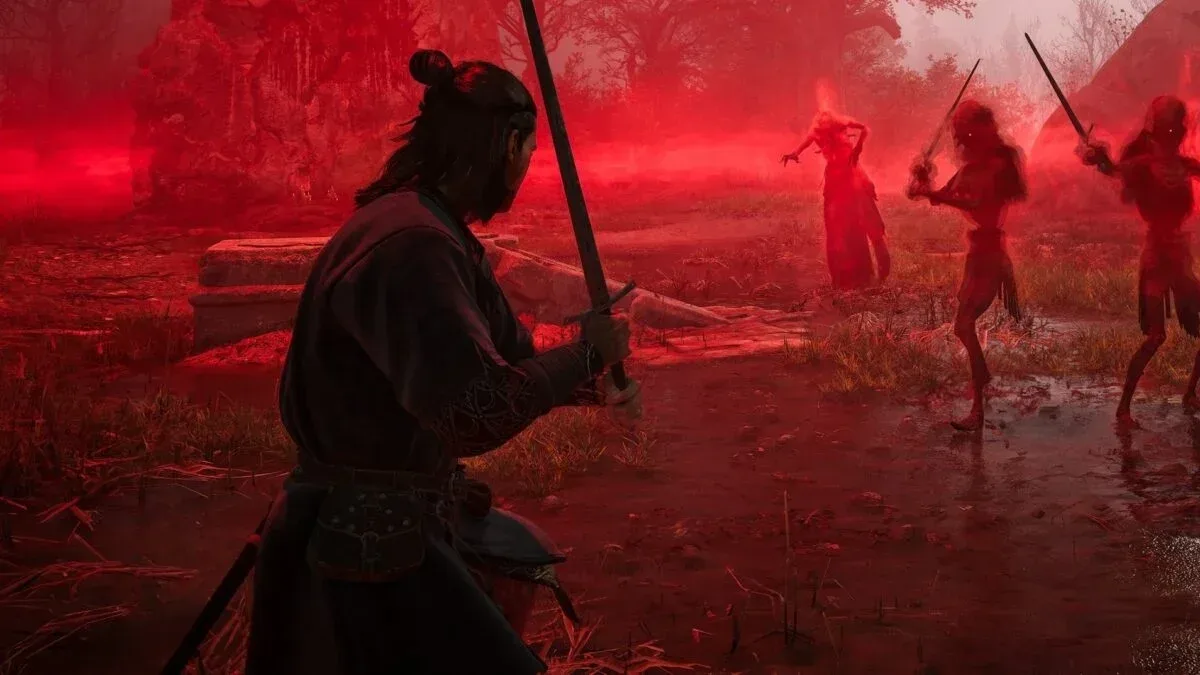
The Blood of Dawnwalker has emerged as one of 2026’s more notable role-playing game stories not because it arrives without flaws, but because its successes appear to have been achieved with unusual discipline. The vampire action-RPG was made by Rebel Wolves, a first-time studio that reportedly worked with a $40 million production budget and has grown to 160 people. It has also reached 1 million sales during an especially crowded part of the calendar.
Those figures do not turn a game into a masterpiece by themselves, and a sales milestone is not a substitute for a player’s own judgment. They do, however, make the project worth examining. A new studio has apparently delivered a substantial third-person RPG while preserving the gameplay principles it established early: a day-night cycle that changes the protagonist’s vampire abilities, and a time limit that prevents a single playthrough from exposing every corner of the game.
For a genre frequently associated with ever-expanding maps, activity lists and sprawling feature sets, that is a striking choice. Rebel Wolves’ approach suggests that limitation was not simply a compromise made during development. It was part of the game’s identity.
A reported $40 million production budget, and what it does and does not say
NetEase reportedly provided $40 million for production in return for a 26% stake in Rebel Wolves. That arrangement matters because it describes more than a publisher simply funding an individual release: the investment was tied to an ownership share in the studio itself.
For more context, explore Absolute Batman #23 Leads Direct-Market Comic Sales for August 2026.
It is important not to overread the number. A reported production budget is not necessarily a complete accounting of every cost connected to a game. The available information identifies the money as production funding, but does not detail marketing expenditure, distribution arrangements or the full financial terms surrounding the release. Nor does it establish a profit figure. What it clearly does show is the scale of the resources Rebel Wolves had for making the game.
Forty million dollars is a meaningful sum for a new team, especially one based in Poland. It is not, though, a magic wand that makes a 160-person organization inexpensive to operate. A studio’s budget has to cover the long list of work behind an action-RPG: staff, technology, art, animation, writing, design, audio, quality assurance and the practical overhead of keeping a team functioning across years of development. Money moves quickly once a project reaches that staffing level.
That makes the game’s development path significant. Mateusz Tomaszkiewicz reportedly financed the first year of development in 2022, before the project ultimately shipped in 2026. Four years is enough time for a concept to gather features, change direction or become trapped in expensive rework. Rebel Wolves instead appears to have treated its initial design pillars as guardrails.
The foundations were meant to stay put
Tomaszkiewicz has said the studio made a deliberate decision not to alter the game’s foundations, noting that its core pillars remained the same as they were in the pitch deck. In development terms, a pitch deck is the early document or presentation used to communicate a project’s concept, direction and case for investment. Keeping the central ideas from that stage intact does not mean every system, quest or asset was frozen. It means the team had a stable answer to a harder question: what is this game fundamentally supposed to be?
That distinction can be crucial. When a studio changes a core premise late in production, the consequences can spread well beyond the feature being changed. Level layouts may need new logic. Progression and balance can be affected. Narrative structure may have to accommodate different player behavior. Art and audio requirements can shift alongside them. The result is not merely extra work on one system; it can be a chain reaction across the whole project.
Rebel Wolves’ reported strategy was to avoid that cascade. The team could refine the execution, but the broad framework remained in place. For a debut studio working on a major RPG, that focus may have been as valuable as any individual technical shortcut.
The approach also helps explain why the game’s most distinctive mechanics fit together. The day-night cycle is not described merely as visual scenery. It changes the player’s relationship to vampiric power. Meanwhile, the time limit means players cannot see everything in one run. Both mechanics make time an active ingredient in play rather than a background clock.
Why the day-night cycle and time limit matter
A day-night cycle is a game system that changes the world based on in-game time. Its simplest use is cosmetic: daylight becomes darkness, with lighting and atmosphere changing accordingly. In The Blood of Dawnwalker, the reported purpose goes further. The changing cycle is linked to the player character’s vampire powers, so the passage of time affects capability as well as mood.
A time limit, meanwhile, places a boundary on what a player can accomplish within a playthrough. It can sound restrictive, especially in RPGs where players are accustomed to treating optional content as a checklist to be cleared before the ending. But restriction can also create meaningful decisions. If everything cannot be done, choosing one path means giving up another. Priorities become part of the role-playing rather than an administrative task performed after the dramatic stakes have faded.
That design carries risks. Some players want exhaustive access to a world on their first journey, and a hard limit can make missed opportunities feel frustrating instead of exciting. A system like this has to make its choices legible and its trade-offs worthwhile. Yet it also offers a concrete answer to a common open-world problem: when a game presents too many tasks, individual decisions can lose urgency because there is always time to do all of them later.
By tying vampiric power to the day-night cycle and limiting total opportunity within a run, The Blood of Dawnwalker makes its central fantasy do mechanical work. The game is not simply about a vampire in a world with a clock; the clock helps determine how the vampire RPG is played. That degree of alignment is often what makes a game’s best ideas feel memorable even when other parts remain uneven.
Experienced RPG makers, without starting from nothing
Rebel Wolves may be a new studio, but it is not a team without relevant experience. Several co-founders came from CD Projekt Red, including Tomaszkiewicz, who directed The Witcher 3. That background does not make The Blood of Dawnwalker an extension of its predecessor, nor does it guarantee a particular standard of quality. It does indicate that the team brought knowledge of the third-person action-RPG form into a new company.
The available account suggests that the studio was able to borrow parts of the design blueprint established by The Witcher 3 where doing so was useful. “Borrowed” should not be confused with simple duplication. In practical development, it can mean beginning with familiar solutions to problems the team has already confronted: how a third-person character moves through a world, how combat and exploration are organized, or how RPG systems are communicated to a player.
That can save a first-time studio from spending its precious early years reinventing systems that are not the project’s reason for existing. The important question is what a team chooses to make new. Here, the reported answer is the combination of vampire powers, day-night change and a deliberately finite set of opportunities. The game’s ambition is not presented as trying to make every aspect of the genre unfamiliar. It is presented as building a distinctive structure around established action-RPG know-how.
There is a useful practical lesson in that distinction. Originality does not require discarding every convention. A project can use recognizable genre language while reserving its biggest creative bets for the systems that define its premise. For Rebel Wolves, holding that line seems to have helped contain the scope of a demanding debut.
One million sales is a real milestone, not a complete verdict
The Blood of Dawnwalker reportedly reached 1 million sales in one of the year’s busiest release periods. That is a significant audience for a studio’s first game, particularly in a genre where players invest considerable time and often wait for a clear sense of a game’s strengths before committing.
Still, the figure should be treated precisely. It tells us that 1 million sales were achieved; it does not on its own reveal how those sales were distributed, how long players stayed with the game, how the game performed across individual platforms, or what its ultimate financial outcome will be. Those are different questions requiring different information.
What can reasonably be said is that the game’s reception in the marketplace gives added weight to its design choices. A title with acknowledged shortcomings can still connect strongly when its best systems are coherent and give players something they cannot easily get from every other release. The Blood of Dawnwalker’s strongest calling card appears to be that coherence: its premise, its rules and its structure are all pointing in the same direction.
A dark-horse case built on focus
Calling a game a dark-horse Game of the Year contender is, ultimately, an assessment rather than a measurable status. There is no single industry ballot that can settle it. The phrase fits The Blood of Dawnwalker because the project has surpassed the expectations often attached to a new studio operating with a reported $40 million production budget, while still carrying the visible rough edges of a first release.
Its story is not that spending less automatically produces better games. The available facts do not support such a simplistic lesson. The stronger takeaway is that a project can protect itself from waste by deciding which ideas are non-negotiable. Rebel Wolves reportedly did that with its time-based structure and vampire-focused day-night mechanics, then leaned on experience in third-person RPG design rather than rebuilding every convention from scratch.
For players, that means the game’s appeal is likely clearest for those interested in an RPG that asks them to live with choices and accept an incomplete first pass through its world. For developers and observers, it is a reminder that the most important form of scope control may be conceptual: know the pillars early, understand what changing them would cost, and make the rest of the game serve them.