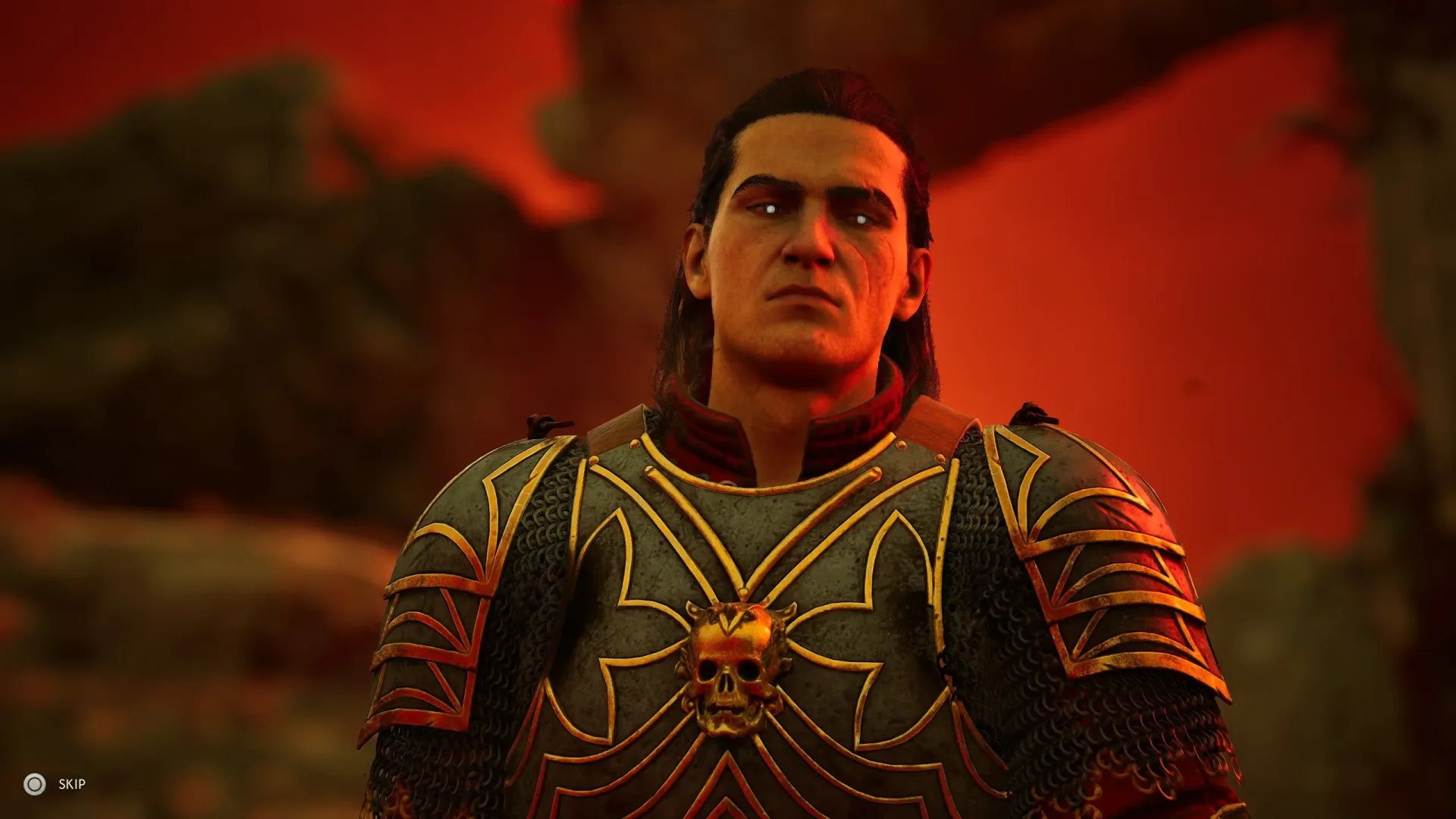
Rebel Wolves has set out a deliberately unfashionable-sounding ambition for an RPG studio: make the games its own developers want to play, rather than building around whatever the market currently appears to reward.
The Warsaw-based studio, which created The Blood of Dawnwalker, says its founding goal was to establish a workplace where the team could concentrate on the project rather than work around stock-market demands, strict deadlines, or industry trends. That is a broad creative statement, not a detailed roadmap for a particular sequel or feature. Still, it is meaningful context for a game that has already prompted discussion around a major design choice: quests governed by a time limit.
There is a useful distinction here. “Not following trends” does not necessarily mean refusing every familiar convention, rejecting outside financing, or making games without commercial considerations. Rebel Wolves has outside support, including minority stakeholder NetEase, while Bandai Namco publishes The Blood of Dawnwalker. The studio nevertheless describes itself as independent and says it retains full creative control over its games.
For players, the immediate question is less whether a studio can avoid every business reality and more whether that stated independence produces clearer, more confident decisions in the games themselves. The answer will depend on the work, but the philosophy offers a lens through which to view what Rebel Wolves has done so far—and what it may choose to preserve next.
A creative principle, not a feature list
Rebel Wolves’ position is rooted in the way the studio says it was formed. Its representatives have described a desire to focus entirely on the project without being driven by stock-market pressure or compressed schedules. Another summary of the stance is even more direct: the team wants to make games it would personally enjoy playing.
That may sound self-evident, but it is not a trivial promise in game development. A trend is not simply a genre or a popular mechanic. It can be a commercial assumption that a project should imitate a recent hit, expand into a particular monetization model, minimize friction at all costs, or reshape itself around whatever data suggests will attract the widest possible audience. A studio saying it will not chase trends is saying that a game’s identity should come before those reactions.
It is also not an automatic guarantee of quality. Developers can sincerely make the game they want and still face hard questions about clarity, pacing, accessibility, performance, or the point at which a difficult system becomes unnecessarily punishing. Creative control matters because it lets a team answer those questions from the needs of the game, rather than from a mandate to imitate another product. It does not remove the responsibility to answer them well.
That distinction is particularly important for role-playing games. RPGs ask players to invest time in systems, character choices, quests, and story outcomes. The strongest reactions often come from the parts that ask the player to accept a particular rhythm or worldview. A studio trying to please every imaginable preference can sand down the very edges that make a role-playing game memorable. On the other hand, a studio that treats every objection as proof that players “do not get it” can make an experience needlessly exclusionary. The value of a stated design philosophy is in how it guides that balance.
Related coverage includes Rebel Wolves Says It Wants to Build RPGs for Itself, Not Industry Trends.
The people and partnerships behind the studio
Rebel Wolves’ leadership helps explain why its RPG ambitions have attracted attention. Konrad Tomaszkiewicz, previously the director of The Witcher 3, is a co-founder and the company’s CEO. The studio also includes other former CD Projekt Red developers. That background naturally creates expectations of expansive role-playing design and consequential storytelling.
Those expectations should not be mistaken for proof that The Blood of Dawnwalker is trying to be another Witcher game. The shared personnel provide context, not a template. Rebel Wolves’ own emphasis is that its debut has a separate identity, even if observers can see broad influences from that RPG lineage.
The financing and publishing arrangement adds another layer. NetEase is described as a minority stakeholder, and Bandai Namco is the game’s publisher. Neither fact inherently contradicts the studio’s independence claim. Independent studios frequently work with publishers and investors; the crucial issue is who ultimately determines the project’s creative direction. Rebel Wolves says that authority remains with the studio.
That setup makes its language about avoiding stock-market pressure more specific than a generic anti-corporate slogan. It is presenting a model in which support and distribution can coexist with internal control of the creative work. The practical limits of that model are not detailed here, and no studio can operate without budgets or schedules. But the claim is that outside relationships should enable the project rather than dictate its identity.
The wider industry conversation around technology and decision-making makes that principle more relevant, not less. Questions about who controls a game’s creative work are also emerging in discussions of AI-assisted development; recent guardrail changes around game recreation are one example of how tools can raise questions beyond pure efficiency. Rebel Wolves’ comments are not specifically about AI, but they reinforce a simpler point: a studio’s choices about process shape the work players receive.
Why the time limit is the real test of that philosophy
The most revealing element in the discussion is The Blood of Dawnwalker’s time limit mechanic. Timed quests are controversial because they change the fundamental contract between a game and its player. In a conventional open-ended quest structure, players often expect to roam, collect equipment, investigate every side path, and return to urgent-looking assignments later. A timer says that delay itself has consequences.
That can be powerful in a horror RPG. Horror often relies on vulnerability, incomplete information, pressure, and the sense that safety is temporary. A meaningful deadline can turn a quest from a checklist into a decision: pursue one lead now, accept that another opportunity may be lost, and live with the result. In that framework, time is not merely a meter at the edge of the screen. It is a narrative resource, as important as health, money, or supplies might be in other games.
It can also create replay value. When one playthrough cannot accommodate every route or outcome, a later run may be more than a repeat with a different dialogue option. It can become an opportunity to prioritize a different person, quest, or strategy. That fits the reported view of The Blood of Dawnwalker as a gothic horror RPG with a story that supports multiple playthroughs.
But the criticism is understandable. FOMO—short for “fear of missing out”—is the anxiety that a player may permanently lose content, rewards, scenes, or outcomes because they did not act at exactly the right moment. In a long RPG, that feeling can make exploration stressful rather than exciting. Players may stop following their instincts and start worrying about optimization, guides, hidden triggers, and whether they have accidentally damaged their save.
Neither response is inherently wrong. Some players want urgency to make their choices hurt; others view an RPG as a space for curiosity and prefer to set their own pace. The controversy therefore is not just about difficulty. It is about player agency. A time limit grants agency by making choices consequential, yet it can feel as though it takes agency away when the game’s rules are unclear or too unforgiving.
Consequences need legible rules
If Rebel Wolves carries the mechanic forward in a future project, its challenge will be communication as much as conviction. Timed design can be intentional and still be opaque. Players need to understand what advances time, how much time remains, which activities are safe to undertake, and what kinds of outcomes are at risk. They do not need every consequence spoiled, but they do need enough information to make a choice rather than stumble into one.
That is not a call for the studio to dilute a high-stakes system. It is a call for legibility: the ability to read the game’s important rules. A clearly communicated deadline asks players to decide under pressure. An unclear one asks them to guess what the designer meant. Those are very different experiences, even when the timer is identical.
How the team treats this divide would be a concrete measure of its “make what we want to play” philosophy. The strongest version of that idea is not that the studio ignores feedback or refuses to reconsider anything. It is that feedback is evaluated against a coherent creative goal. If the goal is a horror RPG where time creates real stakes, then the right response may be to refine clarity and balance without stripping out the pressure that gives the system purpose.
What not to assume about a sequel
A sequel has been discussed in relation to The Blood of Dawnwalker, but there are no specific details here about its timing, platforms, new systems, or narrative direction. It is also unknown whether the time limit will return in the same form, be reworked, or be left behind. Treating the studio’s philosophy as confirmation of any particular feature would go beyond what has been established.
What can reasonably be taken from Rebel Wolves’ comments is a preference for authorial direction over reactive imitation. That could mean retaining divisive ideas because they serve the team’s intended experience. It could also mean changing them if the developers conclude that a different approach better serves that experience. “No trend-chasing” should not be confused with “no evolution.”
For an emerging RPG studio, that is arguably the more useful promise. Players do not need every game to chase the same broad design formula, and they do not need every challenging feature preserved merely for the sake of stubbornness. They need a studio to know what its game is trying to be, communicate its rules clearly, and make deliberate choices in service of that identity.
Rebel Wolves has framed its ambitions in precisely those terms. Whether its future games earn that confidence will come down to the details on screen: the choices the game asks of players, the consequences it allows them to carry, and whether its systems feel like purposeful parts of a gothic RPG rather than familiar ideas adopted because they were popular elsewhere.