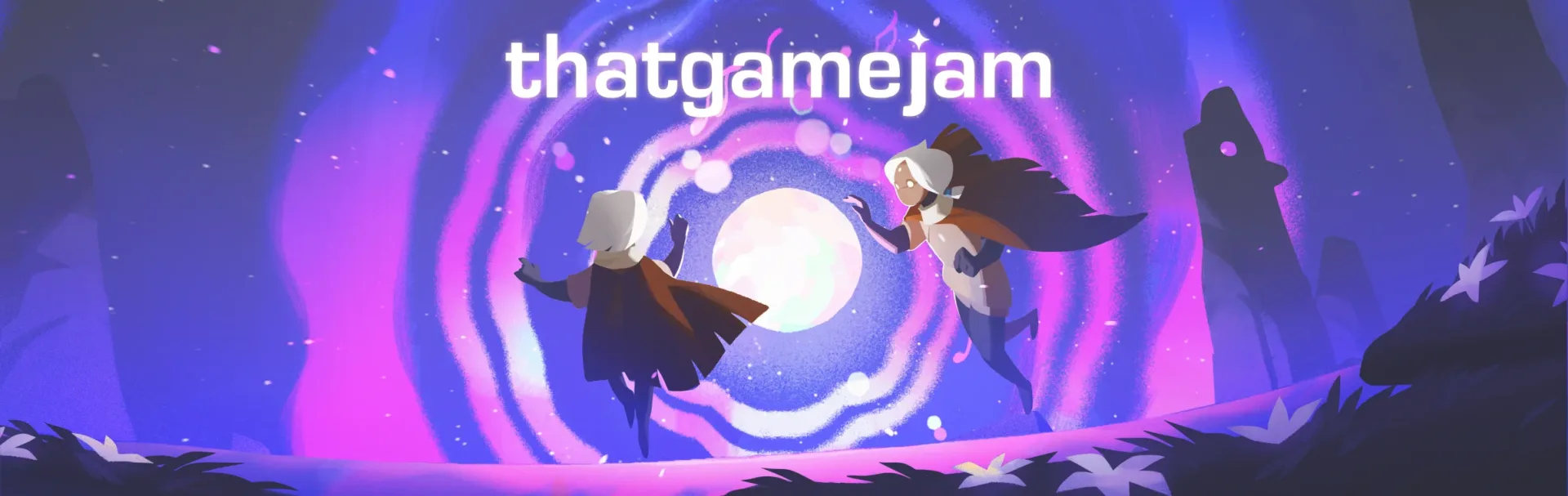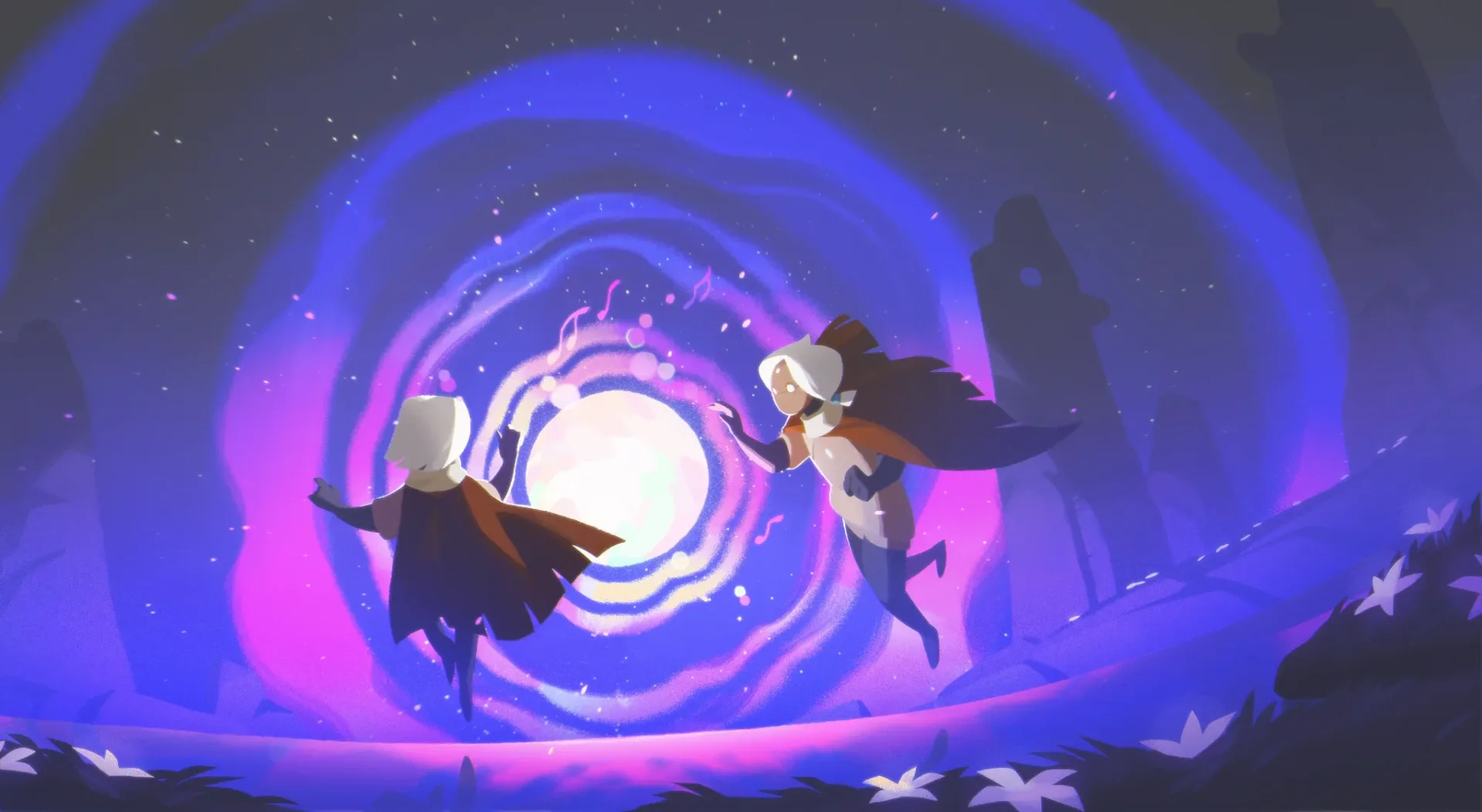
thatgamejam #02 is set to run from October 24 through November 7, 2026, with an unusual starting point for its participating developers: a short audio track. The sound will be revealed when the jam opens, and entrants will be invited to turn their personal response to it into a playable game and world.
The important word is response. The track is intended as a creative prompt, not as a mandatory piece of a game’s soundtrack and not as a command to make a rhythm game. That distinction leaves a broad field for interpretation. A team might focus on mood, texture, a remembered place, a visual association, a pattern, or a gameplay idea suggested by the recording. The stated premise is not “match the beat”; it is “make something from what the sound sparks.”
For a game jam, that is a compact but potentially productive constraint. Participants begin with the same prompt, then make different creative decisions about what matters in it. One developer may hear tension and build a game around uncertain movement. Another may hear a sense of space and make exploration central. A team could take inspiration from sound without placing music mechanics at the core at all.
Dates, format and the basic requirements
Submissions open at 00:00 PT on October 24, 2026, and close at 23:59 PT on November 7. The event is open to students, hobbyists and professional developers. Entrants can work alone or in teams containing up to five people.
Completed games must run on Windows or Mac, and English must be the default language. Those requirements matter during early planning, not merely at upload time. A concept that depends on a platform outside the stated target, or whose central instructions are unavailable in English by default, would not fit the listed technical rules.
A game jam is a time-limited development event: participants make a new game or game project during a defined window and submit it for review. In practice, the constraint is both creative and practical. A promising idea still needs to become a working build, with players able to understand enough of its controls and goals to engage with it. For this event, Windows and Mac compatibility are part of that deliverable.
That does not mean every entry needs to be expansive. A tightly focused game can make a clearer case for its central idea than a larger project that cannot be completed or communicated within the submission period. The format puts value on decisions: what to make, what to omit, and how directly the finished game conveys its interpretation of the prompt.
An audio prompt without a genre mandate
The choice to reveal a short track only on opening day means developers cannot fully lock their creative direction in advance. They can prepare tools, team roles and workflows, but the specific interpretation begins when the audio arrives. That creates a shared starting line while retaining room for drastically different outcomes.
Related coverage includes thatgamejam #02 Sets October Start With an Audio-Led Creative Prompt.
It also separates inspiration from implementation. Inspiration is the idea, emotional direction or design question prompted by a piece of audio. Implementation is the actual form that response takes in a game: movement, level layout, visual design, dialogue, interaction, challenge structure or sound design. Participants are explicitly not required to use the track itself as their music or to create a game about keeping time.
That flexibility could be particularly useful for developers whose strengths are not musical composition. Visual artists, programmers, designers and writers can all respond to an audio-led theme through the parts of game development they know best. A short recording can suggest a pace, a location, a relationship between objects or an atmosphere; none of those interpretations necessarily require a score-based mechanic.
There is a practical upside, too. Teams can avoid forcing an arbitrary genre fit. If a group’s initial reaction is best expressed through a small narrative game, a puzzle, an abstract interactive piece or a more conventional action design, the premise allows that choice. The common prompt provides cohesion without prescribing a single kind of finished game.
How entries will be reviewed
thatgamecompany team members will review all entries. Finalists will then be evaluated by Jenova Chen, with winners due to be announced on December 22, 2026.
The listed awards are Best Overall, Best Gameplay, Best Visual Design, Community’s Voice and Taptap’s Choice. Best Overall carries a USD 3,000 cash award, while Best Gameplay, Best Visual Design and Community’s Voice each carry USD 2,000.
The supplied prize listing gives Taptap’s Choice as “USD 1,00.” Because that amount is written in that form rather than as a clear standard dollar figure, prospective entrants should check the event’s rules and guidelines for confirmation before treating it as a final prize amount.
The award categories also show that the jam is not framed around only one measure of success. “Best Gameplay” points toward what players do and how the game feels to play, while “Best Visual Design” gives visual communication and presentation their own recognition. “Community’s Voice” indicates a community-focused award, and Taptap’s Choice is tied to the parallel TapTap submission route. Best Overall, by its name, suggests a broader assessment of an entry as a complete work.
None of those labels supplies a detailed scoring rubric on its own, so entrants should not assume an unstated formula. The more reliable reading is that the event recognizes several dimensions of a jam game, rather than declaring that technical complexity or any one genre is automatically the route to a prize.
Two submission portals, one combined judging pool
Rules, guidelines and submissions are hosted through the event’s official itch.io page. A parallel TapTap portal is available for developers in China. Entries submitted through both portals will be judged together.
That combined evaluation is significant because it frames the two portals as alternate paths into the same jam rather than separate competitions with separate winner pools. Developers should still use the relevant portal and read its instructions carefully, but the judging arrangement means the creative field spans both submission routes.
The event’s Discord server will also be open throughout the jam for team formation, questions and feedback. For solo entrants, a team-forming space can offer a way to find collaborators with complementary skills. For established teams, it can serve as a place to clarify rules or share progress feedback. Feedback is not the same thing as official judging, but it can be useful for identifying whether a game’s basic intention is understandable to someone outside the team.
Practical planning for participants
With the theme deliberately withheld until the start, preparation is less about pre-building the answer and more about reducing friction. Developers can decide responsibilities, ensure their development setup can produce a Windows or Mac build, and agree on how they will make decisions once the prompt is known. They can also reserve time for a playable build, basic instructions and a final compatibility check.
The rules around team size make scope especially important. A solo creator has the freedom of fast decisions but must cover every necessary discipline alone. A five-person team can distribute work, but coordination becomes a design concern in itself. A small idea with a readable core may be better suited to the timeframe than an ambitious project whose key systems depend on too many unresolved parts.
Audio is likely to be central as a spark, but it need not become an obstacle. An entrant can ask simple questions after hearing the prompt: What feeling or image does it evoke? Does it suggest a rhythm, a setting, a material, a character or a kind of movement? Which of those ideas can be expressed through play rather than explained in text? The answers can guide a game toward a distinct interpretation without requiring the team to literally reproduce the track’s structure.
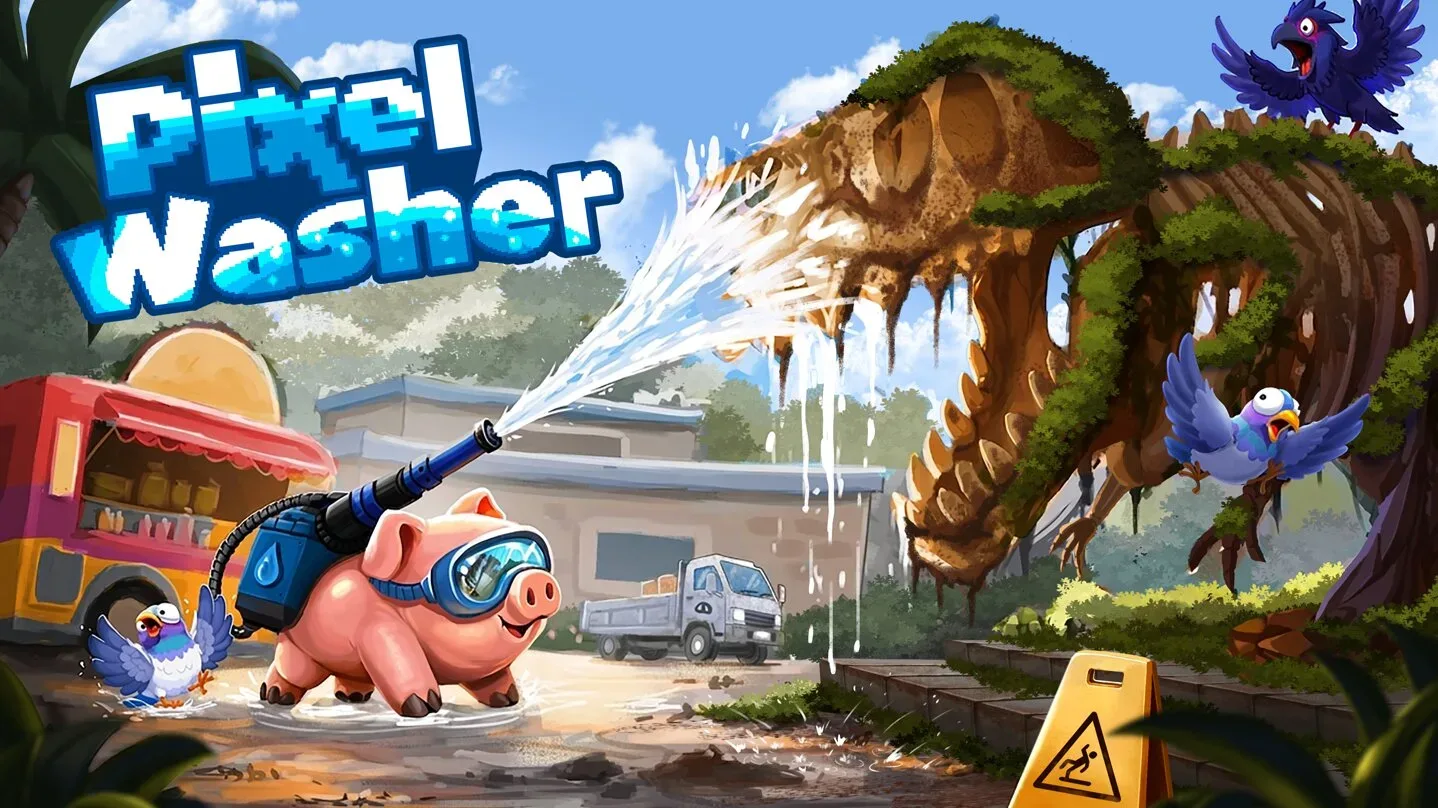
Participants building for PC may also find broader value in looking at how small concepts are communicated to players; for an example of a focused PC-game premise, see this look at Pixel Washer’s compact cleaning-game setup. The lesson is not that jam entrants should imitate that project, but that a concise, immediately legible hook can help a game establish what makes it worth playing.
thatgamejam #02’s central challenge, then, is not simply to make a game quickly. It is to listen, choose an interpretation and translate that interpretation into something players can understand on Windows or Mac before the November 7 deadline. The audio prompt gives everyone the same initial material; the games should reveal where each developer takes it.