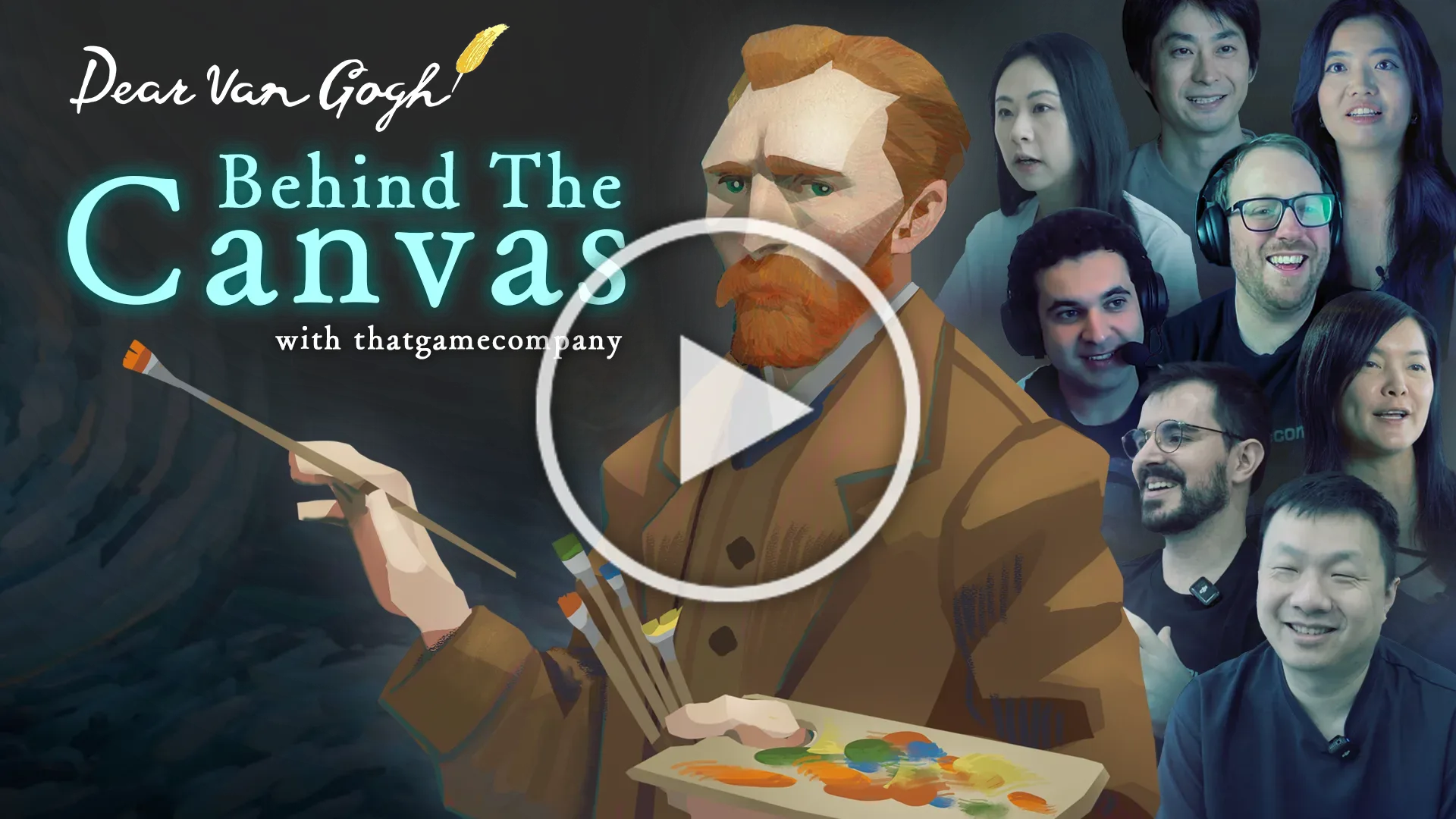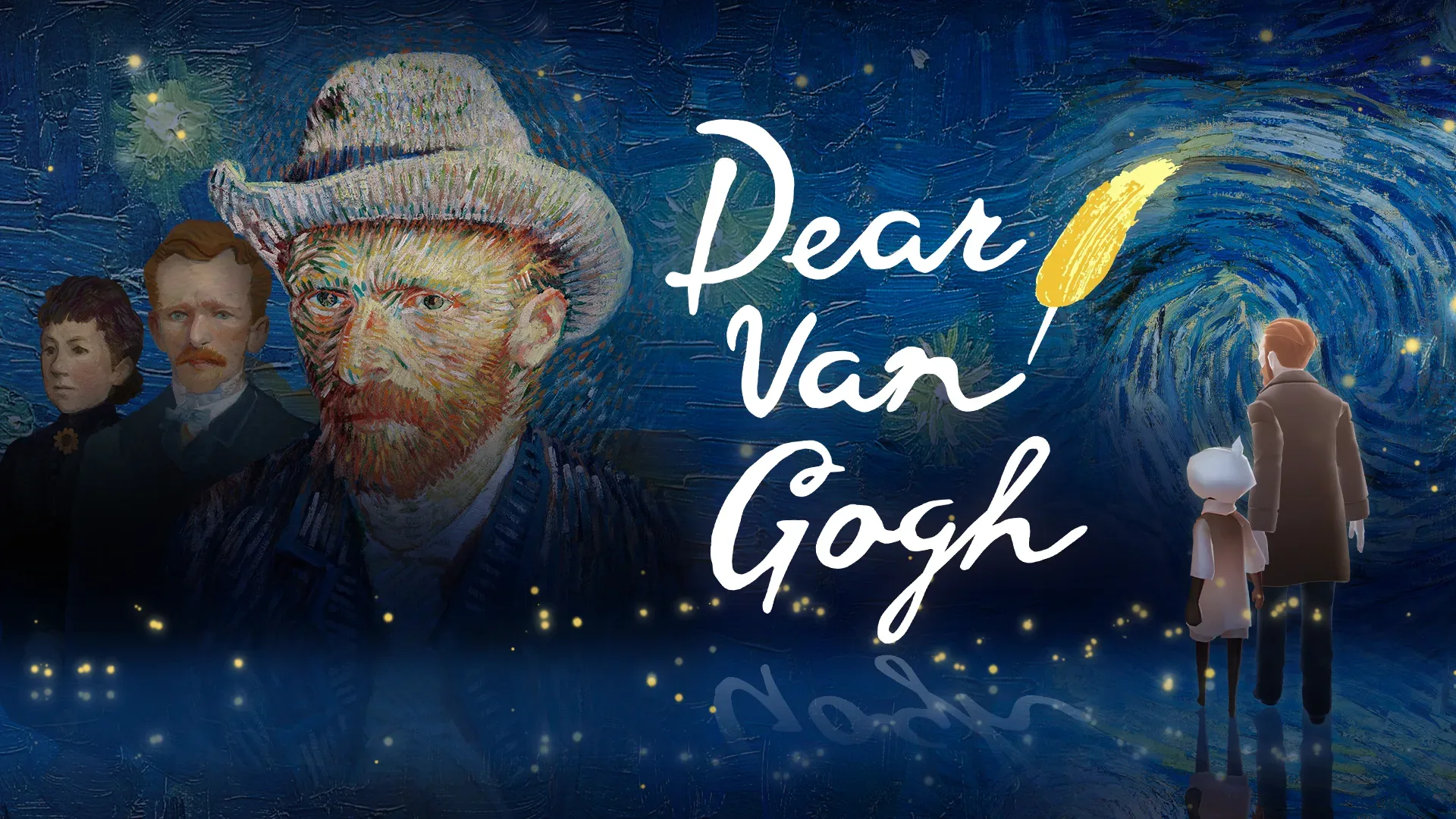
thatgamecompany has released a new five-minute behind-the-scenes video focused on Dear Van Gogh, the interactive standalone experience available within Sky: Children of the Light. The video examines a notably ambitious creative question: how do you translate the work and life of Vincent van Gogh into something players can move through, rather than simply observe?
The studio’s answer combines several disciplines: art direction, music, movement and game design. That framing matters because Dear Van Gogh is not presented merely as a virtual gallery of famous images. It is an interactive interpretation of the artist’s world, built in three dimensions for players to explore inside Sky.
The project also uses the correspondence between Vincent van Gogh, his brother Theo and Theo’s wife Johanna as an important narrative foundation. In doing so, it places familial support and commitment alongside the painter’s artistic legacy, rather than reducing the experience to a tour of recognizable visual motifs.
A world to explore, not a painting reproduced flatly
Translating a painter’s visual language into a 3D game environment is a different task from reproducing an image. A painting determines a single viewpoint, controls its composition and leaves the viewer outside its frame. A navigable digital space must withstand movement. Players can approach, pass through and look around its environments, making art direction responsible for how a world reads from changing angles and distances.
The behind-the-scenes video addresses how the team approached that conversion of van Gogh’s iconic style into explorable three-dimensional worlds. The supplied details do not identify specific visual techniques, and it would be premature to assume exact methods. Still, the creative objective is clear: the experience is designed to interpret the atmosphere and artistic world associated with van Gogh in a form native to a game.
That distinction is important for audiences approaching it through Sky: Children of the Light. An interactive experience can use motion, space and player presence as part of its storytelling vocabulary. Music can establish feeling over time; movement can shape the pace at which a player encounters a scene; and level design can make the route through an environment part of the work’s expression.
In this context, “game design” means the deliberate arrangement of interaction, movement and progression. It does not necessarily mean traditional objectives, challenge or competition. For a project such as Dear Van Gogh, the term instead points to the ways an experience can guide attention and emotional rhythm through participation.
The letters put family at the center
Jenova Chen, CEO and Creative Director of thatgamecompany, said the letters shared by Vincent and Theo were an immediate emotional entry point into the project.
“Reading the letters [between Vincent and Theo], I immediately started to cry to hear a story about a painter that focuses on these unconditional, unsung heroes,” Chen said. “It was tremendous to see how our game can actually influence other younger generations to rediscover one of the greatest artists in the world.”
The reference to “unsung heroes” points to a major emphasis of the experience: the relationships around van Gogh. The studio says the letters between Vincent, Theo and Johanna informed a story about familial bonds and commitment. This is a useful choice for an interactive work because it gives the project a human structure beyond aesthetic quotation. Van Gogh’s paintings are widely recognizable; the correspondence offers a way to foreground care, communication and the people connected to his life.
It also signals a more considered approach to adaptation. Rather than treating the artist’s name as a shorthand for swirling skies or bright, expressive color, the team is connecting the visual world to personal relationships documented through letters. The source material described here supports a tale of family, not a claim that the game functions as a comprehensive biography. That difference should set appropriate expectations for players.
Addressing difficult material without making it the whole story
The video also covers how thatgamecompany navigated van Gogh’s mental illness and untimely death while celebrating his art. That is a significant responsibility for any creative project drawing from his life. The studio’s stated approach acknowledges those difficult subjects, while retaining the focus on art and the relationships that helped shape the story it wants to tell.
This balance is especially relevant in a game space. Interactivity can invite an unusual degree of closeness, but it can also risk flattening a real person’s life into spectacle if sensitive material is used only for dramatic impact. The available description does not spell out every narrative decision made in Dear Van Gogh. It does, however, make clear that the team considered both the painful aspects of van Gogh’s life and the need to celebrate the artistic legacy that brings players to the experience.
For players, that means it is reasonable to view Dear Van Gogh as an artistic interpretation with biographical inspiration, not a replacement for historical study. Its strength appears to be in using game-specific tools—exploration, audiovisual mood and movement—to open a route into the artist’s work and the family connections around him.
Why Sky is a natural home for the project
Sky: Children of the Light launched in July 2019 and has surpassed 300 million downloads. Its scale gives the Van Gogh experience a potentially broad audience across iOS, Android, PC via Steam, PlayStation and Nintendo Switch. The base game is free to play on those platforms.
That platform reach is meaningful for a project that Chen describes in terms of helping younger generations rediscover a major artist. It puts an art-focused interactive experience within a game ecosystem that is already accessible across mobile, PC and console rather than requiring a separate, specialist application.
It also continues a wider idea worth watching in games: interactive spaces can support cultural encounters that are neither conventional classroom material nor conventional action-game content. The value is not that a game can fully substitute for a museum, a book or the original artwork. The value is that a game can offer another entry point—one based on presence, navigation, sound and pacing.
Players interested in how games use music to create a contemplative destination may also want to see how Pokémon Pokopia’s hour-long music video turns its regions into a relaxing background listen. The formats are different, but both highlight how game worlds can be experienced through mood as well as direct gameplay.
What the new video adds
The new feature is useful less as a release announcement than as an explanation of creative intent. It identifies four connected components behind Dear Van Gogh: visual interpretation, music, movement and interaction. It also clarifies that the letters involving Vincent, Theo and Johanna helped guide the experience’s story, and that the team confronted the challenge of representing a renowned artist whose life included mental illness and an early death.
Dear Van Gogh released on July 17 as a standalone experience in Sky: Children of the Light. The behind-the-scenes video is available to watch at this official video link.