Game Industry Conference will return to Poznań from 21 to 24 October 2026 with nearly 100 agenda sessions already announced. The programme is still growing, but its current shape makes the event’s priorities clear: game development craft will sit alongside the business, operational, legal and human questions that determine whether a game and its studio can endure beyond a promising pitch.
The conference is billing the 2026 gathering as its biggest Poznań edition so far. Its speaker list spans studios, technology companies and specialist disciplines, including Walt Disney Imagineering, Ubisoft, Activision, CD PROJEKT RED, Techland, Ten Square Games, 11 Bit Studios, Wargaming, Anshar Studios and AMD. Rather than being structured only around individual talks, the event will also host eight focused summits on subjects from audio and multiplayer development to investment, marketing, law and artificial intelligence.
A programme that treats game development as more than design
The announced sessions bring together people whose work covers systems design, gameplay implementation, production, rendering, technology leadership and long-running game design. That range matters because a finished game is the meeting point of many disciplines. A compelling mechanics idea needs technical implementation; a project needs production and operational structure; and a commercial release needs marketing, publishing, legal and support plans.
Among the announced contributors is Nickole Li, Principal Systems Designer at Mojang. Li’s previous work includes roles at Ubisoft and Electronic Arts on franchises and projects such as Ghost Recon, Battlefield, Star Wars Battlefront and Minecraft. Systems design generally concerns the rules and interacting structures that shape player behaviour: progression, resources, rewards, combat relationships, economies or other mechanics that must work together over time. It is a field where a change to one rule can have consequences elsewhere in the experience.
Jakub Kapuściński-Bernatek, Senior Gameplay Designer at CD PROJEKT RED, is also listed. He is currently working on The Witcher IV and previously served as Senior Technical Gameplay Designer at People Can Fly, with credits including Outriders: Worldslayer. Technical gameplay design is a useful bridge discipline: it connects gameplay intent with the practical systems needed to make a character action, interaction or encounter function in-game.
On the production side, the roster includes Stéphane Jankowski, Executive Producer of the Anno franchise at Ubisoft Mainz. Jankowski has 21 years of game-production experience, with credits including Anno 117: Pax Romana, Anno 1800, The Crew and Assassin’s Creed Unity. An executive producer’s responsibilities can vary by studio, but production leadership broadly concerns coordinating people, schedules, resources and decisions around a project’s delivery.
The technology-focused guests include Megan Friedenberg, a rendering engineer at Walt Disney Imagineering whose specialties include real-time rendering, engines and animation tools. Friedenberg previously worked on Insomniac’s Marvel’s Spider-Man 2. Real-time rendering is the process of generating the visuals a player sees quickly enough to respond to input as the game runs. Rendering work therefore involves much more than making an image look attractive: it must balance lighting, materials, geometry and effects against performance constraints.
David King, formerly Senior Director of Technology at Electronic Arts, is another announced contributor. During 17 years at EA, King worked across Battlefield, Star Wars Battlefront, Need for Speed and Mirror’s Edge: Catalyst. The programme also includes veteran designers Steven Meretzky, whose career includes Infocom, Activision, Legend Entertainment and King, and Bob Bates, co-founder of Legend Entertainment with credits including Unreal II: The Awakening, Spider-Man 3 and Eric the Unready.
Related coverage includes Game Industry Conference 2026 Sets Nearly 100 Sessions Across Eight Poznań Summits.
Eight summits cover practical pressure points
The conference’s eight summits suggest an effort to make room for the subjects that surround game creation, not only the code and content within a build.
- CTRL + ALT + PROMOTE – Games Marketing Summit will address publishing, marketing and growth.
- Legal Summit will focus on regulatory shifts and law in gaming.
- GIC Audio Summit is dedicated to sound design, interactive music and audio implementation.
- The Management & Operations Summit will cover operations, HR and finance for game development.
- How to Multiplayer Summit will examine multiplayer development, live operations and business strategies.
- GEEK Investment Forum will bring developers, investors and other industry professionals together to exchange knowledge and opportunities.
- GEEK Startups Zone & Feedback battle royale will give startups a place to showcase work and compete for support and a cash prize.
- AI Beyond Gaming Summit will address production-ready game tools, narrative agents and AI’s wider impact.
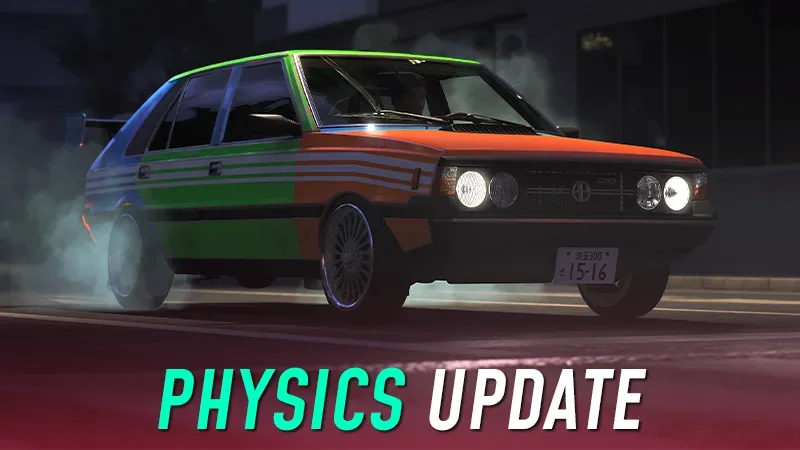
Several of those titles point to questions that players may feel without always seeing. Multiplayer development, for example, is not solely about putting multiple people in the same match. It can also require decisions on ongoing support, player-facing updates and the business strategy around a game after launch. That continuing work is commonly described as live ops, shorthand for live operations. A recent example of the kind of post-release adjustment players encounter is the JDM: Japanese Drift Master patch that retuned suspension and restored tire-pressure controls.
The Audio Summit’s emphasis on implementation is similarly important. Sound design can mean creating effects, but audio implementation concerns how those sounds are triggered, altered and mixed within a running game. Interactive music can respond to gameplay states rather than simply play as a fixed track. The agenda wording does not promise particular technical sessions, but its framing recognises that audio depends on both creative choices and integration into the game.
Marketing, law and finance are part of the development conversation
The inclusion of a marketing summit, legal summit, investment forum and management-and-operations track gives the event a broader industry remit. Publishing and growth are included under CTRL + ALT + PROMOTE, while the Legal Summit will consider changing regulations and legal issues in games. The announcement does not specify individual legal topics, so attendees should not assume coverage of a particular rule or territory from the summit title alone. Still, placing law on the programme acknowledges that game-making operates within rules as well as creative ambitions.
Likewise, the GEEK Investment Forum and startup programming focus on the relationships between developers, investors and industry professionals. For early-stage teams, opportunities for feedback and contacts can be as significant as a stage presentation. The GEEK Startups Zone & Feedback battle royale is specifically set to combine showcasing with a competition offering support and a cash prize, though no additional details on the prize or selection process have been announced in the available programme information.
The AI Beyond Gaming Summit is framed around production-ready tools, narrative agents and AI’s broader impact. “Production-ready” is an important qualifier: it refers to tools positioned for use in actual development workflows rather than ideas that remain purely experimental. “Narrative agents” generally describes AI-driven systems associated with characters or storytelling interactions. The announced description establishes these as subjects for discussion, not as a claim that every game team should adopt a given tool or method.
Workshops, roundtables and wellbeing programming
GIC 2026 will include workshops and roundtables alongside its talks and summits. Those formats serve different purposes. A talk can present an individual’s approach or experience to an audience, while a roundtable is built around discussion among multiple participants. Workshops are typically more focused on active learning. The conference has announced the formats but has not yet provided a full breakdown of every session.
The programme will also feature Women in Games Day. In addition, the conference is continuing a dedicated track on men’s mental health that began in 2025. That track has included roundtables, workshops and talks across multiple meetings. Its return means wellbeing is being treated as a recurring professional topic rather than a one-off addition to the agenda.
That is a meaningful distinction for an event whose programme otherwise ranges from rendering and gameplay systems to investment and promotion. The pressures discussed in operations, staffing and finance do not exist separately from the people doing the work. By retaining a specific mental-health track and running dedicated inclusion programming, the conference is making space for issues that can be relevant across roles and company sizes.
What is confirmed, and what may still change
The confirmed essentials are straightforward: Game Industry Conference 2026 is scheduled for Poznań from 21–24 October, nearly 100 sessions have been announced, eight summits are planned, and tickets are available. More sessions are expected, so the present speaker list and agenda should be read as an expanding programme rather than a final, exhaustive schedule.
For developers, students, studio leaders and other game-industry attendees, the current announcement presents a conference designed around the whole route from an idea to a maintained release: design and gameplay, art technology and audio, operations and finance, discovery and publishing, legal considerations, investment and emerging tools. Players watching from outside the business may not need a summit badge to recognise the outcome of those choices, but the scope of GIC 2026 offers a useful reminder that games are built—and sustained—by far more than the features visible on a store page.