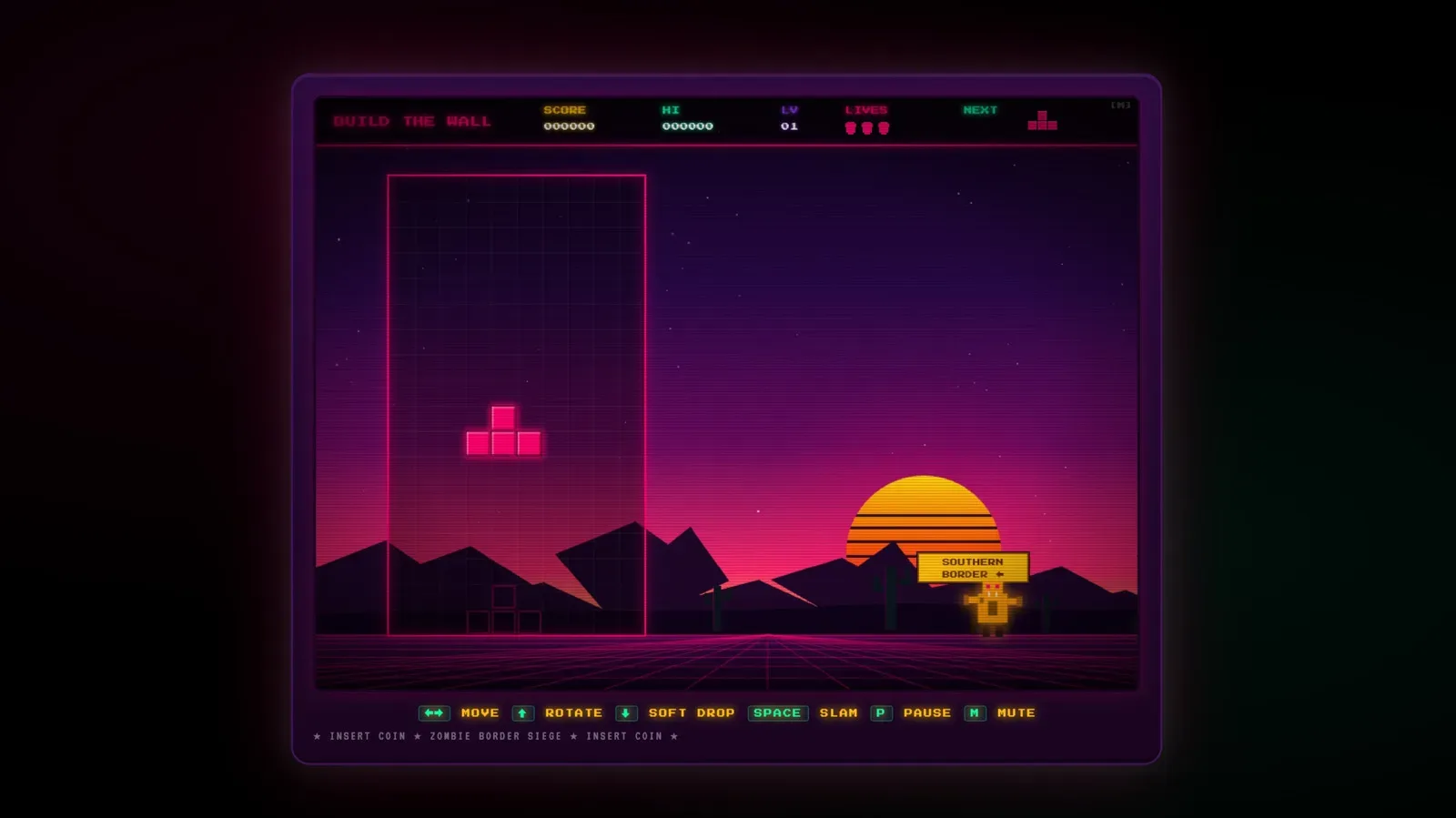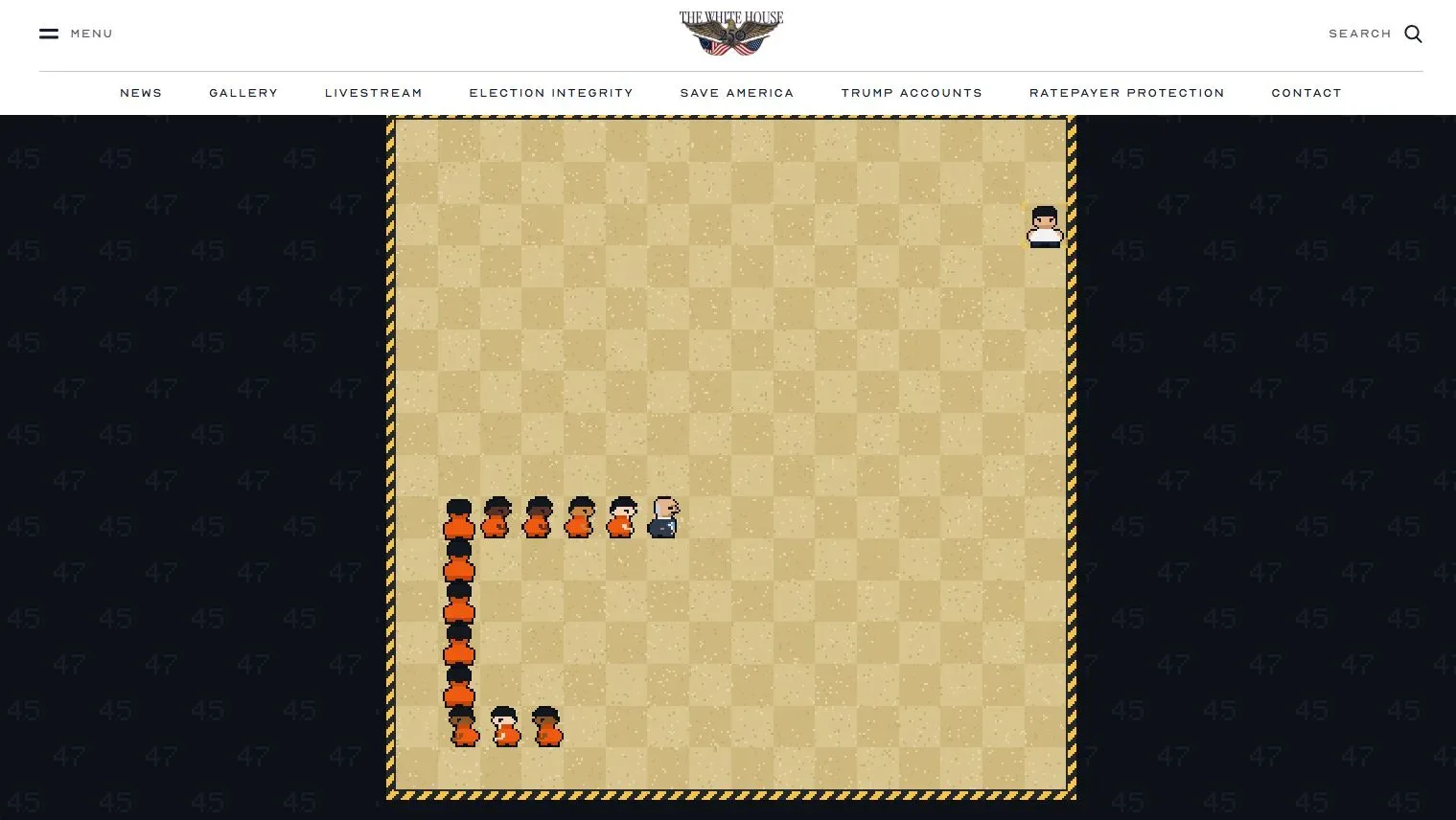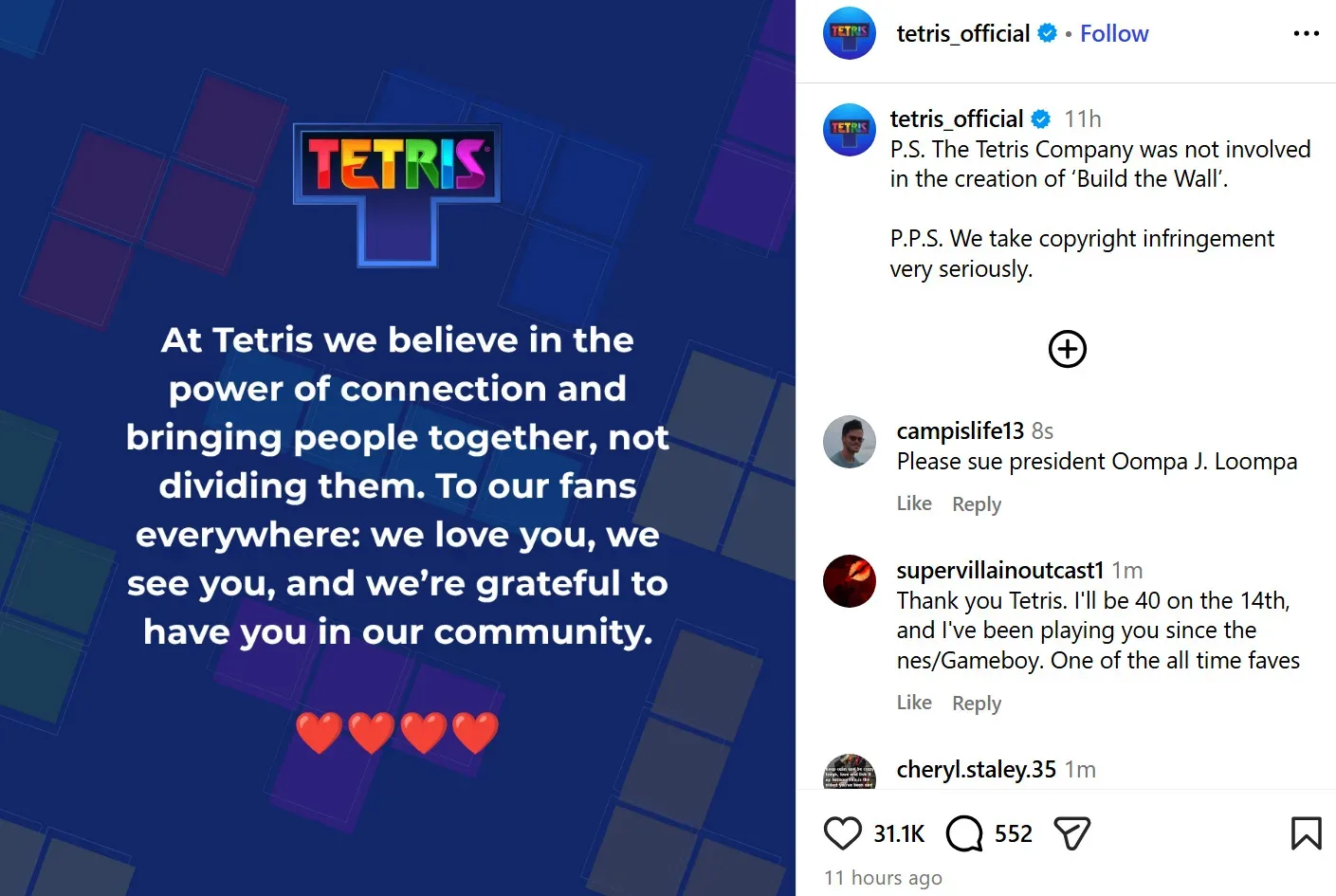
The Tetris Company has publicly separated itself from Build the Wall, a game appearing in an arcade section of the White House website that closely resembles the long-running block-puzzle classic. In a September 4 Instagram post and follow-up comment, the company said it had no role in creating the game and stressed that it views copyright infringement as a serious matter.
The response puts one of video gaming’s most recognizable brands into an increasingly awkward conversation about political uses of familiar game imagery. Build the Wall does not simply evoke the broad idea of a puzzle game: it is presented as a conspicuously Tetris-like experience attached to a political message. For a company whose game has spent decades being sold as an accessible, cross-generational pastime, that association is plainly one it does not want.
Tetris draws a bright line around its name and image
The Tetris Company’s statement emphasized a value that has long been central to the game’s global identity: connection. The company said it sees Tetris as something meant to bring people together rather than drive division, thanked its fans, and made clear that the broader community matters to it.
Its subsequent clarification was even more direct. The company said it was not involved with Build the Wall and added that copyright violations are treated seriously. That wording is not confirmation of a lawsuit, a takedown request, or any other legal step. It is, however, much stronger than quietly ignoring the use or offering a vague statement about “awareness.”
That distinction matters. Rights holders can object to an unauthorized association for several different reasons, including potential copying of protected visual elements, confusion over endorsement, or reputational harm from an unwanted political connection. The available statement does not specify which legal theories, if any, The Tetris Company may pursue. It only establishes that the company has rejected any implication that it collaborated on, approved, or authorized the White House game.
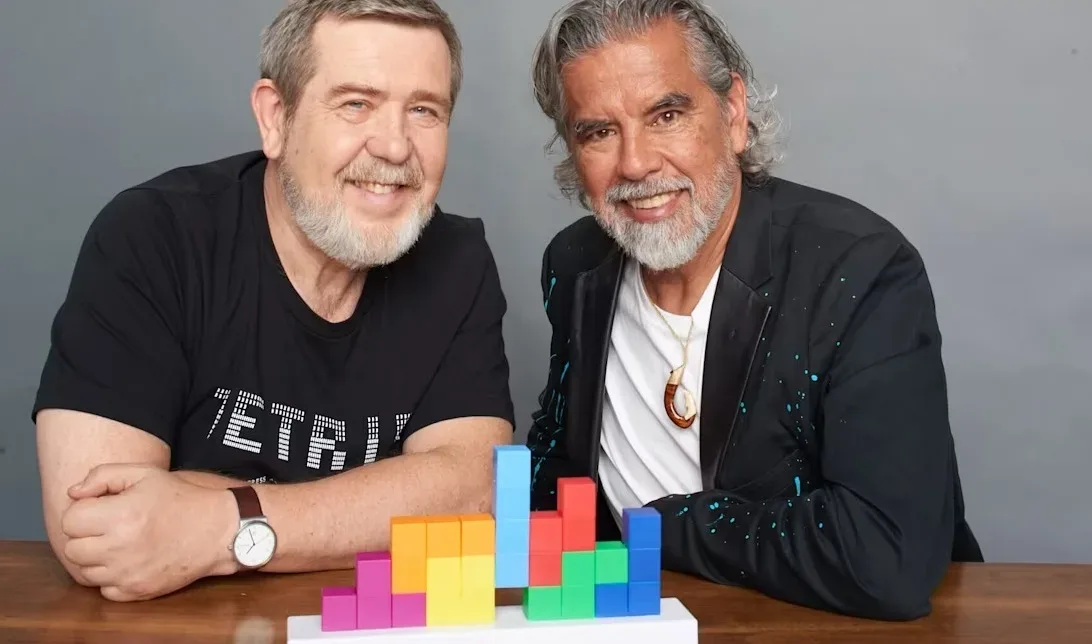
The company is jointly owned by Tetris creator Alexey Pajitnov and businessman Henk Rogers. Their game’s cultural footprint is enormous: Tetris has traveled across arcade machines, home consoles, handhelds, phones, web browsers, adaptations, merchandise, and generations of imitators. Its simple falling-block structure is instantly legible, which makes it especially tempting material for parody, homage, and outright cloning. That visibility also makes a branded political riff difficult to overlook.
Why a “clone” can be a complicated legal question
People often use “clone” as a catch-all term whenever a game resembles another game. Copyright law is not usually that simple. Basic rules and general mechanics can be difficult or impossible to claim as exclusive property, while particular artwork, music, interface designs, branding, code, animations, wording, and distinctive presentations may receive different kinds of protection.
So the central issue would not necessarily be whether another game asks players to place falling shapes. It could involve the exact way that concept is expressed, how the game is named and promoted, what imagery it uses, and whether viewers could reasonably infer an official relationship. Those facts have not been laid out in a public legal filing because no filing has been announced.
It is also worth separating a company’s public stance from a completed court case. A social-media statement can be a firm warning while still falling well short of litigation. The Tetris Company has said enough to remove any ambiguity about its position; it has not announced that it has sued the White House or any individual connected to the site.
For an industry that lives on intellectual property, the episode is a reminder that recognizable game language is not a free bag of props. A familiar mechanic may help a joke land quickly, but borrowing the identity surrounding that mechanic can raise much larger questions. The same broad creative ecosystem that produces small experimental titles and puzzle-platform curiosities, as seen in this recent indie game roundup, depends on developers and publishers being able to distinguish inspiration from unauthorized appropriation.
A wider pattern of gaming and anime imagery in political posts
The Tetris dispute does not exist in isolation. Political messaging associated with the Trump administration has previously incorporated or referenced well-known entertainment properties, including Persona 5-style AI imagery, Halo-themed material tied to Immigration and Customs Enforcement, and a MAGA-oriented reworking of the Pokémon theme song.
Those examples share a common feature: they lean on symbols with preexisting fan communities and immediate visual or musical recognition. That is effective as attention bait, but it can collide with the interests of the companies that own those properties. A brand owner may not want consumers to mistake a political message for a licensed campaign, regardless of whether it agrees with, opposes, or simply wishes to avoid the politics at issue.
The Pokémon Company took that approach in March, when spokesperson Sravanthi Dev said the company knew about social content using imagery tied to its brand. Dev said the company had not participated in creating or distributing the material and that permission had not been granted. The company also said its goal of bringing people together is not aligned with a political position or agenda.
That response and the Tetris statement have an obvious common thread. Neither company wants its intellectual property presented as an unofficial political endorsement. Pokémon’s public distancing came months before the Tetris comments, and no public enforcement action from Pokémon has followed in the intervening period. That history is important context for anyone treating the new Tetris language as proof that a lawsuit is imminent. It may happen; it may not. The public record so far supports only a clear objection and a stated seriousness about infringement.
The unusual optics of a White House-facing dispute
A rights dispute involving material connected to the White House would stand apart from the industry’s more routine conflicts with mobile-game imitators, unofficial merchandise sellers, or fan projects. The political context magnifies every choice. A company that acts can become part of a heated public story; a company that does not act can face criticism from fans who believe silence leaves the association intact.
The Tetris Company’s message appears designed to manage that problem before it grows. It addresses its own community, rejects participation in Build the Wall, and points to copyright as a meaningful boundary. That is a concise strategy, but it is also a notable one: the statement does not merely say the company is unaffiliated. It connects that separation to the company’s vision of what Tetris represents.
There is a practical brand reason for doing so. Tetris is unusual among games because its audience is not confined to one platform, age group, or genre. Someone may know it from the Game Boy era, a modern console release, a mobile app, competitive play, or the enduring visual shorthand of tetrominoes. The broader the audience, the more consequential an unwanted political association can be.
What has and has not happened
- The White House website’s arcade section includes a game called Build the Wall that is presented as a Tetris-like game.
- The Tetris Company says it did not create or participate in creating the game.
- The company says it takes copyright infringement seriously.
- No lawsuit, formal copyright complaint, or confirmed takedown action by The Tetris Company has been announced.
- Pokémon previously said it did not authorize political social content using its brand imagery, but no public legal action has been reported from that statement.
For now, the immediate result is a decisive public disavowal rather than a courtroom battle. Fans asking the company to sue are expressing a preference, not reporting a legal outcome. Whether The Tetris Company sends a demand, seeks removal, reaches a private resolution, or takes no further public step remains uncertain.
What is not uncertain is the company’s intent to keep Tetris separate from Build the Wall. In a medium where a few blocks falling from the top of a screen can carry decades of history, ownership, and goodwill, that is not a small distinction. The company has drawn the line in public. The next move, if there is one, has not been disclosed.