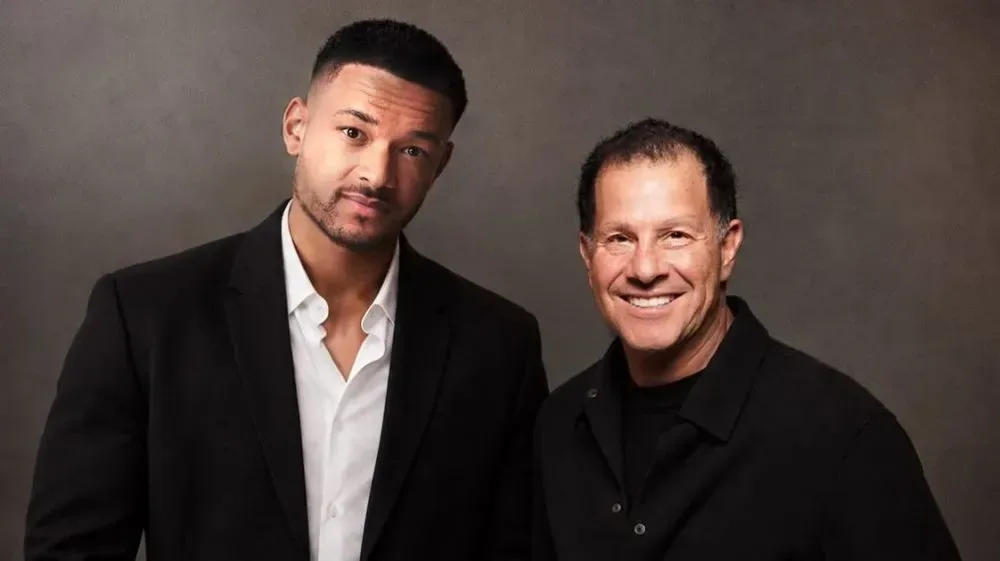
Steven Bartlett and Authentic Brands have launched OBSN, a new venture aimed at helping creators turn audience attention into durable businesses. The partnership is designed to operate across media, live events, consumer products, services and intellectual property, combining Bartlett’s creator-business background with Authentic Brands’ experience in licensing, retail and brand management.
The broad premise is straightforward, even if the scope is substantial: having millions of followers does not automatically create a sustainable company. OBSN is being positioned to help creators build the machinery around their public profiles—business operations, product development, partnerships and long-term management—rather than treating popularity itself as the final product.
That puts OBSN in a consequential corner of modern entertainment. Creators increasingly function as hosts, publishers, entrepreneurs and brand founders at the same time. Yet moving from a successful channel or social feed into products and businesses that can survive changing algorithms, platform policies and audience habits requires a different set of capabilities. OBSN says it intends to provide them.
What OBSN says it will do
OBSN is planned as both a platform for the creator economy and an operating and investment vehicle. Its media side is expected to cover creator-economy news and analysis while also staging live experiences. Its business side will work with creators on ventures that range from consumer-facing goods and services to intellectual property that can be developed over time.
The company is not describing its role as simply making introductions between influencers and sponsors. The stated plan is to help build and manage creator businesses, while also selecting opportunities in which OBSN will invest and participate in operations. In practice, that distinction matters. A short-term brand campaign can monetize a moment; an owned product line, a media property or a licensing program may offer creators more control and a longer runway.
Bartlett framed the venture around that gap between reach and company-building. “The next generation of global media companies and consumer brands will be built around creators,” he said. “But a global audience of millions is not yet a company, and it certainly should not be the ceiling of a creator’s potential.”
Authentic Brands and Bartlett’s Steven.com intend to supply complementary pieces of the equation. Steven.com is Bartlett’s company, which describes itself as an operating system for the creator economy. Bartlett is also widely known as the host of The Diary of a CEO and has more than 5 million Instagram followers. Authentic Brands brings experience with consumer brands, licensing arrangements and retail relationships, areas that can become especially important once a creator’s name moves beyond a feed and onto a product, storefront or wider entertainment property.
A plan for hundreds of millions in creator ventures
The partners say they expect to put hundreds of millions of dollars into creator-led businesses in the near term. Bartlett specified an ambition to deploy as much as $400 million across creator businesses over the coming years, with OBSN central to that strategy.
That figure is an investment target, not a list of completed deals or a guarantee that every dollar will be committed on a fixed schedule. It nevertheless signals the size of the opportunity the partners believe they see. OBSN will apparently apply its own criteria when deciding which businesses merit investment and operational support, so the eventual roster, sectors and individual deal structures remain to be seen.
The logic behind that approach is familiar to anyone watching the evolution of online personalities. Creators often begin with a direct relationship to a specialized community: viewers who return for interviews, comedy, commentary, tutorials, gaming streams, lifestyle advice or another distinct voice. That community can be powerful, but it is also tied to a platform environment that the creator does not own. Building a recognizable business outside that environment can diversify revenue and reduce the dependence on any one app, recommendation system or ad market.
For collectors and pop-culture fans, the model also has clear potential implications. Creator-led intellectual property can eventually extend into licensed apparel, books, events, collectibles, collaborations and other merchandise categories. OBSN has not announced specific products, creators or licensing programs, so it would be premature to predict any particular release. Still, Authentic Brands’ background makes commercial extensions a central part of the venture’s appeal rather than an afterthought.
Why the partnership combines two different skill sets
Creator companies need more than a large following, and brand-management companies need more than a famous name. The partnership’s central bet is that Bartlett and Authentic can address different ends of that challenge.
- Audience and media development: Bartlett’s work is focused on building audiences and creator-centered ventures.
- Consumer-brand expansion: Authentic Brands contributes experience in products, licensing and retailer relationships.
- Investment and operations: OBSN intends to identify businesses worth supporting financially and help run them.
- Industry coverage and events: The platform also plans news, analysis and live experiences for people working in the creator economy.
There is an important difference between an individual creator becoming a celebrity and a creator becoming the foundation of a brand with its own life cycle. The latter can involve supply chains, customer service, legal protections, licensing approvals, inventory decisions and international retail strategy—work that is mostly invisible in a viral clip. A specialist partner can make that leap less improvised, although the results will depend on which creators and business concepts OBSN ultimately chooses.
Matt Maddox, president and CEO of Authentic, characterized creators as increasingly influential across media and entertainment, with some capable of growing into brands that last across generations. He said the partnership would look to identify, invest in and scale creator-led IP by joining the capabilities of the two organizations.
That combination arrives during a period when creators are increasingly building independent media operations. Some run interview franchises, subscription communities and production companies; others launch food, beauty, fashion, publishing or consumer-tech businesses. The common thread is a desire to turn an audience relationship into something more permanent than a string of sponsored posts. The creator’s personality may remain the engine, but a scalable business needs structure around it.
That dynamic has been visible in creator-led interview formats as well. Our look at Ziwe’s expanding independent interview world on YouTube explored how an individual voice can develop a broader media identity outside traditional programming paths. OBSN’s stated mandate takes the business-facing version of that idea further, seeking to develop the consumer and IP opportunities that may grow beside a creator’s core content.
Live conversation scheduled in New York
Bartlett was scheduled to discuss the vision for OBSN in New York on September 14 with Jamie Salter, Authentic Brands’ founder and executive chairman, and Maggie Sellers Reum, founder of Hot Smart Rich. The conversation places the project’s launch squarely in the wider debate over what creator businesses should become as audiences, platforms and retail opportunities converge.
The event itself does not establish a slate of new creator clients or products. Nor have the partners detailed a timetable for the full rollout of OBSN’s media coverage, events or investment activity. Those are among the practical questions that will determine how distinct the venture becomes from existing agencies, talent-management firms, incubators and brand-licensing groups.
The test is whether attention can become longevity
OBSN’s challenge will be to prove that it can translate online attention into businesses that make sense for both audiences and creators. Not every personality needs—or should have—a product empire. A strong fit will likely depend on a clear audience, a credible product category, sufficient creative control and an operating plan that does not dilute the reason fans showed up in the first place.
There is also a creative consideration. The most valuable asset for many creators is trust: the sense that an audience is hearing from a person rather than being marketed to at every turn. Any platform built to commercialize creator-led IP will need to balance brand growth with that relationship. A product or service can deepen a community when it feels useful and authentic; it can just as easily weaken one if the expansion looks opportunistic.
For now, OBSN has outlined a high-level strategy, substantial investment ambitions and a partnership built around audience-building on one side and global brand extension on the other. The names of future creator partners, the specific businesses backed and the first consumer initiatives have not been revealed. But the venture’s launch underscores a larger shift: the creator economy is no longer solely about publishing content. Increasingly, it is about building companies designed to outlast the post that made the audience pay attention.