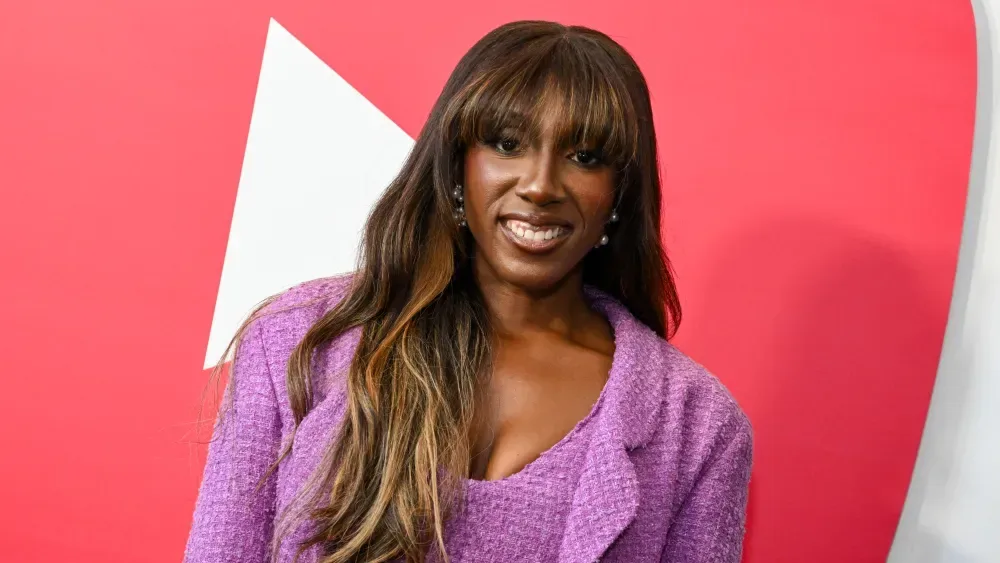
Ziwe Fumudoh is not interested in treating the internet as a waiting room for television. At a September 10 appearance during the Toronto International Film Festival, the comedian, actor and interviewer laid out why YouTube has become the most dependable part of her creative operation: it lets her make the work, determine its shape and place it directly in front of the people who want to watch it.
That independence is especially meaningful for a performer whose projects depend on tone. Ziwe’s interviews can be probing, deliberately awkward, silly, satirical and unusually direct, often changing gears in the space of a single exchange. The format needs room for the host’s timing, a guest’s reaction and, crucially, the occasional silence that makes everybody in the room realize exactly what was just asked.
Two episodes from the forthcoming season of You’d Be an Iconic Guest were screened at the festival: one featuring comedian and actor Wanda Sykes, and another with political commentator Hasan Piker. The event also gave Ziwe an opportunity to talk about the choices behind a career that moves between comedy, interviews, acting and self-directed digital production.
YouTube as the stable part of a shifting career
Ziwe described YouTube as a leveling force in entertainment. Her point was practical as much as philosophical: developing and selling a conventional television show is difficult, while a digital release can be made and published by its creator without waiting for the same elaborate chain of approvals. For an artist who writes, produces and directs, that shorter route means greater control over both the pace and personality of the work.
Her history makes that perspective easy to understand. Ziwe, her Showtime variety series, premiered in May 2021. It ran for two seasons before being canceled amid a change in network leadership. In 2023, she brought the show to YouTube. Rather than presenting that move as a lesser substitute for television, Ziwe framed her channel as the constant through an entertainment business that keeps rearranging its boundaries.
She pointed to creators including Issa Rae, Abbi Jacobson and Ilana Glazer, as well as High Maintenance, as examples of talent that developed online before moving into more traditional structures. At the same time, prominent late-night figures such as Stephen Colbert and Conan O’Brien now also maintain a YouTube presence. The direction is no longer simply web-to-TV; creators, broadcasters and audiences are all moving back and forth.
That fluidity is now a defining feature of pop culture. A major game’s casting news can become part of the same constant social feed as an interview clip, a streaming trailer or a live creator broadcast. For another recent example of a recognizable performer entering a giant entertainment universe, Stephen Root’s confirmed Grand Theft Auto 6 role shows how rapidly conversation travels among television, film and games audiences.
For Ziwe, though, the main benefit is not merely reach. It is ownership over the creative process. Her channel is where viewers can see her work across disciplines rather than encountering only one role selected by a studio, network or platform. She said she creates compulsively, and YouTube offers a place where that impulse can be turned into finished material on her own terms.
Related coverage includes Ziwe Calls YouTube a ‘Great Equalizer’ as She Expands Her Interview World.
Why the pauses matter
Ziwe’s style has a reputation for confrontation, but the festival discussion suggested that listening is central to the effect. She said she is comfortable letting dead air remain dead air. That refusal to rush in and rescue a guest from an answer can produce comedy, since a long pause may expose rambling, uncertainty or the suddenly obvious oddness of the moment.
It is an approach that turns an interview into something closer to scene work. Ziwe described guests as scene partners and characterized the dynamic as an energy-dependent exchange. The preparation and journalistic questioning remain important, but comedy comes first in the encounter itself. The goal is not only extracting information; it is making a situation in which both participants can find the rhythm, or discover that they do not share one.
She acknowledged that one interview did not find that rhythm. A guest ended the conversation after only three questions, the lone example she cited as an interview that truly went wrong. Ziwe did not identify the person or offer a specific explanation, instead suggesting that some encounters simply do not proceed as planned. The restrained response fits her broader view: chemistry cannot be forced, even when a format is designed around tension.
That does not make the questions any less pointed. Her work frequently approaches subjects that can generate strong reactions, particularly when guests enter political territory. Ziwe said that people do get angry, and that managing the backlash sometimes means putting the phone away and ignoring it. But she distinguished her method from rage bait. In her view, satire cannot be entirely safe if it is going to be dynamic, and she wants to keep challenging herself intellectually and artistically rather than merely provoking a reaction for its own sake.
An interview as a meeting of ecosystems
The most useful way to understand Ziwe’s guest choices may be her description of an interview as a joining of two separate audience ecosystems. A guest arrives with an existing community, expectations and cultural reference points; Ziwe brings her own. Ideally, the finished conversation gives each side something unexpected and provides a point of entry for viewers who might not otherwise meet.
That theory applies whether the guest is a comedian, a fashion figure, a political commentator or a possible sports-media personality. It also explains why her dream-guest list is broad. Ziwe named Stephen A. Smith, Charles Barkley and Jennifer Lawrence among the people she would like to interview. Operating her own show means she can pursue whoever interests her, rather than confining the booking list to the requirements of a particular television slot.
Audience participation has become part of that ecosystem as well. Ziwe mentioned a recent episode with Law Roach, the stylist known for work with stars including Zendaya. A moment in which the pair touched one another’s hair became widely shared, and Ziwe said its origin can be traced back to a commenter’s idea. That kind of feedback loop is distinctively digital: viewers are not only reacting after a production is complete, but can sometimes influence the next creative choice.
She described the space as independent and said she feels close to her audience there. That closeness carries risks, especially when online discussion gets hostile, but it also gives her a direct line to the people responding to the work. The creator is not separated from the audience by the layers that traditionally sit between a performer and a television viewer.
Acting, late night and what comes next
Interviewing is not Ziwe’s only focus. She made her feature-film debut this year in One Night Only and indicated that it will not be her final screen acting role. Her stated preference is to take on one guest-star role each year, reflecting a continuing interest in acting while preserving the larger creative practice she has built around writing, producing, directing and hosting.
That balance may be more revealing than any single job title. Ziwe is not positioning herself solely as a podcaster, television personality, actor or online creator. The work is designed to support movement among all of those forms. A movie role can sit alongside an interview series; a festival screening can lead back to a channel; a viral clip can originate with an audience prompt.
Asked about the prospect of returning to traditional media, she did not close the door. She similarly left open the possibility of hosting or presenting at the Oscars when the ceremony is set to arrive on YouTube in 2029. Her response was essentially that such a possibility sounds fun, even if the future is not mapped out. What she did make clear is that she expects to keep interviewing for the rest of her life.
That commitment is the throughline. Ziwe likes asking questions, likes messiness and sees value in the mix of discomfort, humor and discovery that an interview can create. As distribution models continue to blur and major entertainment figures build their own digital homes, her YouTube channel stands as both a production outlet and a creative anchor: a place where the next conversation can be as expansive, strange and specific as she wants it to be.