Sony is preparing a Walkman for listeners whose idea of a dedicated music player includes both serious audio engineering language and a chassis that looks ready to be locked behind museum glass. The NW-WM1ZM3, priced at $5,899, is a gold-plated flagship portable music player scheduled to arrive in January, with pre-orders already open.
At a number that lands just below $5,900, this is plainly not a nostalgia-priced gadget intended to compete with a phone on convenience. The NW-WM1ZM3 is positioned as a high-end, single-purpose listening device: one where its materials, electrical construction and audio-processing hardware are central to the pitch. It also happens to be extremely shiny, which is an admittedly unusual way for a music player to announce that it takes grounding seriously.
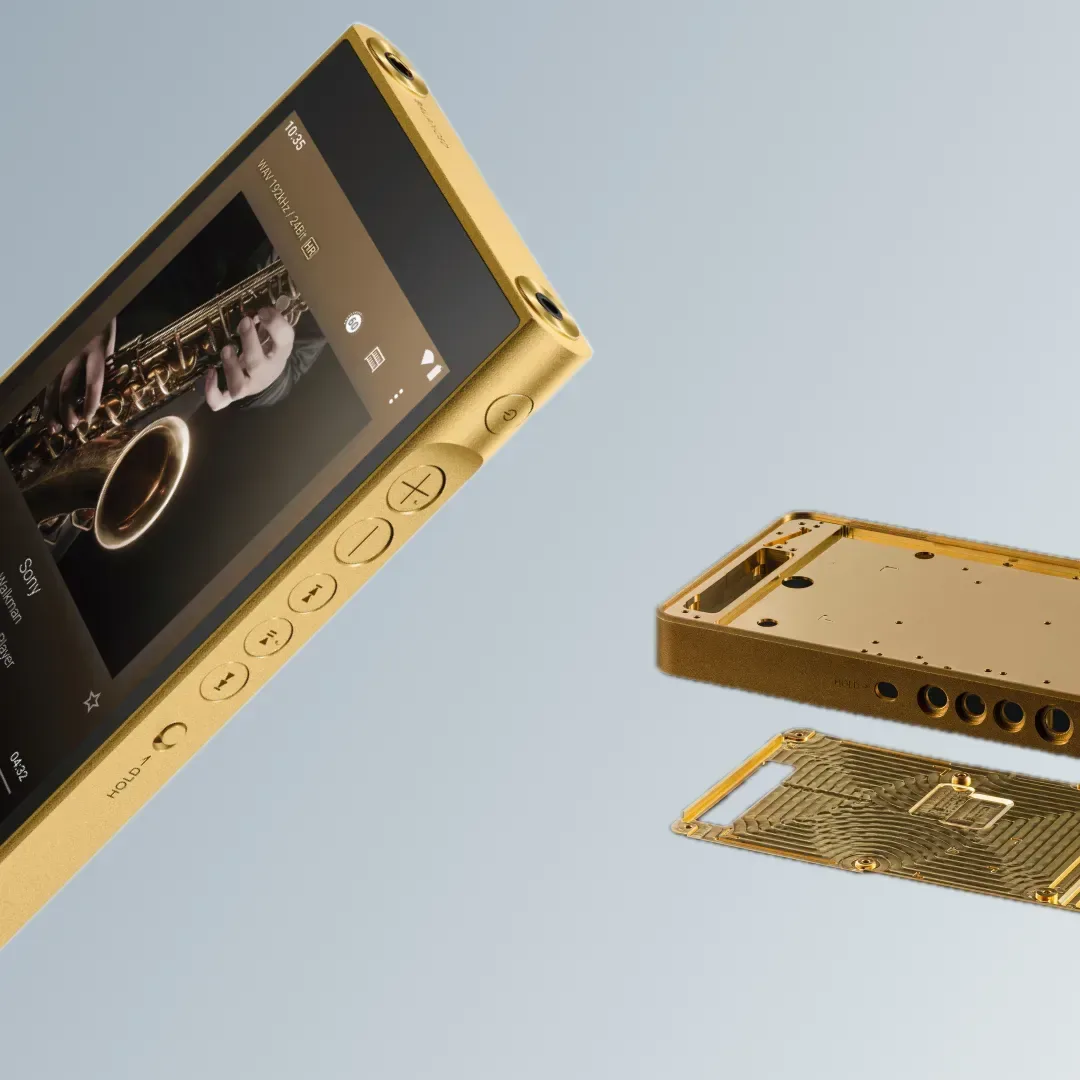
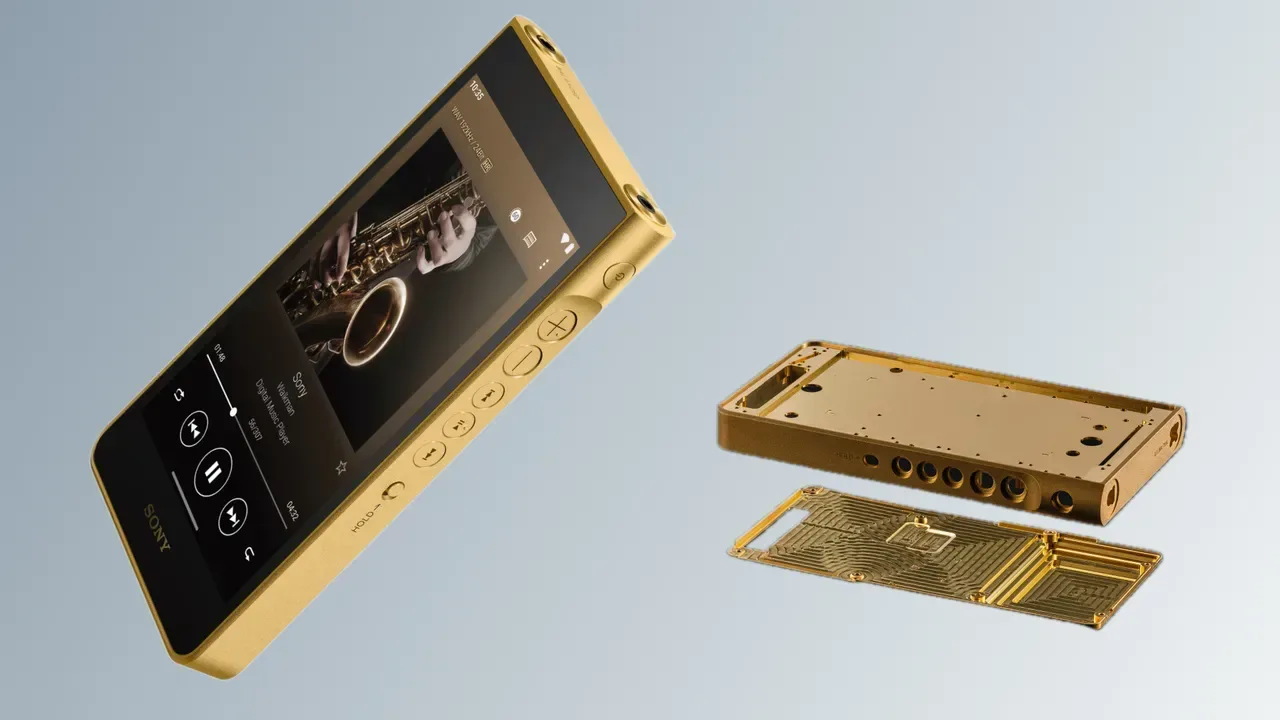
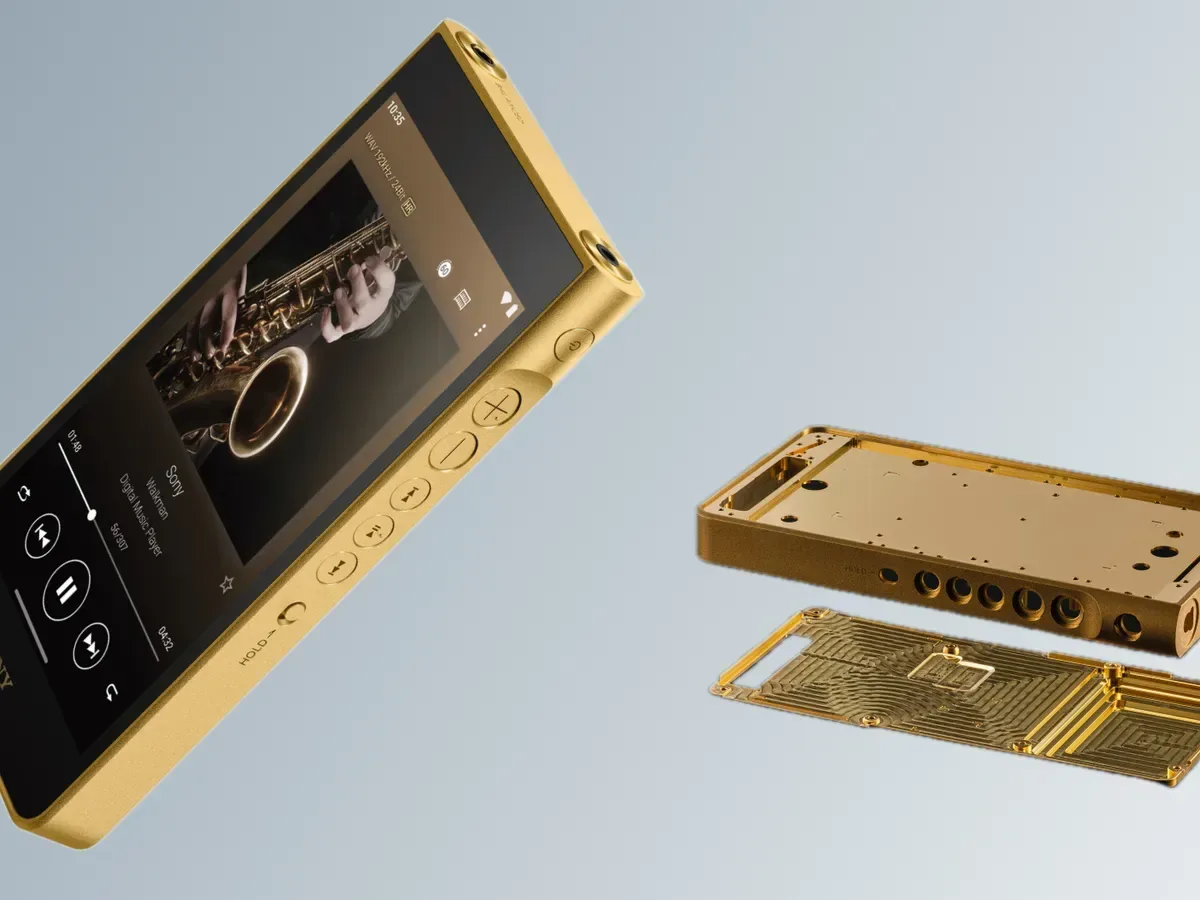
The headline feature is a precision-machined chassis made from gold-plated oxygen-free copper, or OFC. Sony says the main chassis uses 99.99% purity, also called 4N, OFC, while the rear chassis is OFC as well. The device also uses screws given a low-resistance gold-plated treatment exclusive to this model.
That description makes the NW-WM1ZM3 a luxury object, but Sony’s argument is that the gold treatment is not merely decorative. The company says the construction provides a stable ground connection intended to support powerful bass, a broad soundstage and smooth, extended high frequencies. Those are manufacturer performance claims rather than independently established results, but they make clear what Sony believes buyers are paying for: not simply a premium finish, but a material-led attempt to control the conditions around audio playback.
What the copper-and-gold pitch actually means
Some terminology is worth unpacking, because it is easy for a specification sheet to start sounding like a periodic-table role-playing game.
Oxygen-free copper is the copper material identified in the product description. Here, Sony emphasizes its high 99.99% purity rating for the main chassis. The company frames the chassis as part of the player’s audio design rather than a shell placed around the electronics after the fact.
Grounding, in the language used for the NW-WM1ZM3, refers to the electrical connection Sony says is stabilized by the low-resistance treatment on its screws and the chassis design. Sony links that stable connection to its stated sonic goals. This is important because it distinguishes the product from a simple gold-finish special edition: the company is specifically making an audio-performance case for the metalwork.
Soundstage is one of the audio terms Sony uses to describe the intended result. In everyday listening language, it refers to the perceived spatial presentation of instruments and voices. Sony says the NW-WM1ZM3’s construction is designed for an expansive soundstage alongside stronger bass and extended high frequencies. Whether a listener values those particular qualities, and how much they hear them, will naturally depend on their music and the rest of their listening setup. No headphones, bundled accessories or further playback specifications are detailed here, so prospective buyers should avoid filling in those blanks themselves.
Related coverage includes Sony's $5,899 Gold-Plated Walkman Is a Luxury Music Player With 35-Hour Battery Life.
The distinction matters. A $5,899 player should be judged by the information actually supplied, not by an imagined tower of capabilities accumulated just because the chassis is plated in gold. Sony has disclosed several notable features, but not every detail that a potential buyer might use to compare this model with another premium portable player.
A dedicated player in the age of the everything phone
The Walkman name comes with a certain cultural shorthand: portable music, personal listening and the appeal of a device that has one main job. The NW-WM1ZM3 leans all the way into that final part. It is a dedicated music player built around high-end materials and processing rather than an attempt to make a general-purpose smartphone replacement.
That narrow focus is likely the point. A phone can carry a library, stream music and do approximately 400 other things while demanding attention from every app that has ever learned the word “notification.” A separate music player establishes a different proposition. Sony’s flagship aims to make the listening hardware itself the experience, with a luxury physical presence that is difficult to mistake for an incidental add-on.
The player has a 5.5-inch screen, described as larger, and Sony lists up to 35 hours of battery life. The battery estimate is especially useful in practical terms: a dedicated player only makes sense if it can actually stay dedicated through long listening stretches without becoming another device that needs to camp beside a charging cable. As with any quoted battery figure, real-world results can vary with use, but 35 hours is Sony’s stated claim for this model.
It also includes Sony’s DSD Remastering Engine, which the company says is there to improve sound quality. The supplied information does not explain precisely how this engine processes particular audio files or what modes users can select, so it is best understood as part of Sony’s broader playback-quality package rather than a promise of a particular result for every track.
“DSD” is an audio format term, and “remastering” here signals Sony’s effort to present music through its own processing system. The key practical takeaway is simpler: the NW-WM1ZM3 is intended as a device for buyers who care about the audio chain from player construction through digital processing, rather than just a portable screen that can open a music app.
This is not Sony’s first golden lap around the block
The NW-WM1ZM3 has a direct predecessor. Sony released the gold-plated NW-WM1ZM2 in 2022 at a price of $3,200. That makes the newer model’s $5,899 price a notable step up, while also showing that a gold-plated Walkman is not a one-off stunt.
Older NW-WM1ZM2 units are now reported to sell for around $1,500 on eBay. That figure should not be read as a guaranteed resale price or a formal valuation. Secondhand prices can differ with condition, completeness, market timing and the individual listing. Still, it gives a rough reference point for anyone whose interest is fueled by the phrase “previous flagship, but less terrifying to the bank account.”
For collectors, the prior model also supplies a useful reminder: scarcity, age and gold plating do not automatically create a stable or rising resale market. The available $1,500 figure is far below the NW-WM1ZM2’s original $3,200 price. Someone interested in the NW-WM1ZM3 should therefore approach it primarily as an expensive audio product they want to own and use, not as an investment thesis with a headphone jack.
Who this Walkman is really for
The NW-WM1ZM3’s price ensures that it will be a niche proposition. The straightforward audience is an enthusiast who wants a premium dedicated portable player, values the material and engineering approach Sony has outlined, and is comfortable paying for the flagship tier. Its gold-plated chassis is unavoidably part of the attraction, but Sony’s own presentation asks buyers to view it as an audio component rather than jewelry that can play albums.
That is a very different purchase decision from choosing a standard portable device based on screen size, battery life and basic playback alone. The 5.5-inch screen and claimed 35-hour battery life are meaningful specifications, yet they are not the whole identity of the product. The main differentiator is the combination of gold-plated OFC chassis, treated screws and Sony’s stated grounding and sound-quality rationale.
It is also a reminder that Sony’s ambitions stretch across entertainment and premium hardware, even as its projects can look wildly different from one another. The company’s wider entertainment activity has included discussions around the release approach for four Beatles films; the NW-WM1ZM3, meanwhile, puts the emphasis back on the intensely personal end of music consumption: one listener, one player and, potentially, one extremely reflective rectangle.
What prospective buyers can take from the announcement
- Price: The NW-WM1ZM3 costs $5,899.
- Timing: It is scheduled for January, and pre-orders are available now.
- Build: Sony describes a precision-machined, gold-plated OFC chassis, including a 99.99% purity OFC main chassis and OFC rear chassis.
- Audio rationale: Sony says gold-plated, low-resistance screws and the chassis support a stable ground connection, with claimed benefits to bass, soundstage and high frequencies.
- Portable-use features: Sony lists a larger 5.5-inch display and 35 hours of battery life.
- Processing: The player uses Sony’s DSD Remastering Engine, which Sony says improves sound quality.
- Predecessor context: The 2022 NW-WM1ZM2 launched at $3,200 and is reported to sell for around $1,500 on eBay today.
The important caveat is that the announcement describes the product’s intended technical benefits, not a universal verdict on how every listener will experience it. The best reason to consider the NW-WM1ZM3 is not that it makes ordinary devices obsolete. It is that Sony is offering an unusually uncompromising version of a dedicated music player, one that treats the enclosure, grounding and audio processing as parts of the same proposition. The gold is not an excuse for the Walkman. For this particular Walkman, the gold is part of the argument.