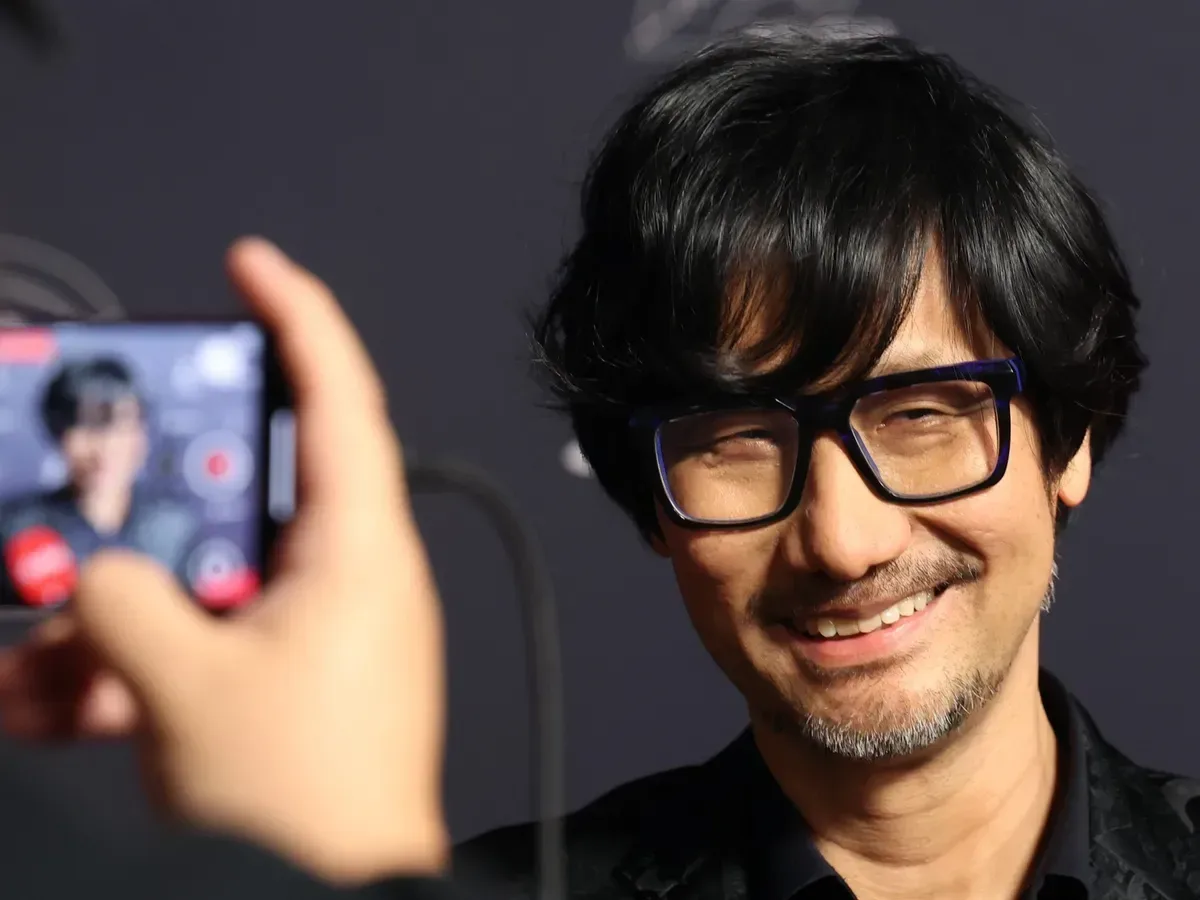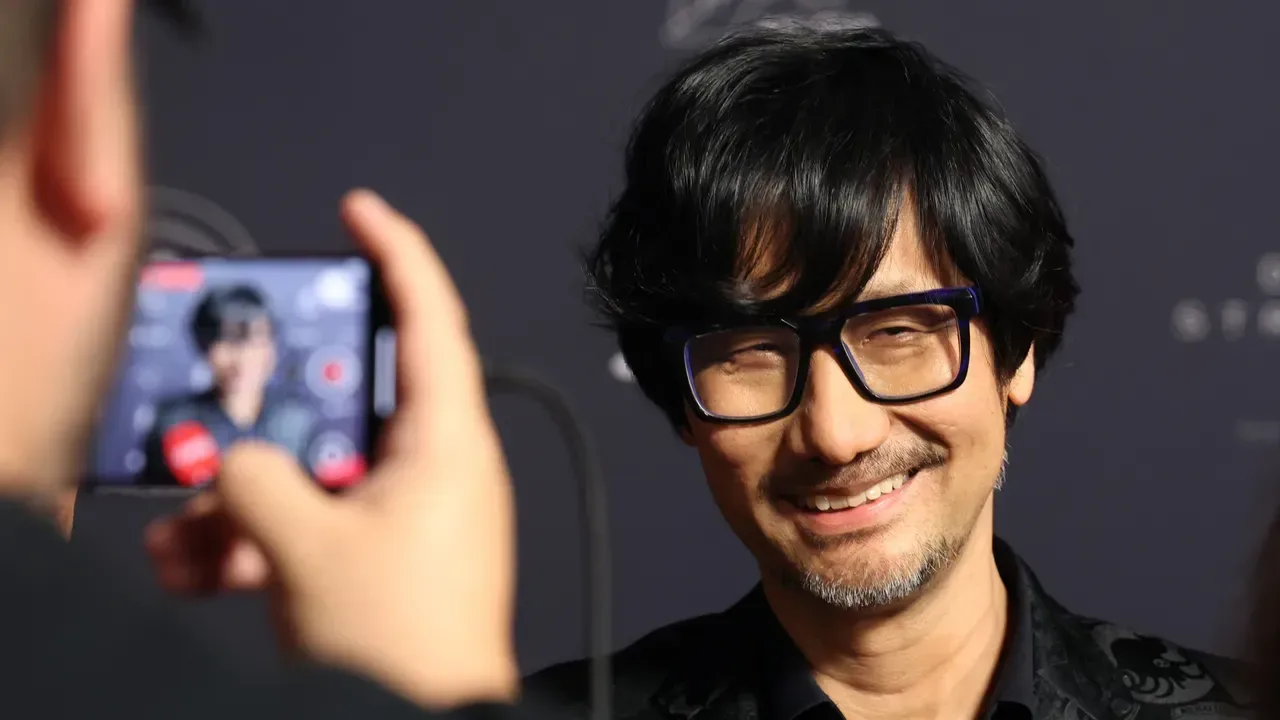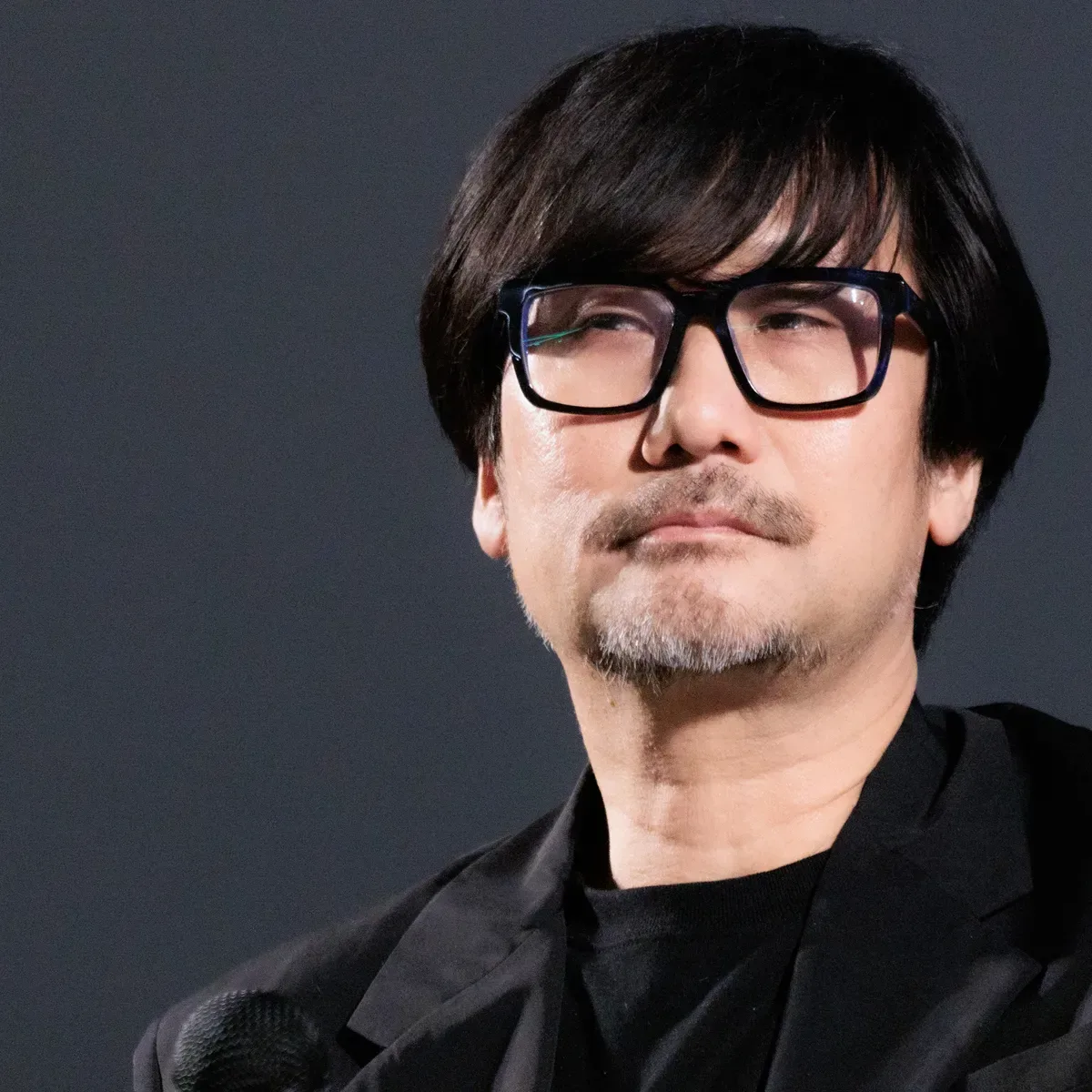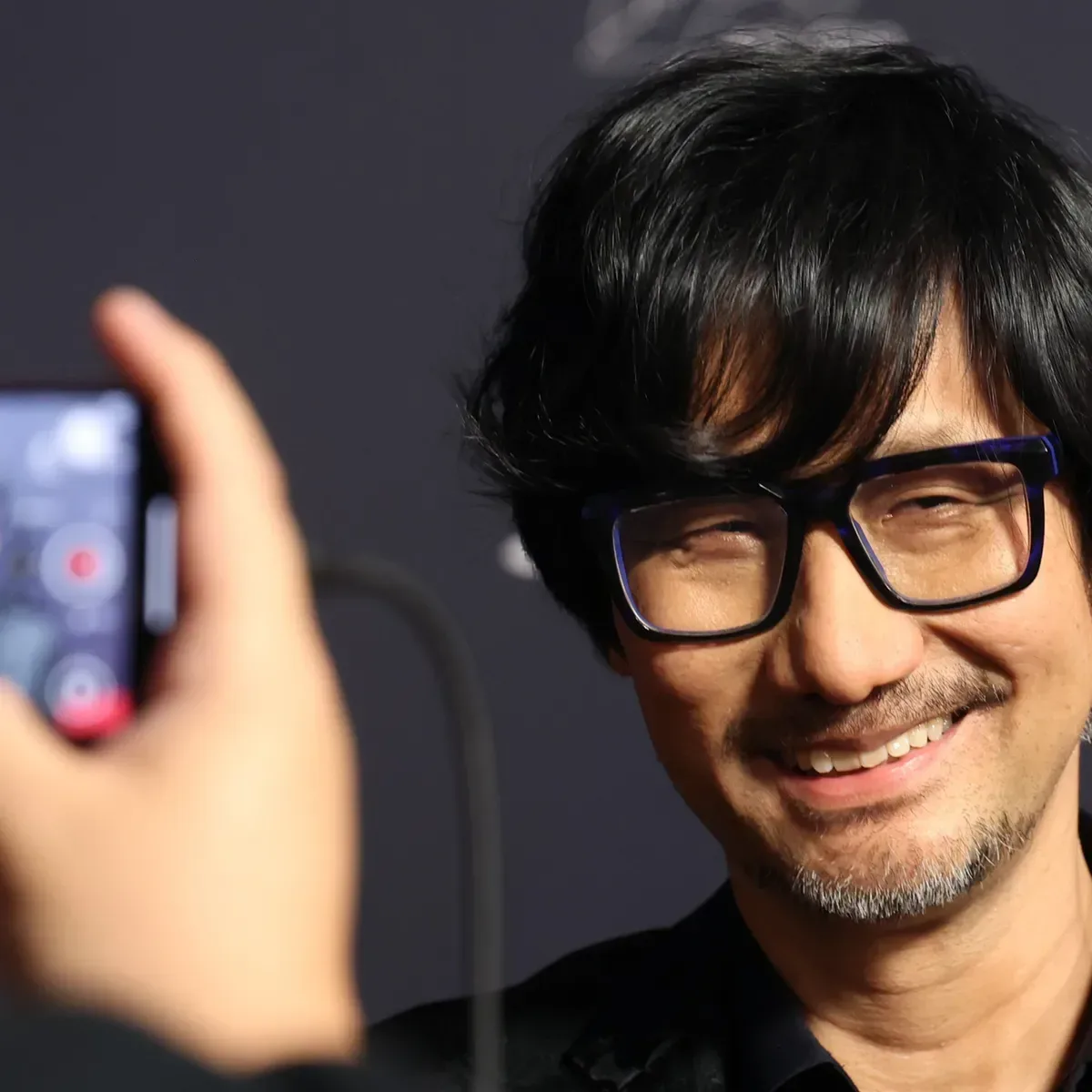
Hideo Kojima has posted photographs of himself outside Sony City in Tokyo, the Sony Corporate Office Building, and the timing has predictably turned an ordinary-looking visit into a full-scale fan-theory generator. Kojima is wearing a Joy Division T-shirt. On its own, that is a wardrobe choice. In the aftermath of Physint moving from Sony to Xbox, though, the image has been treated as everything from a sly reconciliation tease to an extremely stylish declaration of war.
The jokes arrived quickly: fans compared the moment to Johnny Silverhand’s destructive assault on Arasaka Tower in Cyberpunk 2077. The connection is intentionally ridiculous rather than evidentiary. A musician-fronted anti-corporate fictional rebel is not a useful template for interpreting a game creator standing outside an office building. Still, it captures why the post has landed: the public story around Kojima Productions and Sony changed dramatically earlier this year, and a Sony visit now carries baggage it would not have carried before.
There is no confirmation in the photographs of a new game, a revived agreement, another Death Stranding project, or even a business meeting. The safest reading is also the least exciting one: Kojima visited Sony and shared a photo. Everything beyond that remains speculation.
Why a simple Sony photo has become a bigger story
Physint, described as Kojima’s spiritual successor to Metal Gear, had previously been associated with Sony before the company dropped the project. Kojima later said the decision left him worried about the future of Kojima Productions. The concern was understandable: when a project at that scale loses a publishing partner, the issue is not simply finding a new logo for a trailer. It can affect financing, staffing plans, production scheduling and the studio’s ability to plan beyond its current work.
The project subsequently found a home at Xbox. Microsoft’s gaming leadership, including Asha Sharma, backed Physint along with film and television adaptation rights. Kojima has characterized that interest as broader than conventional game funding: an effort centered on building a new intellectual property across games and screen formats.
Intellectual property, often shortened to IP, means the underlying creative asset: its characters, world, name, story concepts and the rights to use them in different media. In practical terms, a publisher interested in an IP rather than only a single game may be looking at a longer runway that could include sequels, animation, film or television. That does not guarantee any of those outcomes, but it explains why the ownership and adaptation portions of a deal can matter as much as the initial release.
Physint still has no release window. It is expected to arrive after OD, Kojima’s next Xbox game. That leaves ample room for people to read tea leaves in social-media posts, corporate-building backdrops and band shirts. It does not leave room to treat those readings as announcements.
Kojima has said there is no fight with Sony
The picture matters because the breakup around Physint was publicly described as painful, not because either side declared open hostility. Kojima said Sony gave final notice in a June meeting and did not offer him a reason for the cancellation. He also said he had not been contacted by Sony afterwards. At the same time, he repeatedly stressed that he was not fighting with the company and did not hold bad feelings toward it.
Related coverage includes Hideo Kojima's Sony Visit and Joy Division Shirt Fuel Fresh Physint Speculation.
“I’m not fighting with Sony,” Kojima said while discussing the situation. “We’re not in a dispute.”
He pointed to a relationship spanning roughly three decades and to his personal fondness for Sony products, mentioning the Walkman and his Sony cameras. That mix of disappointment and continued affection is more nuanced than the factional version of the story. A project can be cancelled, a studio can feel exposed by that decision, and both parties can still avoid a public feud.
Kojima Productions has separately said it remains healthy and profitable, that Physint development is moving ahead with Xbox, and that its relationship with PlayStation remains strong. The statement did not directly answer reporting about Sony’s alleged concerns regarding Death Stranding, Physint’s schedule, budget and platform approach. Therefore, those specific reported concerns should not be presented as settled fact beyond what was attributed to reporting.
That distinction matters. Game development relationships are rarely legible from the outside. A publisher may decline a project for reasons involving risk, timing, financing, its broader platform plans, projected return or internal priorities. Without a detailed account from Sony, a photograph outside Sony City cannot fill in those blanks.
What the shirt joke does — and does not — mean
Joy Division is the key ingredient that transformed the post into meme material. The band name, paired with an apparently tense corporate backdrop, made the image easy to frame as deliberate mischief. The Johnny Silverhand comparison adds an extra layer because Cyberpunk 2077 turns a conflict with a giant corporation into operatic destruction.
But the comparison is a joke precisely because real publishing negotiations are not video-game revenge plots. There is no evidence that Kojima’s shirt was meant as commentary on Sony, Physint or Xbox. Public figures can absolutely use fashion and imagery intentionally, particularly when they know their posts will be examined closely. Yet intention cannot be assumed merely because a visual coincidence is amusing.
The episode is also a useful reminder of how social-media interpretation works around prominent creators. A post with limited information creates a vacuum. Audiences fill it using whatever narrative is already most emotionally charged: here, the cancellation of Physint’s Sony arrangement and the subsequent Xbox partnership. The more incomplete the information, the easier it is for speculation to look like reporting when repeated often enough.
The Xbox deal changes the stakes, not the evidence
Interest in Physint intensified after reports suggested Xbox may have secured its agreement for less than might be expected for a full-priced, triple-A spiritual successor to Metal Gear Solid from that series’ creator. That is a claim about the commercial terms surrounding a project, not a confirmed public price tag, and no specific figure has been disclosed here.
Triple-A is industry shorthand for a large-budget, high-profile production, generally associated with substantial development resources and major commercial expectations. It is not a formal ratings category and does not by itself reveal a game’s cost, quality, scope or launch price. Similarly, calling Physint a spiritual successor explains the broad creative association with Kojima’s previous work; it does not mean the project is a new Metal Gear game or that it uses that franchise’s characters and continuity.
Microsoft’s wider IP interest could make the project strategically different from a standard publishing transaction. If the goal is to establish a property that can expand into film, anime and other formats, the game becomes one component of a larger plan. That possibility is consistent with Kojima’s comments, but it remains an ambition rather than a list of confirmed adaptations or releases.
For players, the immediate practical takeaway is modest. Physint is still in development, is aligned with Xbox, and is expected after OD. The Sony photo does not alter that known sequence. It also does not establish which platforms Physint will ultimately reach, when it will launch, what form its screen adaptations may take, or whether Kojima and Sony are discussing anything new.
Could Sony and Kojima still work together?
It is certainly possible for two companies to maintain a relationship after one project does not proceed. Kojima Productions itself has said its PlayStation relationship remains strong, while Kojima has rejected the idea that he is in a dispute with Sony. Those are meaningful public signals of civility. They are not confirmation of a secret project.
That is the line worth holding. A new agreement would require an announcement or similarly solid confirmation. The same applies to theories about more Death Stranding. The photos do not name a project, mention a deal or show anything that independently establishes what was discussed.
Corporate decisions in games can have a considerable human impact even when no dramatic public conflict follows. Kojima’s comments about fearing for his studio put the Physint transition in that context. The later Xbox arrangement offers a path forward, while the Sony visit suggests that the public relationship need not be reduced to a single cancellation. For a useful broader lens on the business pressures around major technology companies and qualification processes, see our coverage of how production complications can affect industry ambitions.
Until Kojima Productions, Sony or Xbox provides more detail, the Joy Division shirt should remain what it currently is: an entertaining detail attached to a genuine business story, not proof that an Arasaka-style showdown — or an unexpected reunion — is underway.