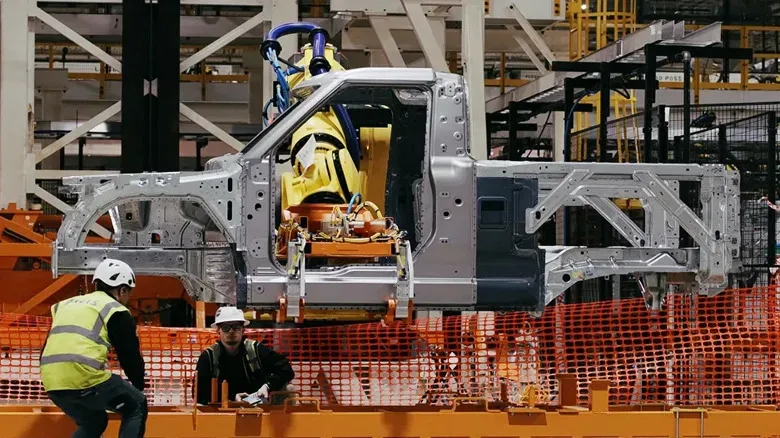
The Slate Truck’s basic pitch is wonderfully straightforward: make the electric pickup smaller, simpler and less financially terrifying. Its stated starting price is $24,950 before a $1,450 destination charge, and Slate projects 205 miles of driving range. The cabin is deliberately pared back, with a phone-centered approach instead of treating a giant built-in screen as mandatory equipment. For buyers tired of watching affordable-vehicle promises turn into option-package riddles, that is a compelling opening move.
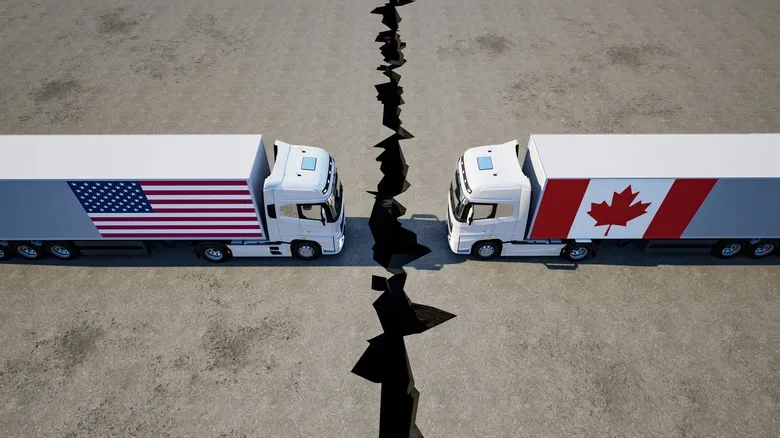
There is one major asterisk beneath the price tag, though. Slate is currently limiting sales to the United States. Its preorder terms require customers to live in the U.S., while the company’s FAQ says the truck will only be available for U.S. purchase for now. That puts Canadian customers and every other international market outside the launch plan, at least at this stage.
It is an understandable decision for a brand-new manufacturer, but it makes geography part of the product equation. A low sticker price is especially powerful when a vehicle can be purchased, serviced, charged and warranted without the buyer having to solve a side quest involving borders, tariffs and certification rules. The Slate Truck may be a promising budget EV in its intended market; it is not yet a cross-border bargain waiting to happen.
A pickup designed to keep the spreadsheet under control
Slate’s approach is about restraint. Rather than competing by piling on luxury features, the truck starts from a modest, utilitarian premise. The projected 205-mile range, compact pickup format and minimal interior all fit that mission. The phone-forward cabin also reflects a broader assumption: many drivers already bring their favorite navigation, music, messaging and everyday apps with them.
That setup can be practical, but it puts extra importance on the device people carry. Anyone building their driving routine around a phone may want a backup plan for digital passes, payments and other mobile essentials; this guide to fixing Apple Wallet problems with cards, passes and tap-to-pay is a useful reminder that the tiny computer in a pocket can occasionally decide it needs its own maintenance window.
Preorders are open with a $300 non-refundable deposit, and first deliveries are expected in late 2026. Those dates matter because Slate has not yet begun the customer-delivery phase that will show whether its low-cost strategy can operate at meaningful scale. The company emerged from stealth in 2025, was founded in 2022 and has raised roughly $1.4 billion, including funding tied to Jeff Bezos’ family office. It is converting a former printing plant in Warsaw, Indiana, into its manufacturing facility.
That is an ambitious list of tasks for any startup: finish and operate the factory, build vehicles consistently, handle direct sales, support customers and establish confidence in a new nameplate. Adding multiple countries at the same time would not merely mean pointing a truck toward a different map pin.
Why a U.S.-only debut makes operational sense
Slate’s launch infrastructure is built around the United States. The company intends to sell direct rather than use traditional dealerships. Manufacturing is planned in Indiana. Its service approach relies on RepairPal’s U.S. network, and every truck is set to use the North American Charging Standard, with access to Tesla Superchargers in the U.S.
Each part of that strategy creates a narrower, easier-to-manage first battlefield. A young automaker has enough to prove without immediately confronting a separate set of national rules, paperwork, repair arrangements and warranty obligations. Keeping the first rollout in one country can reduce the number of variables that could turn a modest truck into a very expensive business lesson.
That does not mean an international future is impossible. It means there is no announced timetable for it. Slate has not said when Canada or another market could be added, and it has not indicated whether tariffs played a role in the U.S.-only decision. Until those details are provided, potential buyers outside the country should treat the truck as unavailable rather than assume a nearby launch is imminent.
There is also a distinction worth making between a vehicle being physically capable of crossing a border and being formally sold, supported and certified there. Those are very different achievements. The latter requires systems that buyers may never see, right up until they need a repair, a warranty claim or a component that meets a market-specific rule.
Canada is close, but the cost math is not simple
Canada is the clearest example because it is adjacent to Slate’s intended home market. On a map, the distance can look trivial. On a purchase agreement, it is not. Canada currently has a 25% retaliatory tariff on U.S. vehicles that do not comply with the Canada-United States-Mexico Agreement, called CUSMA in Canada and USMCA in the United States.
For CUSMA-compliant vehicles imported from the U.S., the tariff treatment is more specific: it applies to the non-Canadian and non-Mexican content of the vehicle. Slate has not released enough sourcing information about its eventual production truck to determine precisely how those rules would affect it. As a result, there is no reliable basis for calculating a final Canadian tariff outcome for a Slate Truck.
That uncertainty matters because the truck’s appeal rests heavily on its starting figure. A low entry price does not leave infinite room for added cross-border expenses before the core value proposition changes shape. Tariff treatment is only one consideration; importing a vehicle can also involve admissibility questions, compliance requirements and modifications.
A personal U.S. purchase is not presented as a clean workaround, either. Canada’s current automobile tariff remission does not apply to personal imports. Transport Canada also says a U.S. vehicle must be admissible and, where necessary, capable of being modified to satisfy Canadian safety standards. Slate has not announced Canadian certification, Canadian service support or Canadian warranty plans.
In plain English: someone cannot safely assume that placing a U.S. preorder and driving north will recreate the intended ownership experience. The financial effect is unknown, the regulatory route is unresolved, and the support structure is not currently spelled out for Canada.
The price comparison gets awkward quickly
Even in the U.S., Slate’s price advantage is meaningful rather than insurmountable. A 2026 Ford Maverick XL equipped with the available EcoBoost front-wheel-drive powertrain costs $3,195 more than the Slate’s stated base price. That Maverick seats five and includes power windows plus a 13.2-inch center display as standard equipment.
This is not a declaration that one truck automatically wins for every driver. The Slate and Maverick represent different priorities, particularly since Slate’s truck is electric and intentionally minimal. But the comparison shows why every added cost matters. When the alternative is only a few thousand dollars away before cross-border charges enter the conversation, the buyer is likely to weigh seating capacity, convenience equipment, service familiarity and purchase simplicity much more closely.
For U.S. shoppers who want a compact EV pickup and genuinely prefer less complexity, Slate’s plan remains distinctive. The 205-mile projected range may fit local travel and routine work for some households, while the phone-centric interior will appeal to people who do not want a vehicle dashboard trying to become a second living room. Access to Tesla Superchargers in the U.S. also strengthens the ownership case where that network is useful.
What prospective buyers should keep separate
- Known launch details: U.S. sales only for now, a $24,950 starting price plus $1,450 destination, a projected 205-mile range, a $300 non-refundable preorder deposit and expected first deliveries in late 2026.
- Known U.S. support direction: direct sales, Indiana production, RepairPal network servicing, NACS connectivity and U.S. Tesla Supercharger access.
- Unknown international details: Canadian launch timing, certification, warranty coverage, servicing arrangements and the ultimate tariff impact on a production vehicle.
- Not a dependable shortcut: personally importing a U.S. truck into Canada, because tariff remission does not cover personal imports and admissibility or safety-modification requirements may apply.
Slate’s challenge is therefore not that its truck lacks a clear idea. The idea is clear: an approachable electric pickup that avoids feature bloat. Its immediate limitation is that the cleanest version of that idea exists only inside the U.S. sales and support ecosystem Slate is building. Until the company announces the regulatory and practical pieces for other countries, the border remains more than a line on the navigation app. For prospective Canadian buyers, it is the point where a potentially tidy budget-EV calculation becomes an unfinished equation.