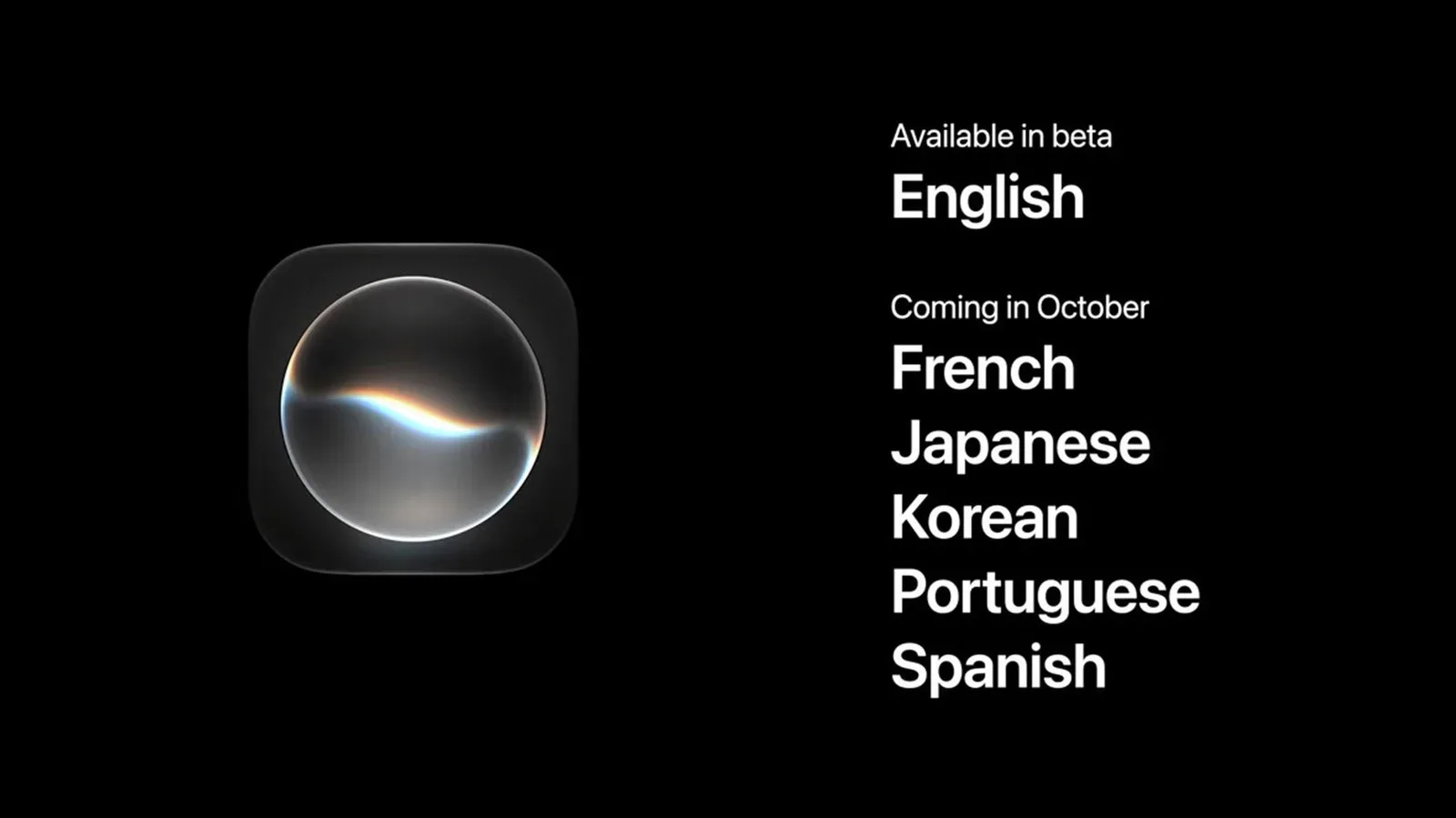
Apple’s redesigned Siri AI is scheduled to reach a substantially wider set of language communities in October. French, Japanese, Korean, Portuguese and Spanish support is planned for next month, following an initial English-language rollout tied to the public releases of iOS 27, iPadOS 27 and macOS Golden Gate on September 14.
The timing matters because the assistant is currently being tested in English through beta versions of those operating systems. September 14 is the date on which the English experience is expected to become more broadly available to users when the software updates arrive publicly. The October expansion does not yet have a more precise date, and the company has not detailed whether every Siri AI capability will launch identically across all five newly named languages.
For people who use Apple devices as part of a gaming, streaming, collecting or everyday media routine, language availability is not a minor checkbox. Voice tools only become useful when dictation understands names, places, slang and natural phrasing well enough that the user does not have to slow down and translate their own thoughts into a machine-friendly version of English. Apple is positioning newer hardware as part of that equation, but the transition is also notably limited by which iPhones can run the new assistant.
English arrives first, then five languages in October
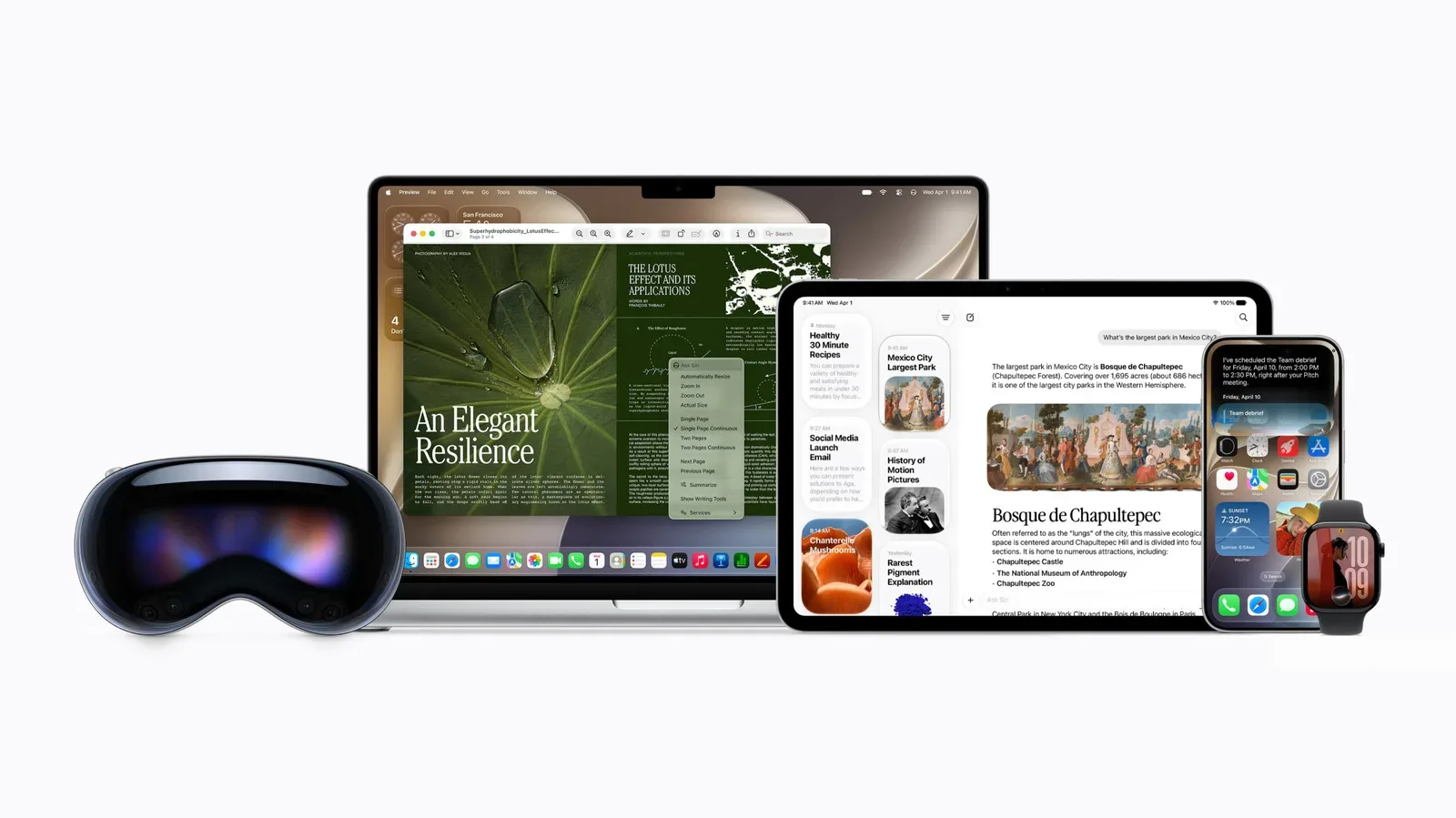
The immediate roadmap is relatively straightforward. Siri AI has been in English-language beta testing within iOS 27, iPadOS 27 and macOS Golden Gate. Once those operating systems are released to the public on September 14, English-speaking users will be the first larger group eligible for the redesigned assistant.
Apple then plans an October rollout for:
- French
- Japanese
- Korean
- Portuguese
- Spanish
That is a meaningful set of additions, spanning regions where smartphones are central to communication and entertainment as well as languages used by huge international communities. Still, “available in a language” can cover a lot of ground with AI assistants. Speech recognition, dictation, prompt comprehension, regional vocabulary and voice output each have their own complexities. Apple has confirmed the five-language plan, but has not provided a granular feature-by-feature comparison or a list of regional variants at this stage.
Users should therefore treat October as a rollout window rather than an assurance that every feature, voice option or behavior will be uniform on day one. That is not a prediction of missing functionality; it is simply an area where specifics have not been supplied. The key confirmed fact is that these five languages are next in line after English.
Anyone following the broader software schedule can find additional context in our coverage of iOS 27, iPadOS 27 and macOS Golden Gate arriving September 14. That date is the main dividing line between the current beta period and the public English release.
Cloud-powered prompts will have daily usage limits
The other major detail is less complete, but potentially more consequential over time. Siri AI will have daily usage for requests that need Apple’s cloud-compute AI models. Apple has also said that iCloud+ plans will provide expanded usage limits.
What has not been shared is just as important for setting expectations. There are no published figures for the standard daily allowance, no stated iCloud+ tiers paired with specific limits, and no explanation yet of how Apple will count a qualifying request. A short prompt and a complicated multi-part task could conceivably be treated differently, but no such system has been confirmed. Nor has Apple laid out what users will see after they reach a daily cap.
That makes it premature to frame iCloud+ as a required purchase for routine Siri use. The information available establishes only that some cloud-model requests will be measured against daily usage and that iCloud+ subscribers will receive higher limits. Until Apple publishes the numbers and the exact handling of limits, the practical difference between standard access and expanded access remains unknown.
The cloud distinction is worth watching because it draws a line between tasks handled by on-device intelligence and prompts sent to the company’s cloud models. Apple has not supplied a public catalog that labels every Siri AI request one way or the other. Users who care about their daily access will need more detail before they can judge whether their own habits—whether organizing a busy calendar, dictating messages, searching for information, or working through other voice-driven tasks—would approach the allowance.
Compatible iPhones start with the 2023 Pro models
Siri AI is not being extended to every iPhone that can install the newest operating system. Apple says support begins with the iPhone 15 Pro and iPhone 15 Pro Max, both released in 2023. Older iPhone models fall outside the stated compatibility range for the redesigned assistant.
That separation is easy to miss amid broader operating-system news. A user may have an iPhone capable of receiving iOS 27 yet still not have access to Siri AI, because software eligibility and AI-assistant eligibility are different questions. The relevant hardware floor is the 2023 iPhone 15 Pro family, not the entire population of supported iPhones.
For an upgrade decision, the message is clear but narrow: Siri AI requires a recent Pro-level starting point. It does not establish that every conventional Siri function disappears from older devices, nor does it tell us which particular redesigned features may have varying requirements. It only confirms the baseline needed to use Siri AI itself.
That may be especially relevant in households where an older iPhone remains perfectly adequate for games, streaming, social apps and basic communication. Siri AI is an added capability with its own device cutoff, rather than a reason to assume a broad iOS update turns every existing handset into the same AI-equipped device.
Newer phones are set to handle speech locally with stronger models
Apple is also differentiating its more recent phones through on-device processing. Beginning with the iPhone 17 Pro, iPhone 17 Pro Max and iPhone Air, more powerful local models are intended to improve speech recognition and dictation accuracy.
The wording here is important. The announced benefit concerns more accurate speech recognition and dictation, not a blanket guarantee that every Siri AI result will be better in every situation. Even so, voice recognition is one of the most immediately felt parts of any assistant. If a device misunderstands a contact name, game title, character name, foreign-language term or quick message, the supposed convenience turns into correction work.
On-device models also fit the wider direction of AI tools that attempt to perform some work directly on a person’s hardware while reserving larger cloud models for other requests. Apple has confirmed both pieces in this case: newer iPhones have more capable local models for recognition and dictation, while some prompts will require cloud computation and will be subject to daily usage limits.
There is still room for important clarification. Apple has not explained exactly how much the accuracy gain will vary between supported phone generations, which languages will benefit first, or whether conditions such as accents and background noise will change the result. Those questions need real implementation details, not assumptions drawn from model names alone.
What is confirmed, and what remains open
At this point, the Siri AI rollout can be separated into a firm set of dates and a set of unanswered operational questions.
Confirmed
- Siri AI is currently available in English through the iOS 27, iPadOS 27 and macOS Golden Gate betas.
- Public releases of those updates are due September 14, when the English rollout will broaden.
- French, Japanese, Korean, Portuguese and Spanish are planned for October.
- Support starts with iPhone 15 Pro and iPhone 15 Pro Max.
- iPhone 17 Pro, iPhone 17 Pro Max and iPhone Air are set to use more powerful on-device models for speech recognition and dictation.
- Cloud-model prompts will have daily usage, and iCloud+ plans will offer expanded limits.
Still unspecified
- The exact October launch date for the five added languages.
- Whether all Siri AI features will be available equally in each language at launch.
- The number of daily cloud-model requests included with standard access.
- The expanded usage amounts associated with individual iCloud+ plans.
- How cloud-model usage will be calculated and what happens when a limit is reached.
Apple’s October language expansion gives Siri AI a clearer international path after the English release begins on September 14. But the feature remains a product of both language support and hardware eligibility: a compatible device is necessary, and the newest specified iPhones are expected to offer stronger local speech and dictation performance. The cloud side, meanwhile, has been announced in principle but not yet explained in the detail users would need to understand their daily allowance.