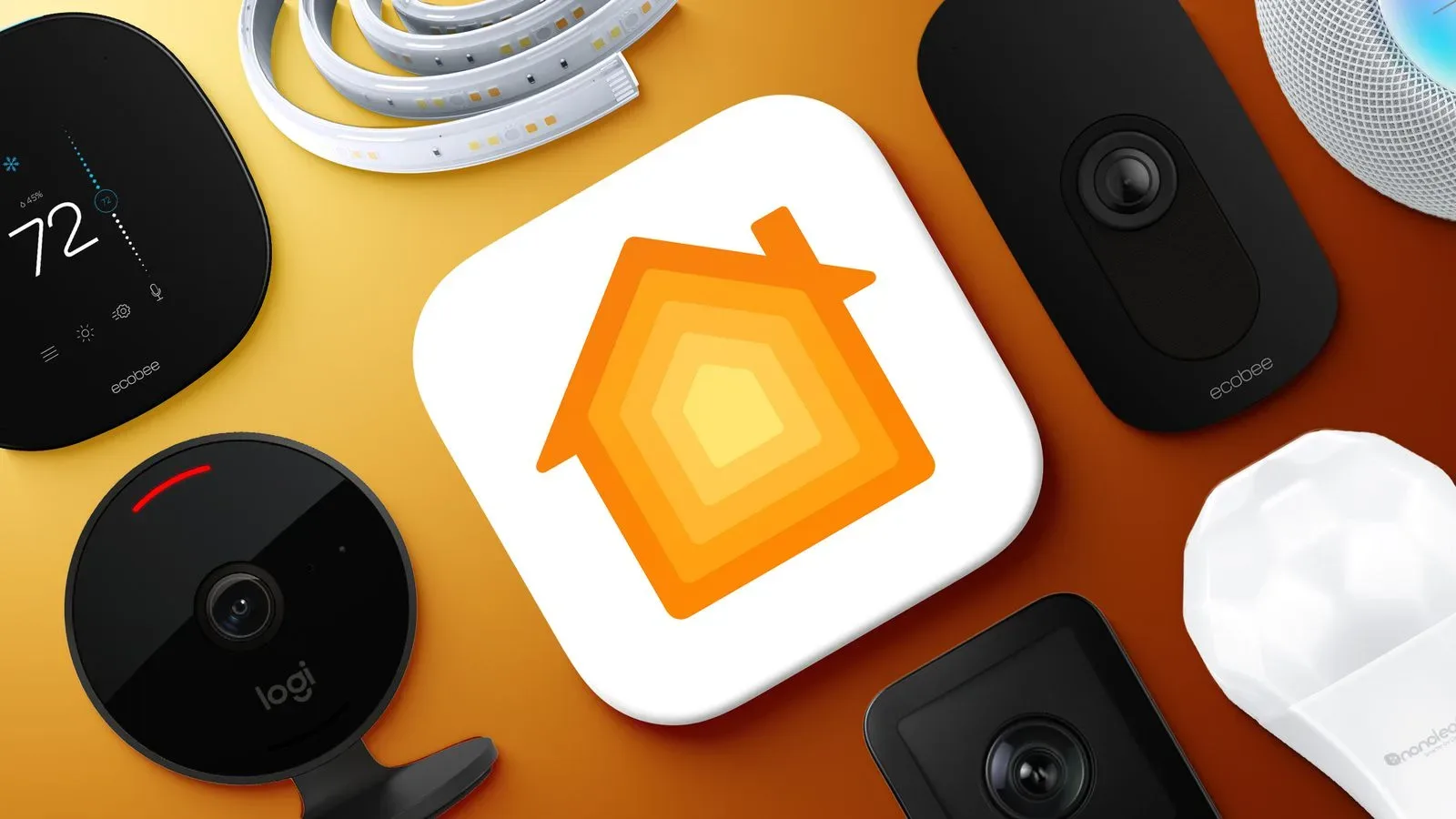
Apple may be preparing to turn its smart-home ambitions toward security in 2027. The reported plan involves a dedicated home security camera alongside a monitoring service, extending the company’s existing Apple Home and HomeKit Secure Video ecosystem into territory occupied by specialist camera makers, subscription security platforms, and professionally monitored home systems.
The important word, for now, is may. Neither a camera, a monitoring service, a price, nor a release date has been officially detailed. But the outline is notable because it suggests Apple is considering a more complete security proposition rather than treating cameras solely as accessories that connect to its software.
There is also a distinctly Apple-shaped wrinkle to the reported camera concept: privacy. The device is said to use artificial intelligence to monitor the surrounding environment instead of relying on conventional video footage as its central mechanism. That brief description leaves major practical questions unanswered, but it points toward a security product that could make interpretation of events—not merely recording them—the feature people notice most.
A camera that may prioritize understanding over footage
Most consumer home cameras are easy to explain. They capture video, identify motion, send an alert, and let an owner look at a live view or saved clip. AI has increasingly been added to distinguish a person from a passing car, a pet, a package, or a tree branch behaving dramatically in the wind.
The reported Apple concept sounds as if it could take a different emphasis. Rather than treating video as the primary product, it may use AI to observe environmental changes and deliver useful information while reducing dependence on actual footage. That could mean interpreting activity and generating alerts in a way intended to minimize what is recorded, viewed, or retained. However, the available details do not establish exactly what data would be captured, processed, stored, transmitted, or available to a homeowner.
Those distinctions will matter. “Privacy-forward” is an appealing direction, but the real-world result depends on technical specifics: whether analysis happens locally or remotely, what users can turn off, how long information lasts, how alerts can be reviewed, and what access a monitoring service might have during an emergency. It also matters how the system handles the everyday chaos of a home: guests at the door, deliveries, pets, roommates, children, bright headlights, and that one neighbor who apparently only owns a leaf blower.
For Apple, a privacy-centered security camera would fit a long-running product message. It would also set a high bar. Home security is among the most sensitive forms of consumer technology, because it can involve both an owner’s private space and the people who happen to enter, visit, work near, or pass by it.
How the reported system could fit Apple Home
The possible 2027 project does not appear in a vacuum. Apple is expected to release a home hub for managing smart-home devices before the end of this year. Earlier reports have suggested that a wireless camera with Siri integration could accompany that hub and connect directly with it.
A hub, camera, voice assistant, mobile app, cloud storage, and monitoring option could create a familiar ecosystem model: Apple hardware at the center, Apple software as the control surface, and an ongoing service component for customers who want it. The company has not confirmed that these products are part of a single package, so that connection remains uncertain. Still, the overlap is easy to see.
In that scenario, the home hub could serve as a shared point of control for household devices, while the camera could become an input for alerts and automations. Siri integration could potentially make security status easier to check without opening an app. Yet those are logical possibilities, not confirmed functions. The reports do not spell out how a hub, a future camera, and a possible monitoring service would work together.
Apple’s broader smart-home direction is worth watching precisely because connected-home products often live or die on convenience. A camera can have impressive hardware, but users still need quick controls, reliable notifications, intelligible settings, and a straightforward way to know what the device is doing. The most exciting AI label in the world will not soothe anyone who receives a mysterious alert at 3 a.m. with no useful explanation.
HomeKit Secure Video is already the foundation
Apple already supports cameras through HomeKit Secure Video, an Apple Home feature built for compatible third-party devices. HomeKit Secure Video uses end-to-end encryption and iCloud to securely stream and store video from supported HomeKit cameras.
That existing base gives Apple several building blocks it would not need to invent from scratch. There is already a place for cameras inside the Home app, an established compatibility framework, and a cloud-backed security-video feature connected to iCloud. A first-party Apple camera could, in theory, deepen that integration, although no official product specifications have been announced.
The distinction between HomeKit Secure Video and a possible Apple security service is important. HomeKit Secure Video is a camera feature for compatible products. A monitoring service could suggest something broader, potentially involving a subscription and some form of security response or oversight. But no details have been provided about professional monitoring, emergency dispatch, staffing, regional availability, hardware requirements, or monthly costs. Those are the parts that would determine whether the service competes with conventional security subscriptions or occupies a more limited role.
It is possible that any future service could be connected to iCloud+ and the HomeKit Secure Video framework Apple already has. That would be a natural extension, but it remains an inference rather than a confirmed plan.
iOS 27 adds a more AI-driven camera interface
The direction of iOS 27 provides another clue about how Apple sees camera information fitting into Apple Home. The Home app is gaining written summaries for motion alerts, highlights, and the ability to group footage from different cameras together.
These additions move the experience beyond a basic timeline of clips. A written motion summary could help a user understand why their phone buzzed without immediately opening a video. Highlights could reduce the burden of sorting through routine activity. Grouping material from several cameras could make a multi-camera household easier to manage.
That is especially relevant to the reported 2027 camera idea. If a future device is intended to interpret its environment with AI, concise and useful summaries may be just as important as the sensing hardware. The challenge is accuracy and clarity. An alert needs to be specific enough to be helpful, restrained enough not to overstate uncertainty, and easy to verify when it concerns something important.
The new iOS 27 Home features require an iCloud+ plan with 2TB of storage or more. By comparison, HomeKit Secure Video requires an iCloud plan with at least 50GB. That gap is significant for prospective users: the smarter organization and summary tools are not simply a universal update for every HomeKit Secure Video subscriber.
It also raises a practical question for any future security subscription. If Apple does introduce a dedicated monitoring offering, it will need to clearly explain what comes with iCloud+, what requires a larger storage tier, and what—if anything—requires another service plan. Consumers are accustomed to smart-home subscriptions, but they are also exceptionally good at noticing when one doorbell alert seems to require three separate payment lanes.
What remains unknown before 2027
For all the potential, the reported system is still short on concrete information. There is no confirmation of whether the camera would be indoor-only, outdoor-ready, battery-powered, wired, or capable of local storage. There is no stated support for multiple cameras, no known details on sensors, and no description of how an owner would interact with emergency features.
- Whether Apple will release the camera and monitoring service at all.
- Whether 2027 is a firm target or an early internal timeframe.
- How environmental AI monitoring would differ from standard AI video detection in daily use.
- Whether analysis would occur on-device, through a home hub, via iCloud, or through a combination of methods.
- How the potential service would relate to iCloud+, HomeKit Secure Video, and the iOS 27 camera tools.
- Which countries, homes, and existing Apple devices would be supported.
Those unknowns are not minor footnotes; they are the product. A privacy promise becomes meaningful through controls and architecture. A monitoring service becomes valuable through reliability and a clearly defined response model. And a smart-home camera becomes useful only when its alerts help people make decisions rather than merely offering a fresh stream of digital anxiety.
The wider consumer-tech conversation is already wrestling with where AI belongs: as an invisible background helper, a visible assistant, or an overconfident narrator of ordinary life. Even gaming culture has started poking fun at office AI and its ever-expanding reach, as seen in this indie game roundup featuring a cat taking on office AI. Home security is a more serious setting, though, and the tolerance for ambiguity will be much lower.
If Apple’s reported plans reach the market, the most compelling question will not be whether the company can make a polished camera. It will be whether it can make a security system that uses AI to provide reassurance without asking households to surrender the privacy it claims to protect. For now, 2027 is a possibility on the horizon, not a product on a shelf.