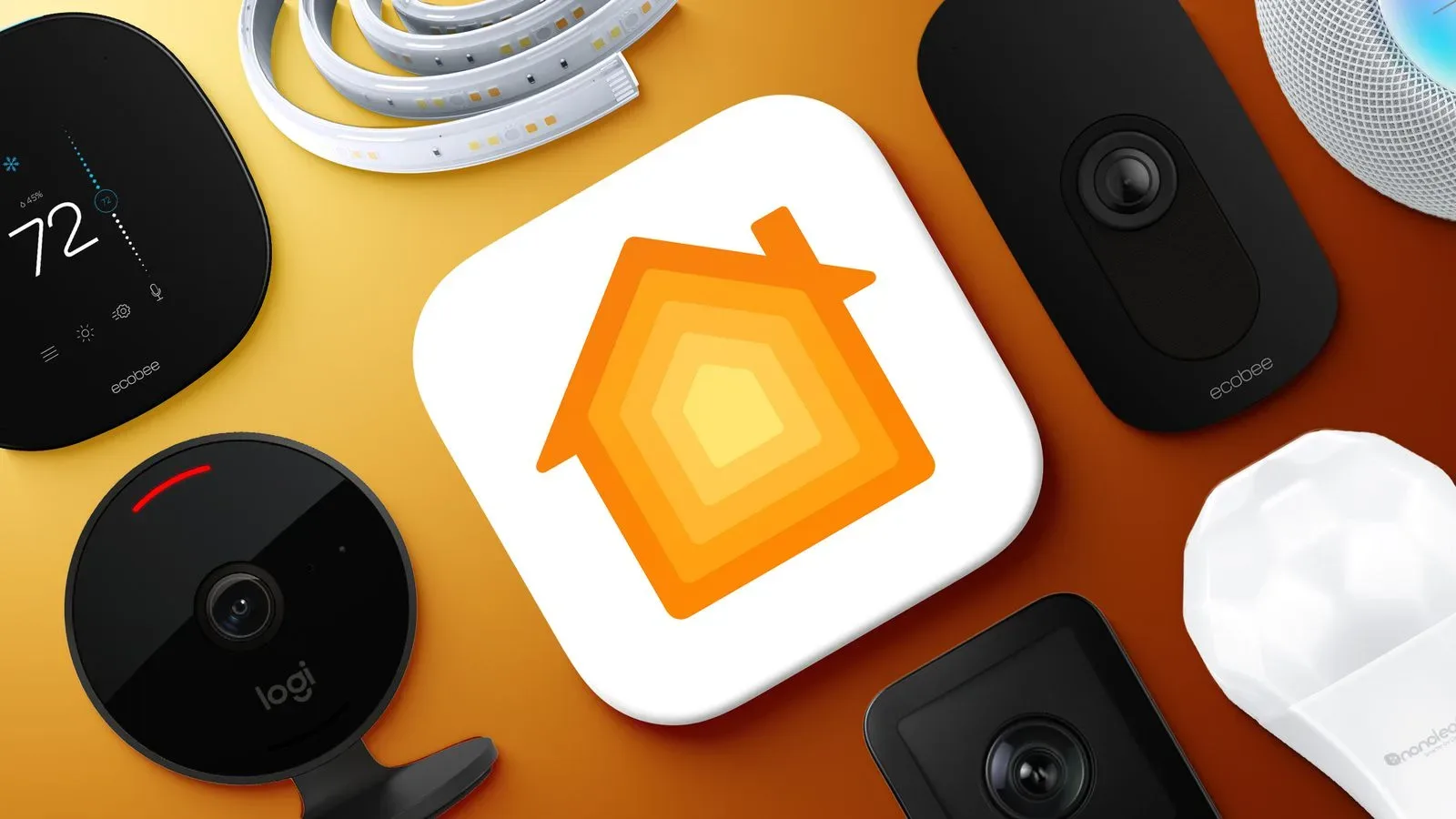
Apple’s iOS 27 is set to bring a useful-sounding Apple Intelligence feature to the Home app: written summaries of what triggered a motion alert. In principle, it is exactly the sort of small convenience smart-home owners want. Instead of opening a clip every time a notification arrives, an iPhone could tell them whether a person walked up, a package appeared, a vehicle pulled in, an animal crossed the yard, or the camera merely spotted general movement.
The catch is a subscription structure that turns a single camera’s AI narration into a $9.99-per-month proposition. The 2TB iCloud+ plan supports Apple Intelligence summaries for only one compatible HomeKit camera. Getting the feature on two cameras requires the 6TB tier at $29.99 per month, while up to five cameras require the 12TB tier at $59.99 per month.
That is a surprisingly steep leveling curve for households that already built out HomeKit Secure Video coverage. The new tool may be framed as a quality-of-life improvement, but the limits make it feel less like flipping on a helpful accessibility setting and more like discovering that the most informative part of a security camera’s interface is locked behind a late-game storage expansion.
What the iOS 27 Home summaries are meant to do
iOS 27’s text summaries are tied to motion alerts in the Home app and use Apple Intelligence to interpret the footage. The system can recognize people, animals, vehicles, packages, and broader motion, then provide a short description of the event. That could reduce the familiar smart-camera ritual of checking a notification, loading a video, squinting at a driveway, and learning that a shrub was having an energetic afternoon.
It is important to distinguish these summaries from the underlying camera recording service. HomeKit Secure Video already uses iCloud+ tiers to determine how many cameras can record. The new Apple Intelligence option is a separate entitlement layered on top of that existing setup. A person may have enough iCloud+ capacity to record from several cameras, yet only be able to receive AI-written alerts from one of them.
That separation is the center of the pushback. The useful question for many customers is not simply, “How much storage do I have?” It is, “Which of my cameras gets to be smart?” A front-door camera may be the obvious first pick, but a driveway, back entrance, garage, nursery, or pet area could be just as important depending on the household. One eligible camera is a very narrow answer for someone whose system was deliberately designed around multiple viewpoints.
The new AI-camera limits, tier by tier
The currently detailed limits for Apple Intelligence video summaries are as follows:
- 2TB iCloud+ — $9.99 per month: AI summaries for one camera.
- 6TB iCloud+ — $29.99 per month: AI summaries for up to two cameras.
- 12TB iCloud+ — $59.99 per month: AI summaries for up to five cameras.
Apple One Premier subscribers are also limited to one AI-summary camera because the bundle includes 2TB of iCloud+ storage. That is likely to stand out to people who view Premier as a premium all-in bundle: the subscription can include the qualifying storage amount, yet it does not create a more generous Home-app allowance than the standard 2TB tier.
There is no stated iCloud+ option for unlimited Apple Intelligence camera summaries. Even the $59.99 12TB plan caps the feature at five cameras. A household with six cameras therefore has no announced way to turn summaries on everywhere, regardless of how much it is willing to pay through the listed tiers.
Why the comparison with Secure Video is so awkward
HomeKit Secure Video’s existing camera counts paint a much friendlier picture:
- 50GB iCloud+ — $0.99 per month: one HomeKit Secure Video camera.
- 200GB iCloud+ — $2.99 per month: up to five cameras.
- 2TB iCloud+ — $9.99 per month: unlimited cameras.
Put those charts next to each other and the mismatch becomes difficult to ignore. At $2.99, a customer can have recording coverage for five HomeKit Secure Video cameras. At $9.99, they can have unlimited recording-camera support, but Apple Intelligence descriptions for only one of those cameras. Reaching five cameras with summaries means moving all the way to the $59.99 tier.
That is not merely a higher price for an added capability. It changes the relationship between the recording product and the AI layer. Secure Video scales in a way that rewards a complete camera setup; the AI summaries scale in a way that asks a user to reserve a high-end storage plan for a very limited number of narrated feeds.
For the person with one doorbell or a single indoor camera, the 2TB threshold may already feel like an excessive requirement. For the person who has accumulated several compatible cameras over time, it creates an even stranger result: a subscription level that permits all the cameras to record but only lets one of them explain what happened in plain language.
Why smart-home owners are reacting so strongly
Complaints about the requirements have appeared across community discussions, and the frustration is understandable even before judging how good the summaries will be in daily use. Security cameras are typically purchased to cover different locations, not to create a contest for which angle deserves the premium feature. A package at the front door and a person approaching a side gate can both matter. Limiting the more readable alert format to a chosen camera risks fragmenting what should be a unified home-security view.
There is also a value-perception issue. Storage plans are easy for consumers to understand: more data, more room for backups, and—in the HomeKit Secure Video case—more cameras. AI processing limits can be harder to accept when the visible output is a short sentence attached to an event the system already captured. Apple may have operational reasons for structuring access this way, but no separate explanation changes the immediate arithmetic customers see.
The situation has some familiar overlap with gaming subscriptions and premium services more broadly. People tend to accept a paid online feature when the tiering is clear and the upgrade maps cleanly to their use. They react badly when a platform they already pay into adds an extra ceiling that feels disconnected from the service they thought they had purchased. For another Apple subscription example where premium settings can produce unexpectedly large costs, see Apple Music Lossless and its appetite for mobile data.
This is part of a wider Apple Intelligence limits story
The Home app camera allowances are not the only Apple Intelligence limits on the horizon. Apple has indicated that usage limits will also apply to Siri AI, photo-editing tools, and Image Playground, with paid ways to increase access. Pricing for those other expanded-access options has not been announced.
That broader context makes the iOS 27 camera policy more than a niche smart-home footnote. It offers an early, concrete example of how advanced AI functionality may be split between included access and paid capacity. The unresolved detail is how each product will define a unit of use and what customers will receive before encountering a limit.
For HomeKit camera owners, the unit is clear: the number of cameras eligible for summaries. Clear does not necessarily mean popular. The listed jump from one camera at $9.99 to two at $29.99 is especially hard to square with the usual expectation that more storage mainly benefits people with larger libraries, bigger device backups, or major media needs—not someone who simply wants two cameras to describe motion.
What could change, and what remains unconfirmed
Apple notes that supported camera counts and other iCloud+ plan features can change over time. That means the current chart should be treated as a policy subject to revision rather than an eternal hardware law carved into a Cupertino tablet. The company could adjust counts, introduce another tier, or otherwise reshape the offering later. For now, though, the stated limits are one, two, and five cameras across the 2TB, 6TB, and 12TB plans.
There are also rumors that Apple could release its own home-security cameras as early as next year, alongside work on a security and monitoring service. Those products have not been confirmed. If they do arrive, advanced AI features may depend on iCloud+ in some form, but the precise requirements, pricing, camera limits, and service details remain unknown.
In the immediate term, iOS 27 presents HomeKit users with a simple but uncomfortable choice. They can keep the broad camera recording allowances they already understand, select one camera for Apple Intelligence summaries at the 2TB level, or consider far more expensive storage plans to expand that AI coverage. The summaries themselves could be genuinely handy. The question is whether enough people will view a single narrated camera—or five at $59.99 per month—as a feature worth adding to their monthly loadout.