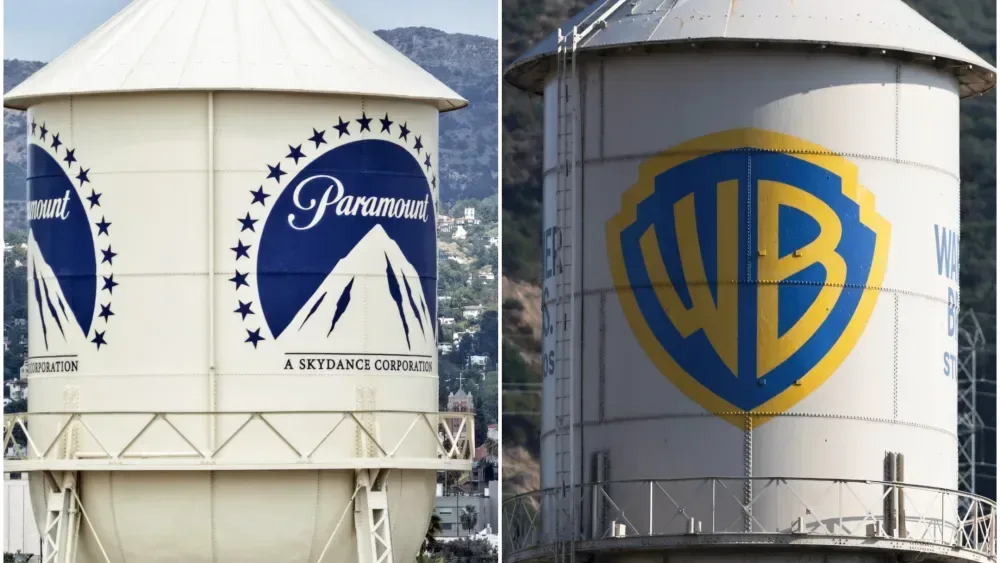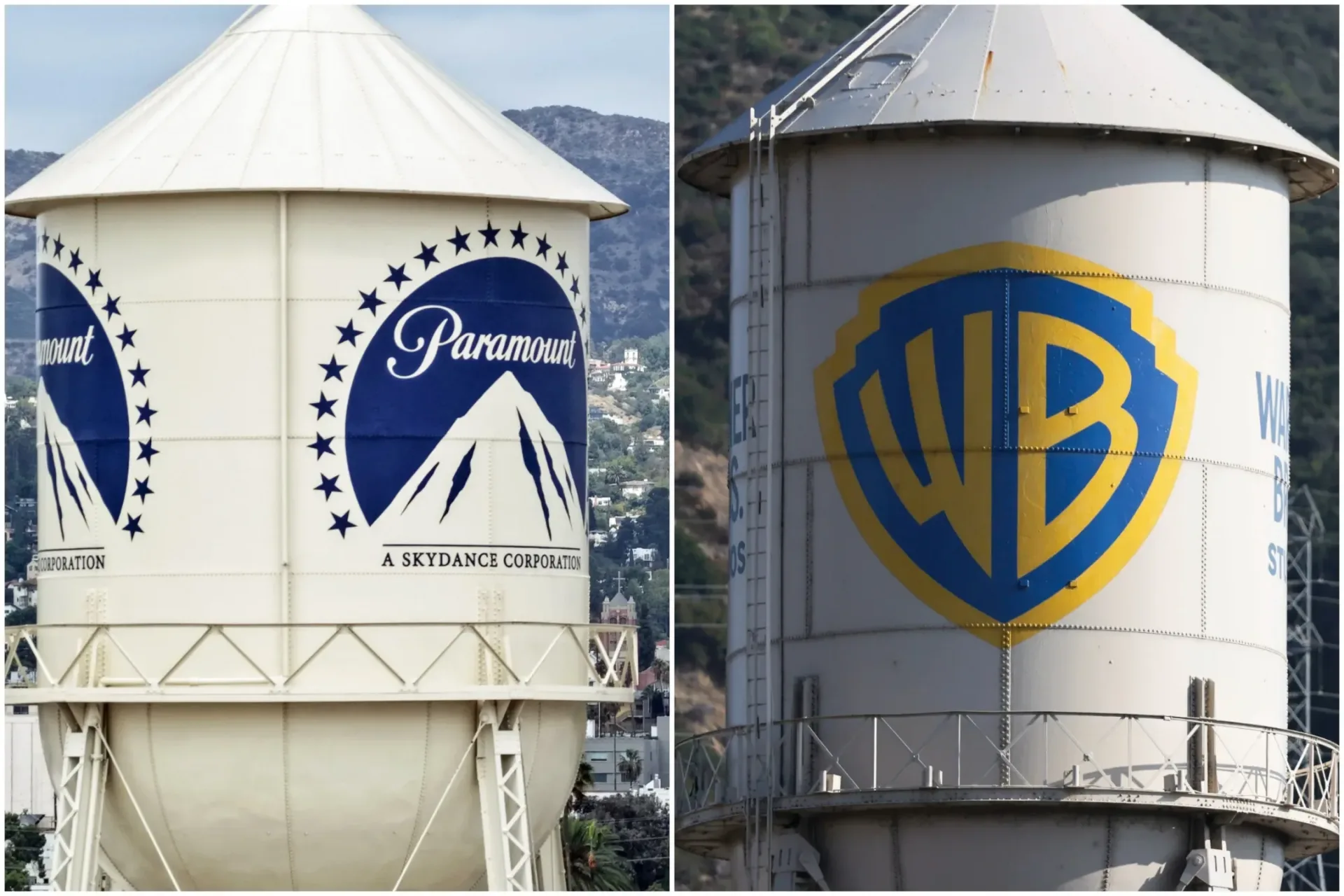
Paramount is making preparations for its proposed acquisition of Warner Bros. Discovery while stressing that the transaction has not closed and its final timing remains uncertain.
The company’s board determined on September 25 that Paramount’s Class B common stock, trading under the ticker PSKY, will leave the Nasdaq Global Select Market for the New York Stock Exchange. Nasdaq trading is expected to end at the close of the market on or around October 5, with NYSE trading expected to begin at the opening bell on or around October 6.
That planned exchange move is one of several practical steps attached to the pending $111 billion Warner Bros. Discovery deal. It should not be confused with confirmation that the acquisition is complete. Paramount explicitly says further closing conditions remain, and that the ultimate closing date—if the deal closes at all—is not yet certain.
A stock-exchange move, not a merger finish line
A stock listing is the market where a company’s shares trade. In this case, Paramount intends to transfer its Class B common stock from Nasdaq to the NYSE. The expected dates give shareholders and market participants a timetable for the proposed change, but they do not erase the conditions that still need to be resolved before the Warner Bros. Discovery acquisition can be finalized.
The distinction matters because several dates in the company’s plan are conditional. Paramount has scheduled October 5 as the record date for a proposed warrant distribution. A record date is the date used to determine which shareholders are eligible for a distribution. Yet eligibility alone does not guarantee that the securities will ultimately be issued: the warrant distribution depends on the Warner Bros. Discovery transaction closing.
Paramount says it can cancel or delay the record date and/or the issue date if necessary. In other words, the calendar currently outlines a preparation path, rather than an unconditional sequence of completed events.
What the proposed warrants would do
Paramount expects to issue roughly 470 million warrants on October 5, subject to the acquisition closing. A warrant is a security that gives its holder the right, but not the obligation, to buy a share at a defined exercise price. It is different from receiving a share outright. Whether a warrant is valuable to a holder can depend on the eventual share price, the exercise price and the warrant’s specific terms.
Under the outlined plan, each warrant would initially allow the holder to purchase one Class B common share. The initial exercise price would be calculated using the average daily volume-weighted average price of the Class B stock over 20 trading days ending on the third business day before the merger closes.
Related coverage includes Paramount Targets NYSE Switch as Warner Bros. Discovery Deal Timing Remains Uncertain.
Volume-weighted average price, commonly shortened to VWAP, is a pricing measure that factors in both the prices at which shares traded and the amount of stock traded at those prices. Using a multi-day VWAP formula can reduce the significance of a single unusually active or volatile trading session. But the actual calculation here cannot be known until the closing timing is known, because the measurement window is tied directly to that closing date.
Paramount has also established boundaries for the initial exercise price: it will be no higher than $16.02 per share and no lower than $12.00 per share. The company describes the warrants as a way for eligible existing Class B holders to purchase Class B stock in the post-transaction entity on terms similar to those offered to the equity syndicate supporting the Warner Bros. Discovery deal. That syndicate includes David Ellison, Larry Ellison and RedBird Capital Partners founder Gerry Cardinale.
Not every Class B holding will receive warrants through the same mechanism. Shares held by the Paramount Global 401(k) Plan and the Paramount Global Master Trust are set to receive Class B shares instead of warrants in the distribution.
The date investors are watching remains the close
The biggest unresolved event is still the acquisition itself. Paramount will begin accruing a $7 million-per-day ticking fee for Warner Bros. Discovery shareholders starting October 1, continuing until the merger closes. A ticking fee is, in plain terms, a daily payment obligation that grows while a transaction remains pending. Its presence creates a direct financial consequence for further delay, while it does not itself establish that a closing date has been secured.
One significant legal obstacle has moved closer to resolution. Paramount reached a settlement with 12 Democratic state attorneys general that, if approved by the court, would end their antitrust lawsuit seeking to block the deal. The court is still reviewing the proposed settlement. It asked the parties to respond by Monday, September 28, to Sen. Cory Booker’s request for an independent review of the proposed consent decree.
The proposed settlement reportedly does not require major concessions from Paramount. Still, the court’s review and the remaining closing conditions mean the deal should continue to be described as pending, not complete.
Warner Bros. Discovery is also preparing debt-market changes
Warner Bros. Discovery has announced a related plan involving two of its debt securities rather than its common stock. In connection with the pending Paramount merger, WBD intends to voluntarily delist its Euro Notes from Nasdaq: 4.302% senior notes due 2030 and 4.693% senior notes due 2033. It expects to file the necessary notification with the SEC on or around October 6.
A senior note is a form of corporate debt. The percentages in the names identify the notes’ stated interest rates, while 2030 and 2033 refer to their respective maturity years. This planned delisting is therefore separate from Paramount’s PSKY common-stock transfer and separate from the proposed warrant distribution. All three developments may be connected to the broader deal, but they concern different securities and different groups of holders.
Why the merger matters beyond market plumbing
Most of this update is about securities mechanics: listings, record dates, debt notes, formulas and warrants. Yet the underlying transaction joins two major entertainment companies whose properties extend across film, television, streaming and games. That makes the deal relevant to audiences that follow screen franchises and the game worlds that frequently intersect with them. For one example of how deeply production stories can travel between those spaces, see the report on the practical origins of Resident Evil’s “Katamari Monster”.
There is no new operational roadmap in the disclosed information for franchises, game releases, studio output or consumer services. It would be premature to infer such changes from a planned ticker migration or a contingent warrant. The immediate, concrete takeaways are narrower: Paramount is setting up a move to the NYSE; eligible PSKY holders could receive warrants if the acquisition closes; WBD is preparing to delist specified Euro Notes; and the parties are still working through the closing process.
For shareholders, the key details are the conditional language and the distinct dates. October 5 is the expected end of Nasdaq trading for PSKY and the currently designated warrant record date. October 6 is the anticipated first day of NYSE trading for PSKY, as well as the approximate date for WBD’s expected debt-delisting filing. October 13 is the scheduled start of warrant trading—if the warrants are issued under the contemplated plan. None of those milestones replaces the event that controls the warrants and ends the ticking fee: the actual closing of Paramount’s acquisition of Warner Bros. Discovery.