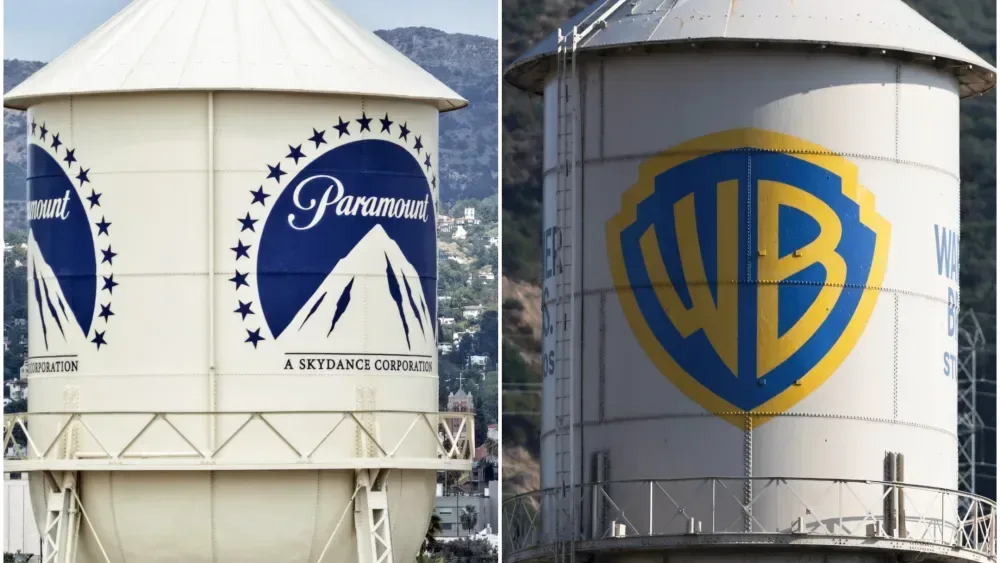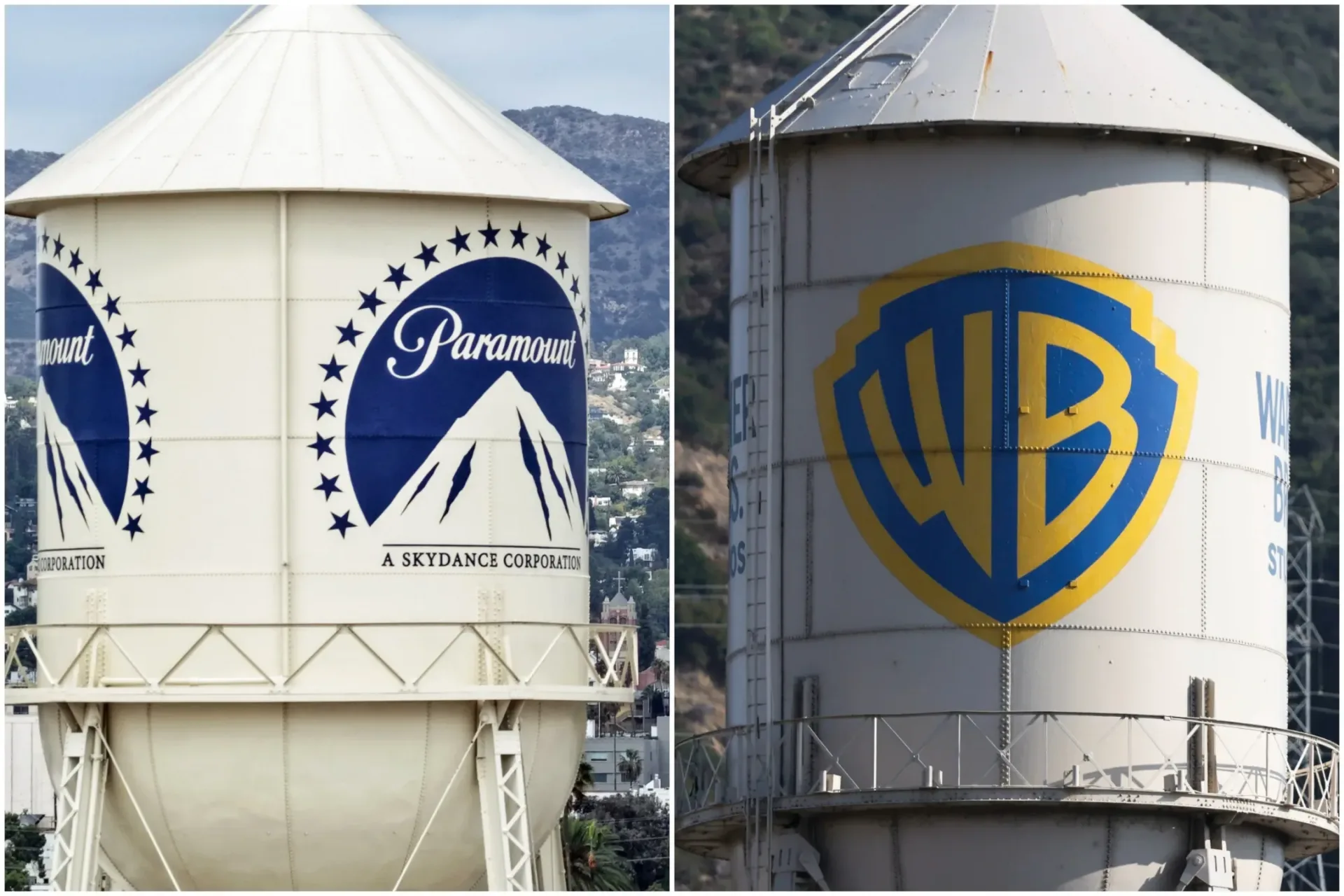
The proposed Paramount-Warner Bros. Discovery merger has reached its final court checkpoint, but it did not receive a simple press-to-continue prompt. U.S. District Judge Araceli Martínez-Olguín questioned Paramount and the 12 state attorneys general who settled their antitrust challenge, emphasizing that court approval of their proposed consent decree is not automatic.
The virtual hearing concerned outstanding issues in the settlement. Martínez-Olguín did not say when she would rule, stating only that a decision would arrive in due course. That timing matters: Paramount CEO David Ellison has told employees he expects the Warner Bros. agreement to close in roughly two weeks, provided the settlement is approved promptly.
For now, the combination remains uncompleted. The agreement between Paramount and the state AGs may have removed the active lawsuit as the immediate obstacle, but the court still must decide whether to enter the proposed decree.
The judge’s central question: was this settlement properly reached?
Martínez-Olguín made clear that the court’s role is not to mechanically approve an agreement because both sides signed it. She said she had questions and wanted to reinforce that the result came from an arm’s-length process, rather than collusion.
In plain terms, an arm’s-length negotiation is one in which parties pursue their own interests independently. Here, that means the states should have negotiated to address the competition concerns in their complaint, while Paramount negotiated to preserve the transaction and avoid a continuing legal fight. The judge’s inquiry goes to whether the compromise is a real adversarial resolution of an antitrust dispute, not an arrangement that bypasses meaningful scrutiny.
Paula Blizzard, senior assistant attorney general in the California Attorney General’s Office antitrust section, told the court the process was arm’s length. Paramount’s lawyer agreed.
The judge also asked how the proposed terms answer the competition issues raised by the states. Blizzard explained that the AGs did not want to permanently bar the deal. In her description, preventing the merger altogether would lock in a permanent market structure, while Warner Bros. Discovery could in any event pursue a different merger-and-acquisition partner if this transaction were stopped.
That is an important distinction in the parties’ theory of the settlement. The states are not presenting the deal as risk-free; they are arguing that five years of enforceable conditions can curb identified harms without an outright ban or a forced breakup of assets at the outset.
Related coverage includes Judge Presses Paramount and State AGs on Warner Bros. Discovery Merger Settlement.
What a consent decree does — and why the details matter
A consent decree is a court-approved settlement that sets binding obligations without requiring the case to run through a full trial and final merits ruling. In this case, it is designed to establish operating commitments for the combined company and consequences if it fails to comply.
The underlying complaint, brought by California Attorney General Rob Bonta and 11 other attorneys general, alleged that a combined Paramount-Warner Bros. could gain excessive power in markets involving wide-release and tentpole theatrical films, as well as basic cable. A tentpole film is a major release intended to anchor a studio’s commercial calendar, typically with a large-scale theatrical rollout and substantial promotional importance.
Earlier in the dispute, Bonta had said only structural remedies — such as divestitures — would be enough to resolve the case. Structural remedies change who owns which business or asset. The proposed agreement, however, does not require an immediate divestiture. Instead, it relies chiefly on behavioral and output-focused conditions, backed by divestiture penalties if certain obligations are violated.
That difference helps explain the court’s attention. A condition requiring conduct over several years only works if its terms are clear, the compliance process is visible, and the consequences for violation are meaningful. The decree’s stakes therefore extend beyond its headline promises of movie spending and theatrical releases.
The proposed movie commitments
The settlement would prevent Paramount from selling the Paramount Studios or Warner Bros. studio lots in California for at least five years. It would also require at least $300 million in additional annual U.S. film-production investment, for a stated total of $1.5 billion across five years.
The theatrical-release commitments are similarly specific:
- At least 30 movies released theatrically in each of the first two years.
- At least 32 movies released theatrically in each of years three through five.
- A 45-day theatrical window for wide-release films.
Those numbers are intended to address a central concern surrounding studio consolidation: whether a larger combined company might release fewer movies theatrically, or reduce the scale and availability of those releases. The decree does not merely state a general preference for theatrical distribution; it sets numerical release minimums and a window requirement for wide releases.
The deterrent attached to those requirements became a focus at the hearing. If the merged company does not meet its movie-output minimums, it could be required to divest its ownership stake in Miramax Studios. Paramount attorney Josh Holian told the court the company does not want that result, calling Miramax important and pointing to Scary Movie 6 as a Miramax property among the domestic box office’s top 20 films in 2026 at the time of the hearing.
That exchange illustrates the intended design of the condition: the potential loss of Miramax is meant to make noncompliance costly enough that meeting the movie-release commitment remains the preferable business path. It is not an immediate requirement to sell Miramax; it is a remedy triggered by failure to satisfy the decree’s film-output terms.
Cable networks, news oversight and enforcement
The consent decree also contains basic-cable conditions. If Paramount-WBD violates the agreement’s anticompetitive terms, the specified divestiture consequence can encompass several BET channels, VH1, Comedy Central, Smithsonian, Destination America and Science. Blizzard described those possible divestitures as deterrents, using potential asset loss to discourage conduct that would violate the decree.
For viewers, these provisions should not be confused with an announced sale or shutdown of those channels. They are conditional remedies within the proposed settlement. Whether they ever become relevant depends on the company’s compliance after a deal closes and on how the decree is enforced.
News operations are also addressed. The combined company would be monitored by a news editorial independence board, which would establish guiding editorial and journalism principles for CNN and CBS News. This is a governance commitment, separate from the movie-output and cable remedies, and it sits alongside broader public anxiety about media ownership and consolidation.
Blizzard acknowledged that the transaction has attracted intense debate over corporate power, the state of news media and wider political concerns. But she stressed that the state case is an antitrust matter, centered on competition law. That framing matters because public concern about a merger can be significant without necessarily being a legal basis for an antitrust remedy.
Martínez-Olguín also asked to be kept informed of the state committee responsible for monitoring compliance. Monitoring is the unglamorous but essential part of a multi-year settlement: promises on paper need someone with the authority and information to determine whether production spending, releases, distribution windows and other requirements are actually being met.
Senator Booker seeks added public-interest review
Sen. Cory Booker of New Jersey has urged the court to halt the merger and conduct an independent public-interest review before entering the consent decree. In his letter, Booker argued that the state settlement arrived without a competitive impact statement, a public-comment period or a formal opportunity for theaters, distributors, workers and consumers to be heard.
The judge instructed the parties to submit replies to Booker’s letter by noon Pacific time on Monday, Sept. 28. The court also considered a request from the Block the Merger coalition for an emergency hearing that would allow interested parties to formally oppose what the group characterized as a weak and unenforceable settlement.
Paramount Skydance opposed that request and other intervention efforts. Martínez-Olguín did grant administrative motions to submit amicus briefs, with briefs due on the docket by 12:01 a.m. Pacific time on Sept. 25. An amicus brief is a filing from a person or organization that is not one of the core parties to the case but wants to provide the court with its view on the issues.
These filings do not themselves resolve the merger’s fate. They do, however, give the judge additional arguments to weigh while deciding whether the proposed decree adequately serves the legal purpose it is supposed to serve.
California’s location dispute does not change the antitrust test
Another dispute surfaced around Ellison’s reported comments to senior leadership that Paramount would look to relocate elsewhere if the Warner Bros. deal were blocked. Blizzard said threats or pressure tied to leaving California carried little weight in the antitrust analysis, because the state’s focus is protecting competition and businesses under antitrust law.
Holian rejected the description of Paramount’s position as blackmail, arguing that the company must make its own operational business decisions and that those decisions were not threats.
For the court, the practical question is less about the rhetorical label and more about the settlement’s legal adequacy. The proposed terms restricting sale of the California studio lots for five years are already part of the package before Martínez-Olguín. The judge’s ruling will determine whether the overall package becomes a court-enforced obligation.
The money behind the closing timeline
Separately, Paramount said it planned to raise an additional $7.5 billion in debt through a proposed senior secured incremental tranche of term B loans. The funds are intended to help finance the WBD takeover and pay down certain other debt. Paramount said it now expects to raise approximately $44.4 billion in additional secured debt in total, on top of financing previously announced.
A term B loan is generally a type of institutional term loan. “Senior secured” indicates that lenders hold a priority claim backed by specified collateral, which can reduce lender risk relative to unsecured borrowing. The proposed financing does not replace the need for court approval of the settlement; it is part of the broader financial preparation for the planned acquisition.
If the merger closes before the end of the year, as Paramount expects, the settlement’s commitments would run through Dec. 31, 2031. That makes the decision more than a near-term clearance item. It would set a five-year framework for film production, theatrical distribution, studio-lot ownership, cable-related deterrents and news governance at one of entertainment’s largest proposed combinations.
Media mergers can often feel like a balance-sheet story happening in a distant executive menu. Here, the court record makes the consumer-facing stakes unusually concrete: how many films reach theaters, how long wide-release titles remain there, what assets are at risk if commitments are missed, and who watches the watcher. For more on another current media-distribution decision, see Apple TV’s scheduled free viewing windows for Peanuts holiday specials.