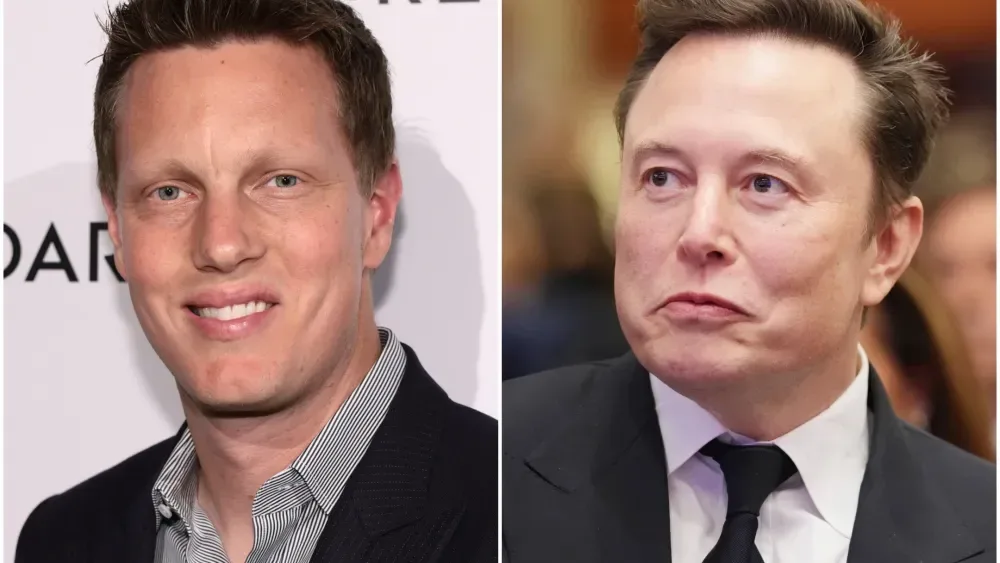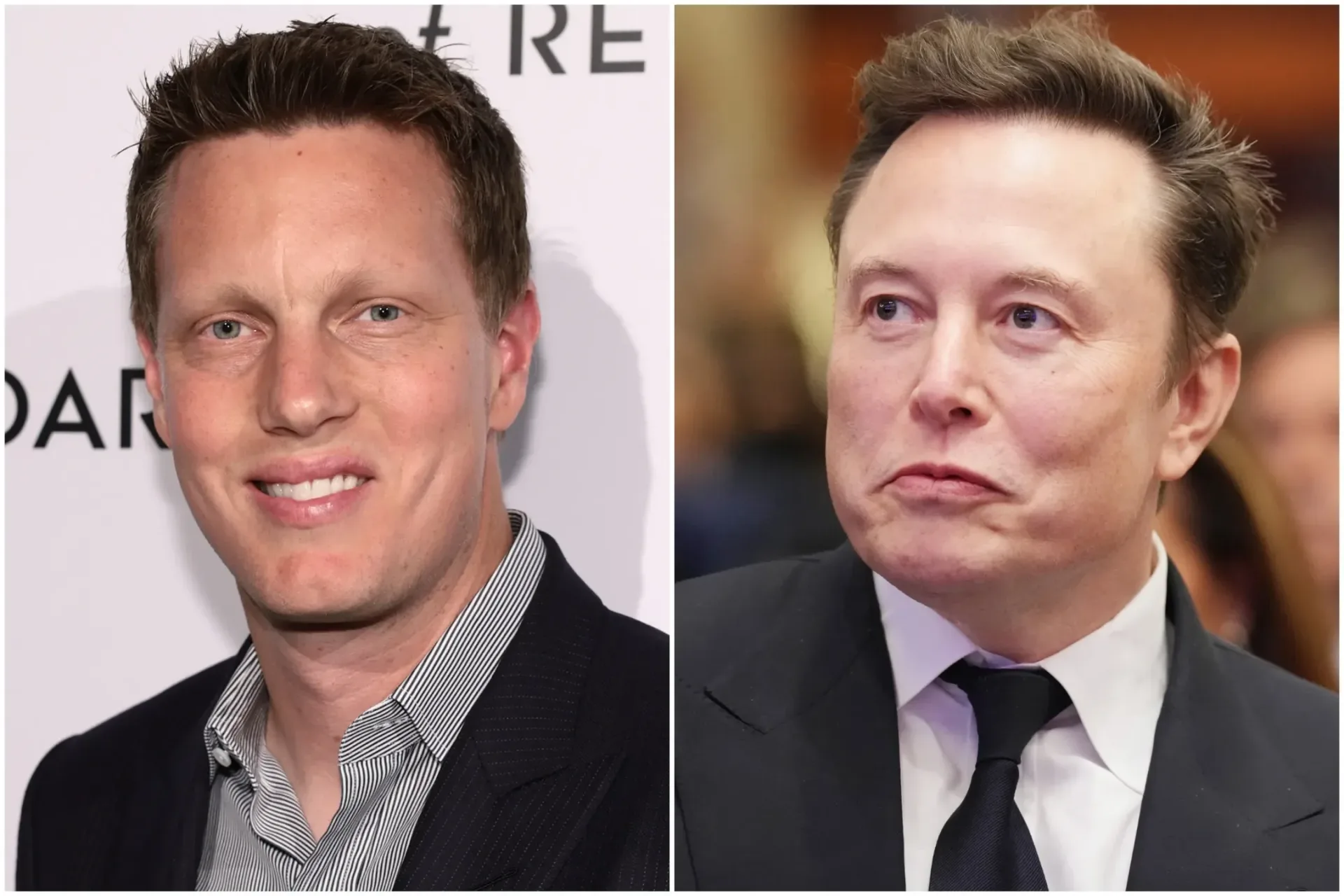
David Ellison is reportedly considering Elon Musk as a potential member of an equity-investor group for the proposed combined Paramount-Warner Bros. business. It is an intriguing possibility with an enormous asterisk: the reported deliberations have not been confirmed, no investment amount is known, and there is no indication that Musk has agreed to participate—or even that an approach has been made.
Paramount declined to comment on the report, while a representative for Musk did not immediately respond to a request for comment. That leaves the matter firmly in the possible investor column rather than the completed financing column.
Still, the idea arrives at a consequential point for the $111 billion Paramount-Warner Bros. Discovery transaction. The merger is nearing its expected close after Paramount reached a settlement with 12 state attorneys general over their antitrust challenge. A judge is scheduled to review the proposed consent decree, and the transaction is expected to close in roughly two weeks if it receives approval.
What is being reported—and what is not
The central claim is narrow. Musk is reportedly among several wealthy people Ellison has considered for a syndicate of equity investors in Paramount. The other potential investors were not identified, and the size of any possible Musk commitment was not learned.
That distinction matters because a name being discussed internally is not the same as a negotiated investment. There is no disclosed term sheet, ownership percentage, board role, governance arrangement or public commitment from Musk. There is also no stated indication that fresh outside equity is required to complete the proposed deal. Readers should be cautious about treating a report of consideration as proof that Musk will become an owner.
Equity financing is capital invested in exchange for an ownership stake, unlike debt financing, which is borrowed money expected to be repaid under agreed terms. A syndicate, in this setting, is simply a group of investors contributing capital together. The exact stakes, rights and obligations of any such group would depend on deal documents that have not been made public.
The report has immediate public-interest weight because Musk runs SpaceX, Tesla and X, and is among the world’s wealthiest individuals. His wealth was estimated at about $950 billion as of Wednesday. But personal wealth does not establish a planned investment, nor does it reveal what a prospective investment might mean for the company’s operations.
A giant deal already has major financing pieces in place
The prospective Paramount-Warner Bros. deal already comes with unusually large disclosed financing components. Larry Ellison, David Ellison’s father and Oracle’s founder, has personally guaranteed $46.7 billion in equity financing for the transaction.
Paramount has also lined up $24 billion in commitments from the sovereign wealth funds of Saudi Arabia, Qatar and the United Arab Emirates. Paramount has said those three funds would own 38.5% of the combined company. Separately, the FCC approved Paramount’s petition to permit foreign entities to hold up to 49.5% of equity if the merger is completed.
Those figures clarify why any addition to an investor group would draw attention. The deal is not a small private placement; it is a proposed restructuring of two major entertainment companies supported by substantial commitments and guarantees. Yet the reported consideration of Musk does not specify whether any investment would supplement existing arrangements, replace a portion of them, or simply provide an additional source of capital. The supplied information does not answer those questions.
It is also worth separating the two Ellisons’ roles. David Ellison is the Paramount CEO reportedly considering additional investors. Larry Ellison is the person who has personally guaranteed the stated $46.7 billion in equity financing. Their relationship may make the reported Musk connection seem more plausible to observers, but it does not turn the possibility into a deal.
Why Musk’s name has a business connection to the Ellison family
Larry Ellison and Musk have prior business ties. Larry Ellison invested $1 billion in Musk’s 2022 transaction to take Twitter private, before the platform was renamed X. He also invested in Tesla in 2018 and served on the company’s board for several years.
Those links provide context for why Musk could be considered within a wider investor conversation. They do not establish that Musk wants a Paramount stake, what he might pay, or what terms he would seek. Past investments and board service are evidence of prior business relationships, not confirmation of a current transaction.
That restraint is especially important when discussing a high-profile investor in a company that would encompass major film studios, theatrical distribution, television brands and news operations. An ownership investment can be passive, can come with negotiated protections, or can carry varying degrees of influence depending on governance terms. No such terms have been disclosed here.
The merger has commitments beyond financing
The proposed state settlement describes obligations that would shape the combined company’s entertainment output after the merger. Paramount would be barred from selling the Paramount Studios or Warner Bros. lots located in the state for at least five years.
The company would also be required to spend at least an additional $300 million annually on U.S. film production, totaling $1.5 billion over five years. That is a concrete production commitment, distinct from broad promises about supporting movies or theatrical exhibition.
On theatrical releases, the combined company would need to distribute at least 30 films theatrically during each of the first two years, followed by at least 32 films in each of years three through five. Wide-release films would receive a 45-day theatrical window.
A theatrical window is the period in which a movie is intended to play in cinemas before it becomes available through other forms of distribution, such as digital rental, purchase or streaming. A 45-day window therefore puts a defined period of theatrical exclusivity around wide releases. The settlement’s release-count and window requirements provide measurable benchmarks for a company that would control major studio operations.
For audiences, theater owners and filmmakers, these conditions matter more directly than an unconfirmed investor’s name. They outline how much film activity and theatrical supply the merged company is expected to maintain over its first five years. Whether the proposed consent decree is approved remains the next procedural question.
CNN and CBS News would face an editorial-independence framework
The proposed settlement also includes a news editorial independence board for CNN and CBS News. The board would establish guiding editorial and journalism principles for both organizations.
This is a separate issue from movie production and deal financing, but it is central to evaluating the scale of the merger. A company combining Paramount and Warner Bros. operations would not only have significant film and entertainment assets; it would also have major news brands. The proposed monitoring structure recognizes that editorial decision-making has public consequences beyond ordinary studio strategy.
The available details identify the board’s purpose but do not explain its membership, powers, enforcement process or the full text of the principles it would establish. Those are meaningful omissions. An editorial-independence body can only be assessed fully once its specific authority and operating rules are clear.
Practical implications: what to watch next
The near-term events are more definite than the Musk report. The judge’s hearing on the consent decree is scheduled for Thursday. Subject to approval, the merger is expected to close about two weeks later.
After that, a few categories of disclosure would be particularly important:
- Confirmation of any investor: Whether Musk is approached, participates or is not involved at all.
- Investment size and ownership: The dollar amount and resulting equity stake would be necessary to understand the material significance of an investment.
- Governance rights: Board seats, voting rights and other protections would determine whether an investor has influence beyond an economic stake.
- Final settlement obligations: Approval of the consent decree would determine whether the film-production, theatrical-release and studio-lot provisions take effect as described.
- Editorial board details: The eventual rules for the proposed CNN and CBS News oversight framework will be important for assessing how editorial independence is structured.
Corporate combinations often produce headlines about the most famous possible investor, but the long-term impact is usually defined by the financing agreements, ownership split, governance documents and operating commitments. In this case, several of those broad commitments are already visible: U.S. film-production spending, theatrical release minimums, a 45-day window for wide releases and a proposed editorial-independence mechanism for CNN and CBS News.
The reported Musk possibility is consequently a significant but unresolved thread in a much larger transaction. It should be read as a sign that David Ellison may be exploring additional equity partners, not as confirmation that Musk has bought into Paramount-Warner Bros. For more on how ownership and corporate reporting lines can raise questions about creative franchises, see our look at Obsidian’s reporting shift to Bethesda.
Until either company or Musk confirms a transaction, the known facts remain limited: Musk is reportedly one of several names under consideration; the size of a possible investment is unknown; Paramount has not commented; and the merger’s legal and regulatory path is approaching a decisive stage.