Obsidian Entertainment is moving under Bethesda’s reporting structure, a corporate reshuffle that arrives with a reassuring headline and several very large asterisks. A leaked internal message from Bethesda president Jill Braff says Obsidian’s creative identity will remain central to its work, while CEO Feargus Urquhart and the existing Obsidian leadership team continue to run the studio.
In the practical org-chart sense, the change is straightforward: Obsidian will report to Braff. In the practical creative sense, it is much harder to judge. The memo presents the move as a reporting change rather than an absorption of Obsidian into Bethesda Game Studios, and it specifically says Bethesda Game Studios will continue to lead the Fallout franchise. Yet the shift coincides with layoffs and a stronger emphasis on franchise-led development—two facts that make players understandably cautious about what “distinct” will mean once budgets, staffing, greenlights, and priorities start moving through a new chain of command.
What the memo says is staying the same
The most concrete assurance is leadership continuity. Urquhart and Obsidian’s leadership team are set to remain in place, with the studio reporting upward to Bethesda’s president. Braff’s message frames Obsidian’s defining qualities as something to preserve rather than flatten.
That distinction matters because a reporting line is not automatically the same thing as a studio merger. Obsidian is not described as becoming Bethesda Game Studios, and Bethesda Game Studios is explicitly identified as the lead on Fallout. The stated model appears to separate studio leadership from franchise accountability: Obsidian keeps its own leadership structure, while the broader organization aims to make responsibility for both the developer and the franchise clearer.
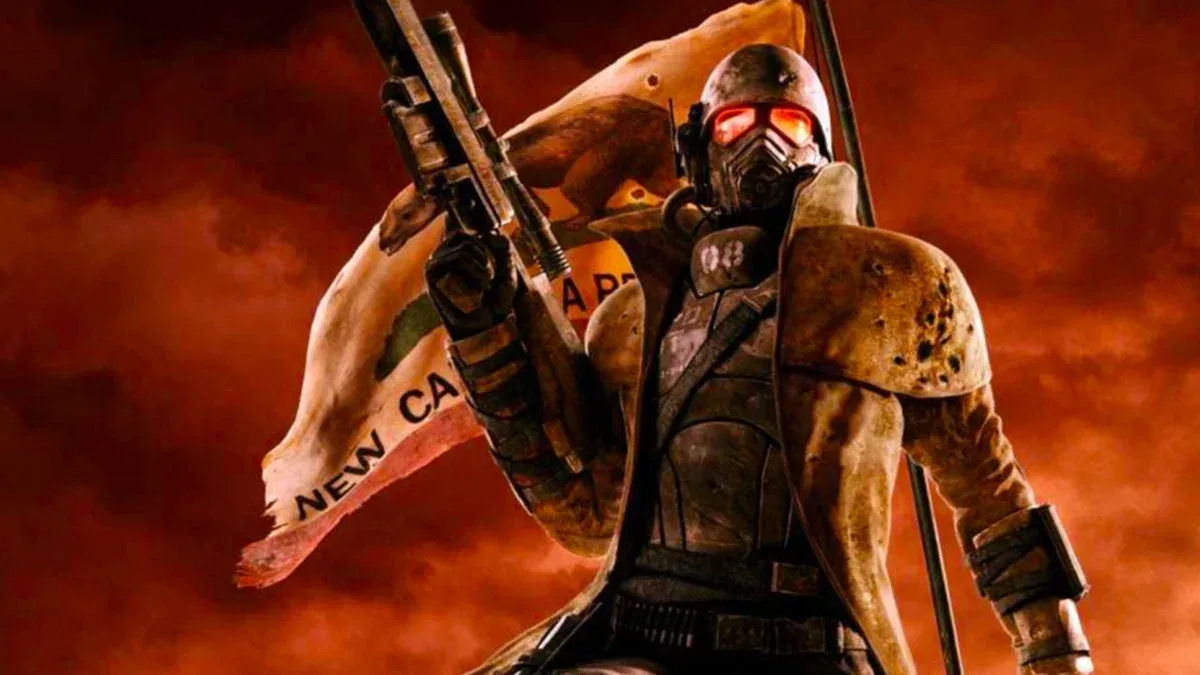
There is also an immediate shared assignment. Bethesda and Obsidian previously confirmed that they are collaborating on a new Fallout project, reviving a relationship that produced Fallout: New Vegas 16 years earlier. The leaked message says early work on that new project is already underway and promises more information in the coming months.
Those are meaningful details, but they are not a full production roadmap. The memo does not identify the new game’s name, platforms, release timing, development scope, or precisely how work will be divided between the teams. It also does not state what other projects Obsidian may be developing alongside its Fallout contribution. For now, the public picture is one of a studio retaining its internal leaders while taking on work within a bigger franchise structure.
Why “franchise-led” is the phrase doing the heavy lifting
Corporate language has a special ability to sound calm while making everyone reach for a flashlight. “Franchise-led” is the key term here. In plain terms, it means a major series can become the organizing priority for the people, schedules, and decisions around it. That can create focus and accountability. It can also mean that a studio’s future becomes more dependent on the needs of an established brand than on the ideas it develops independently.
Neither outcome is guaranteed by the phrase alone. A franchise-led approach could allow Obsidian to apply its RPG experience to a major series while retaining enough independence to pursue its own games. Conversely, it could narrow the studio’s capacity for original work if personnel and resources are increasingly pulled toward Fallout. The leaked memo supports the first possibility as the stated intention; the surrounding circumstances leave the second as a reasonable concern rather than a confirmed result.
Related coverage includes Obsidian's Bethesda Reporting Shift Raises Questions as Fallout Work Continues.
That uncertainty is especially important because Obsidian has spent much of the past decade building and expanding its own portfolio. Its recent body of work includes The Outer Worlds, Grounded, and Pentiment, along with Avowed, a new take on its Pillars of Eternity world. These projects are not interchangeable in scale or style. Together, however, they demonstrate a studio that has been allowed to move between role-playing games, survival-focused work, narrative experimentation, and its own established settings.
Creative identity is not simply a label on a studio door. It is expressed through the projects a team can propose, the risks it is allowed to take, and the room it has to see ideas through. Keeping Obsidian’s leadership in place could help protect that identity. But leadership continuity has to operate alongside staffing levels and project priorities, which are usually where an organizational change becomes tangible to the people making games.
The layoffs change how the assurances land
The reporting change came alongside Xbox layoffs and restructuring, with reports indicating that 25% of Obsidian was affected during the transition. That context cannot be treated as a footnote. A memo about preserving identity will naturally be read differently when colleagues have been laid off and the studio is being repositioned within a new reporting structure.
No public information in the material available explains exactly how those reported cuts affect particular teams, games, or duties. It would be irresponsible to turn that gap into certainty. There is no confirmed public accounting here of which roles were lost, whether the new Fallout work changed as a result, or what projects may have been reduced, delayed, or continued.
Still, layoffs have a direct practical implication even when a studio’s formal leadership remains the same: fewer people can mean fewer simultaneous priorities. This is not a prediction about any one project’s fate; it is a basic constraint of development. Studios make games through specialized teams, and changing team size changes the number of things a studio can sustain at once. For fans hoping Obsidian can make a major Fallout game while also preserving a broad lineup of original work, the resource question is likely to be more important than the wording of any single memo.
The Avowed sequel report needs careful labeling
Part of the anxiety around Obsidian’s direction comes from reporting that an Avowed sequel was cancelled and that Microsoft redirected the studio toward Fallout. That is not something confirmed in the leaked memo. The memo confirms a new Fallout collaboration and sets out the new reporting structure; it does not mention Avowed, a sequel, or a cancellation.
The difference is important. A reported cancellation may explain why the franchise-first language has drawn scrutiny, but it should not be rewritten as an announced fact. Likewise, the existence of a new Fallout project does not, on its own, prove that Obsidian has abandoned every original property. The public evidence supports questions, not a definitive obituary for the studio’s non-Fallout ambitions.
There is a related historical wrinkle: a former studio lead has said that another Fallout RPG at Obsidian was cancelled some time ago. That claim adds to the sense that the road back to Fallout has not been a straight one, but it does not provide details about the current project. The only clear present-tense point is that early work on a new project is underway with Bethesda and Obsidian involved.
Why Fallout is both an opportunity and a pressure test
Fallout: New Vegas remains the obvious reason this collaboration has captured attention. The earlier Bethesda-Obsidian connection gives the new project a recognizable creative lineage, and a fresh Fallout RPG has clear appeal for players who have waited a long time to see Obsidian return to that universe.
But nostalgia is not a development plan. The new arrangement says Bethesda Game Studios continues to lead the franchise, which means expectations should be calibrated accordingly. Obsidian’s involvement does not establish that it is independently making a direct follow-up to New Vegas, nor does it reveal which familiar elements, if any, will return. It establishes collaboration, not a complete set of creative promises.
That makes this a pressure test for the assurances in Braff’s memo. If Obsidian can work on Fallout while continuing to possess meaningful freedom over its own slate, the new reporting relationship may genuinely function as advertised: a structural change with retained studio character. If the franchise becomes the overriding destination for the studio’s resources, then “creative identity” may become a much narrower concept—one expressed mainly through how Obsidian serves an existing universe.
The larger games business has plenty of reason to debate who controls creative direction and how corporate structures shape it. Even outside this specific news, questions of control and player trust have surfaced in areas such as a PlayStation patent that raised privacy and control concerns. Obsidian’s situation is different, but the underlying issue is familiar: the structure around a creative team can matter almost as much as the talent inside it.
What players can responsibly expect next
The immediate takeaway is neither “everything is fine” nor “Obsidian is gone.” It is that a respected RPG studio has a new reporting relationship, continuing internal leadership, reported layoffs, and an active role in early work on a new Fallout project. Each of those facts is real, and none alone settles what the studio’s long-term output will be.
The most useful signals will be concrete ones: information on the new Fallout game, clarity about Obsidian’s other projects, and evidence of whether the studio continues to receive space for original worlds and smaller-scale creative bets. Until then, fans have a valid reason to be excited by the renewed Fallout partnership and an equally valid reason to watch the corporate reshuffle carefully. The wasteland is famous for uncertainty; it did not need an org chart to make that part feel authentic.