Obsidian Entertainment is being moved under Bethesda as Xbox Game Studios reshapes its internal structure around a smaller set of major franchises. The change places the studio behind Avowed, The Outer Worlds, Pillars of Eternity, and Grounded alongside Bethesda Game Studios while Obsidian works on an upcoming Fallout game.
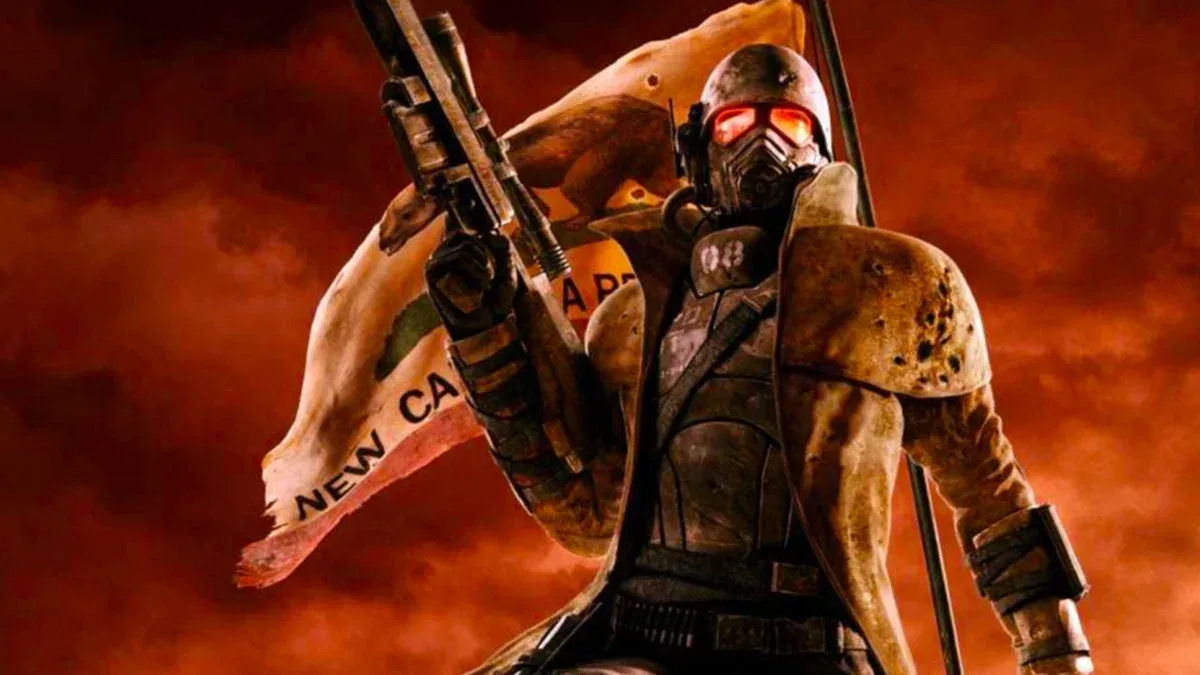
The corporate move has obvious symbolic weight for role-playing-game fans. Obsidian’s history with Fallout is unusually important: the studio previously worked with Bethesda on Fallout: New Vegas. Now the studio is being assigned another game in that universe at the same time that Bethesda continues work toward Fallout 5, which remains in pre-production.
For now, there are far more questions than disclosed creative details. No title, setting, release window, platform list, or description of Obsidian’s new Fallout project has been provided. The meaningful confirmed point is organizational: Obsidian is now being grouped with Bethesda, and its new assignment puts a studio known for RPGs back in the orbit of one of the genre’s most enduring series.
What is changing at Obsidian
Xbox’s reorganization is not framed as Obsidian shutting down existing work in favor of a single franchise. Matt Booty, Microsoft’s chief content officer, said on September 22 that the studio’s current projects will continue, specifically including Grounded.
That distinction matters. A studio being moved under another part of a publisher can imply many things to players, from shared management and production support to a sharper franchise mandate. The available information does not spell out the operational details. It does establish that Obsidian’s ongoing projects are meant to continue while the studio takes on its Fallout work.
There was no mention in that statement of every series associated with Obsidian. In particular, the public update did not address a potential sequel to Avowed, despite previous indications that the studio wanted to make one. Reports have indicated that planning for Avowed 2 was underway, but the absence of a fresh public commitment means its status should not be treated as confirmed by this restructuring news.
That leaves Obsidian’s immediate portfolio in a deliberately incomplete-looking state: Grounded is named as continuing, a new Fallout project is part of the studio’s work, and other potential projects have not received the same explicit update.
Why Fallout is the center of the story
Fallout is not merely another property in Obsidian’s catalogue. Fallout: New Vegas connects the studio directly to Bethesda’s post-apocalyptic RPG universe, which makes this placement feel more coherent than a purely administrative chart might suggest.
Related coverage includes Bethesda Takes Over Obsidian Management as Mystery Fallout Project Moves Forward.
Obsidian was founded in 2003 and built its reputation through role-playing games. Its early work included a partnership with BioWare on Star Wars Knights of the Old Republic II: The Sith Lords. It later collaborated with Bethesda on Fallout: New Vegas. In the 2010s, Obsidian crowdfunded Pillars of Eternity, an original isometric RPG, before releasing The Outer Worlds, a science-fiction shooter RPG.
Those projects do not prove what an upcoming Fallout game will play like. They do explain why the assignment will draw attention. Obsidian has experience across party-driven RPG design, dialogue-heavy role-playing, first-person RPG structures, and the Fallout setting itself. Bethesda, meanwhile, remains responsible for the next numbered Fallout entry currently identified as Fallout 5.
It is important not to collapse those two projects into one. Obsidian’s new game and Fallout 5 are separately described pieces of work. The latter is in pre-production, a development phase generally used for planning and early project definition before full production. That tells players that Bethesda’s next numbered sequel is not being positioned as an imminent release, but it does not reveal anything about the schedule or scale of Obsidian’s project either.
Remasters are also part of the broader Fallout plan
The reorganization arrives with more Fallout activity on the horizon. Remasters of both Fallout 3 and Fallout: New Vegas are also expected in the future.
“Remaster” is a broad label, and no feature set has been laid out here. It can cover visual updates, technical improvements, changes intended to help an older game run on modern hardware, or broader revisions. Until specific plans are announced, players should avoid assuming that either remaster will contain new quests, new story content, restored material, or any particular gameplay changes.
Still, the three strands together are revealing: future remasters for two older entries, a new Obsidian project, and Fallout 5 in pre-production. Xbox is clearly treating Fallout as a central long-term franchise rather than waiting on a single distant sequel. The practical significance is not that every project is suddenly close, but that the series is receiving attention from more than one direction.
A narrower Xbox focus
Microsoft acquired Obsidian in 2018 during an effort to build a larger content operation for Game Pass. Nearly a decade on, Xbox is changing the studio structure created during that expansion. The current direction places greater emphasis on fewer blockbuster properties, including Diablo, The Elder Scrolls, and Fallout.
For players, a strategy centered on fewer giant series has two possible readings at once. It can mean more focused support and clearer ownership for the franchises that survive the prioritization. It can also mean less visibility for projects outside that core. In Obsidian’s case, the update provides a very clear signal about Fallout and continued work on Grounded, while offering no equivalent new clarity around an Avowed follow-up or the broader future of all its original RPG worlds.
The same tension is visible elsewhere in Xbox’s evolving studio picture. A separate reorganization has combined Playground and Turn 10 into one studio working across Forza and Fable, another example of the company placing established teams and recognizable properties into a tighter structure. That Xbox studio combination provides useful context for how this is more than a one-off adjustment involving Obsidian.
What players can reasonably expect—and what remains unknown
Players can reasonably take away several points from the announcement:
- Obsidian is moving under Bethesda within the broader Xbox Game Studios organization.
- Obsidian is working on a new Fallout game.
- Current Obsidian work, including Grounded, is intended to continue.
- Fallout 3 and Fallout: New Vegas remasters are planned for the future.
- Fallout 5 is still in pre-production at Bethesda.
Just as significant is what cannot yet be concluded. There is no announced launch date for Obsidian’s game, no confirmation of whether it is a full-scale sequel, no revealed setting, and no named platforms. There is also no detailed explanation of how development responsibilities will be divided between Obsidian and Bethesda Game Studios. A change in reporting lines is not a substitute for a game reveal.
The lack of detail should not drain the news of its importance. Corporate restructuring can sound remote from the games themselves, but in this instance the shift assigns a major RPG studio to a major RPG franchise with which it already has history. It also puts Obsidian closer to Bethesda at a moment when Fallout has multiple future projects in motion.
The key issue for Obsidian’s identity
Obsidian’s appeal has long been its ability to create original worlds alongside work in famous settings. Pillars of Eternity, The Outer Worlds, Avowed, and Grounded demonstrate a studio that has not relied on only one format or one fictional universe. The incoming Fallout assignment therefore reads as both a return to familiar terrain and a potential test of how much room remains for that range under Xbox’s new priorities.
Nothing in the available announcement says that Obsidian’s original franchises are over. But silence is not confirmation of plans, either. Fans looking for an Avowed sequel, another The Outer Worlds entry, or news about the future of Pillars of Eternity will need more specific announcements.
For the moment, the clearest message is that Xbox sees Obsidian as part of its renewed push behind Fallout. The studio’s past makes that a notable fit; the lack of project details makes it a story about direction rather than a game that can yet be judged on features. Until Xbox and the teams involved say more, the sensible expectation is simple: Obsidian remains active, Grounded work continues, and another trip to the wasteland is being prepared.